1/3
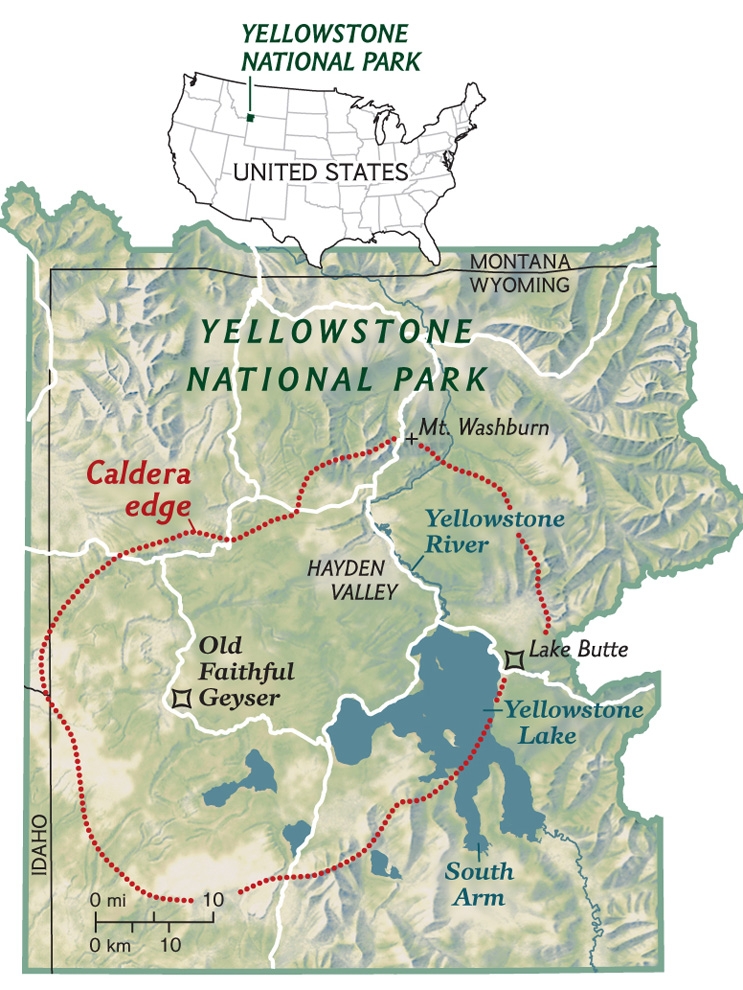
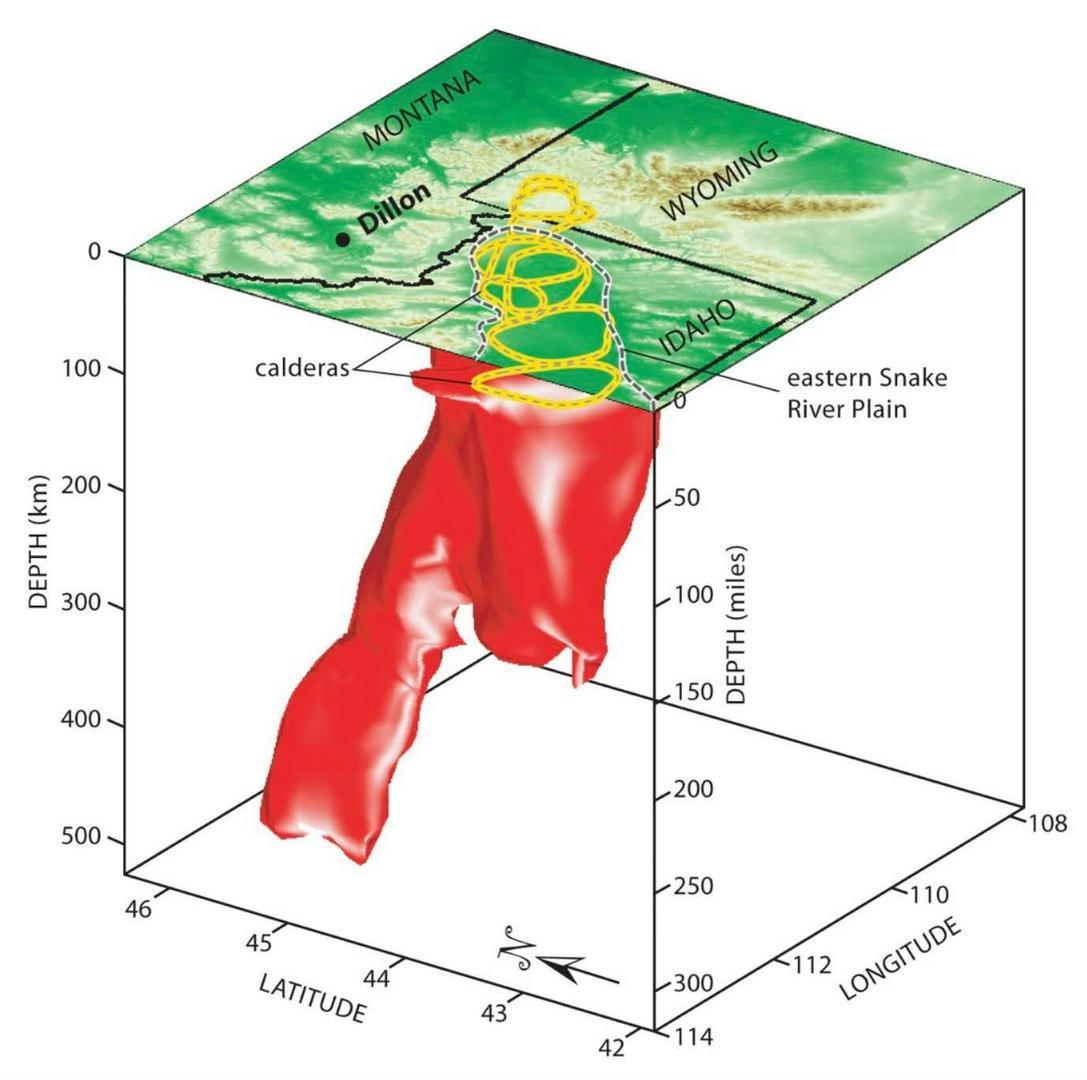

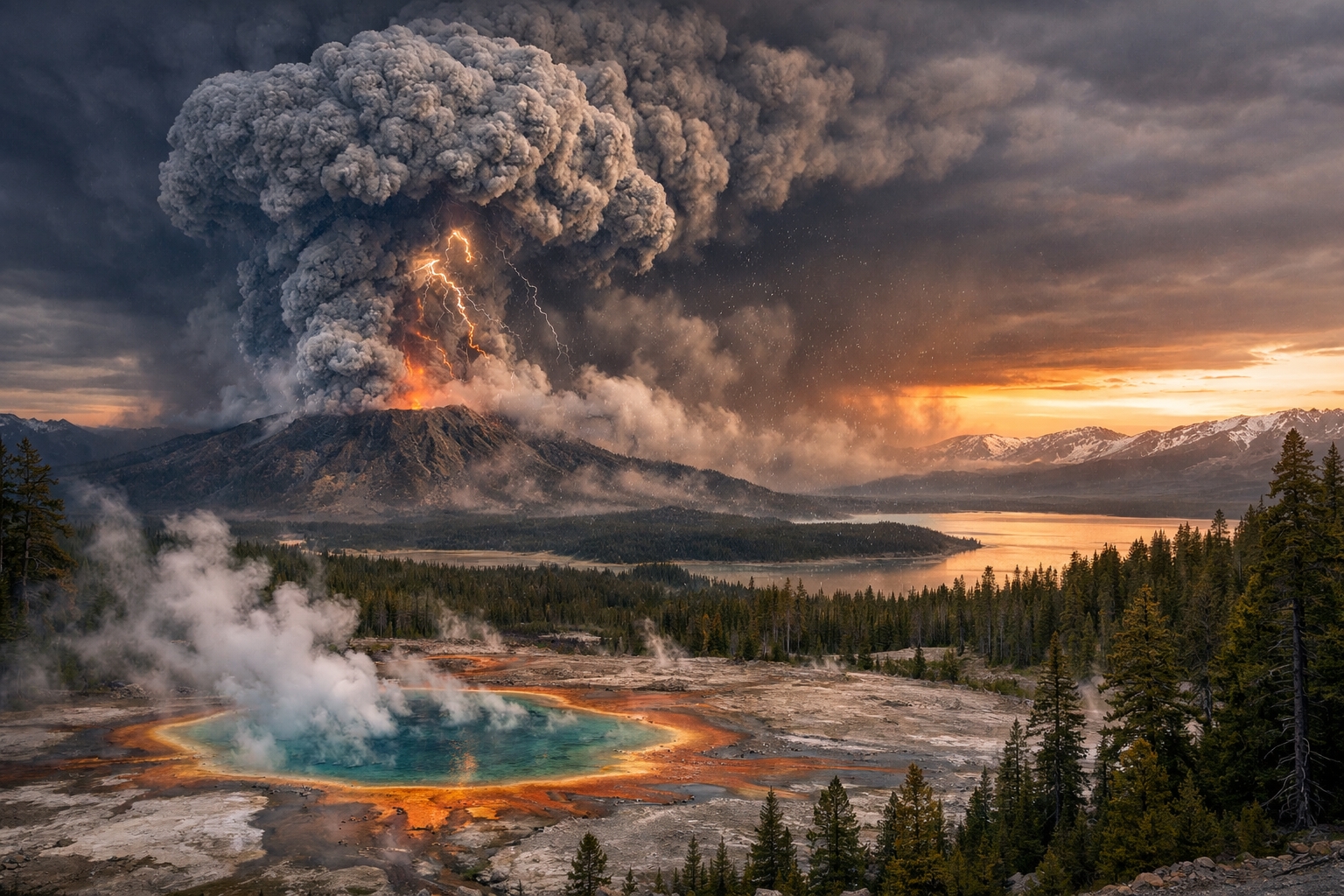
America’s Supervolcano: When Will It Erupt? The Revealing Evidence Beneath Yellowstone National Park lies one of the planet’s largest volcanic systems, a supervolcano capable of eruptions exceeding 240 cubic miles of magma. An eruption of this magnitude would reshape landscapes, blanket vast regions in ash up to several feet deep, destroy forests, and disrupt global climate for years, potentially lowering temperatures worldwide. The Yellowstone caldera spans roughly 34 by 45 miles, about the combined size of Rhode Island and Delaware, and contains over 10,000 geothermal features including geysers, hot springs, mud pots, and fumaroles, which are vents releasing steam and volcanic gases. The magma chamber extends 55 miles long, 18 miles wide, and 3 to 9 miles deep. Most of it is solid rock, while only 16 to 20 percent is molten, far below the 50 percent needed to fracture the crust and allow a supereruption. Yellowstone’s last supereruption, 640,000 years ago, expelled nearly 240 cubic miles of material, covering much of North America in volcanic ash and altering ecosystems for centuries. Earlier events 1,300,000 and 2,100,000 years ago were even larger, illustrating the irregular timing and immense power of supervolcanic activity. The U.S. Geological Survey estimates the annual chance of a supereruption at about 1 in 730,000. More likely hazards include major earthquakes and sudden hydrothermal explosions. Scientists monitor thousands of earthquakes, ground movement via GPS and satellites, gas emissions including carbon dioxide and sulfur dioxide, heat flow, and hot spring chemistry. Current readings show slow uplift and subsidence, low sulfur dioxide, and no sustained earthquake swarms, indicating deep cooling magma. Any future supereruption would be preceded by years of escalating seismic, chemical, and deformation signals, none of which are present today. #Supervolcano #Yellowstone #Science #ScienceNews #America #News #USA
Yellowstone National Park, Montana • 2025-12-22

Ceecee
if that would go we all would be DOOMED
12-23
Melbourne, FL
Reply(1)
3

Dharma Beach Bum
So, it erupted 640,000 years ago, 1.3 million years ago, and 2.1 million years ago. We're due.
12-23
Myrtle Beach, SC
Reply
3

crittercrsp
Just go to end of article : not going to happen today . Click bait -
12-24
Pumpkin Center, CA
Reply(1)
2

richie 88
Most of the fallout will go around the world….at least democrats can’t blame this on trump…..??
12-25
Reply

Bryon Griffin
Why worry about it.
03-19
Gallatin Gateway, MT
Reply

RK Barbo
Not soon enough
02-01
Reply
1
More comments ...
write a comment...