Tag Page Science

#Science
justme

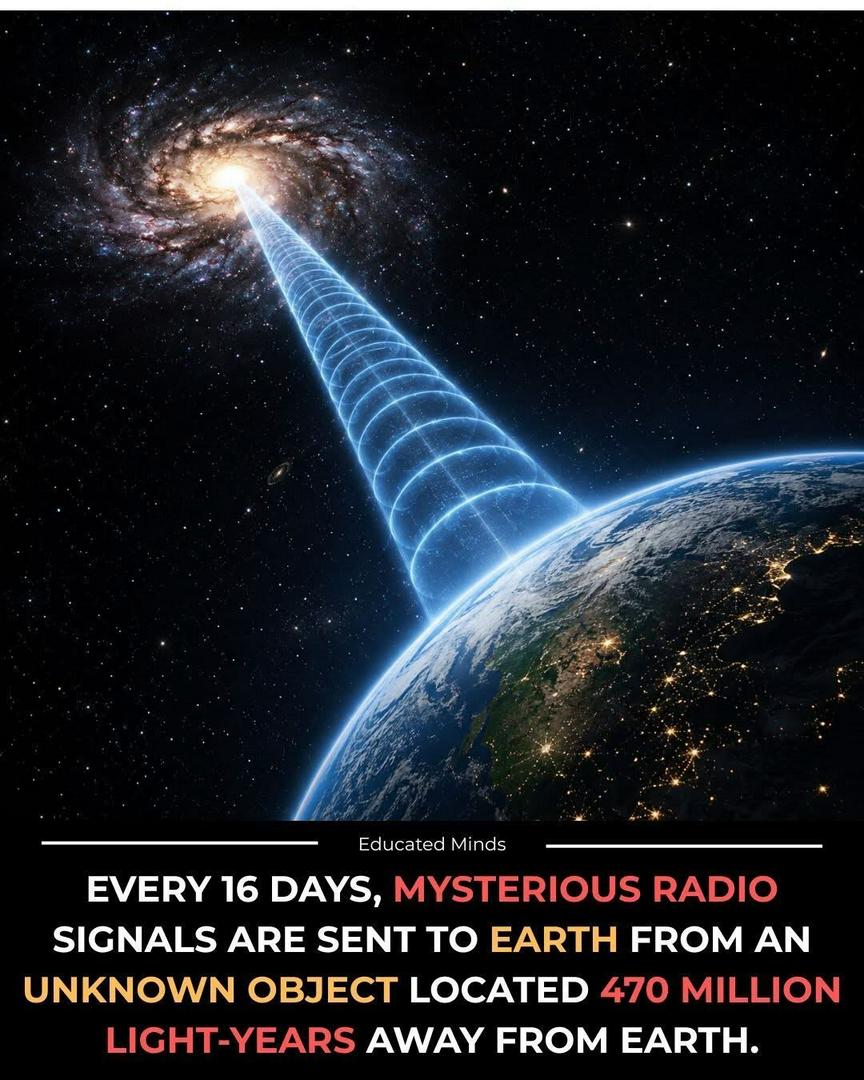
Something nearly 500 million light-years away keeps sending signals toward Earth. And it appears to do it on a schedule. The source is known as FRB 180916, one of the most mysterious objects ever discovered in space. It produces what scientists call a Fast Radio Burst—a powerful flash of radio energy that lasts only milliseconds. Most fast radio bursts appear random. This one doesn't. Researchers discovered that the source follows a repeating cycle of about 16 days. For a few days, it becomes active and sends bursts of radio energy across the cosmos. Then it falls silent. Then the pattern repeats. Again. And again. And again. Scientists still don't know exactly what's causing it. Some suspect a magnetar, an extremely magnetic type of dead star. Others think a neutron star in an unusual orbit may be responsible. But despite years of study, the true source remains uncertain. What makes the mystery so fascinating is that these signals began their journey long before humans existed as a species. They traveled across nearly half a billion years of space before reaching Earth. And we're still trying to understand what sent them. Fun fact: A single fast radio burst can release as much energy in a few milliseconds as the Sun produces over several days. What do you think is more likely: an unusual natural phenomenon, or something scientists haven't even imagined yet? #Space #Curiosity #Science #fblifestyle Sources Nature – Publication reporting the 16-day periodic activity cycle of FRB 180916 Canadian Hydrogen Intensity Mapping Experiment – Discovery and monitoring of FRB 180916 NASA – Explanations of Fast Radio Bursts and proposed origins

justme

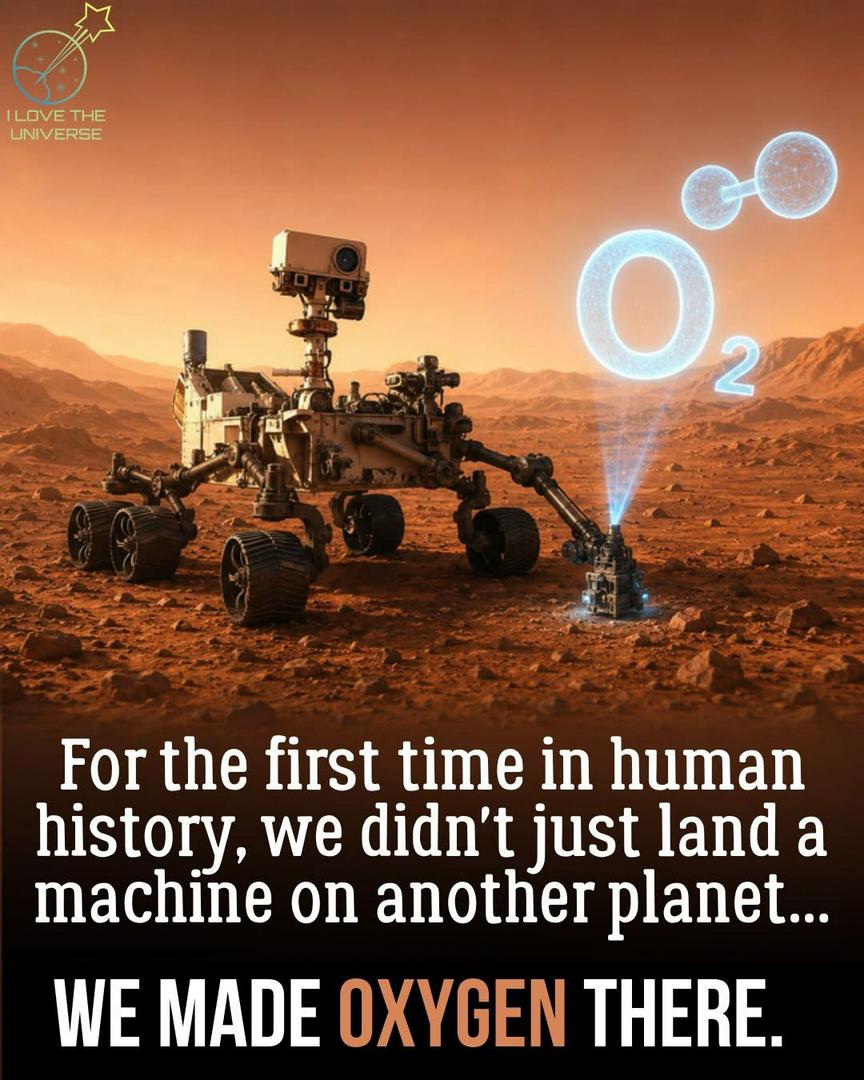
🚀 For the first time in human history, we didn't just land a machine on another planet... We made oxygen there. Think about that for a moment. On a world where the atmosphere is 95% carbon dioxide, where humans cannot breathe, a small device aboard NASA's Perseverance rover quietly achieved something extraordinary. It took the thin Martian air and transformed it into oxygen. Not in a laboratory on Earth. Not in a simulation. On Mars. The experiment, called MOXIE, proved that future explorers may not need to bring every breath of air with them across millions of kilometers of space. Instead, they could create it right where they land. And oxygen isn't just for breathing. The same technology could one day help produce the oxidizer needed for rocket fuel, solving one of the biggest challenges of sending humans to Mars... and bringing them home again. 🌌 Every giant leap begins with a small proof of concept. The Wright brothers flew for 12 seconds. The first computers filled entire rooms. And a toaster-sized machine on Mars just showed us that humans may someday live on another world. One small machine. One distant planet. One giant step toward becoming an interplanetary species. 🛸 Fun fact: During its mission, MOXIE produced enough oxygen to keep an astronaut breathing for dozens of hours, while operating in conditions no human could survive. Do you think we'll see the first human footprint on Mars within the next 20 years? #Mars #NASA #Perseverance #MOXIE #SpaceExploration #Astronomy #Science #Future #RedPlanet #HumansToMars

justme

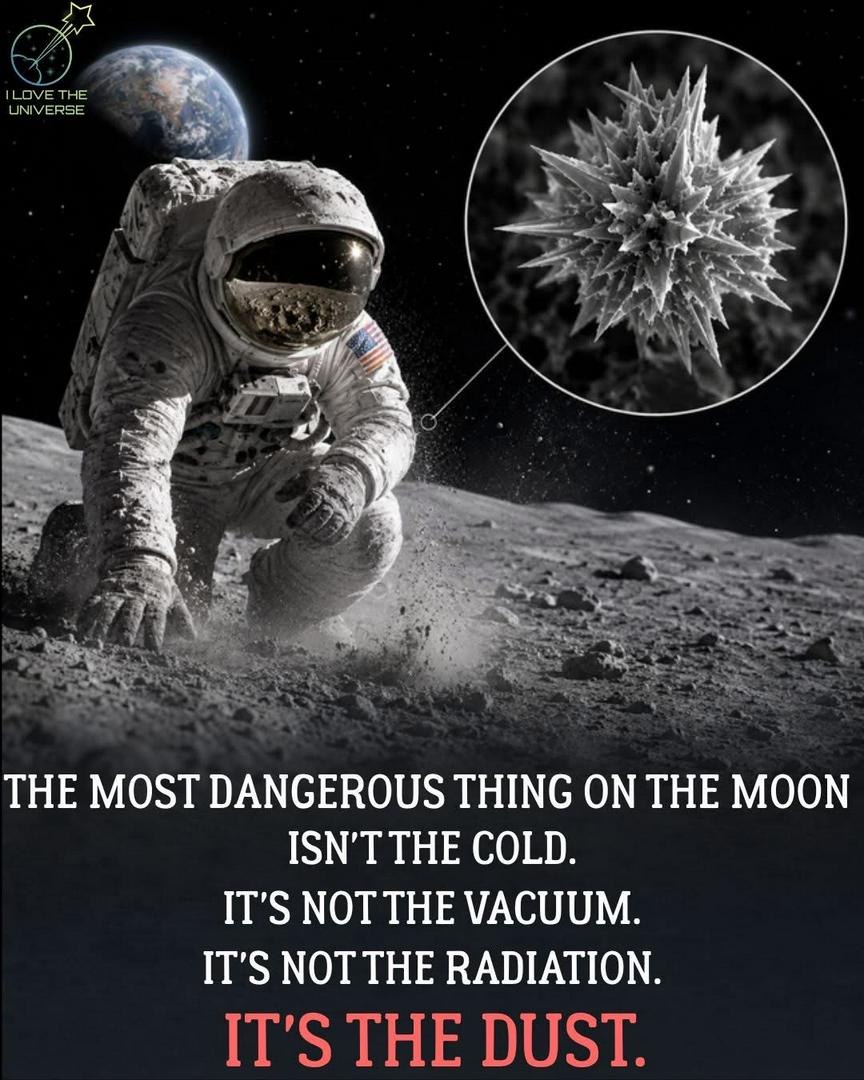
🌕 Imagine dust finer than powder, sharper than broken glass, and capable of sticking to absolutely everything. That's lunar dust. When Apollo astronauts returned to their lunar modules after walking on the Moon, they carried large amounts of this dust back inside with them. It clung to their suits, coated equipment, and quickly filled the cabin. But then something unexpected happened. The astronauts started sneezing. Their eyes became irritated. Their throats felt scratchy. The symptoms were so similar to an allergic reaction that some even nicknamed it "Moon Hay Fever." The reason is fascinating. Unlike dust on Earth, which is gradually smoothed by wind and water, lunar dust remains razor-sharp. For billions of years, tiny meteorite impacts have shattered lunar rocks into microscopic fragments with jagged, glass-like edges. And it gets even stranger. Lunar dust can become electrically charged by solar radiation, allowing it to cling stubbornly to spacesuits, machinery, and almost any surface it touches. Scientists even believe some particles can briefly levitate above the lunar surface. As humanity prepares to return to the Moon and build permanent bases there, lunar dust may become one of the greatest challenges future astronauts face. Not the cold. Not the vacuum. Not even the darkness. Dust. Sometimes the biggest obstacles in space come in the smallest packages. 🚀 Here's a mind-blowing thought: During the Apollo missions, lunar dust was so abrasive that it damaged spacesuits, scratched visors, and wore down seals after only a few days of use. Future Moon explorers may need entirely new technologies just to keep dust out. 💬 What do you think will be harder for humanity: reaching other worlds... or learning how to live on them? #Moon #Apollo #NASA #Artemis #SpaceExploration #Astronomy #MoonDust #SpaceFacts #Science #ILoveTheUniverse

justme

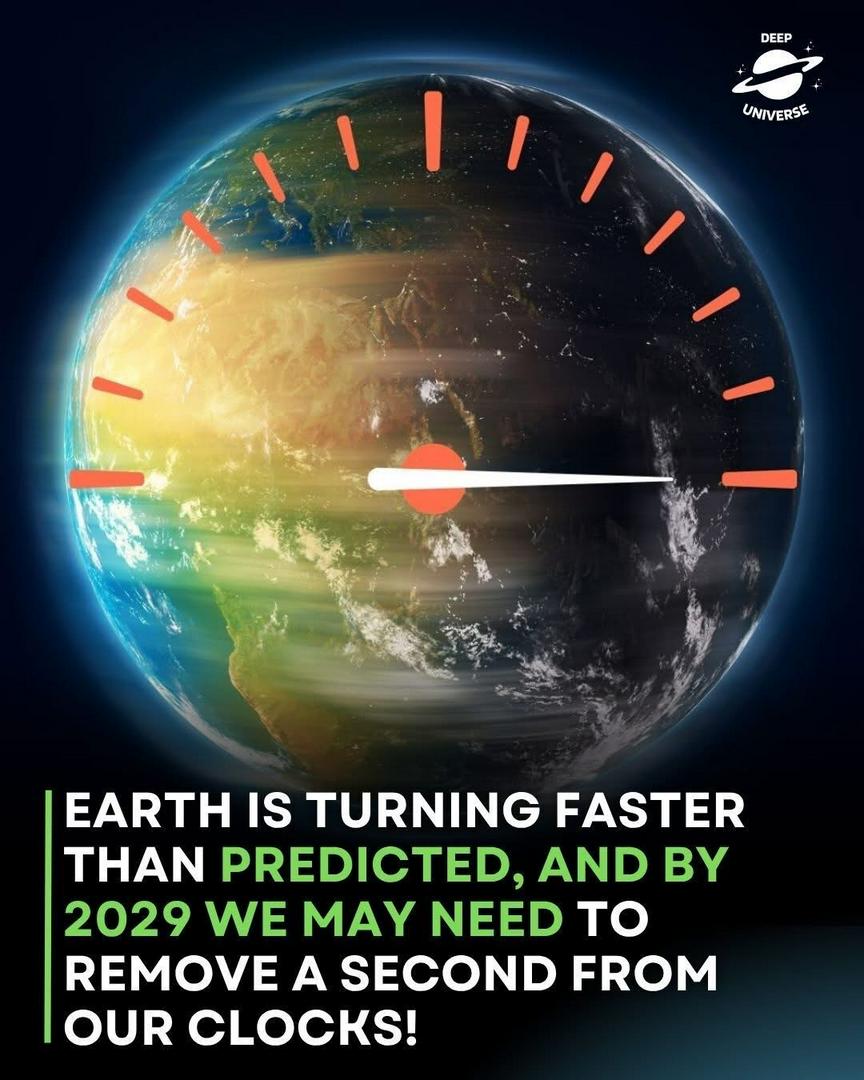
Scientists have discovered that Earth has recently been spinning slightly faster than expected, raising the possibility that the world may eventually need to remove a second from official time for the first time in recorded history. For decades, Earth's rotation has generally been slowing due to gravitational interactions with the Moon. That gradual slowdown is why leap seconds were introduced in 1972 to keep atomic clocks aligned with Earth's actual rotation. However, since 2020, researchers have recorded several unusually short days. On some occasions, Earth completed a rotation milliseconds faster than the standard 86,400 second day, attracting attention from timekeeping organizations around the world. The difference is tiny and impossible for people to notice in daily life, but modern technology depends on extraordinary precision. Global positioning systems, financial networks, telecommunications, and scientific instruments rely on atomic clocks that measure time with incredible accuracy. Scientists believe changes within Earth's core, shifts in the atmosphere, ocean circulation, and long term climate processes may all contribute to these subtle variations in planetary rotation. One surprising insight is that a change of just a few milliseconds can become important when accumulated over years. Researchers monitoring Earth's rotation have suggested that if current trends continue, a negative leap second, meaning one second removed rather than added, could be required sometime around 2029. No negative leap second has ever been implemented before, making it a unique challenge for global timekeeping systems. #deepuniverse #earth #science #timekeeping #universe #cosmos #spacefacts #fblifestyle

justme

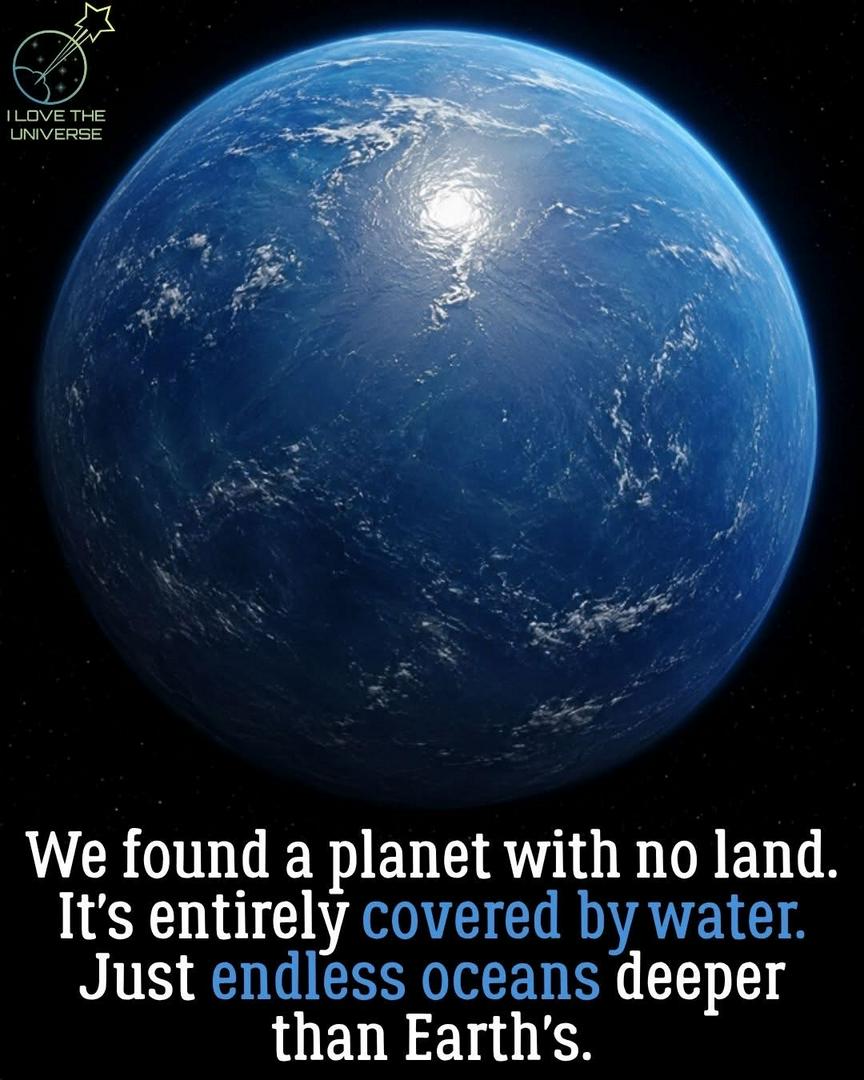
🌊 Imagine a planet where there are no beaches... no continents... no islands... Just water. Endless water. Meet TOI-1452 b — a remarkable alien world located about 100 light-years away in the constellation Draco. This fascinating "super-Earth" is nearly 5 times more massive than our planet and may be covered by a single, planet-wide ocean with no land anywhere in sight. 🌍💙 Scientists believe that beneath its endless waters lies a dense rocky core, hidden under an ocean so vast that it could contain a much larger percentage of water than Earth itself. For comparison, all of Earth's oceans make up less than 1% of our planet's total mass. TOI-1452 b could be something entirely different — a true water world. 🌊✨ Although we cannot directly see its surface yet, data collected by NASA's TESS mission strongly suggests that this extraordinary planet is rich in water and other volatile materials. The powerful James Webb Space Telescope is now helping scientists investigate its atmosphere and uncover its secrets. And here's the mind-blowing part: If these observations are confirmed, TOI-1452 b may represent a completely different type of planetary environment than anything we know in our Solar System — a world where the ocean never ends, where there are no shores to reach, and where the horizon stretches across an endless global sea. 🌌 Somewhere out there, an entire planet may exist without a single piece of land. What do you think life would look like on a world like this? 🌊👽 #Space #Astronomy #Exoplanets #WaterWorld #TOI1452b #JamesWebb #NASA #Universe #Cosmos #Science #ILoveTheUniverse

justme

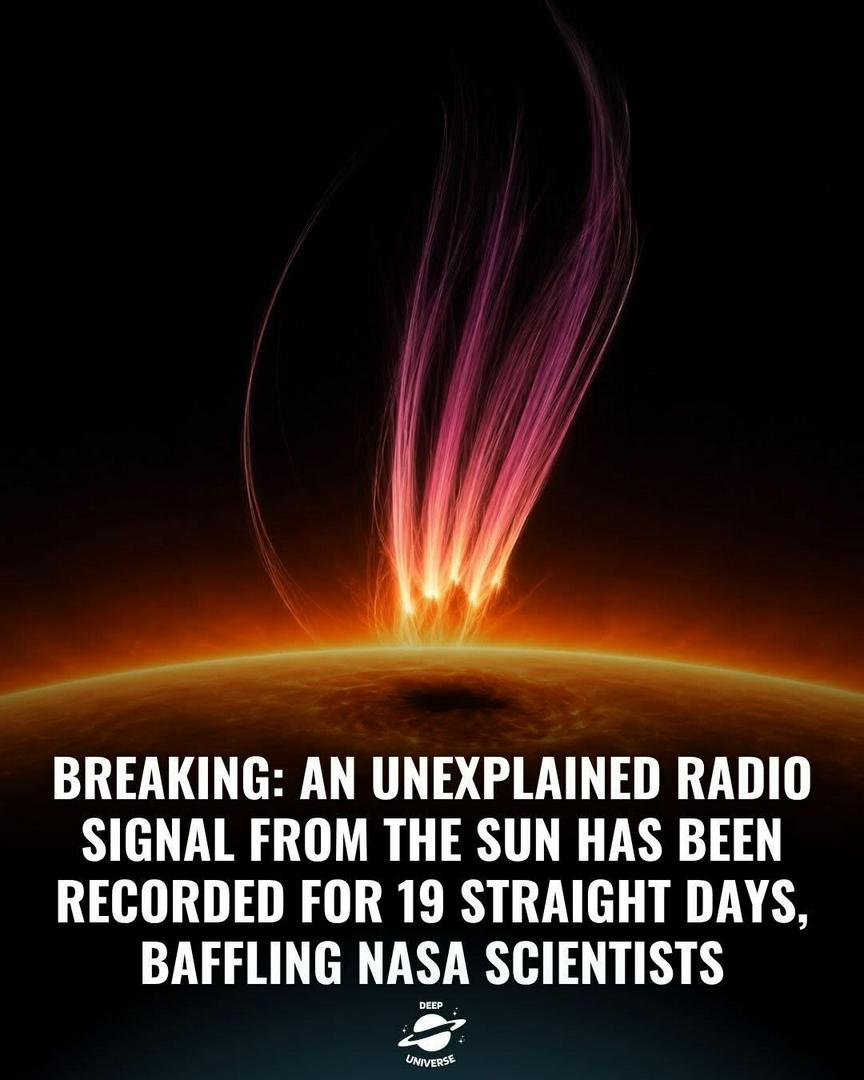
NASA scientists observed an unusual pattern of radio emissions from the Sun that persisted for approximately 19 consecutive days, a duration that stands out from typical short lived solar bursts linked to flares or coronal mass ejections. The observations were recorded through instruments operated by the NASA alongside solar monitoring systems such as the Solar Dynamics Observatory, which continuously tracks electromagnetic activity from the Sun in multiple wavelengths including radio, ultraviolet, and extreme ultraviolet bands. During this period, the Sun was undergoing an active phase in its roughly 11 year solar cycle, where sunspot regions increase and magnetic field lines twist and reconnect, sometimes producing sustained radio wave emissions tied to coronal structures rather than a single explosive event. A key scientific insight is that long duration radio signals are often linked to coronal hole high speed streams or long lasting active region complexes, where rotating solar structures repeatedly face Earth due to the Sun’s 25 to 35 day differential rotation depending on latitude, creating the illusion of continuous signal persistence. While the event may sound mysterious, it reflects the dynamic nature of solar magnetism rather than an unknown transmission, yet it still highlights how much the Sun behaves like a complex plasma system rather than a stable glowing sphere, reminding us that even our closest star holds patterns we are still learning to fully decode. #DeepUniverse #NASA #Sun #SolarActivity #SpaceDiscovery #BlackHoles #Cosmos #Universe #Science #UnknownPhenomena #fblifestyle

Curiosity Corner

Eternal Life: The Jellyfish That Reverses Its Own Life Cycle The tiny jellyfish Turritopsis dohrnii is one of the few organisms known to effectively escape permanent death, not by living forever in one form, but by repeatedly resetting its life cycle. Barely a few millimeters wide, it inhabits warm oceans worldwide, yet carries a biological capability that challenges the standard model of aging. Most animals move in a single direction: birth, growth, reproduction, decline, and death. This species can interrupt that process entirely. When stressed by injury, starvation, or environmental change, the adult jellyfish initiates a transformation driven by transdifferentiation. Its specialized cells revert and reorganize into different types, collapsing the organism into a cyst-like state before reforming as a polyp, the earlier juvenile stage of its life. From that polyp, new jellyfish bud off, genetically identical to the original. This process can begin within days under lab conditions, showing how rapidly the reset can occur. In controlled settings, this reversal has been observed multiple times in the same organism, meaning there is no fixed biological limit forcing death through aging. It can still die from predators or disease, but not from internal deterioration. In effect, it bypasses the gradual cellular damage that defines aging in most species. During the reversal phase, gene activity linked to stem-cell renewal and tissue regeneration sharply increases, effectively reprogramming mature cells into more primitive states. This makes Turritopsis dohrnii a rare case in which life does not strictly move forward. Instead, it loops, demonstrating that under certain genetic conditions, aging is not an unavoidable endpoint but a process that can, at least in one species, be reversed. #Biology #Science #ScienceNews #OceanLife #News #USNews

justme

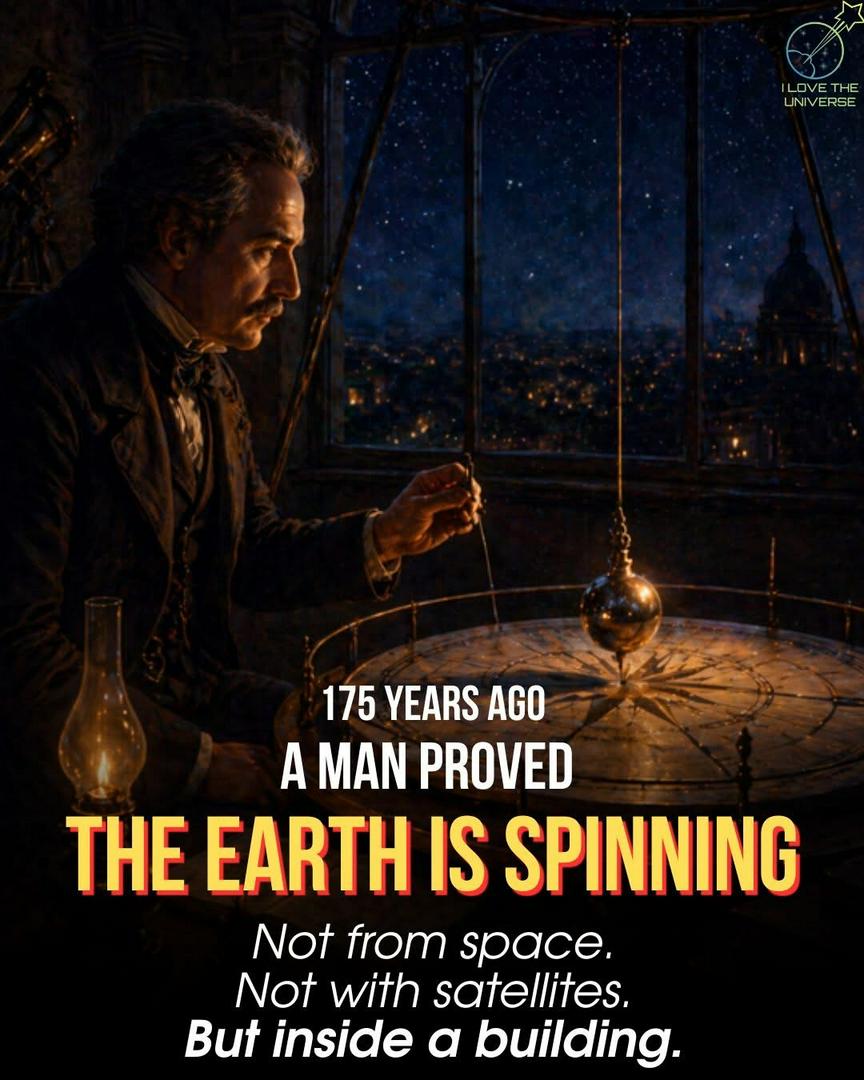
In 1851, a simple experiment proved that Earth is spinning. Not from space. Not with satellites. But inside a building… with a swinging weight. For centuries, people believed that Earth rotates. But proving it was another challenge. The French physicist Léon Foucault came up with a brilliant idea. He suspended a heavy metal ball from a long wire and set it in motion. Back and forth… perfectly steady. At first glance, nothing seemed unusual. But slowly, something incredible happened. The direction of the swing began to change. Not because the pendulum moved differently… but because the Earth beneath it was turning. The pendulum kept its direction in space. The ground did not. With a single, elegant experiment, Foucault made the rotation of Earth visible. No rockets. No space travel. Just a swinging weight… revealing that our planet is constantly in motion. #Science #Physics #Earth #Astronomy #DidYouKnow #ScienceFacts #Cosmos #Universe #STEM #SpaceScience

justme

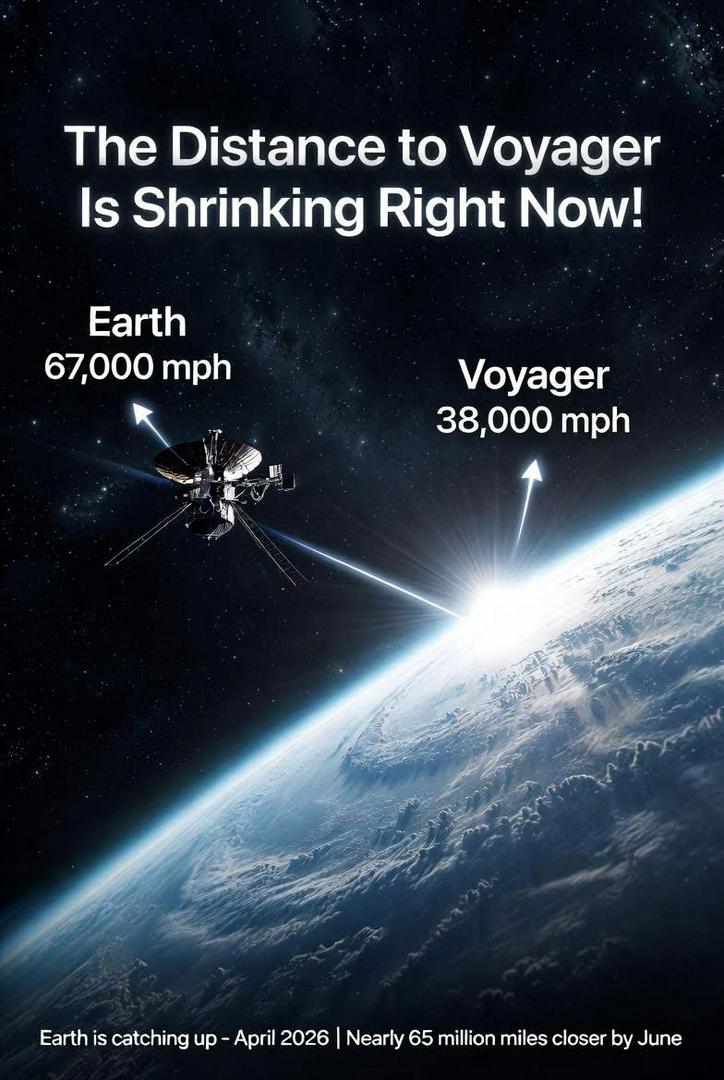
🌍 Mind-Blowing Fact: The Distance Between Voyager and Earth Is Currently Shrinking! 🚀 For nearly 50 years, Voyager 1 and Voyager 2 have been speeding away from the Sun at up to 38,000 mph, now deep in interstellar space. Yet right now (and every year from late February to early June), the distance to Earth is actually decreasing — by millions of miles! Why? Earth orbits the Sun at a blistering 67,000 mph — much faster than the Voyagers. As our planet swings around to the same side of the Sun as the probes, we’re catching up to them. For example, Voyager 2 is shrinking its distance by about 0.69 AU (nearly 65 million miles) between February and June 2026. By early June, it will be closer than it was in February! Once Earth passes and heads the other way, the distance will start growing again — forever. Our tiny blue planet is still playing cosmic catch-up with its distant robotic ambassadors. What do you find more amazing — that the Voyagers are still communicating after 50 years, or that Earth can “catch up” to them every year? Drop your thoughts below 👇 and tag a space lover who needs to see this! #Voyager #Voyager1 #Voyager2 #InterstellarSpace #NASA #Astronomy #SpaceFacts #Science

justme

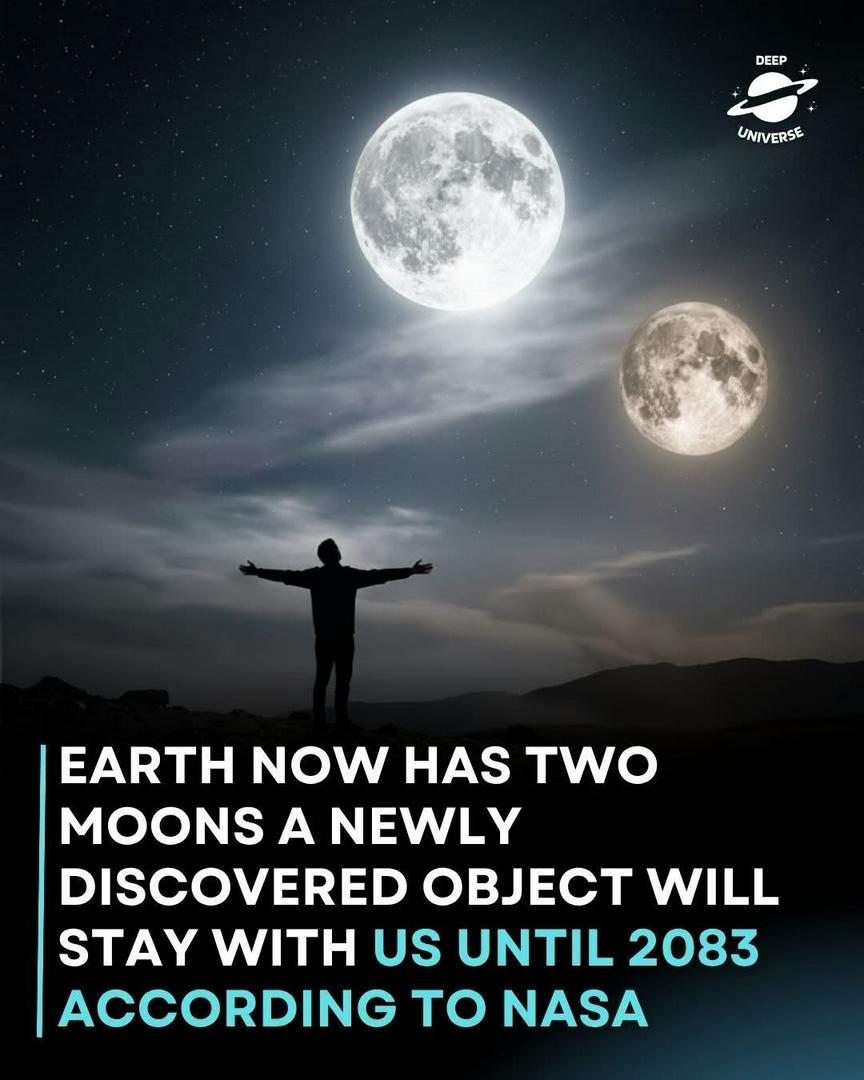
Astronomers have identified a small near-Earth asteroid temporarily captured by Earth’s gravity, creating the rare illusion of a second moon sharing our skies and orbit for a limited period, a finding that has sparked widespread fascination and confusion across science communities and social media. The object, believed to be a few meters to around 10 meters wide, follows a horseshoe-like path influenced by Earth’s gravitational pull and the Sun’s dominant force. Observations from ground-based telescopes and NASA-supported surveys suggest it is not a permanent satellite but a transient visitor, similar to other mini-moon events recorded in recent years across observatories worldwide. Scientists explain that these temporary moons form when small asteroids drift close enough to Earth to be trapped briefly in its gravitational field before escaping back into solar orbit. A key insight from recent studies shows that such captures may be more common than once thought, but most remain undetected due to their small size and faint reflectivity. Beyond the data, the discovery reminds us how dynamic and crowded near-Earth space really is, where invisible objects quietly move alongside our planet for weeks or months without notice. It also highlights how modern astronomy is constantly refining our understanding of what counts as a 'moon' in a universe filled with shifting gravitational relationships. Even as headlines simplify it into a second moon, the reality is more subtle and fleeting, yet no less remarkable. It is a brief companion in Earth’s long journey around the Sun, leaving behind a reminder that the cosmos still holds quiet surprises waiting just beyond routine observation. #DeepUniverse #fblifestyle #SpaceDiscovery #Cosmos #Universe #Science #Astronomy #UnknownPhenomena #NearEarthObjects #SpaceScience

Tag: Science | LocalAll