1/1

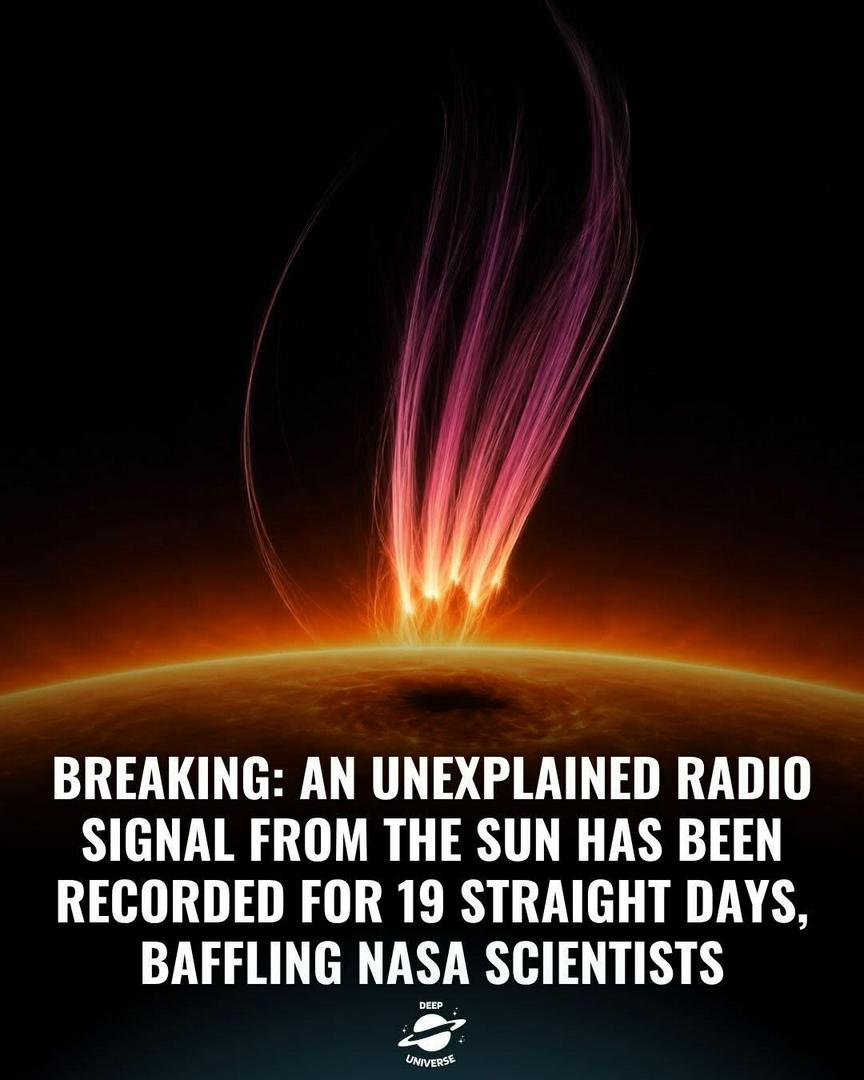
NASA scientists observed an unusual pattern of radio emissions from the Sun that persisted for approximately 19 consecutive days, a duration that stands out from typical short lived solar bursts linked to flares or coronal mass ejections. The observations were recorded through instruments operated by the NASA alongside solar monitoring systems such as the Solar Dynamics Observatory, which continuously tracks electromagnetic activity from the Sun in multiple wavelengths including radio, ultraviolet, and extreme ultraviolet bands. During this period, the Sun was undergoing an active phase in its roughly 11 year solar cycle, where sunspot regions increase and magnetic field lines twist and reconnect, sometimes producing sustained radio wave emissions tied to coronal structures rather than a single explosive event. A key scientific insight is that long duration radio signals are often linked to coronal hole high speed streams or long lasting active region complexes, where rotating solar structures repeatedly face Earth due to the Sun’s 25 to 35 day differential rotation depending on latitude, creating the illusion of continuous signal persistence. While the event may sound mysterious, it reflects the dynamic nature of solar magnetism rather than an unknown transmission, yet it still highlights how much the Sun behaves like a complex plasma system rather than a stable glowing sphere, reminding us that even our closest star holds patterns we are still learning to fully decode. #DeepUniverse #NASA #Sun #SolarActivity #SpaceDiscovery #BlackHoles #Cosmos #Universe #Science #UnknownPhenomena #fblifestyle
2 days ago
shewhorunfromcold
My dad passed when 🌸💕
Thank you
We had fireballs prior also
2d
Plainfield, IN
Reply
More comments ...
write a comment...