Tag Page Cosmos

#Cosmos
justme

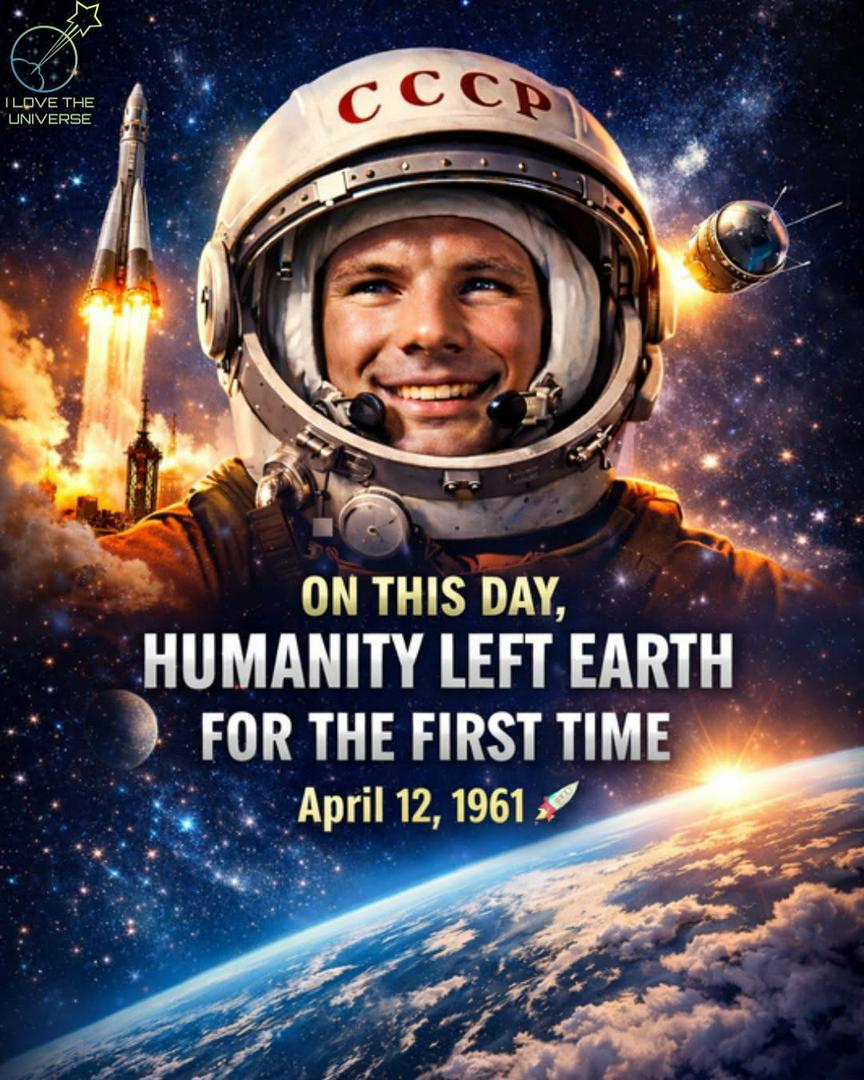
He didn’t just go to space… He changed humanity forever. 🚀 On April 12, 1961, Yuri Gagarin became the first human to leave Earth. In just 108 minutes, aboard Vostok 1, he orbited our planet once… But what he really did was something far bigger. He proved that we are not bound to this world. For the first time in history, a human looked back at Earth not as a place… but as a fragile blue world floating in the infinite dark. 🌍 No borders. No countries. Just one home. That single flight ignited a fire that still burns today — from the Moon landings… to Mars dreams… to the missions happening right now. And maybe the most powerful part? 👉 Every astronaut since… every rocket… every mission… exists because of that one moment. Because someone dared to go first. We didn’t just reach space that day… we discovered who we are capable of becoming. We are explorers. We are dreamers. And space is only the beginning. — If this moment gives you chills… you’re not alone. Share it. Let more people feel it. 🌌 #Space #YuriGagarin #April12 #Humanity #Astronomy #Cosmos #SpaceExploration #NASA #History #Universe #Earth #Inspiration

justme

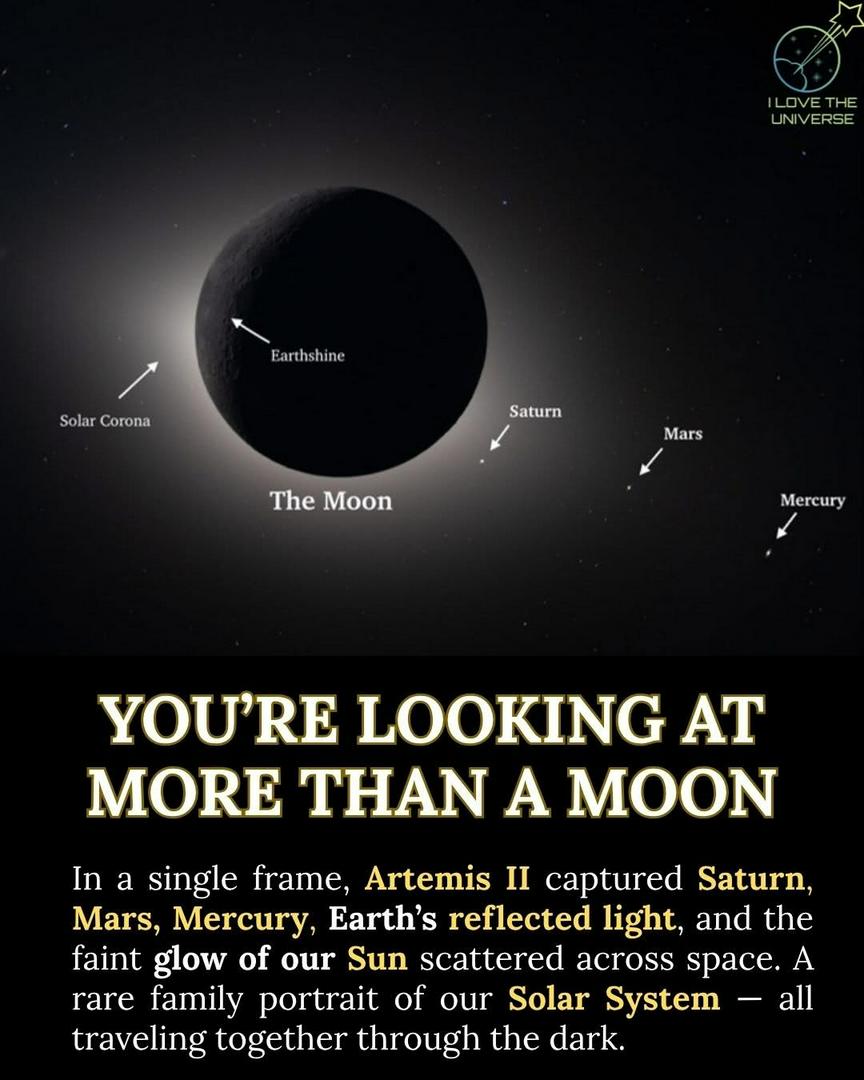
This image captures more than just the Moon… 🤯 Captured by the Artemis II crew, this view reveals not just the Moon, but a quiet alignment of worlds — Saturn, Mars, and Mercury, all shining across the same sky. Even Earth is here, its light softly illuminating the dark side of the Moon. What looks like empty space is anything but — sunlight scattered through interplanetary dust creates a faint glow, reminding us that we are all part of one vast, connected system. Venus sits just beyond the edge of this frame, while Neptune is here too — hidden in the darkness, too faint to be seen. A rare and humbling family portrait of our Solar System — seen not from afar, but from within. 🚀 Credits: NASA/ Artemis II #ArtemisII #NASA #Space #Astronomy #SolarSystem #Moon #Earth #Explore #Cosmos

justme

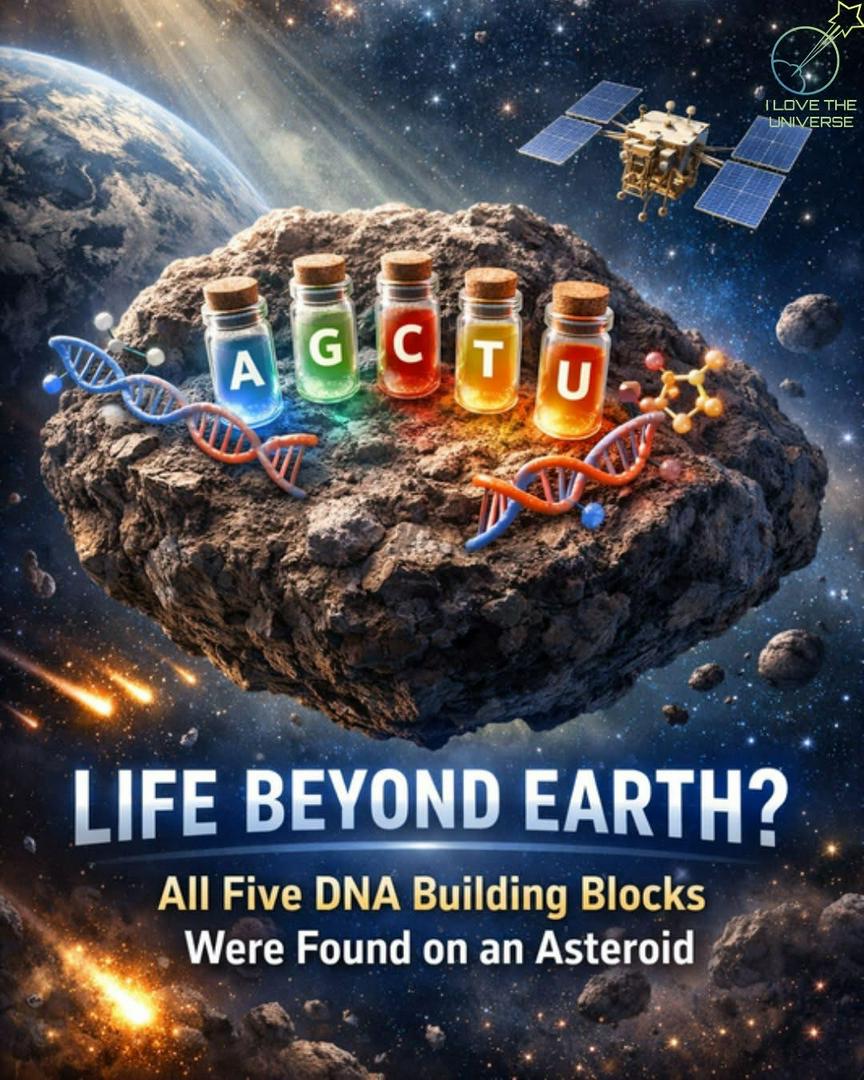
🚨 BREAKING: We may not be as alone as we once thought… A small, ancient space rock has just shaken everything we know about life in the Universe. Japanese scientists studying asteroid Ryugu have confirmed something extraordinary: within just 5.4 grams of material brought back by the Hayabusa2 mission, they found all five nucleobases - the essential building blocks of DNA and RNA. ✅ Adenine ✅ Guanine ✅ Cytosine ✅ Thymine ✅ Uracil For the first time ever, a single celestial body contains a complete and balanced set of the molecules needed to store and pass on life’s information. Let that sink in… 🌌 This isn’t just chemistry. This is the language of life - written in the dust of space. 💡 What does it mean? It suggests something truly mind-blowing: The ingredients for life may not be rare at all… they could be everywhere. Scientists now believe asteroids like Ryugu may have delivered these building blocks to early Earth, seeding our planet long before life began. Even more fascinating - Ryugu likely formed in a water-rich environment, where these complex molecules could slowly assemble over millions of years. And here’s the big question… If the recipe for life exists across the Solar System - or even the galaxy - then… 👉 How many other worlds have already used it? We still don’t know how these molecules became living organisms. But one thing is becoming clearer with every discovery: 🤔 Life might not be a miracle unique to Earth… 😲 It might be a cosmic inevitability. And that changes everything. What do you think — are we alone? 👇 #Space #Asteroid #Science #Astronomy #OriginsOfLife #NASA #Hayabusa2 #Ryugu #Universe #Cosmos #LifeInTheUniverse

justme

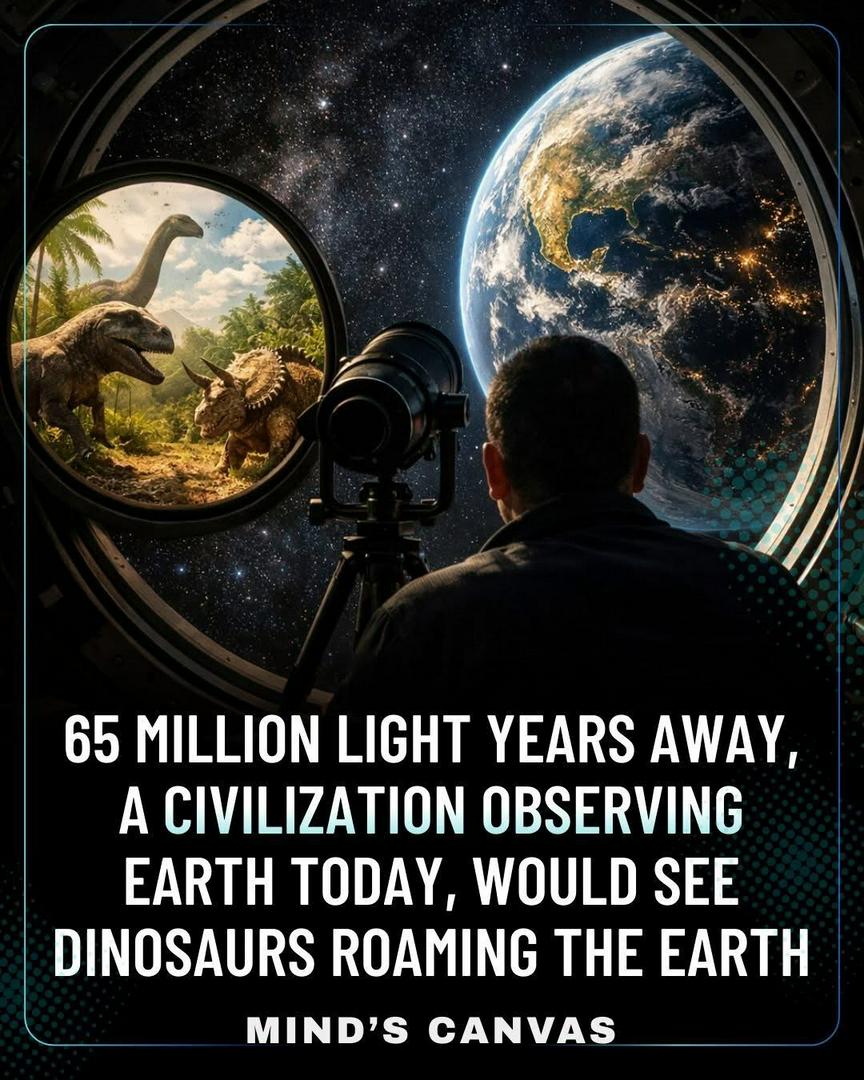
Looking at the night sky may feel like watching the present, but in reality it is a glimpse into the distant past. Because light takes time to travel through space, everything we see in the universe appears as it existed long ago. Light moves at about 300,000 kilometers per second, which is incredibly fast but still limited. When astronomers observe objects millions or billions of light years away, the light reaching their telescopes began its journey millions or billions of years in the past. In other words, space works like a natural time machine. If a hypothetical civilization were located 65 million light years from Earth and had a powerful enough telescope, the light arriving from our planet today would have left Earth 65 million years ago. That period corresponds to the late Cretaceous era, when dinosaurs still dominated Earth before the mass extinction event that ended their reign. This concept highlights how time and distance are deeply connected in the universe. Observing distant worlds means observing ancient history. The farther we look into space, the further we look back in time, revealing snapshots of the universe as it once existed. Sources: NASA; European Space Agency; Harvard Smithsonian Center for Astrophysics; National Radio Astronomy Observatory #astronomy #spacetime #sciencefacts #cosmos #astrophysics #fblifestyle #mindcanvas

You've reached the end!
Tag: Cosmos | LocalAll