Tag Page ScienceNews

#ScienceNews
justme

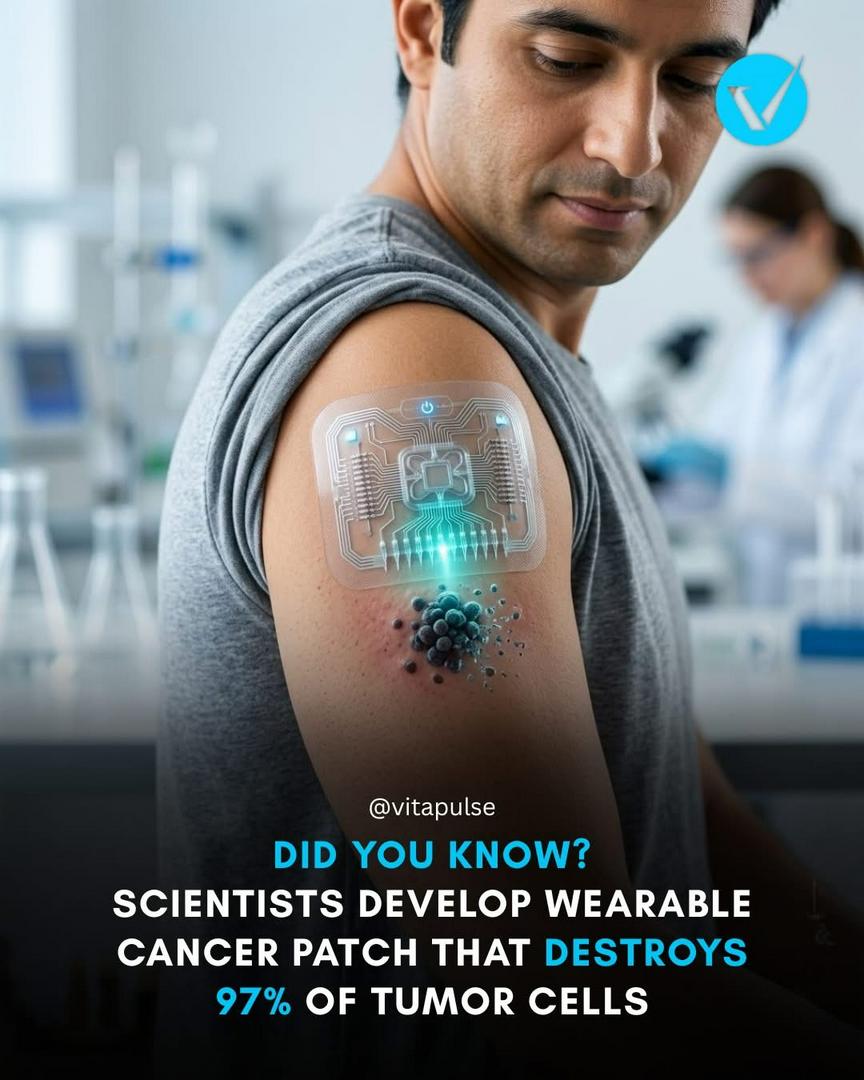
Scientists have developed a wearable patch designed to target and destroy cancer cells without the need for invasive surgery. The technology is attracting attention because it could offer a less painful and more convenient treatment option for certain patients. The patch works by delivering targeted therapy directly to the affected area. By focusing treatment where it is needed most, researchers aim to reduce damage to healthy tissues while improving the effectiveness of cancer treatment. Early findings show the patch eliminated up to 97% of cancer cells in experimental testing. These results are encouraging and suggest that wearable medical technologies could play a larger role in future cancer care. Further research is underway to evaluate the safety and effectiveness of this technology across different patient groups and treatment settings. This advancement demonstrates the potential of innovative medical solutions to improve care and expand future treatment options. #CancerResearch #MedicalInnovation #Healthcare #ScienceNews #HealthTechnology

Curiosity Corner

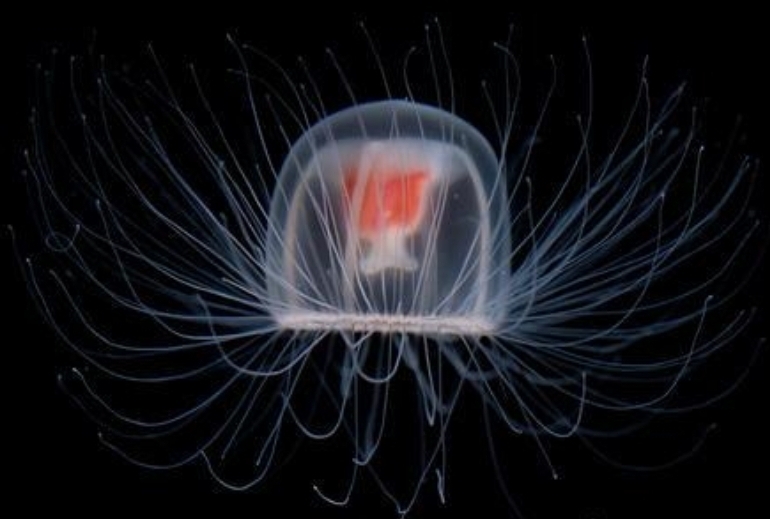
Eternal Life: The Jellyfish That Reverses Its Own Life Cycle The tiny jellyfish Turritopsis dohrnii is one of the few organisms known to effectively escape permanent death, not by living forever in one form, but by repeatedly resetting its life cycle. Barely a few millimeters wide, it inhabits warm oceans worldwide, yet carries a biological capability that challenges the standard model of aging. Most animals move in a single direction: birth, growth, reproduction, decline, and death. This species can interrupt that process entirely. When stressed by injury, starvation, or environmental change, the adult jellyfish initiates a transformation driven by transdifferentiation. Its specialized cells revert and reorganize into different types, collapsing the organism into a cyst-like state before reforming as a polyp, the earlier juvenile stage of its life. From that polyp, new jellyfish bud off, genetically identical to the original. This process can begin within days under lab conditions, showing how rapidly the reset can occur. In controlled settings, this reversal has been observed multiple times in the same organism, meaning there is no fixed biological limit forcing death through aging. It can still die from predators or disease, but not from internal deterioration. In effect, it bypasses the gradual cellular damage that defines aging in most species. During the reversal phase, gene activity linked to stem-cell renewal and tissue regeneration sharply increases, effectively reprogramming mature cells into more primitive states. This makes Turritopsis dohrnii a rare case in which life does not strictly move forward. Instead, it loops, demonstrating that under certain genetic conditions, aging is not an unavoidable endpoint but a process that can, at least in one species, be reversed. #Biology #Science #ScienceNews #OceanLife #News #USNews

Curiosity Corner

Why Do Reported Alien Encounters Involve Beings With Human Characteristics? Many people who report extraterrestrial encounters describe humanoid beings with slender bodies, large heads, oversized black eyes, small mouths, minimal noses, and thin limbs. Heights often range from 3 to 5 ft. Some accounts describe smooth gray or pale skin, no visible ears, and little or no hair. Psychologists explain these recurring descriptions through cognitive processing, memory reconstruction, and cultural influence. The brain is wired from birth to recognize faces, symmetry, and upright body shapes. When recalling vague or fragmented experiences, especially under stress, fatigue, or sleep disruption, the brain fills missing details using familiar patterns. Sleep researchers estimate that 8 to 12% of adults experience sleep paralysis at least once, often accompanied by pressure on the chest, difficulty moving, and a strong sense of another presence. Visual hallucinations during these moments frequently include shadowy figures or humanoid shapes. Large eyes, elongated heads, and thin bodies are common features. Cultural exposure reinforces these images. Analysis of over 300 science fiction films and shows from 1950 - 2020 shows 71% of extraterrestrials depicted as bipedal figures with two arms, a head, and forward-facing eyes. Many witnesses also report silent movement, limited facial expression, and telepathic communication. Despite geographic and cultural differences, the physical descriptions remain remarkably consistent. Some scientists note that convergent evolution could theoretically produce similar traits on planets with Earthlike gravity and atmosphere. Upright posture, bilateral symmetry, and centralized sensory organs can aid mobility, perception, and tool use. However, the uniformity of reported features is more strongly explained by human perception, sleep disturbances, emotional intensity, and cultural imagery than by actual et biology. #Aliens #ScienceNews

Curiosity Corner

Breaking China’s Rare Earth Monopoly: Samsung Unveils Ultra Fast Charging Silver Battery Samsung is a global technology company based in South Korea, advancing energy storage with a new silver solid state battery. It replaces the liquid electrolyte in lithium ion systems with a solid material and uses a silver carbon composite layer to improve performance and stability. This design targets electric vehicles, grid storage, portable electronics, aerospace, and renewable energy systems. The battery achieves an energy density of about 500 watt hours/kilogram, nearly 2 times the 270 watt hours/kilogram typical of lithium ion batteries, enabling lighter packs with more energy. For electric vehicles, this translates to a driving range up to 600 miles on a single charge, compared to roughly 300 miles today. Charging to 80% in about 9 minutes dramatically reduces wait times. Lifespan reaches 20 years and more than 1,500 full charge cycles before notable capacity loss. The solid state design also improves safety and durability compared to conventional liquid batteries. A typical 100 kilowatt hour EV battery pack could contain about 1 kilogram of silver in the anode composite to stabilize lithium. Currently, solid state batteries cost more than lithium ion packs. Lithium ion costs are around 100 to 150 dollars/kilowatt hour, while solid state variants are roughly 400 to 1,000 dollars/kilowatt hour depending on scale. A 100 kilowatt hour pack could cost 40,000 to 100,000 dollars, versus 10,000 to 15,000 dollars for lithium ion. Scaling production could reduce costs toward 75 to 100 dollars/kilowatt hour by 2030. Reduced reliance on cobalt, nickel, and other rare earth materials, many controlled by China, could diversify supply chains. If scaled, Samsung’s silver solid state battery could transform electric vehicles, grid storage, aerospace, and portable devices with ultra long range, rapid charging, enhanced safety, and extended lifespan. #Science #ScienceNews #News

Tag: ScienceNews | LocalAll