Tag Page nasa

#nasa
justme

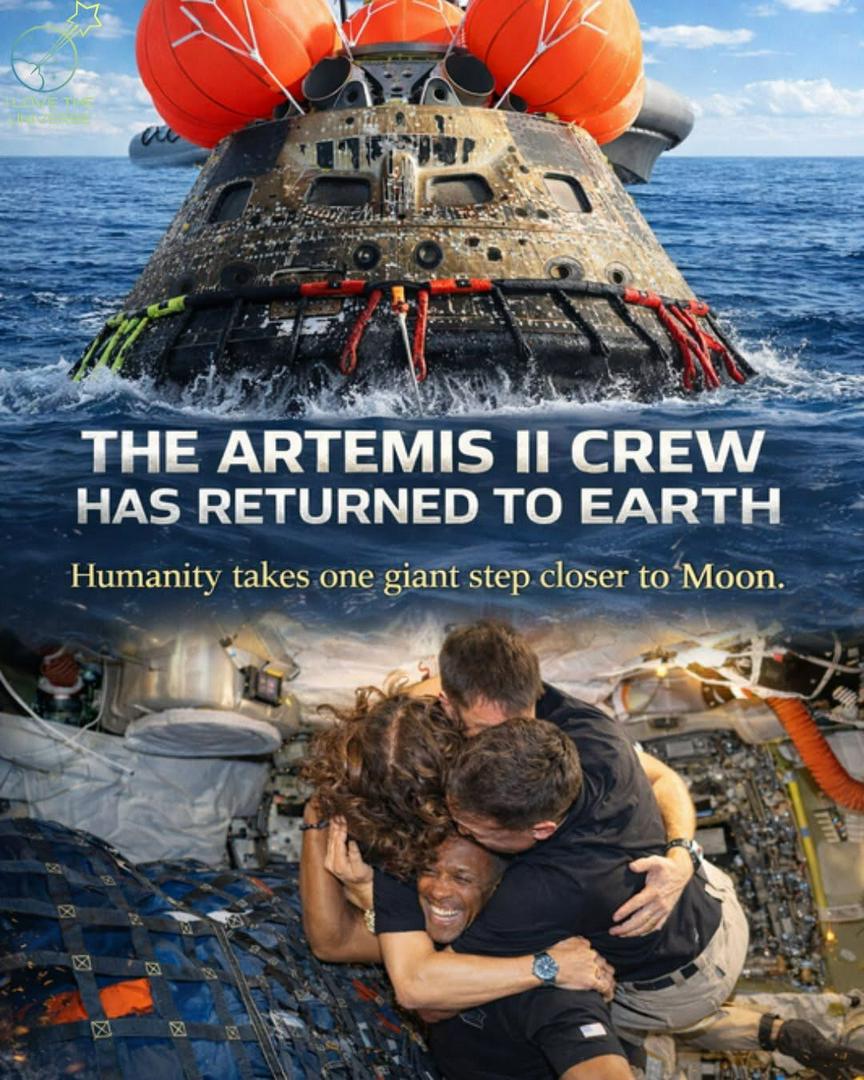
WE DID IT. THEY’RE HOME. 🌍🚀 After traveling hundreds of thousands of kilometers through the silent void, after pushing the limits of human courage and engineering, the crew of Artemis II has safely returned to Earth. The most dangerous moment… came last. Reentry — when the spacecraft becomes a fireball, when temperatures rise to thousands of degrees, when everything depends on precision, physics, and trust. And they made it through. Today, we didn’t just witness a successful mission. We witnessed humanity proving—once again—that we are capable of going farther, risking more, and coming back stronger. This mission wasn’t only about reaching the Moon and returning. It was about testing the path for all who will follow. It was about showing that deep space is no longer a distant dream—it’s our next destination. To the Artemis II crew: Welcome home. You carried all of us with you. You inspired millions. And you reminded the world what we can achieve when we dare to explore. And this is only the beginning. Next stop: Artemis III — humanity returns to the surface of the Moon. 🌕 A new era has begun… and we are living in it. #ArtemisII #NASA #Space #Moon #Astronomy #SpaceExploration #WelcomeHome #Artemis #Humanity #NextStep

ArmyVet News & Knowledge

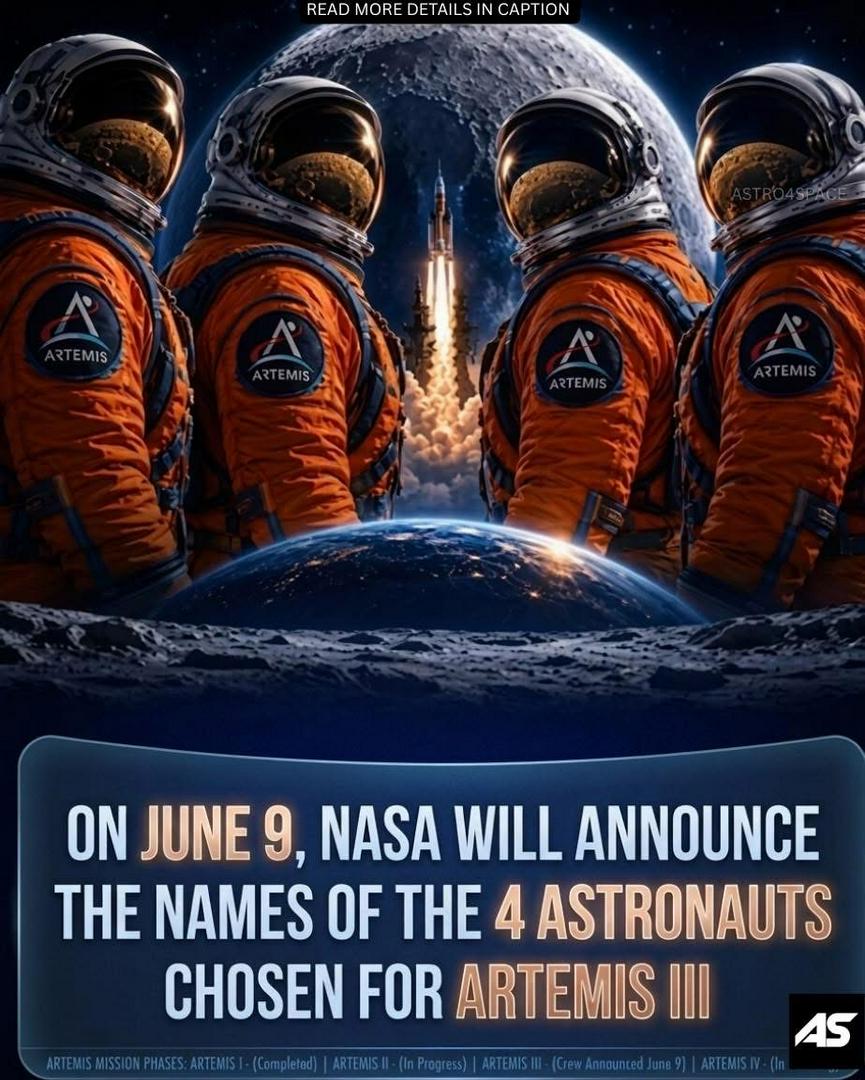
🚀🇺🇸 NASA’s Artemis program isn’t just a return to the Moon — it’s a full engineering roadmap for building a multi‑planet future. The plan starts with proving the hardware: SLS, the heavy‑lift rocket; Orion, the deep‑space crew capsule; and the upgraded ground systems that support them. Artemis I validated the full stack in deep space. Artemis II puts humans into the loop — testing life support, navigation, radiation exposure, and manual controls on a 10‑day lunar flyby. From there, Artemis III targets the Moon’s south pole, where water ice could support fuel production and long‑term habitation. This mission requires Orion, SLS, and SpaceX’s Human Landing System working together — the first sustained surface operations since Apollo. Artemis IV and beyond shift from “missions” to infrastructure: building the Lunar Gateway, expanding surface mobility, and testing resource extraction. These steps aren’t symbolic — they’re the engineering foundation for Mars. NASA states that Artemis is the required proving ground for deep‑space survival, propulsion, and life‑support systems needed for the first crewed Mars missions. 🌕➡️🔴 The long‑term goal: a sustainable lunar base, a staging point in lunar orbit, and eventually humans living and working on Mars. Not science fiction — a strategic, step‑by‑step architecture for a multi‑planet species. #NASA #Artemis #EngineeringTheFuture #MoonToMars #SpaceExploration #STEM #USA #NextGiantLeap 🚀

justme

He didn’t just go to space… He changed humanity forever. 🚀 On April 12, 1961, Yuri Gagarin became the first human to leave Earth. In just 108 minutes, aboard Vostok 1, he orbited our planet once… But what he really did was something far bigger. He proved that we are not bound to this world. For the first time in history, a human looked back at Earth not as a place… but as a fragile blue world floating in the infinite dark. 🌍 No borders. No countries. Just one home. That single flight ignited a fire that still burns today — from the Moon landings… to Mars dreams… to the missions happening right now. And maybe the most powerful part? 👉 Every astronaut since… every rocket… every mission… exists because of that one moment. Because someone dared to go first. We didn’t just reach space that day… we discovered who we are capable of becoming. We are explorers. We are dreamers. And space is only the beginning. — If this moment gives you chills… you’re not alone. Share it. Let more people feel it. 🌌 #Space #YuriGagarin #April12 #Humanity #Astronomy #Cosmos #SpaceExploration #NASA #History #Universe #Earth #Inspiration

justme

🚀 TODAY IS THE DAY. After more than half a century… humanity is returning to deep space. In just hours, the Artemis II mission will carry astronauts around the Moon — the first crewed journey beyond Earth orbit since Apollo. Not a test. Not a simulation. This is real. And it’s happening NOW. 🕒 LAUNCH DAY TIMELINE (EDT) 🌅 7:45 AM – Live coverage begins The world wakes up. The mission starts. ⛽ ~1:00 PM – 3:30 PM – Fueling the rocket Hundreds of thousands of liters. One chance. ⏸️ ~3:30 PM – Built-in hold A pause before history moves forward. ▶️ ~4:00 PM – Countdown resumes No turning back. 👨‍🚀 ~5:00 PM – Crew inside Orion The hatch closes. Silence. Focus. 🟢 ~5:30 PM – Final GO / NO-GO Every system. Every heartbeat. 🚀 6:24 PM – LAUNCH WINDOW OPENS 🔥 Target liftoff: 6:24 PM If all goes well… a new chapter for humanity begins in that exact moment. 🌌 What happens next? +8 minutes → The rocket reaches space +1 hour → Orion begins its journey to the Moon This is not just another launch. This is the moment we step back into the cosmos. Watch it. Feel it. Remember where you were. 🌍🌕🚀 #ArtemisII #NASA #MoonMission #Space #LaunchDay #HistoryInTheMaking

justme

🚀 HUMANITY RETURNS TO THE MOON — ARTEMIS II LAUNCH WEEK More than 50 years after Apollo 17 mission, we’re standing on the edge of history again. This is the countdown to Artemis II — the first mission that will send astronauts around the Moon and back in a new era of exploration. 📅 Monday, March 30 🕔 5:00 p.m. – Final launch preparations briefing 📅 Tuesday, March 31 🕐 1:00 p.m. – Prelaunch press conference 📅 Wednesday, April 1 — LAUNCH DAY 🕢 7:45 a.m. – Live coverage begins as the Space Launch System is fueled 🕛 12:50 p.m. – Official launch broadcast starts 🕟 4:45 p.m. – Spanish live coverage of liftoff Carrying humans aboard the Orion spacecraft, this mission will push us beyond Earth orbit once again — farther than any crew has traveled in decades. No landing this time. Just a bold step… back into deep space. 🌕 The Moon is no longer the finish line — it’s the beginning. Watch it. Feel it. Share it. Because this isn’t just another launch… This is humanity rising again. #Artemis #NASA #MoonMission #Space #Launch #DeepSpace #Orion #SLS

justme

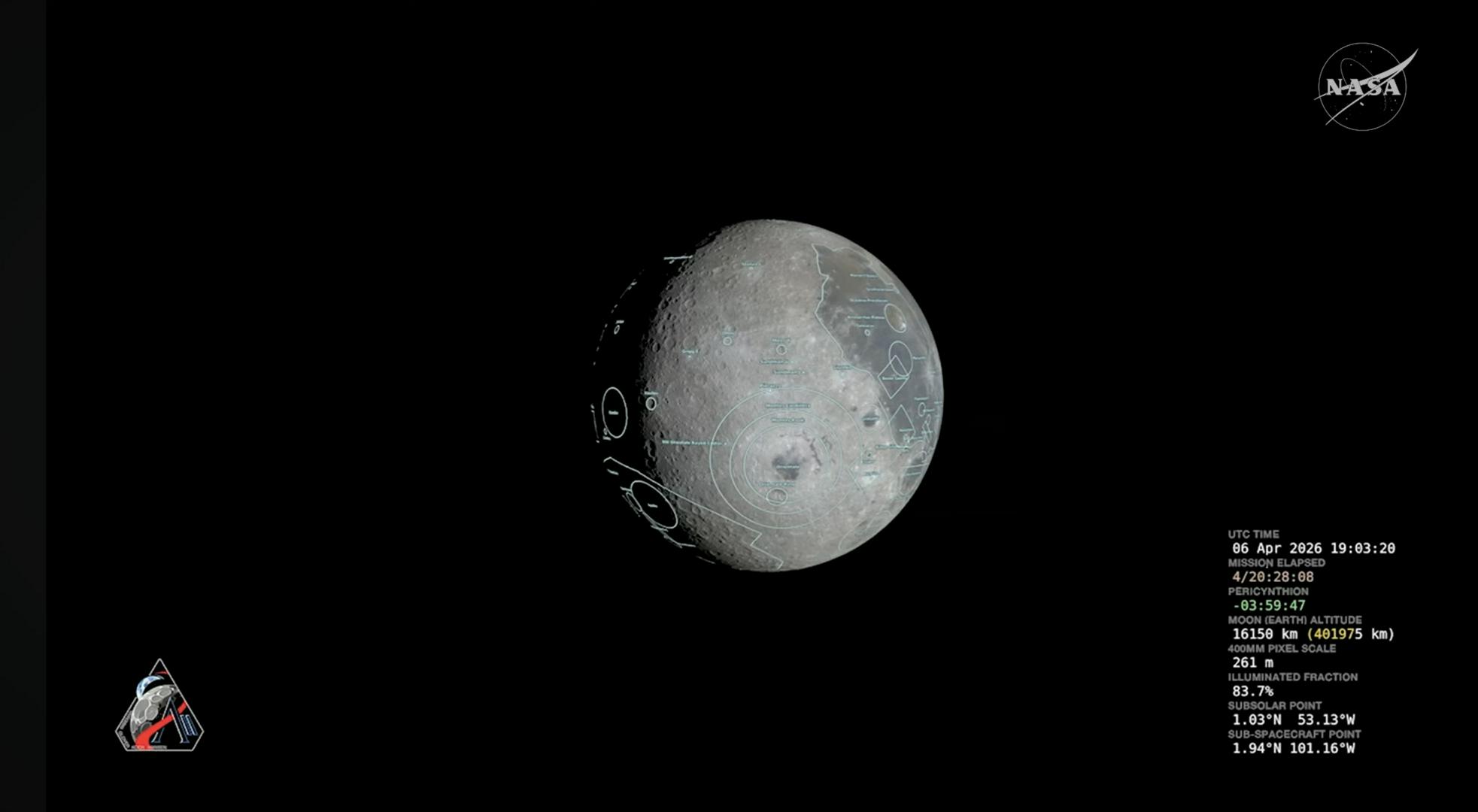
The last time humans ventured beyond Earth orbit was December 1972. Apollo 17. Gene Cernan and Harrison Schmitt walked on the lunar surface. Then they climbed back into their spacecraft, lifted off, and left. And for 54 years — no human being went back. That changes in six days. Artemis II will carry four astronauts on a 10-day journey around the Moon and back to Earth. Not a landing. Not yet. But a free-return trajectory that will carry them farther from Earth than any human being has traveled since the final Apollo mission — swinging them around the far side of the Moon before gravity pulls them back home. The crew: Reid Wiseman — Commander. A Navy test pilot and veteran astronaut who has already spent 167 days aboard the International Space Station. Victor Glover — Pilot. A Navy aviator and NASA astronaut who will become the first person of color to travel beyond Earth orbit. Christina Koch — Mission Specialist. A NASA astronaut who holds the record for the longest single spaceflight by a woman, spending 328 consecutive days in space. Jeremy Hansen — Mission Specialist. A Canadian Space Agency astronaut and former Royal Canadian Air Force fighter pilot. This will be his first spaceflight — and he will become the first Canadian to leave Earth orbit. Four people. Four firsts. One mission. They won't land on the Moon. But they will do something that hasn't happened in over half a century: they will see it up close, with their own eyes, through a window, from a spacecraft they are flying themselves. They will watch it fill the entire frame as they swing around its far side — a view so rare that only 24 human beings in history have ever experienced it. All of them in the 1960s and 70s. The entire mission will be streamed live by NASA. Every burn. Every maneuver. Every moment the crew looks out that window at a Moon that suddenly isn't a dot in the sky anymore — it's a world, and they're next to it. The launch window opens April 1 at 4:20 UTC. Six days from now. We are

justme

🚨 BREAKING: We may not be as alone as we once thought… A small, ancient space rock has just shaken everything we know about life in the Universe. Japanese scientists studying asteroid Ryugu have confirmed something extraordinary: within just 5.4 grams of material brought back by the Hayabusa2 mission, they found all five nucleobases - the essential building blocks of DNA and RNA. ✅ Adenine ✅ Guanine ✅ Cytosine ✅ Thymine ✅ Uracil For the first time ever, a single celestial body contains a complete and balanced set of the molecules needed to store and pass on life’s information. Let that sink in… 🌌 This isn’t just chemistry. This is the language of life - written in the dust of space. 💡 What does it mean? It suggests something truly mind-blowing: The ingredients for life may not be rare at all… they could be everywhere. Scientists now believe asteroids like Ryugu may have delivered these building blocks to early Earth, seeding our planet long before life began. Even more fascinating - Ryugu likely formed in a water-rich environment, where these complex molecules could slowly assemble over millions of years. And here’s the big question… If the recipe for life exists across the Solar System - or even the galaxy - then… 👉 How many other worlds have already used it? We still don’t know how these molecules became living organisms. But one thing is becoming clearer with every discovery: 🤔 Life might not be a miracle unique to Earth… 😲 It might be a cosmic inevitability. And that changes everything. What do you think — are we alone? 👇 #Space #Asteroid #Science #Astronomy #OriginsOfLife #NASA #Hayabusa2 #Ryugu #Universe #Cosmos #LifeInTheUniverse