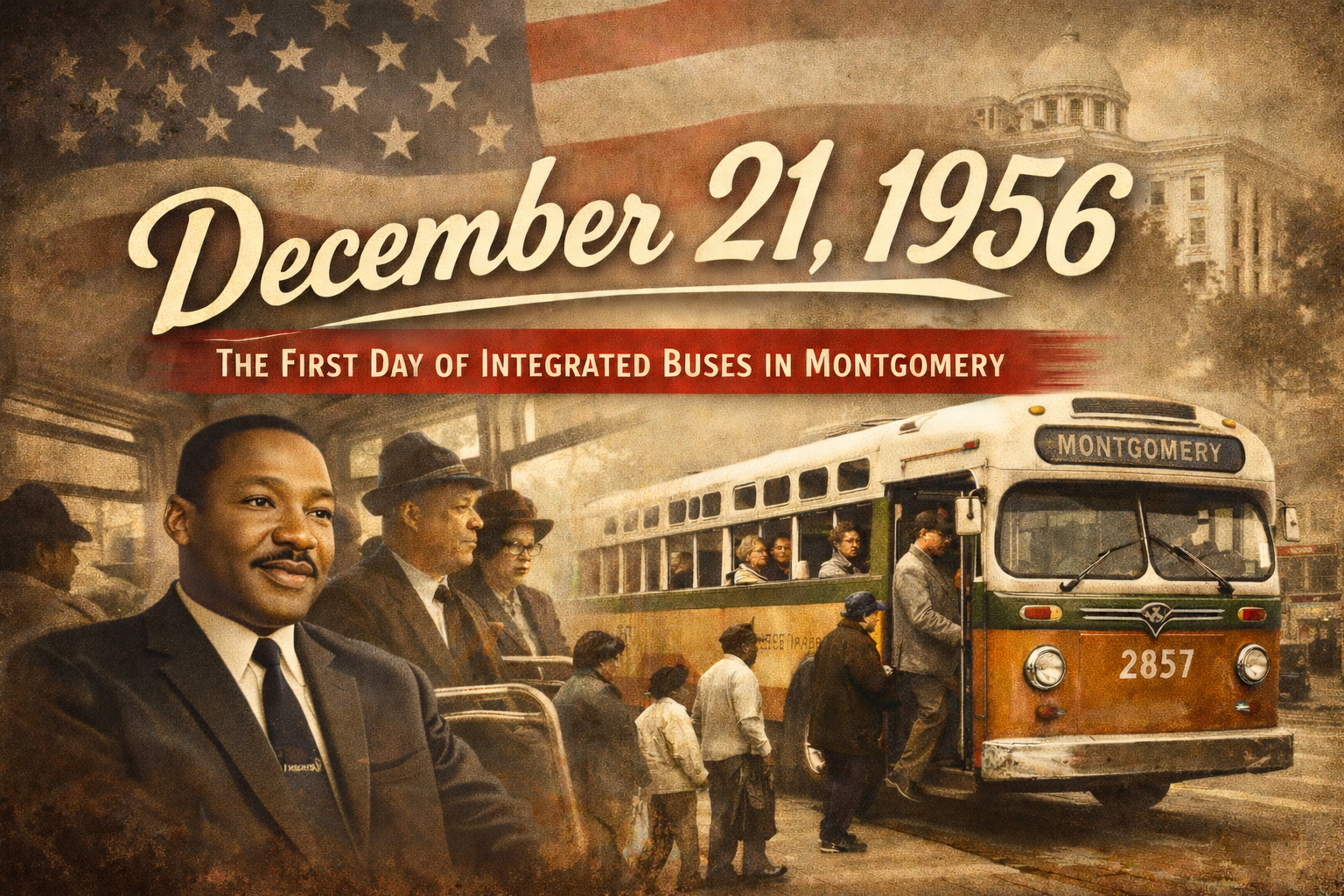
December 21, 1956 is often remembered as the end of the Montgomery Bus Boycott, but more precisely, it marks the first day Montgomery’s city buses operated as integrated in daily life. The legal battle had already been won, yet this morning mattered because it was when the ruling became visible, physical, and unavoidable.
After more than a year of walking, carpooling, and enduring harassment, Black residents of Montgomery boarded buses alongside white passengers under a new reality. The Supreme Court decision banning bus segregation had finally reached Alabama, and the city was required to comply. December 21 was the morning the mandate moved from paper to pavement.
That day, community leaders and ordinary citizens rode together. Among them was Martin Luther King Jr, who boarded a bus quietly, without fanfare. There were no speeches, no celebrations, and no cameras chasing spectacle. What made the moment powerful was its calm. People simply sat where the law now said they could sit.
The boycott itself officially ended when the legal order took effect, which is why some summaries list earlier dates. But December 21 endures in public memory because it represents the first lived experience of change. It was not just a court victory. It was a morning commute transformed by discipline, unity, and resolve.
For 381 days, Montgomery’s Black community refused to accept injustice as routine. On December 21, 1956, routine finally changed. History did not announce itself loudly that morning. It showed up on time, paid its fare, and took a seat.
#MontgomeryBusBoycott #CivilRightsHistory #December21 #AmericanHistory #BlackHistory