1/1

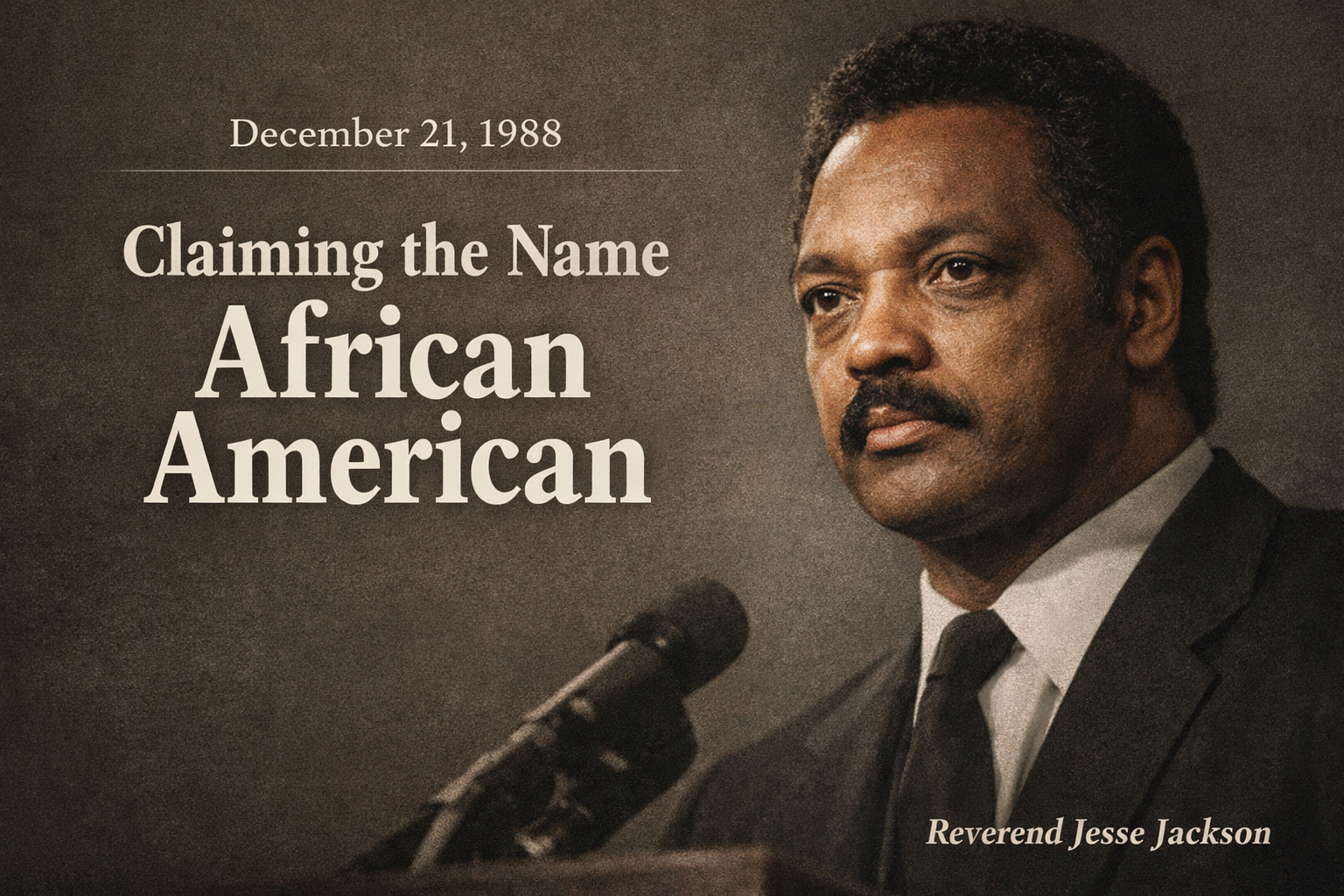
December 21, 1988 marked a subtle but powerful shift in public language. Around this time, Jesse Jackson and other prominent Black leaders encouraged broader use of the term African American, signaling a move toward self-definition rooted in heritage rather than description alone. The push was not about erasing the word Black or ranking one label above another. It was about choice, context, and power. African American emphasized ancestry, history, and cultural lineage tied to the African diaspora, much like how other ethnic groups in the United States name themselves. For many advocates, it framed identity as part of a longer historical arc rather than a reaction to skin color assigned by others. Jackson argued that names matter because they shape how people see themselves and how they are treated. In the late 1980s, Black Americans were navigating increased visibility in politics, media, education, and global affairs. Language became part of that visibility. To name oneself was to assert agency. The shift did not happen overnight, nor was it universally accepted. Some embraced African American immediately. Others preferred Black and still do today. What mattered then, and what still matters now, is that the discussion centered on self-identification rather than labels imposed from the outside. December 21 stands as a reminder that history is shaped not only by laws and marches, but also by words. Sometimes progress is loud. Sometimes it is quiet. Sometimes it sounds like a name spoken clearly and claimed with intention. #africanamerican #blackhistory #jessejackson #december21 #identity This is a historical post shared because today is the date it occurred. Please read it as history, not as a personal stance or affiliation.
2025-12-21

DENNIS T. MENACE
And still with the labeling, the labeling to keep themselves apart from all others, a label to try to confer being special and above others! The only way people are going to learn to get along is to drop the labels, your not African American unless you were born in Africa and immigrated to America and become a naturalized citizen, then and only then can you legitimately call yourself an African American!
12-22
Arlington, WA
Reply(1)
3

SedyRedy
👊☃️🌞🎄💯🎁🫡🌹
12-22
Milwaukee, WI
Reply
More comments ...
write a comment...