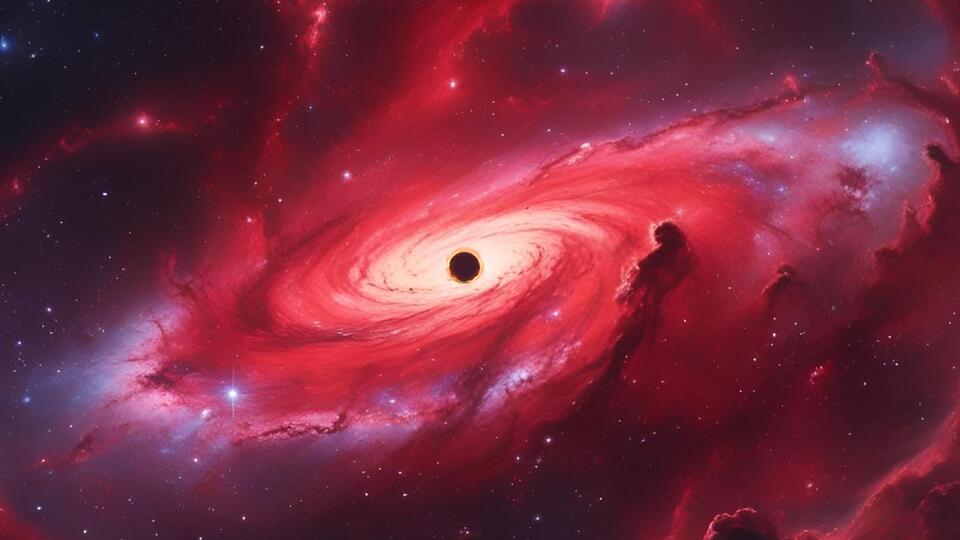
Melvin Mosley+FollowAre Little Red Dots Baby Black Holes?Okay, get this: those weird 'Little Red Dots' the James Webb Space Telescope keeps spotting? They might actually be cosmic baby cribs for massive black holes that didn’t even need to be born from stars. Scientists think these dots could be where black holes just collapse straight out of giant gas clouds, skipping the whole star phase. If true, this could explain why we see so many supermassive black holes way earlier in the universe than we ever expected! #Science #JamesWebb #SpaceMystery10Share
Melvin Mosley+FollowUniverse’s Dark Side Just Got ExposedScientists just dropped the sharpest look yet at the universe’s dark energy—the mysterious force making space expand faster and faster. After six years and 669 million galaxies, they combined four different ways of studying the cosmos for the first time ever. The result? We’re closer than ever to cracking what’s driving most of the universe, but there’s still a cosmic puzzle: galaxies aren’t clustering like our models predict. Next up: even more galaxies and, hopefully, answers! #Science #DarkEnergy #SpaceMystery50Share
megangibson+FollowUniverse’s Biggest Ring? Mind. Blown.Astronomers just found a cosmic ‘Big Ring’ that’s 1.3 billion light years across—way bigger and weirder than what our universe is supposed to allow. It’s a giant loop of galaxies that looks like a corkscrew in space, and if it’s real, it could totally mess with the basic rules of cosmology. Are we about to rewrite the story of the universe? Stay tuned, because this is wild! #Science #BigRing #SpaceMystery10Share
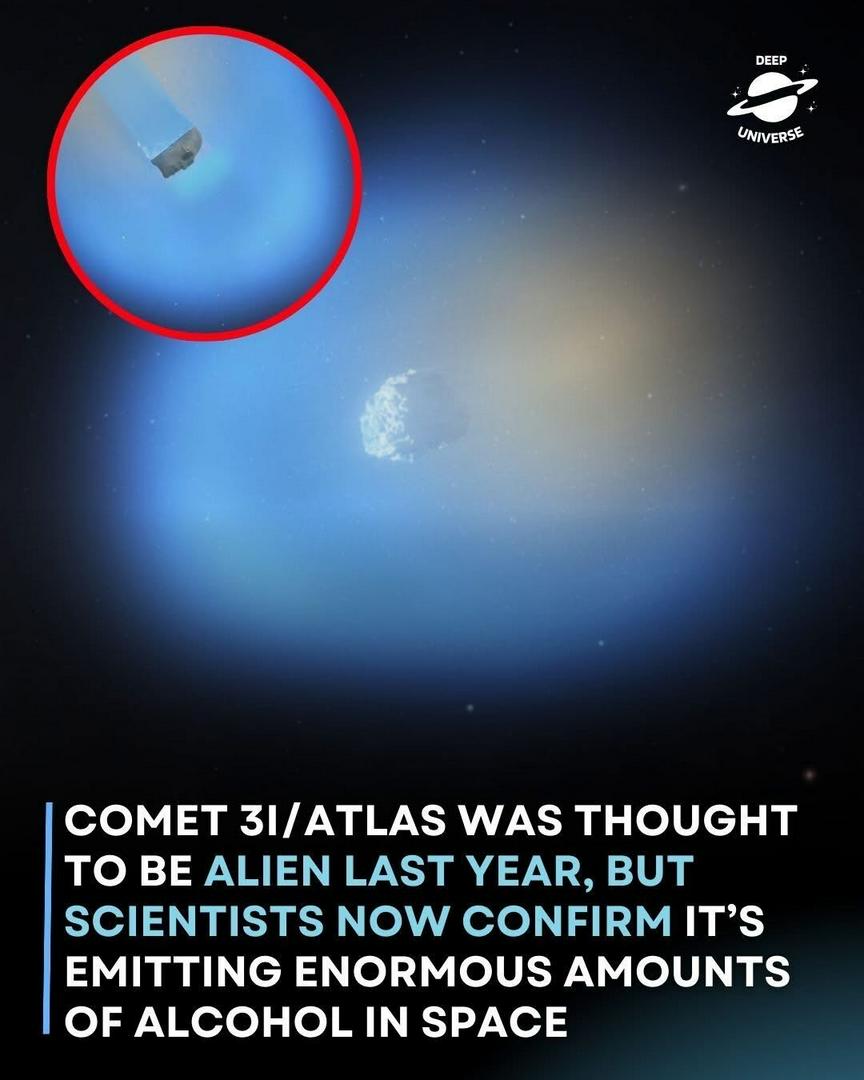
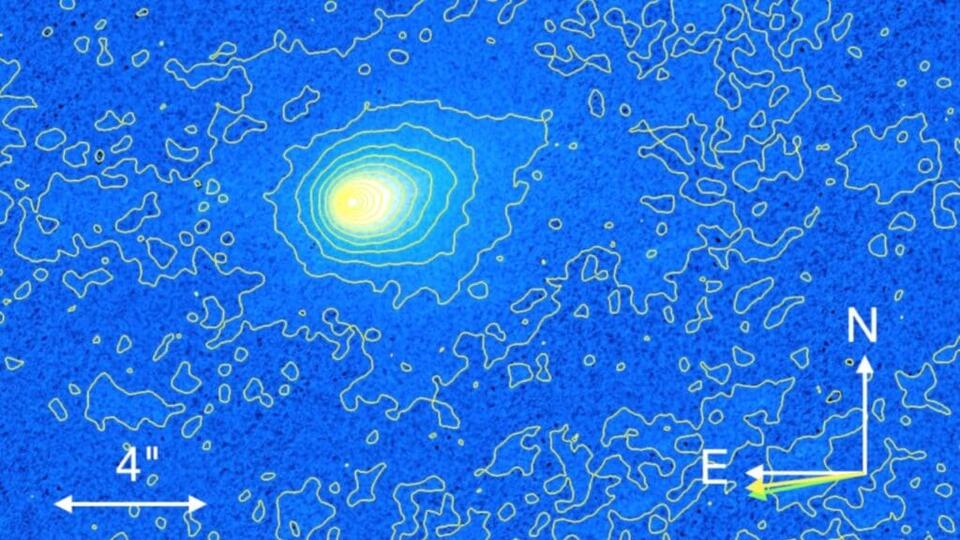
megangibson+FollowComet ATLAS Just Went Full Sci-FiComet 3I/ATLAS is breaking all the rules! This interstellar visitor just erupted in X-rays, surrounded by a massive 400,000-km halo—something scientists say is 'difficult to explain.' Instead of a neat, compact glow, telescopes are seeing a wild, sprawling cloud and even weird jets wobbling toward the Sun. Basically, ATLAS is rewriting what we thought we knew about comets and giving astronomers a cosmic mystery to obsess over. Catch it before it vanishes for good! #Science #CometATLAS #SpaceMystery356Share
Michelle York+FollowStar Explodes Twice & Breaks ScienceImagine a star so extra, it exploded not once but TWICE—and astronomers caught the whole thing on camera! This wild cosmic event, dubbed AT2025ulz, stayed bright way longer than anyone thought possible and is basically rewriting what we know about how stars die. Some scientists think a newborn black hole or magnetar might be behind the double drama. Space just keeps getting weirder, and honestly, I’m here for it! #Science #SpaceMystery #StarExplosion30Share
Richard Vaughan+FollowDid We Just Find a New Solar System Oddball?Okay, this is wild: astronomers just spotted a super-icy, super-distant object called Ammonite way past Neptune. It’s only the fourth of its kind ever found and its orbit is so weird, it’s making scientists rethink the whole ‘Planet Nine’ theory. Basically, our solar system’s outer edges are way more mysterious than we thought—and Ammonite just threw another curveball into the mix! #Science #SpaceMystery #PlanetNine00Share
Melvin Mosley+FollowSpace’s Red Dots Are Baby Black Holes?!Remember those weird red dots in James Webb Telescope pics? Scientists finally cracked the case—they’re actually young, growing supermassive black holes! These cosmic babies are still wrapped in gas clouds, gobbling up material and glowing red hot. Turns out, they’re not as massive as we thought, but still weigh millions of times more than our Sun. Basically, we’re catching black holes in the middle of their cosmic growth spurt. How wild is that? #Science #JamesWebb #SpaceMystery10Share
Jessica Hodge+FollowJupiter’s Secret Oxygen Stash RevealedJupiter’s got a wild secret: it’s hiding 1.5x more oxygen than the sun! Scientists used new computer models to peek beneath those famous clouds and found way more oxygen than anyone expected. Turns out, slow atmospheric mixing lets water-rich ices pile up deep inside. This totally flips what we thought about how Jupiter—and maybe other planets—formed. Imagine what else is lurking in our solar system! What would you want to discover next? #Science #Jupiter #SpaceMystery20Share
megangibson+FollowChina’s ‘Sky Eye’ Solves Space’s Wildest MysteryYou know those weird, powerful space flashes that had scientists stumped for years? China’s giant ‘Sky Eye’ telescope just cracked the case! Turns out, these fast radio bursts (FRBs) aren’t alien signals—they’re coming from two stars locked in a wild cosmic dance. After a decade of guessing, researchers finally tracked the bursts’ rhythm and matched it to a binary star system. Space just got a little less mysterious, but way more epic! #Science #SpaceMystery #SkyEye20Share
Zachary Gutierrez+FollowThis Star Is Breaking Physics!Okay, get this: astronomers just found a neutron star (M82 X-2) that’s shining 10 million times brighter than the Sun—literally brighter than physics says is possible. Instead of exploding, it keeps gobbling up gas and blasting out X-rays, totally ignoring the rules. Scientists are obsessed because it’s forcing them to rethink how stars, gravity, and magnetic fields actually work. The universe just loves breaking its own rules, huh? #Science #SpaceMystery #NeutronStar51Share