Tag Page ScienceNews

#ScienceNews
Curiosity Corner

Can You Tell a Dyed Geode from a Real One? Dyed geodes look natural at first glance, yet their bright blues, pinks, and greens often come from a controlled coloring process. Natural geodes rarely form such vivid tones, which is why sellers enhance them. Today, about fifty to sixty percent of small decorative geodes are artificially colored, and brightly dyed pieces often outsell natural ones by nearly two to one. The process begins when a geode is cut open to reveal its crystal chamber. The halves are cleaned to remove dust, then soaked in a heated dye bath. Tiny channels between quartz crystals act like capillaries, drawing in pigment. A medium geode can absorb nearly its own weight in liquid during a full day of soaking. Some workshops rotate geodes periodically to ensure even color. Crystal density affects the final hue. Dense clusters absorb less dye, producing pastel tones, while open pockets take in up to thirty percent more pigment, creating bold saturated shades. Deep purple and bright teal are especially popular, mimicking rare natural minerals at lower cost. Temperature also matters: hotter baths push dye deeper into the crystal, while cooler baths keep it near the surface. Layered or multistage baths produce gradients rarely seen in nature. Collectors often spot dyed geodes by observing sharp color bands near cut edges, faint staining on the outer rind, or solid pigment in crystal tips. Newly dyed stones may feel slightly heavier because absorbed liquid has not fully evaporated. Dyed geodes remain popular because they combine natural crystal formation with human creativity. Artists continue experimenting with pigments, metallic finishes, and gradient effects, turning ordinary stones into striking decorative pieces. Millions of dyed geodes are sold each year, proving even a simple rock can captivate with color and design. #Science #America #USA #News #USNews #ScienceNews

Curiosity Corner

America’s Supervolcano: When Will It Erupt? The Revealing Evidence Beneath Yellowstone National Park lies one of the planet’s largest volcanic systems, a supervolcano capable of eruptions exceeding 240 cubic miles of magma. An eruption of this magnitude would reshape landscapes, blanket vast regions in ash up to several feet deep, destroy forests, and disrupt global climate for years, potentially lowering temperatures worldwide. The Yellowstone caldera spans roughly 34 by 45 miles, about the combined size of Rhode Island and Delaware, and contains over 10,000 geothermal features including geysers, hot springs, mud pots, and fumaroles, which are vents releasing steam and volcanic gases. The magma chamber extends 55 miles long, 18 miles wide, and 3 to 9 miles deep. Most of it is solid rock, while only 16 to 20 percent is molten, far below the 50 percent needed to fracture the crust and allow a supereruption. Yellowstone’s last supereruption, 640,000 years ago, expelled nearly 240 cubic miles of material, covering much of North America in volcanic ash and altering ecosystems for centuries. Earlier events 1,300,000 and 2,100,000 years ago were even larger, illustrating the irregular timing and immense power of supervolcanic activity. The U.S. Geological Survey estimates the annual chance of a supereruption at about 1 in 730,000. More likely hazards include major earthquakes and sudden hydrothermal explosions. Scientists monitor thousands of earthquakes, ground movement via GPS and satellites, gas emissions including carbon dioxide and sulfur dioxide, heat flow, and hot spring chemistry. Current readings show slow uplift and subsidence, low sulfur dioxide, and no sustained earthquake swarms, indicating deep cooling magma. Any future supereruption would be preceded by years of escalating seismic, chemical, and deformation signals, none of which are present today. #Supervolcano #Yellowstone #Science #ScienceNews #America #News #USA

Curiosity Corner

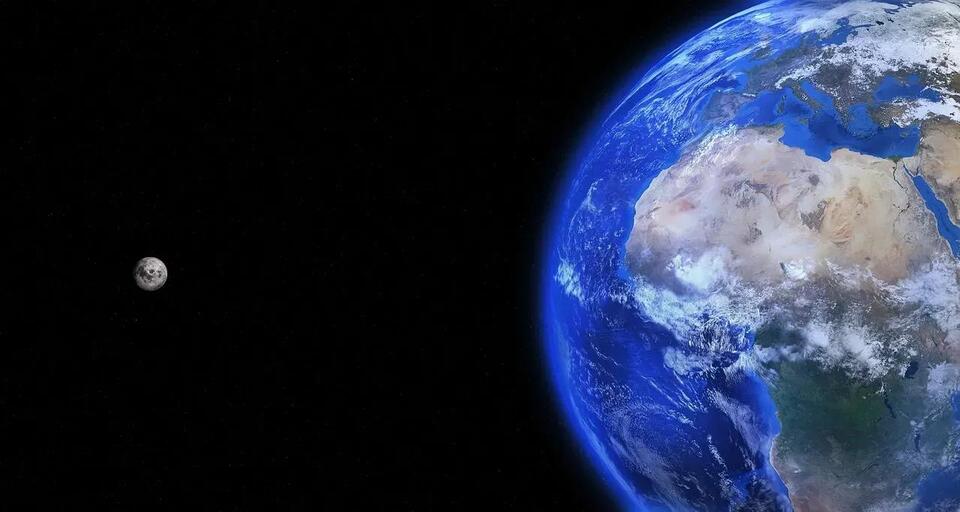
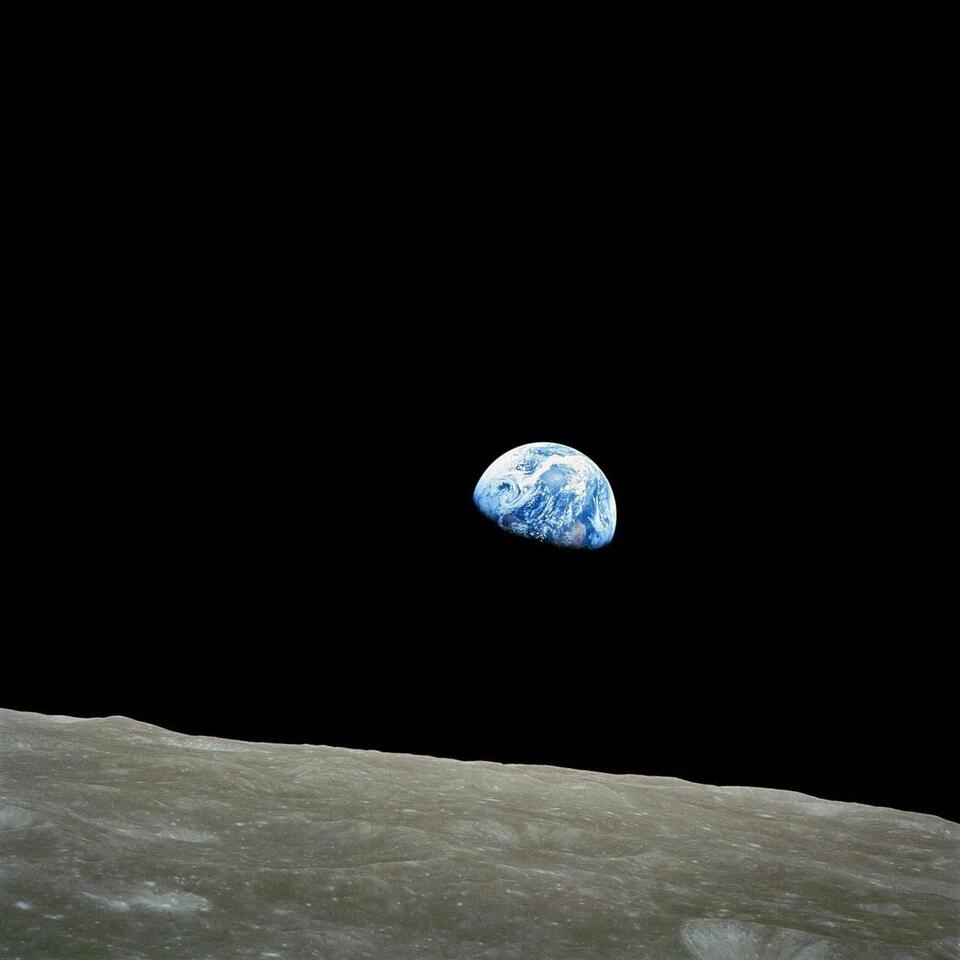
The Kurzweil Paradox and When Humanity Should Leave Earth The Kurzweil paradox shapes modern thinking about when humanity should begin permanent expansion beyond Earth. It arises from the principle that technology advances at an accelerating rate. If propulsion efficiency improves each decade, if radiation shielding becomes more effective, and if closed loop life support grows more reliable, then any mission launched today could be eclipsed by one launched later. In extreme models, a future crew could overtake an earlier one simply because its technology is superior. Forecasting data reinforces this dilemma. Computing power has increased roughly a million fold in the past fifty years. Energy storage density has doubled about every ten years. Spacecraft reliability improves significantly with each hardware generation, reducing mission failure rates and human risk. These trends argue strongly for waiting. Ray Kurzweil predicts a technological singularity around 2045, when advances in AI, robotics, and space technologies could dramatically change what is possible. Stephen Hawking also briefly noted that humanity may need to begin colonizing other worlds to avoid long‑term existential risks. Delay carries its own costs. Earth now supports over eight billion people and is expected to approach ten billion by mid century. Environmental strain, resource competition, and geopolitical instability raise the value of independent off world settlements. Strategic studies from space agencies and research institutions place a realistic window for initial large scale Mars settlement between 2035 and 2050, when propulsion, automation, and life support maturity intersect with rising global risk. The Kurzweil paradox demands a threshold where technological gains slow while the cost of waiting rises. Leave too early and settlements may fail. Leave too late and the opportunity may disappear. When does waiting stop being wise and start becoming dangerous? #Science #ScienceNews