Tag Page SNAPVoices

#SNAPVoices
Corey Walton

SNAP and the Reality for an Older Stock Clerk

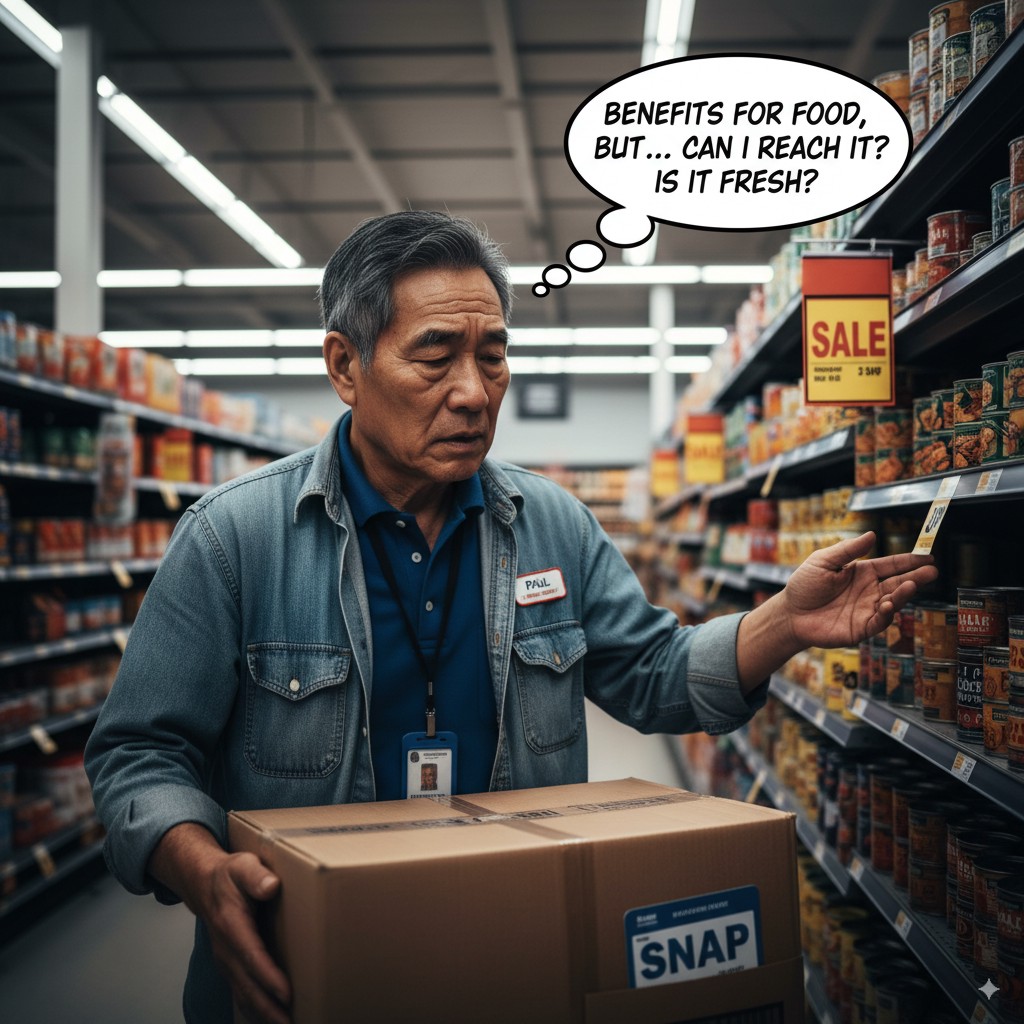
I’m 62 and work stocking shelves at a big supermarket. It’s physical work and the pay is low; my pension is small, so I applied for SNAP. At work I move heavy boxes from the back to the shelves, and often sale items are placed high or in corners. I can’t always pick the cheapest or the products closest to expiry—I just put stock where there’s space. After work I sometimes find what I bought is past its prime or not suitable, and returning items isn’t always easy. Some older people in the neighborhood can’t travel to better stores or pick fresh food because of transport and energy limits. Having SNAP on a card matters less when there’s nothing suitable nearby. People say “you’ve got benefits, that’s enough,” but when you can’t find the right food, the benefit is only a number. Points to discuss: How can SNAP be made more accessible for older adults? Do we need more community support like delivery or shopping help? Should store layouts and promotions consider vulnerable shoppers? #SNAPLife #SNAPVoices

SNAP and the Reality for an Older Stock Clerk
Kathryn Lucas

SNAP and Bulk Buying — The Upfront Cash Problem

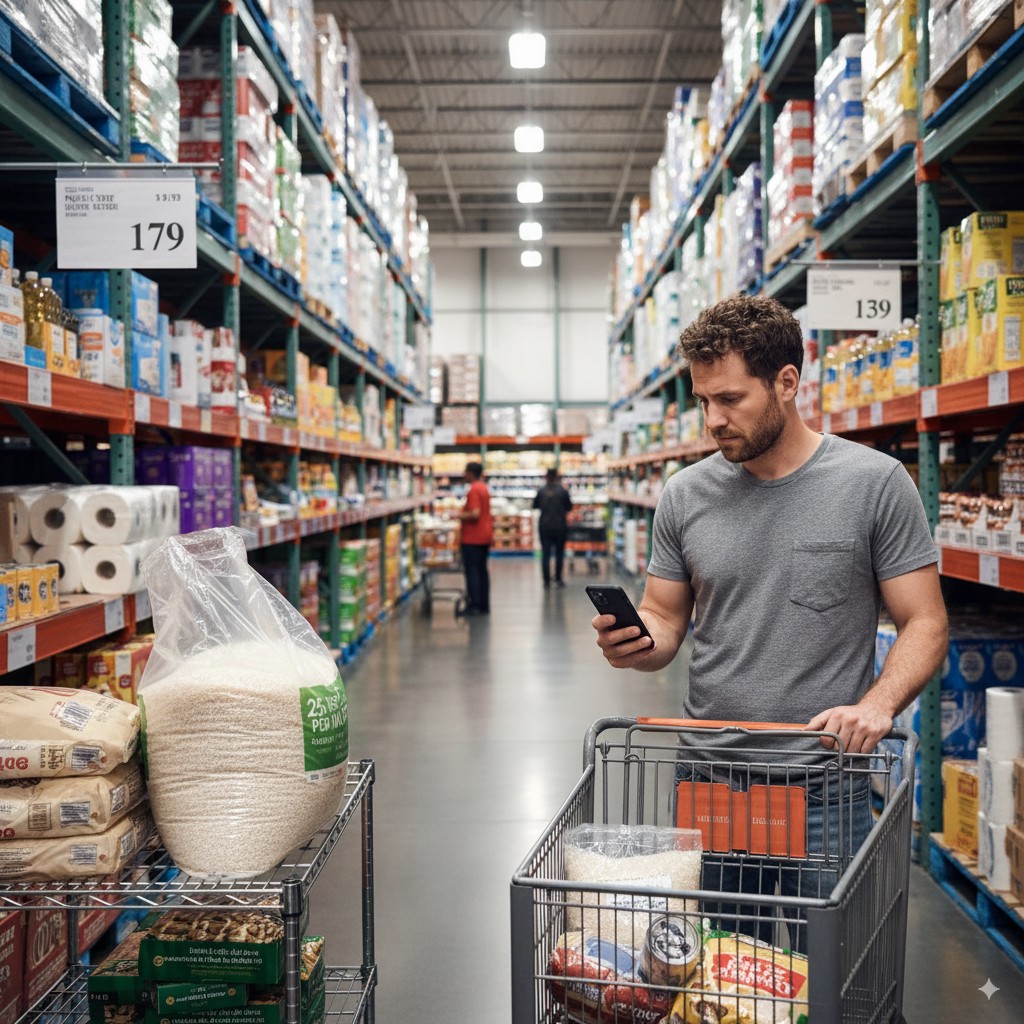
I’m a 30-year-old who tries to be frugal. When I look at unit prices, buying in bulk at the warehouse store is a smart move—rice, beans, paper products: cheaper per unit, less frequent trips. But bulk means a big upfront cost. Even if SNAP covers the items, I still need the cash to buy a large package at once. Often I don’t have that lump sum in my wallet. A month ago I compared a 25-lb bag of rice to several smaller bags; the big bag would save me money over time, but it required an upfront payment I couldn’t float that week. So I bought smaller bags at a higher per-pound cost. It’s ironically more expensive and more time-consuming. When affordability is judged by unit price but daily life is judged by cash on hand, the system pushes people toward worse choices. Would it make sense for programs or stores to offer micro-financing, split payments, or community bulk-buy cooperatives for SNAP users so the long-term savings of bulk purchases become accessible to those without upfront cash? #SNAPLife #SNAPVoices

SNAP and Bulk Buying — The Upfront Cash Problem
lewisjessica

SNAP and the Thanksgiving Turkey

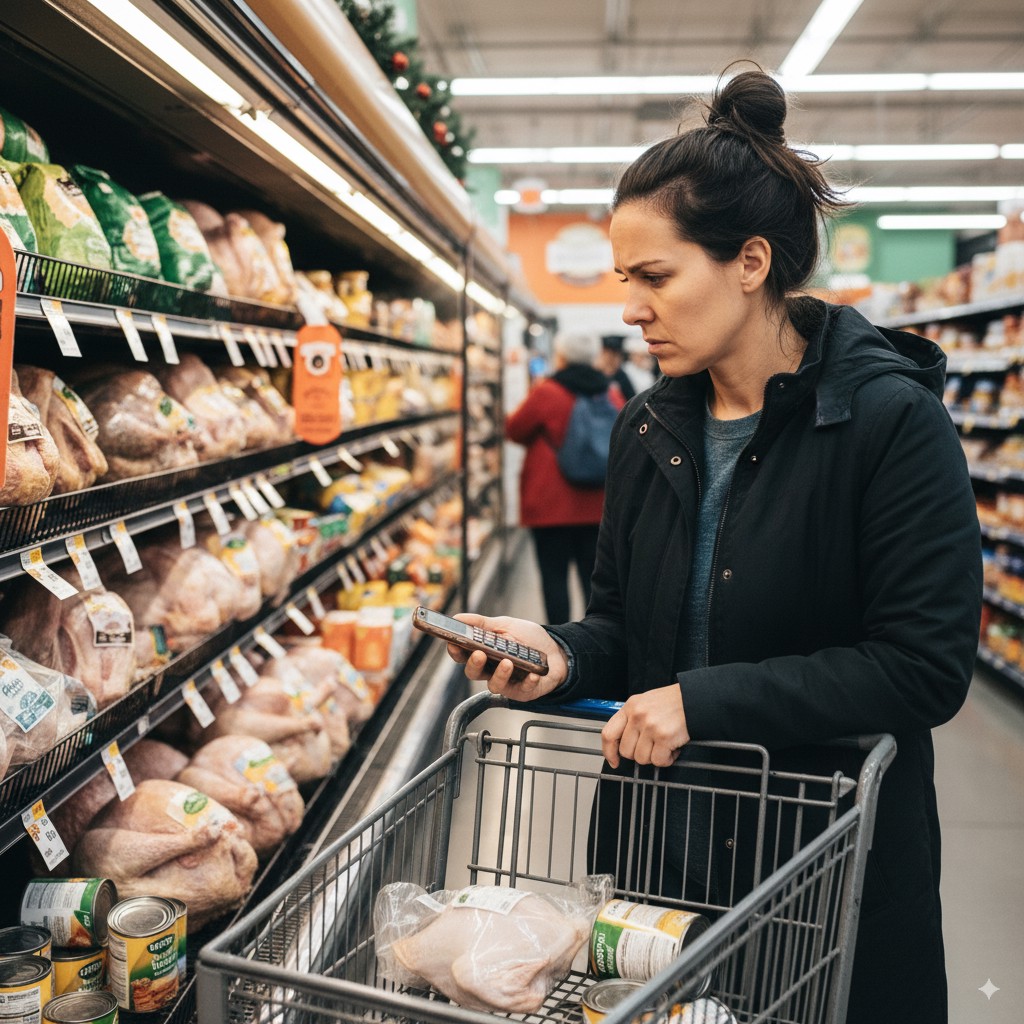
I’m a 36-year-old parent, and Thanksgiving has always been the one day my family tries to feel whole. This year I planned to buy a turkey and a few sides—something that smells like home. SNAP helps cover our groceries every month, but the timing of benefits isn't the same as the timing of holidays. My benefits hit my card earlier in the month, and by the time Thanksgiving rolled around my account was stretched thin from bills and rent. I went to the store and saw all the turkeys on sale. The price looked doable until I did the math: buying a turkey plus extra sides would wipe out the rest of my monthly food money. I stood there thinking about my kids’ faces, the neighbors who always come by, and the idea that a holiday meal shouldn’t be a luxury. I ended up buying only a small chicken and some canned yams. We made it through, but the meal felt patched together. Many families juggle benefit timing, pay schedules, and seasonal needs. Is the program’s monthly cadence unintentionally making holidays harder for low-income households? Should there be a way to adjust benefit timing or provide targeted holiday support so everyone can have that one familiar meal? #SNAPLife #SNAPVoices

SNAP and the Thanksgiving Turkey
Jordan Phillips

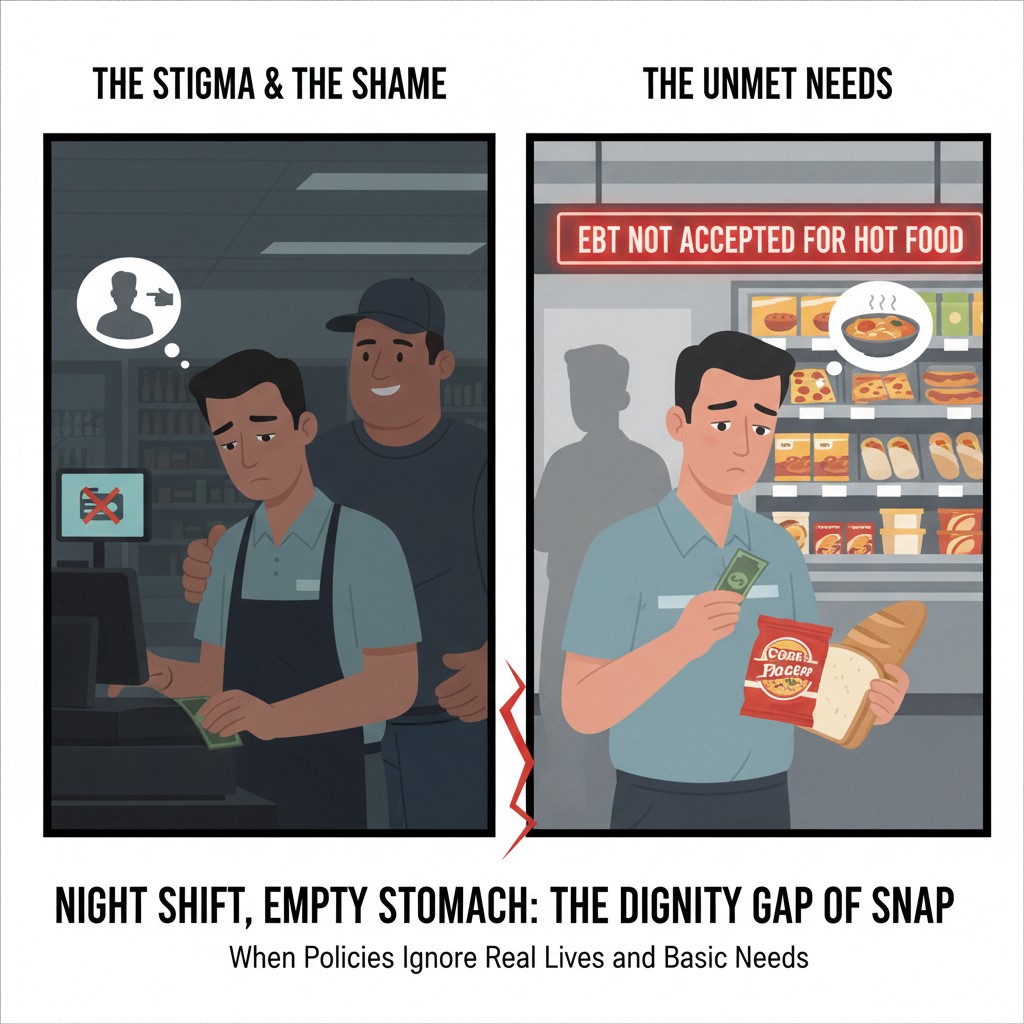
SNAP and the Struggles of a Night-Shift Cashier

I work nights as a cashier at a 24-hour convenience store—been doing it five years. Nights are quiet, but there are truck drivers and temp night workers who stop by. I use SNAP to buy groceries. Every time I pay, I put my EBT card aside and let others go first—just don’t want anyone to see me using benefits. Once a regular driver noticed me using the EBT card; he paused and quietly offered a kind word. I felt thankful but also ashamed. My wages are low even with the hours; SNAP helps a lot, but the shame of being seen is real. Worse, many hot or prepared foods at the store can’t be bought with SNAP, yet after a long shift I crave something warm and can’t afford it. I end up watching others buy hot food. Points to discuss: Should SNAP be more private and destigmatized? Should hot prepared foods be allowed to help night-shift and people without kitchens? Do store product mixes exclude the real needs of low-income shoppers? #SNAPLife #SNAPVoices

SNAP and the Struggles of a Night-Shift Cashier
Kristen Gutierrez

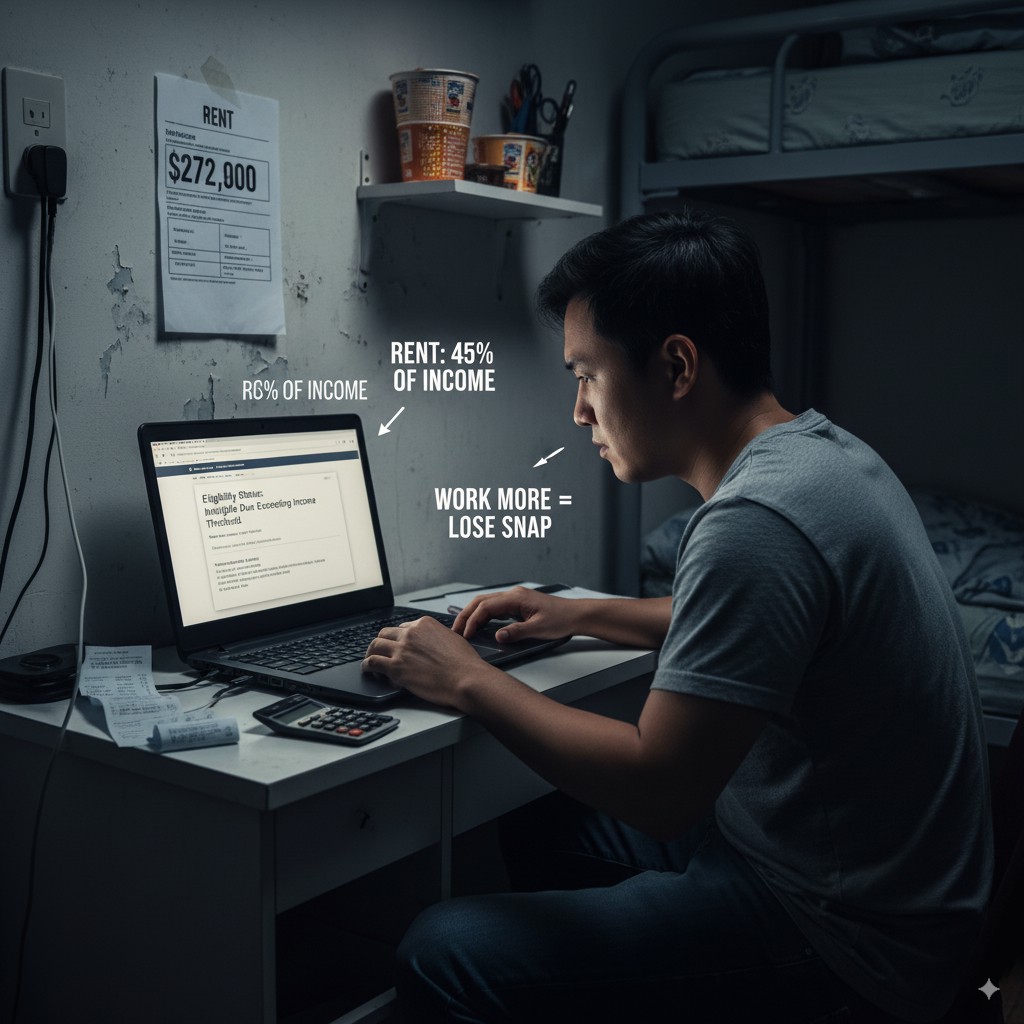
SNAP vs. Rent — The Tough Choices of a Young Worker

I’m 28 years old and rent a room in a shared apartment. Rent has been climbing nonstop, and every month nearly half of my paycheck goes to the landlord. SNAP is what helps me stretch the rest of my budget when it comes to food. But here’s the issue: SNAP’s eligibility rules are strict. If my income goes just a little over the limit, I lose the benefit. Sometimes when I pick up extra shifts, I end up making “too much,” and SNAP is taken away. Rent hikes aren’t counted in the formula, but they drain my wallet just the same. So I’m caught in a frustrating tradeoff: either I work fewer hours to keep SNAP, or I take extra shifts and lose the support. Shouldn’t the program be more flexible, taking into account the rising cost of living? With rent as high as it is, these rigid thresholds feel out of touch with reality. #SNAPVoices #SNAPLife

SNAP vs. Rent — The Tough Choices of a Young Worker
Matthew Wilson

The Dilemma of Enforcing SNAP Rules

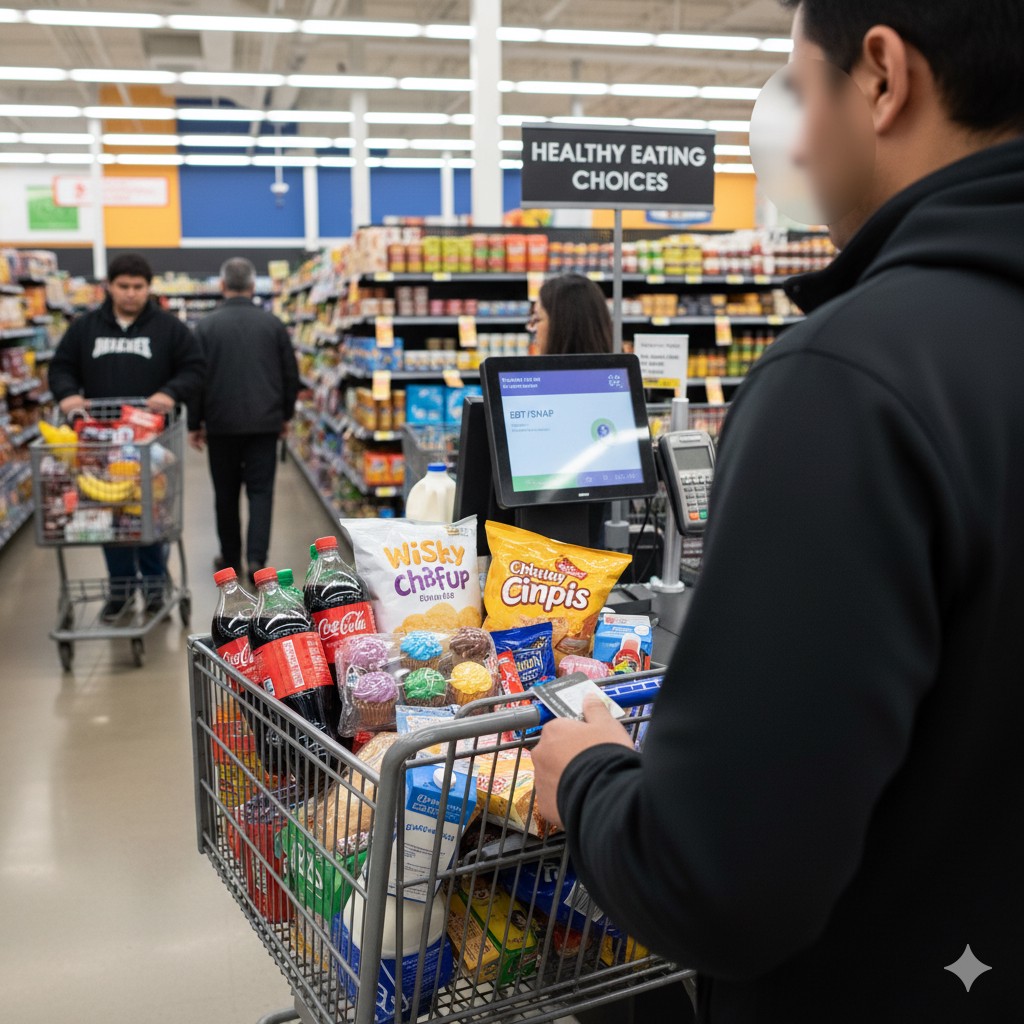
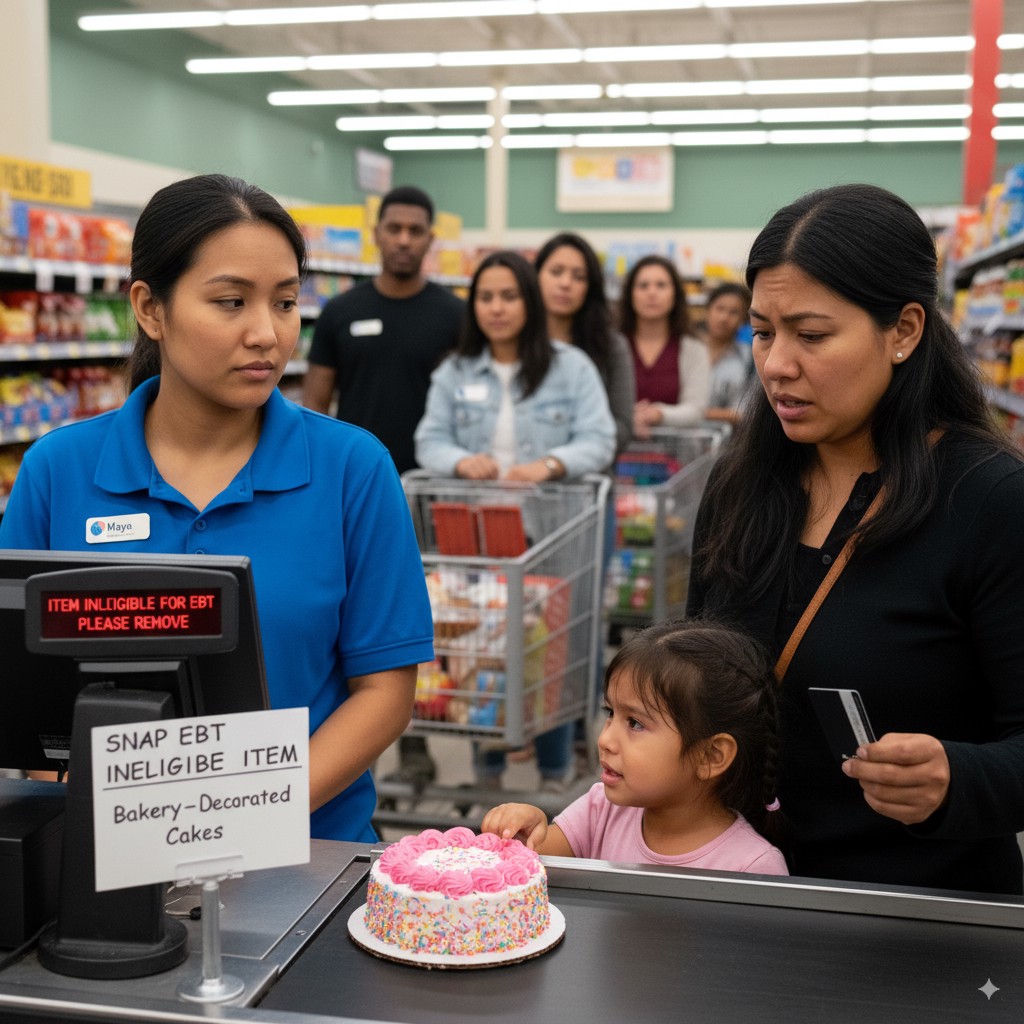
I’m 27 and work as a cashier at a neighborhood grocery store. Recently, management has been stressing that we must strictly follow SNAP rules, because if an item that isn’t eligible goes through, the store could face fines or penalties. Just last week, a customer came through with bread and a small cake. When she swiped her SNAP card, the system immediately flagged the cake as ineligible. The customer looked embarrassed, and her child started crying. All I could say was, “That’s the policy,” but it didn’t feel good. To avoid risk, my supervisor even pre-blocked certain items that might be questionable. But that only made more shoppers feel like we were being “heartless.” As frontline workers, we’re stuck between following compliance and trying to show basic empathy to our neighbors. I understand SNAP is meant to ensure access to essential food, but the way it’s enforced often lacks flexibility. Shouldn’t there be clearer guidance—or limited exceptions—for situations like a child’s birthday cake or specific nutrition items? That way we could stay compliant without taking away small moments of joy. Do you think SNAP enforcement should allow more flexibility, or is strict compliance the only fair way? #SNAPVoices #SNAPLife

The Dilemma of Enforcing SNAP Rules
Lisa Goodman

SNAP and the Birthday Cake

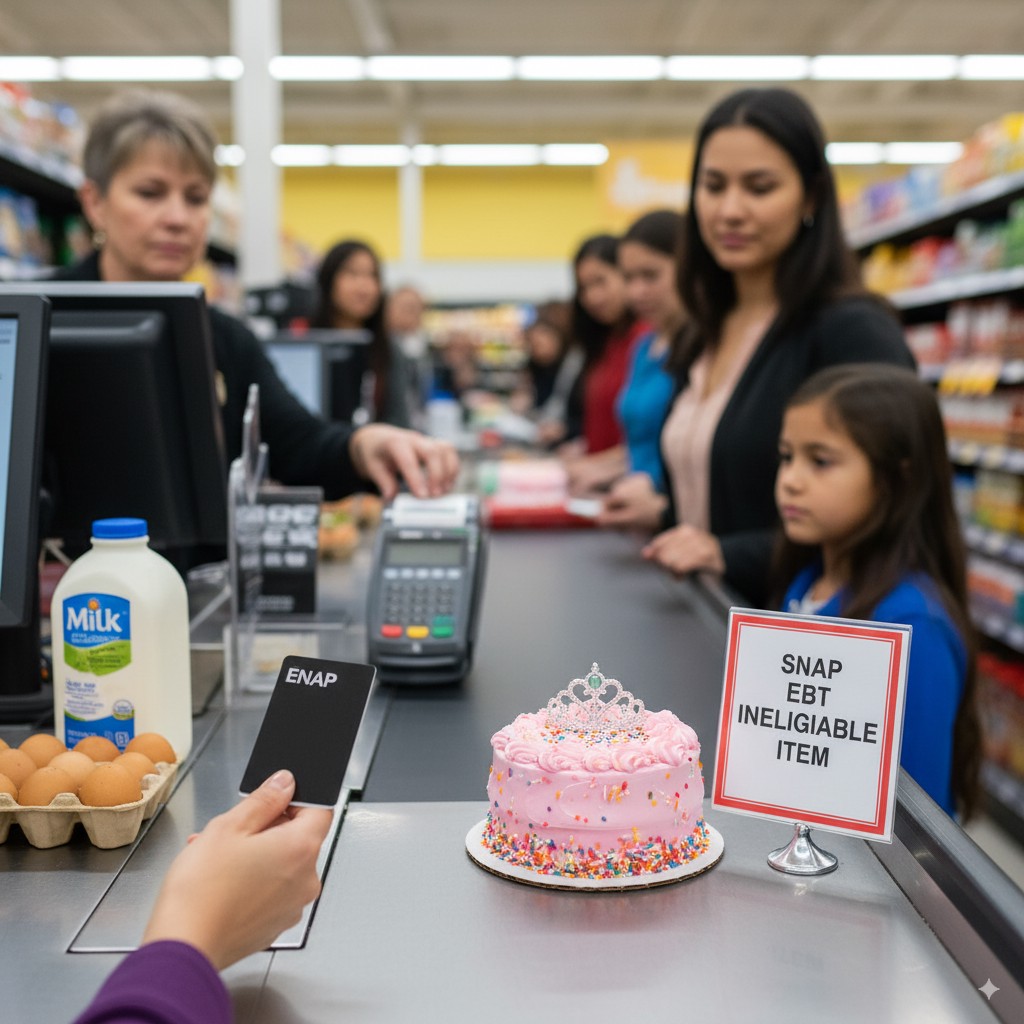
SNAP and the Birthday Cake My daughter was about to turn six. It had been a really tight year. Almost every dollar I made went to rent and bills. The food on our table? That came from the SNAP benefits that hit my EBT card each month. I’d been promising her for a long time that on her birthday, I’d get her that princess cake she loved—the one with the pink frosting and rainbow sprinkles. We’d seen it at the grocery store a few times, and she’d always press her face against the glass display, refusing to leave. On her birthday, I took her to the store. I let her pick it out herself. She chose the smallest one, but her eyes were lit up. I carefully placed the cake in our cart, along with some milk and eggs. At the checkout, I pulled out my EBT card, just like always. The cashier scanned the milk and eggs, then picked up the cake. She turned it over, then looked at me with an apologetic smile. "I'm sorry," she said, "but you can't pay for this with SNAP." I was stunned. "Why not? It's food." "It's a prepared item from the bakery," she explained. "The rules say items with low nutritional value, like decorated cakes, aren't eligible. But you can use the card to buy flour, sugar, and eggs to make one yourself." My face burned. There were people in line behind me, and my daughter was looking up at me, her eyes full of hope. Make one myself? My oven broke last month, and it costs over a hundred dollars to fix—money I just don't have. And even if I had an oven, could these hands of mine ever make a princess cake that beautiful? I couldn't explain "prepared items" and "nutritional value" to a six-year-old. All I could do was crouch down and say, in the softest voice I could manage, "Honey, how about... how about we get something else? We can get some cookies." The light in her eyes just went out. She didn't cry, but she went silent. I took the beautiful princess cake out of the cart and handed it back to the cashier. On the walk home, my daughter didn't say a word. I know SNAP is meant to keep us fed, to provide nutrition. But on that day, I really wanted to ask the people who made the rules: isn't a child's happiness on her birthday a kind of nutrition, too? Why do these rules make the simplest celebration for a normal family so incredibly difficult? #SNAPVoices #SNAPLife

SNAP and the Birthday Cake
Angela Kelly

SNAP and Stability for Families

I’m a 38-year-old middle school teacher in Texas. I see kids come to school with empty lunchboxes, or sometimes with a single sandwich packed by a parent who works two jobs. SNAP is a lifeline for many of these families, but even with benefits, the food is often limited, repetitive, and barely enough to cover daily nutrition needs. One family I know relies on SNAP for all groceries. They spend nearly $400 a month on milk, bread, rice, and beans, but fresh vegetables, fruits, and lean proteins often get skipped because they’re more expensive or run out too fast. During school holidays, kids might go several days with less than ideal meals. The family makes do, but the stress is visible. I wish SNAP could be more flexible: cover culturally relevant foods, allow for seasonal purchases like fresh produce in summer, or even give a little extra for occasional treats for children. For example, a few extra dollars could allow parents to buy strawberries or a small treat for a birthday, helping children feel seen and celebrated. Small adjustments could reduce stress, improve nutrition, and support overall family well-being. This isn’t about giving handouts—it’s about giving families a chance to thrive rather than just survive. #SNAPLife #SNAPVoices

SNAP and Stability for Families
You've reached the end!