Tag Page LataraSpeaksTruth

#LataraSpeaksTruth
LataraSpeaksTruth

Remembering Esther Rolle

Esther Rolle was a presence you could feel before she even spoke. She carried a quiet strength that settled into every room and every role she touched. There was nothing forced about her. She led with dignity, warmth, and honesty, and viewers connected with her like she was family. She was born in Pompano Beach, Florida, the daughter of Bahamian immigrants who raised her in a home rooted in discipline and faith. That foundation shaped the way she moved through the world. She loved her people. She loved her culture. She loved truth. And she protected the characters she played with that same devotion. Her most beloved role introduced her to millions, but her talent extended far past one show. She was a trained actress long before television found her. She worked in theater. She pushed for meaningful stories. She fought for roles that reflected real life instead of stereotypes. She understood the power of representation long before it became a conversation. Esther Rolle’s gift was connection. She made people feel seen. She made tough moments feel real without making them hopeless. She played mothers, workers, leaders, and women who held everything together when the world felt heavy. She carried those stories with grace. She passed away on November 17, 1998, but her legacy did not fade. New generations continue to discover her work and feel the same warmth audiences felt decades ago. Her presence lives through every performance. Her honesty lives through every scene. And her spirit lives through the people who still speak her name with love. Esther Rolle remains a reminder that real talent leaves light behind. #EstherRolle #BlackCultureStories #TVHistory #LegacyMatters #ClassicTelevision #LataraSpeaksTruth

Remembering Esther Rolle
LataraSpeaksTruth

Cathay Williams was born in September 1844 in Independence, Missouri, to an enslaved mother and a free father. Because her mother was enslaved, Cathay was also born into slavery. As a young woman, she was forced into labor for Union troops during the Civil War, working as a cook and washerwoman and traveling with the army through parts of the South. That experience brought her close to military life long before she officially entered it. After the war, Williams chose a path few women of her time could even imagine. On November 15, 1866, she enlisted in the United States Army in St. Louis under the name William Cathay. Since women were barred from military service, disguising herself as a man was the only way she could join. She served in Company A of the 38th U.S. Infantry, one of the African American regiments created after the Civil War and later tied to the legacy of the Buffalo Soldiers. For nearly two years, she performed the duties expected of any soldier. Her secret remained hidden until repeated illness and hospital visits led army doctors to discover she was a woman. She was discharged on October 14, 1868. Years later, Williams applied for a military disability pension, describing her service and failing health, but her claim was denied. Much of her later life remains unclear, but her place in history does not. Today, Cathay Williams is remembered as the only documented woman known to have served as a Buffalo Soldier and one of the most remarkable women in American military history. #OurHistory #CathayWilliams #BuffaloSoldiers #MilitaryHistory #BlackHistory #WomensHistory #AfricanAmericanHistory #HiddenFigures #AmericanHistory #LataraSpeaksTruth

LataraSpeaksTruth

Recy Taylor’s story is not only about what was done to her. It is also about what the legal system refused to do afterward. In 1944, Recy Taylor was a 24 year old Black wife and mother living in Abbeville, Alabama. On her way home from church, she was abducted at gunpoint by a group of white men and assaulted. She reported the crime immediately. One of the men later admitted his role and identified the others involved. That should have been enough. It was not. Instead of justice, Taylor faced the full weight of a system that did not treat her pain, her dignity, or her safety as worth protecting. Two all white grand juries refused to indict her attackers. No one was held accountable. But this story does not end in silence. Her case drew national attention. Rosa Parks investigated it for the NAACP. Supporters organized through the Committee for Equal Justice for Mrs. Recy Taylor. Black newspapers covered the case. People spoke her name, demanded action, and forced the country to confront a truth it often tried to hide. Long before the civil rights movement became a chapter in textbooks, Black women like Recy Taylor were already standing at the center of that fight. Her story exposed more than one crime. It exposed a system that could hear a confession, see a victim come forward, and still choose not to act. That is why Recy Taylor matters. Not just because she survived something horrific, but because her case revealed how deeply the law could fail Black women while claiming to stand for justice. History often celebrates the marches, the speeches, and the victories. But before many of those moments came the women whose suffering was ignored, whose courage was tested, and whose truth refused to disappear. Recy Taylor was one of them. #OurHistory #RecyTaylor #CivilRightsHistory #WomensHistory #BlackHistory #LataraSpeaksTruth

LataraSpeaksTruth

The Opelousas Massacre… The Story They Tried to Erase

On September 28, 1868, the town of Opelousas, Louisiana showed the world exactly how far white supremacy was willing to go to silence Black voices. One Black newspaper editor, Emile Deslondes, challenged the violence and intimidation Black voters were facing. Instead of answering with truth, local white Democrats answered with guns. What followed wasn’t a “riot.” It was a wave. White mobs spread across Opelousas and nearby parishes, dragging Black men out of their homes, hunting down schoolteachers, community leaders, and anyone connected to the Republican Party. It became open-season on Black life. Historians estimate that 200 to 300 Black people were murdered in just a few days… and that’s only what was documented. Many families were never counted. Records vanished. Testimonies disappeared. Louisiana buried this story the same way it buried the bodies… fast, deep, and quiet. The message was loud: “Vote if you want to… but you won’t live to see the next sunrise.” That was the blueprint for voter suppression in the Deep South. Not laws… violence. Not debates… massacres. Opelousas wasn’t a moment. It was a warning. And every time we tell the truth about it, we undo one more piece of the silence they tried to build. History isn’t just dates… it’s accountability. And this one deserves to be spoken out loud. #OpelousasMassacre #LouisianaHistory #HiddenHistory #ReconstructionEra #BlackHistoryMatters #ReclaimTheRecord #HistoryTheyDidntTeachUs #TruthOverSilence #LataraSpeaksTruth

The Opelousas Massacre… The Story They Tried to Erase
LataraSpeaksTruth

Charity Adams Earley did not quietly step into history. She walked into it wearing a uniform. Born in 1918 in North Carolina and raised in South Carolina, Charity Adams Earley came of age in a country where race and gender were often used to limit what a person could become. She refused to accept those limits. In 1942, she joined the Women’s Army Auxiliary Corps, later known as the Women’s Army Corps, and became part of the first class of Black women officers. During World War II, she rose through the ranks and was selected to lead the 6888th Central Postal Directory Battalion, known as the Six Triple Eight. This was the only all Black women’s Army unit sent overseas during the war. Their mission was urgent and enormous. Millions of letters and packages had piled up in Europe, leaving American troops waiting for word from home. Under Adams Earley’s leadership, the battalion worked in harsh conditions in England and later France. They sorted and redirected mail around the clock with speed, discipline, and precision. The unit cleared the backlog in far less time than expected, helping restore morale for troops fighting far from home. By the end of the war, Charity Adams Earley had become the highest ranking Black woman officer in the U.S. Army during World War II. Her story is not about opinion or internet debate. It is about documented service, proven leadership, and a woman who handled a wartime crisis with excellence. Charity Adams Earley did her job, led her unit, and left a record that still stands. #OurHistory #CharityAdamsEarley #6888th #MilitaryHistory #WWIIHistory #LataraSpeaksTruth

LataraSpeaksTruth

Remembering the Gettysburg Address

On November 19, 1863, President Abraham Lincoln stood on the battlefield at Gettysburg and delivered a message that reshaped how the nation understood the Civil War. The ceremony was meant to honor the thousands of soldiers who died there, but Lincoln used the moment to remind the country what the fight was really about. In just a few sentences, he connected the war to the country’s earliest promise that all people are created equal, and he challenged Americans to keep working toward a future where that promise actually means something. The speech was short, but the impact has lasted generations. Lincoln said the world would not remember what was said that day, but the opposite became true. The Gettysburg Address became a reminder that freedom, sacrifice, and democracy require constant work. Even now, the words push us to think about what kind of nation we want to be and whether we’re living up to the ideals we claim to stand on. #HistoryMatters #GettysburgAddress #OnThisDay #AmericanHistory #LataraSpeaksTruth

Remembering the Gettysburg Address
LataraSpeaksTruth

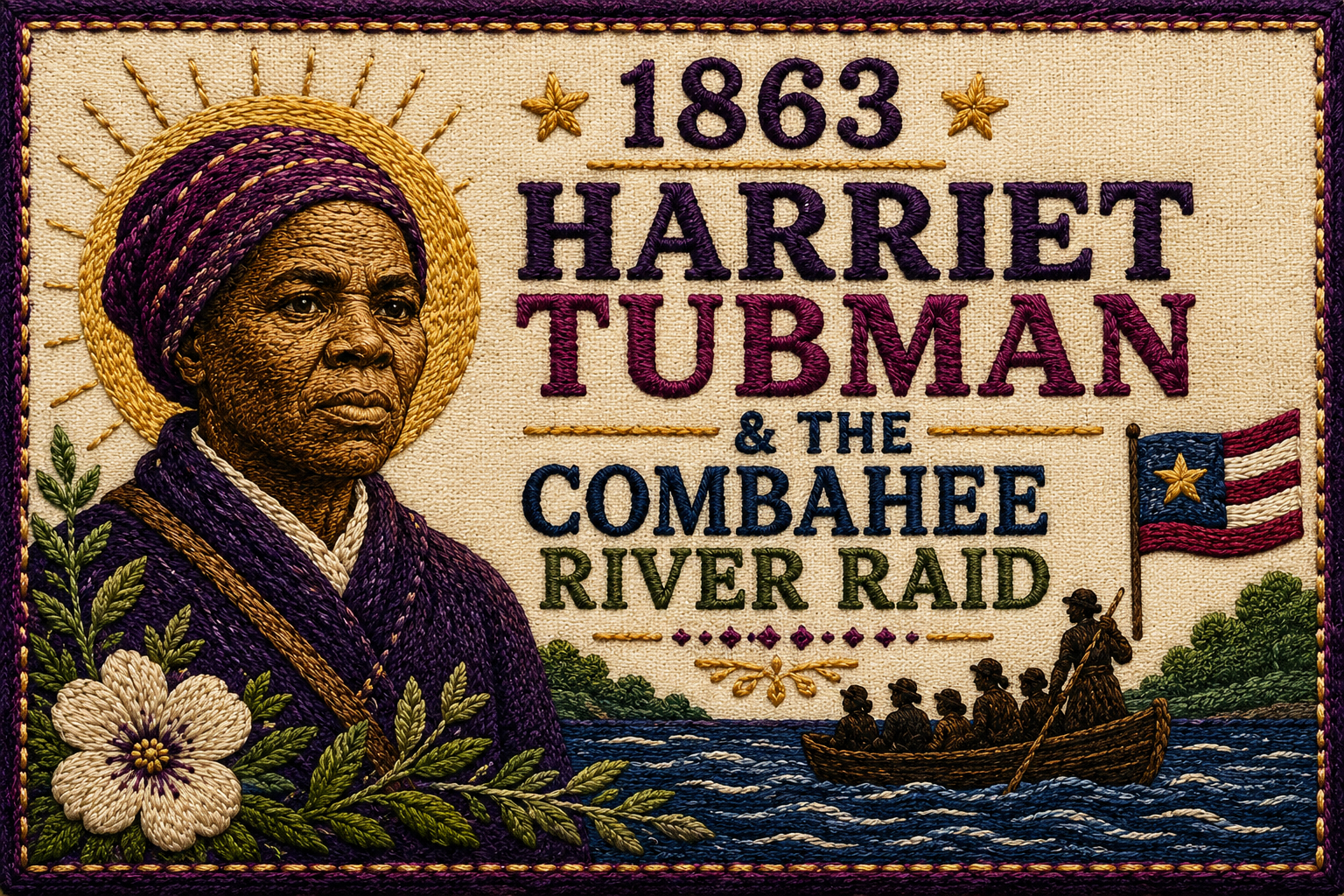
Gertie Davis is one of the lesser-known names connected to Harriet Tubman’s life, and her story offers a glimpse into Tubman’s later years in Auburn, New York. After the Civil War, Harriet Tubman settled in Auburn and later married Nelson Davis. Together, they adopted a young girl named Gertie Davis. While Harriet Tubman became widely known for her work as a conductor on the Underground Railroad, a Union scout and nurse, and a freedom fighter, much less was recorded about the family life she built in the years that followed. Historical records about Gertie Davis are limited. What is known is that she was part of the Tubman household and appears in the story of Harriet Tubman’s later life. Her presence reminds us that Tubman’s life was not only defined by public courage and national history, but also by home, caregiving, and family. That matters because history often reduces people to their most famous roles. Harriet Tubman is rightly remembered for her extraordinary bravery, but she was also a wife, a mother figure, and a woman who created a home in the midst of a life shaped by struggle and service. Gertie Davis may not be widely documented, but her name still carries meaning. She represents a quieter part of Harriet Tubman’s story, one rooted in family life and the personal world Tubman built after years of sacrifice. Sometimes history is loud. Sometimes history lives in the small details, in the names that appear only briefly, and in the lives that stand just beyond the spotlight. Gertie Davis was one of those lives. #GertieDavis #HarrietTubman #BlackHistory #AmericanHistory #HiddenHistory #LataraSpeaksTruth #repost

LataraSpeaksTruth

1987: Death of Chicago Mayor Harold Washington

Harold Washington, the first Black mayor in Chicago’s history, passed away on this day in 1987 after collapsing at his desk in City Hall. He was sixty-five. His election reshaped Chicago’s political landscape. Washington built broad coalitions across neighborhoods that had long been divided. His administration shifted attention toward communities that spent decades on the margins and brought new expectations for transparency and reform. Even with the challenges he faced, Washington’s leadership changed how people saw the possibility of political power in Chicago. His time in office lives on as a turning point for the city and for generations who studied the path he carved. #HaroldWashington #ChicagoHistory #AmericanPolitics #HistoricalLeaders #LataraSpeaksTruth

1987: Death of Chicago Mayor Harold Washington
LataraSpeaksTruth

On December 10, 1964 Dr. Martin Luther King Jr. stood in Oslo, Norway to formally receive the Nobel Peace Prize. At just 35 years old he became the youngest person ever to earn that honor at the time. The committee recognized him for leading a nonviolent movement that confronted segregation, discrimination, and the long shadow of inequality across the United States. His award was not a celebration of victory, but a recognition of how much courage it takes to stand in the storm without raising a fist. King accepted the prize with a steady voice and an even steadier conviction that change was possible. He spoke of the struggles happening back home… the bombings, the arrests, the backlash, the constant risk that trailed every step. Yet he still called for peace, not because the times were peaceful, but because he believed humanity could rise above the cycles that had shaped the nation for centuries. This moment in Oslo is often remembered as a milestone, but it was also a mirror. It showed the world what was happening in America and forced people to see the gap between its ideals and its reality. King stood alone at that podium, but he carried a movement on his shoulders. A movement built by ordinary people who marched, sat in, spoke up, pushed forward, and refused to let injustice remain untouched. Sixty years later the speech still echoes. The questions he raised still challenge us. And the hope he carried still feels necessary. History marks the day he received the Nobel Peace Prize, but that award did not define him. His work did. His legacy did. The change he sparked still does. #History #AmericanHistory #OnThisDay #MLK #Nonviolence #LataraSpeaksTruth #LearnOurHistory #NewsBreakCommunity #TodayInHistory #LegacyLivesOn

Tag: LataraSpeaksTruth | LocalAll