1/1

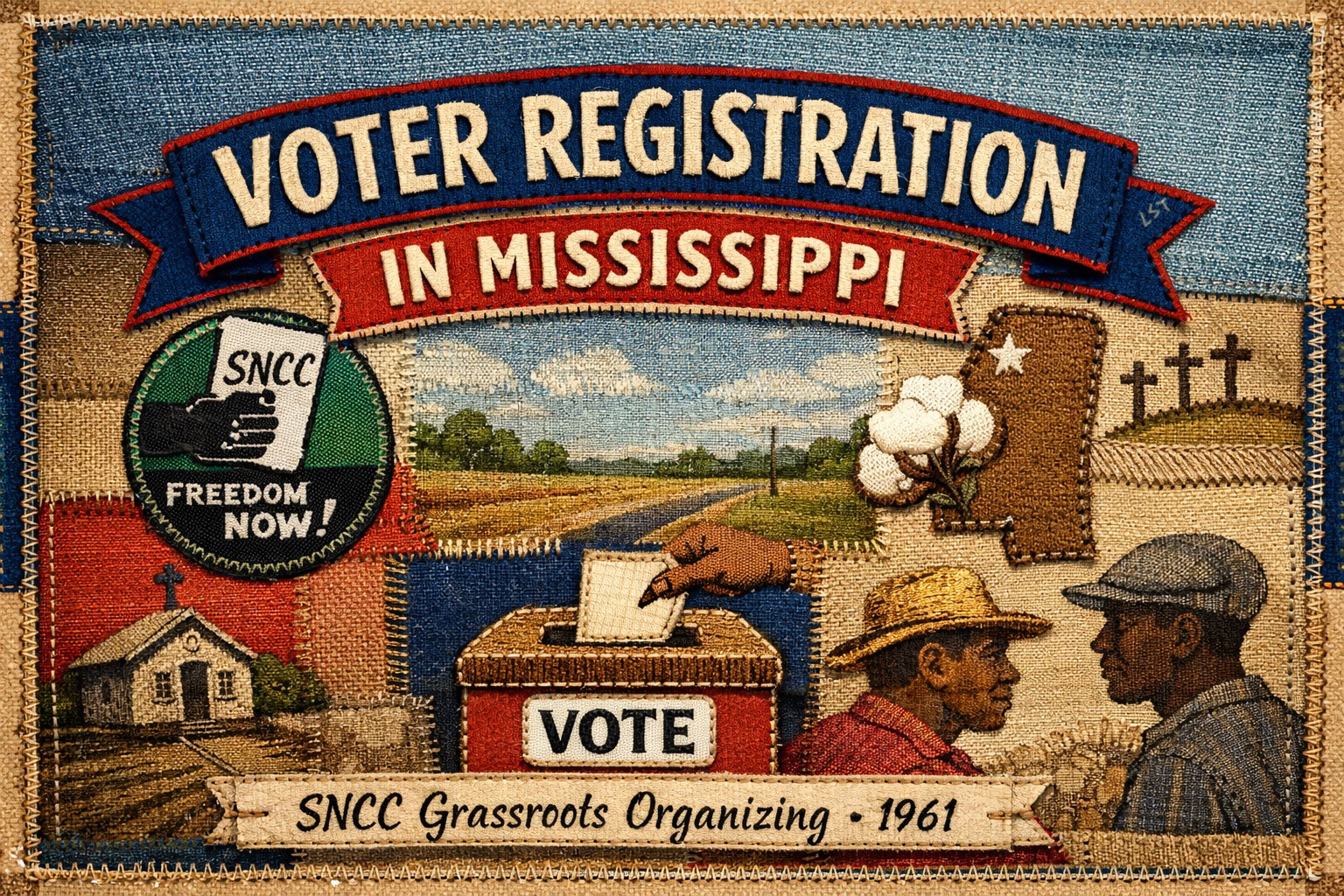
In January 1961, the work of democracy in Mississippi did not arrive with cameras or speeches. It moved along back roads, into church basements, and across kitchen tables where fear and determination sat side by side. During this period, the Student Nonviolent Coordinating Committee was already deeply engaged in voter registration efforts across the state, laying groundwork that would later fuel national change. January 17 falls within this documented campaign window, a time when organizers lived among the people they served, recorded intimidation, challenged exclusion, and encouraged political participation in places where doing so carried real risk. Mississippi remained one of the most aggressively restrictive states in the country when it came to voting access. Literacy tests, economic retaliation, surveillance, and violence were routinely used to suppress registration. SNCC’s approach differed from older civil rights organizations. It emphasized local leadership, patience, and sustained presence. Rather than brief appearances for speeches or press, organizers stayed. They listened. They taught. They documented names, stories, and patterns of suppression. This January work did not produce a single headline, but it produced something more durable. It built trust. It trained future leaders. It formed networks that would later support Freedom Summer, the Mississippi Freedom Democratic Party, and federal voting rights enforcement. What happened in early 1961 matters precisely because it was not dramatic. It was steady. It was intentional. It was dangerous. History often remembers moments. Movements are built in seasons like this one. #SNCC #VotingHistory #CivilRightsMovement #MississippiHistory #GrassrootsOrganizing
Mississippi • 2026-01-17

Aeisha Jones
They want us to go back to these days ! 🙏🏼
01-19
Sacramento, CA
Reply(1)
2
More comments ...
write a comment...