1/1

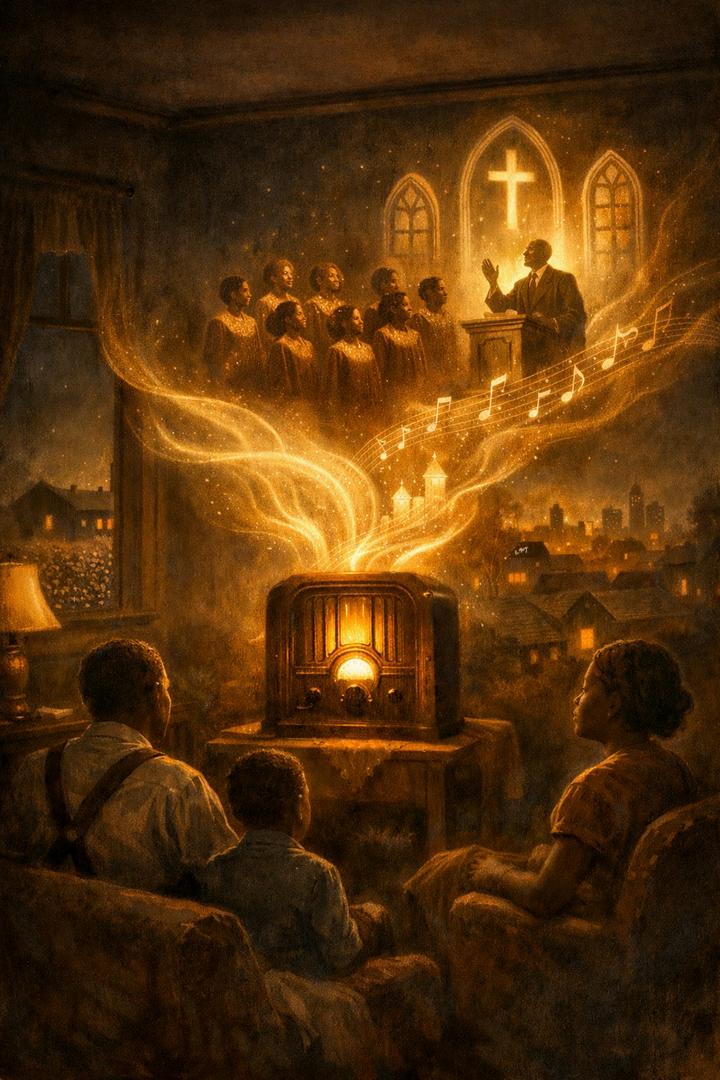
December 25 in the 1930s and 1940s quietly became one of the most important days for Black radio. While churches, concert halls, and public venues remained restricted or segregated, Christmas Day radio broadcasts allowed Black gospel music to move freely across the country. On this day, spirituals, choirs, sermons, and holiday messages reached households far beyond local communities, turning the airwaves into a sanctuary when physical space was denied. Radio mattered because it crossed boundaries people could not. Families who might never step inside a Black church still heard the music. Listeners encountered voices shaped by faith, survival, and tradition without seeing faces first. Gospel did not arrive as protest, but its presence challenged exclusion simply by existing in national soundspace. Christmas amplified that reach, giving Black spiritual expression a moment of visibility during a holiday associated with reflection and hope. These broadcasts also helped standardize and spread gospel as a national musical form. Regional styles traveled coast to coast, influencing future performers, choirs, and composers. What began as sacred music rooted in specific communities expanded through radio into a shared cultural language. Christmas programming made room for that expansion when few other platforms would. By the 1940s, Black gospel on Christmas radio was more than seasonal programming. It was infrastructure. It preserved tradition, strengthened cultural memory, and reminded listeners that faith, like sound, could not be segregated forever. December 25 became proof that even when doors were closed, voices still traveled. #BlackHistory #GospelMusic #RadioHistory #ChristmasDay #CulturalHistory #AmericanMusic #FaithAndCulture #HiddenHistory #BlackExcellence #MediaHistory
2025-12-25

James Shaw
black radio? not racist at all back then huh.
12-25
Mount Pleasant, PA
Reply(1)
1

Arlean Wyckoff
Beautiful Gospel Singing On The Redio Thank God For It Back Then White People's Was Home Off The Air
12-25
Alexander City, AL
Reply

KindYtKng
Beautiful black, gifted voices. Cant be taught in lessons. Natural gift.
12-25
Columbia, MD
Reply

J* Peace715
❤️🖤💚🎄🙏🏽✨
12-25
Norristown, PA
Reply
More comments ...
write a comment...