Category Page relationships

Dashcamgram

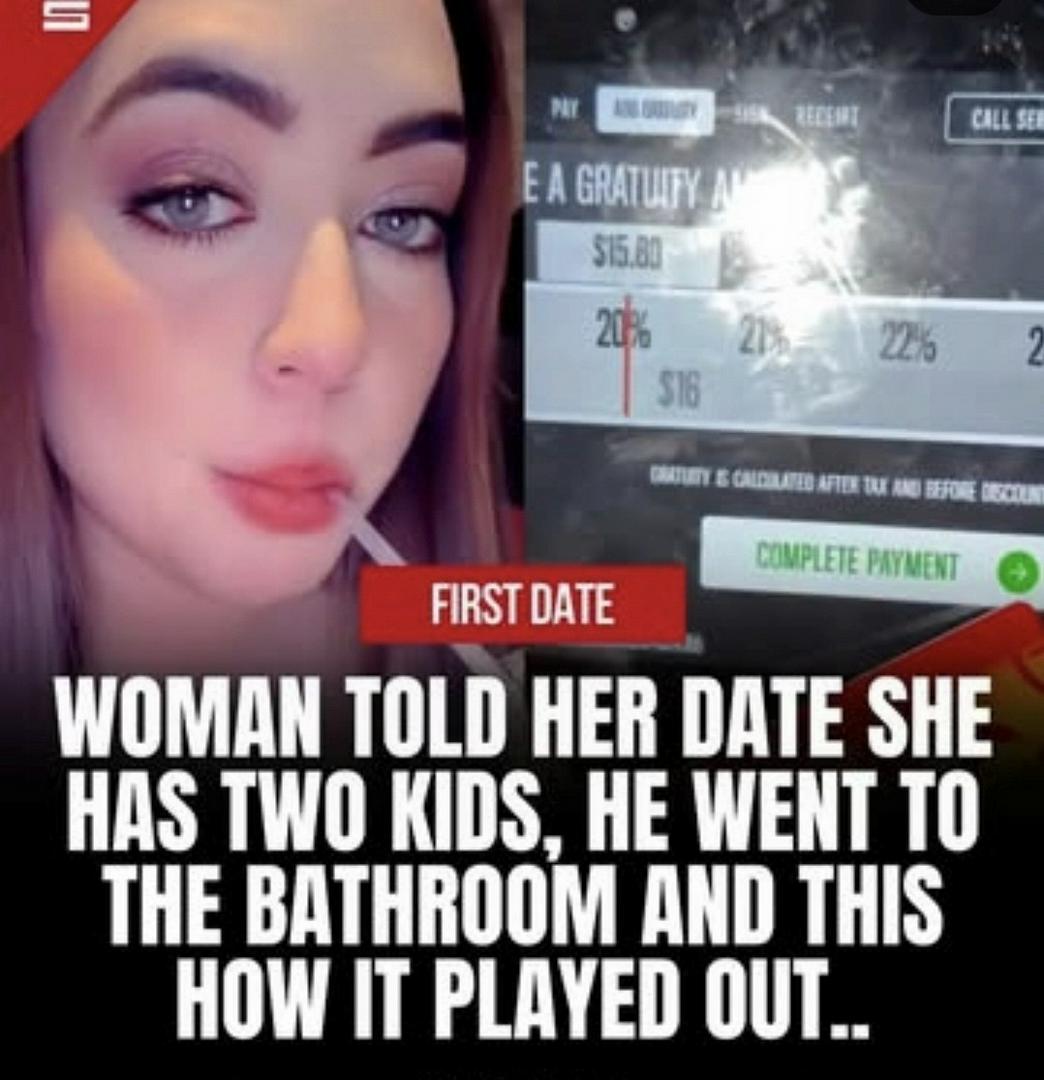
First dates are already awkward… but this one went left fast. A woman says she told her date she has two kids, and moments later he excused himself to the bathroom — and never came back. Gone. Vanished. Paid the bill remotely and dipped. Social media is split. Some people are calling it heartless. Others are saying he simply exercised his right to walk away. Here’s the real conversation nobody wants to have: Dating is about compatibility. Kids are a major life factor. And not everyone is ready to step into that. Should he have said something instead of ghosting? Probably. But should anyone feel forced to stay on a date once they realize it’s not for them? That’s debatable too. Modern dating is wild. Moral of the story: be honest early, don’t waste people’s time — and if you’re not on the same page, exit respectfully. What y’all think… cold move or fair play? #DatingStories #FirstDateFail #ModernDating #RelationshipTalk #RedFlags #RealLifeMoments #ViralStory #DatingDebate #SingleParentLife #HonestyMatters #HardTruths #SocialMediaTalk #StayReal

Joanna Rivera

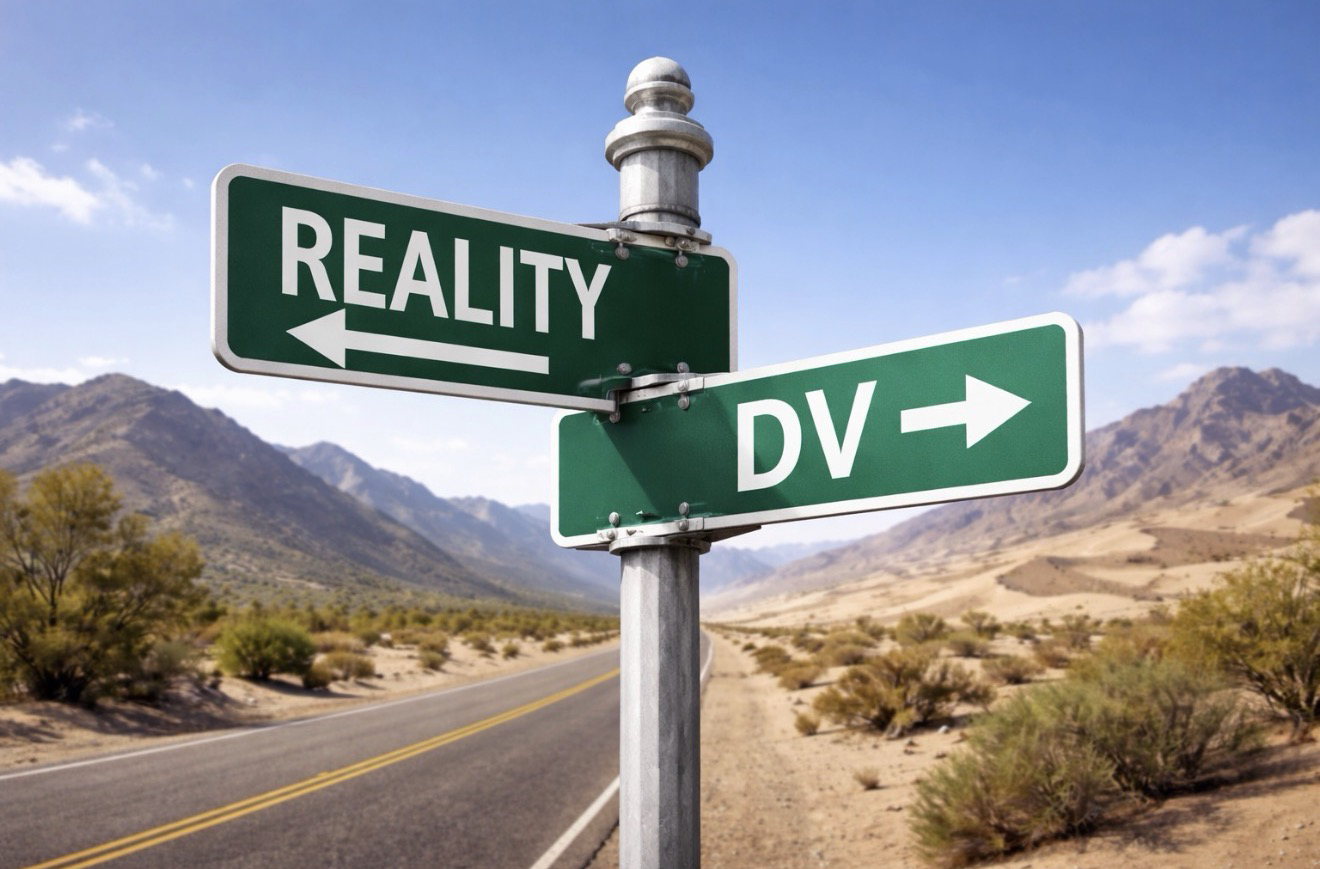
Why Domestic Violence Is So Hard to Escape: The Reality Most People Don’t See… Public conversations about domestic violence often sound simple. The advice survivors hear can sound simple too: “Why didn’t you just leave?” “Just document everything.” But the reality of navigating abuse — and the systems meant to address it — is rarely simple. When you look closely at how these situations unfold, one pattern becomes clear: there is often a significant gap between assumptions and reality. Assumption: If it was really that bad, they would have left. Reality: Research consistently shows that the period when a survivor attempts to leave can be one of the most dangerous moments in an abusive relationship. Leaving is rarely a single event. It is often a process shaped by safety concerns, financial barriers, housing instability, and fear for children. Many survivors make multiple attempts before it becomes possible to leave safely. Another common piece of advice is: “Just document everything.” Documentation can be important. But survivors are often managing trauma, safety planning, and disruption while also being expected to gather evidence and timelines. In some situations, documentation itself can increase risk if an abusive partner is monitoring devices, communications, or movements. People also assume that once someone speaks up, the system will take it from there. In reality, disclosure is often just the beginning. Survivors frequently must navigate legal systems, secure housing, gather documentation, and protect their children while trying to recover from trauma. When systems are built around simplified assumptions, survivors are often expected to become investigators while traumatized, strategists while displaced, and advocates while unrepresented. Until we close the gap between assumptions and reality, survivors will continue to carry the burden of navigating systems that were meant to protect them.

TheCrew®POd

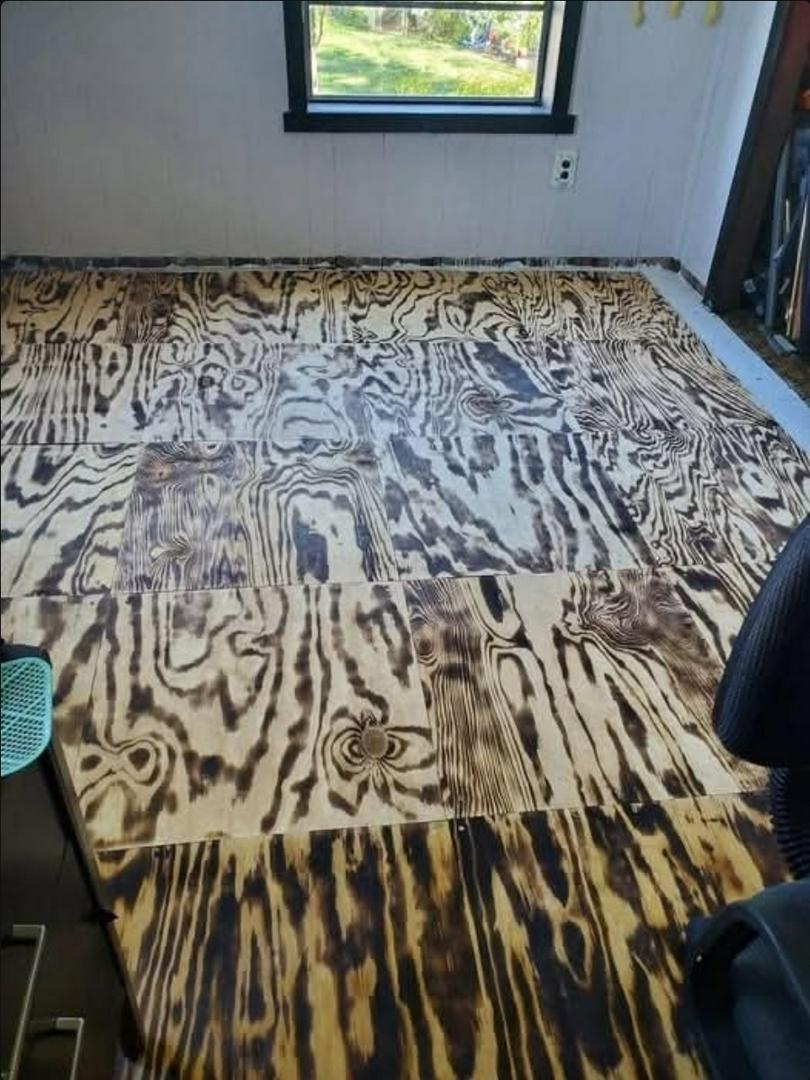
My son's been living in my basement since his divorce. Thirty-two years old, sleeping on a pullout couch, avoiding eye contact at dinner. For six months I watched him shrink into himself. this man I raised to be confident becoming someone I barely recognized. Then last month he asked if he could redc my office floor. Said he needed a project needed his hands busy. I said yes even though the floor was fine, even though 1 knew this wasn't really about flooring We bought plywood sheets and he cut them into squares in the driveway, measured everything twice. Then he pulled out a propane torch and started burning patterns into the wood. Just stood there with fire in his hands creating these wild grain patterns each piece different. I asked what he was doing and he said, "making something ugly beautiful." We both knew he wasn't talking about the floor. It took us two weeks, working every evening. He found a special sealant online from someone who does custom wood finishing and talked to them for an hour about techniques. He started buying other woodworking supplies online too, planning his next proiect before we even finished this one. The floor's not perfect. Some sauares are darker than others. the lines don't al match up. But when the light comes through that window it looks like water, like movement ike proof that burned things can still be beautiful. He moved out last weekend. Got his own apartment--small, but his. Took some of the extra wood squares to practice making furniture. Called me vesterday to say he's starting his own refinishing business. My office floor is his first portfolio piece. the evidence that sometimes you have to burn everything down before vou can build it back better.

Andrew Goltz

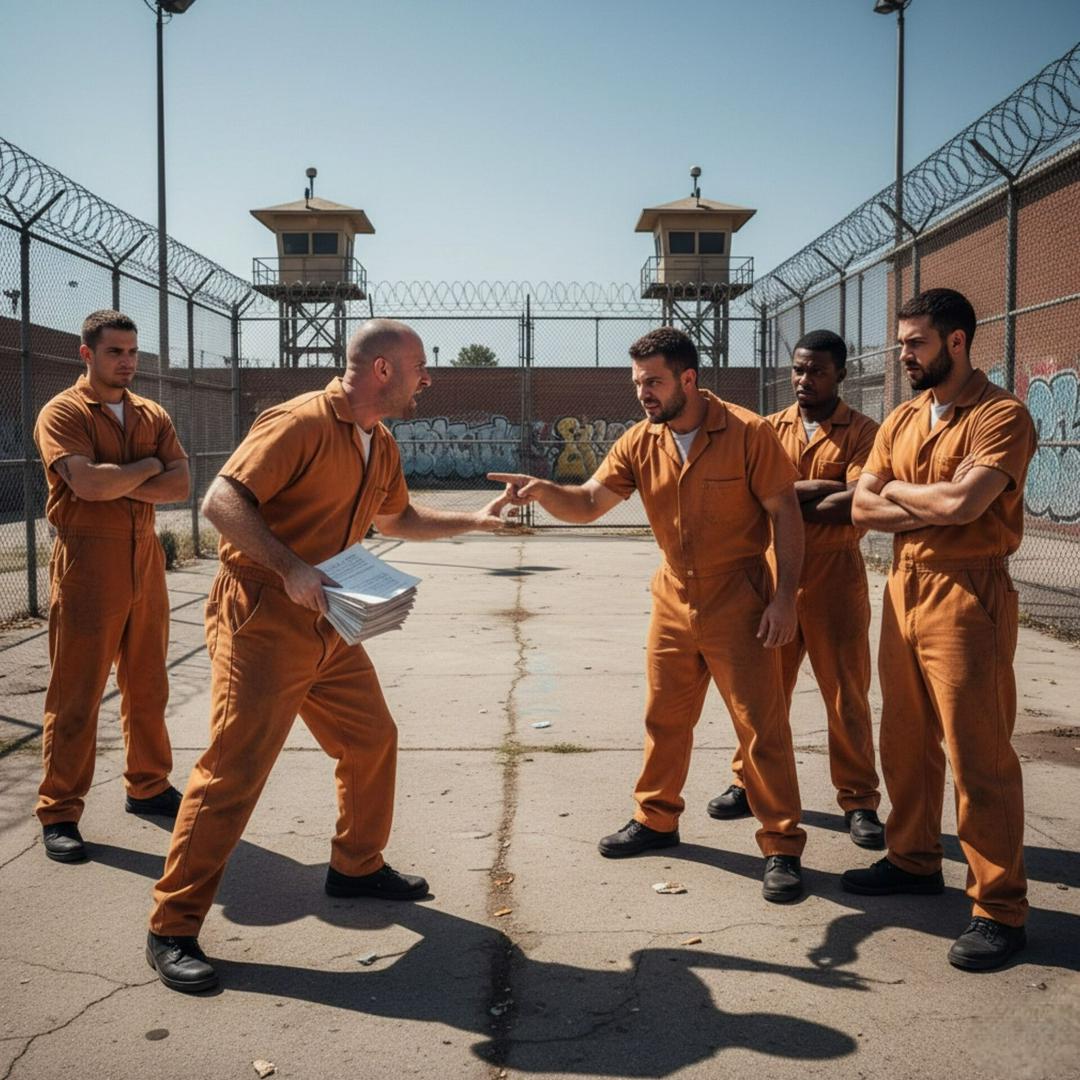
The Golden Rule — Convict Style

In prison, we live by a set of rules that go back so far nobody even knows who made them. You’ll hear guys say, “I didn’t make the rules, but we gotta follow them.” Out here, people talk about the Golden Rule — “Do unto others as you’d have them do unto you.” Inside, that rule still applies — but it’s got teeth. Everybody knows: snitches and sex offenders don’t last long. The penalty for either is final. But here’s what most people don’t know — if you falsely accuse someone of being one without proof (paperwork), then you wear that jacket. And your exit usually comes with a LifeFlight ride to the ER — if you’re lucky. So when you’re out here throwing wild accusations at politicians, public figures, or anyone else, remember — in the convict’s world, claims come with consequences. Better have the paperwork. Andrew Goltz writes raw, unfiltered stories about prison life, addiction recovery, and second chances. A reformed convict with firsthand experience in the federal system, he’s on a mission to expose the truth, break stigma, and change how people see those rebuilding after incarceration. #PrisonReform #ConvictStories #LifeAfterPrison #JusticeSystem #TruthTeller #RealTalk #SecondChances #ReentryMatters #RespectEarned #NewsBreakCommunity

The Golden Rule — Convict Style
Rick And Morty

The hardest conversation I’ve ever had isn’t with someone else. It’s with myself before I ever say a word. It’s the moment I admit I’ve been settling. That I’ve been over-understanding. That I’ve been strong for so long it started to look like I didn’t need anything. I tell myself I’m patient. I tell myself I see the bigger picture. I tell myself not everyone loves the way I love. And maybe that’s true. But if I’m honest, sometimes I stay quiet because I don’t want to find out the truth. Because once I say it out loud — “I need consistency.” “I need clarity.” “I need to feel chosen.” — I risk hearing that it can’t be given. And that’s the part that scares me. I’ve learned how to carry depth without showing the weight of it. I can analyse my feelings, articulate them, package them in calm language. But underneath that composure is a very simple fear: what if being fully seen makes someone step back instead of forward? So I compromise in small ways. I don’t ask twice. I don’t push when something feels off. I tell myself not to overthink. I convince myself that silence is strength. But it’s not strength. It’s self-protection. The hardest conversation for me is looking at someone I care about and saying, without armour, “This matters to me more than I’ve let on.” It’s admitting I’m not as detached as I pretend. That I don’t just want connection — I want depth, intention, certainty. It’s owning that I don’t do halfway well. That when I care, I care fully. And that pretending otherwise has cost me parts of myself. The real risk isn’t losing them. It’s finally choosing not to lose me.