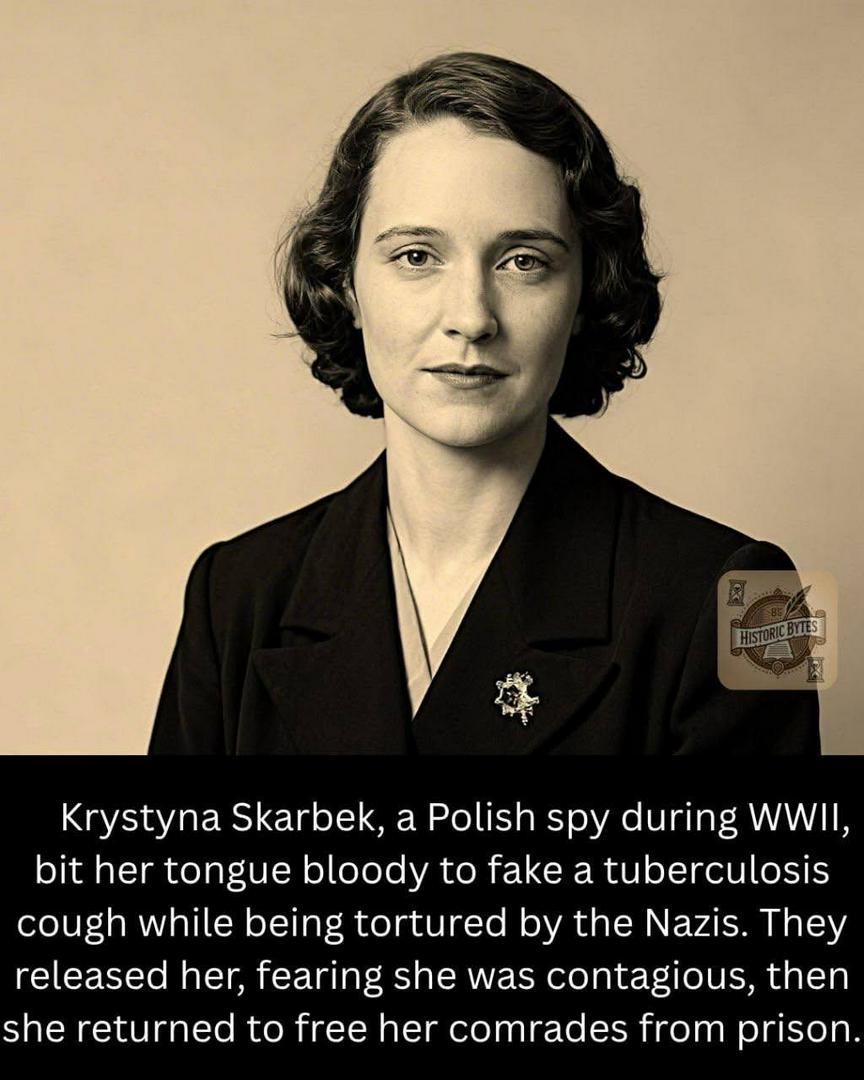
Krystyna Skarbek was born in Warsaw in 1908, the daughter of a Polish aristocrat and a Jewish banking heiress. Before the war she had been a beauty queen, an expert skier, and a sometime cigarette smuggler across the Tatra Mountains.
When Germany invaded Poland in September 1939, she presented British intelligence with a plan: she would travel to neutral Hungary, ski across the Carpathians into occupied Poland, gather intelligence, and bring out resistance fighters and information.
They agreed. She was operating behind enemy lines before the SOE, Britain’s sabotage and espionage organization, had even been formally established, making her the first British female agent of the war and eventually its longest-serving.
She made multiple crossings into occupied Poland through some of the most dangerous terrain in Europe, smuggling money, weapons, and coded radio materials in both directions. On one crossing she carried rolls of microfilm documenting German preparations for Operation Barbarossa hidden inside her gloves. Churchill, upon seeing the intelligence, named her his favorite spy.
In January 1941, the Gestapo arrested her and her partner, Polish officer Andrzej Kowerski, in Budapest. Two days into interrogation, Skarbek bit her own tongue hard enough to draw blood, coughed violently, and spat the blood in front of her captors.
The Gestapo, who had a well-documented terror of tuberculosis, called a doctor. What the doctor found on an X-ray confirmed the fiction: old lung scarring from exhaust fumes at a garage where Skarbek had worked years earlier. He diagnosed likely tuberculosis. Both prisoners were released immediately.
The British ambassador arranged passports under new names. Krystyna Skarbek became Christine Granville, a name she kept for the rest of her life.
#womeninhistory #ww2 #fblifestyle