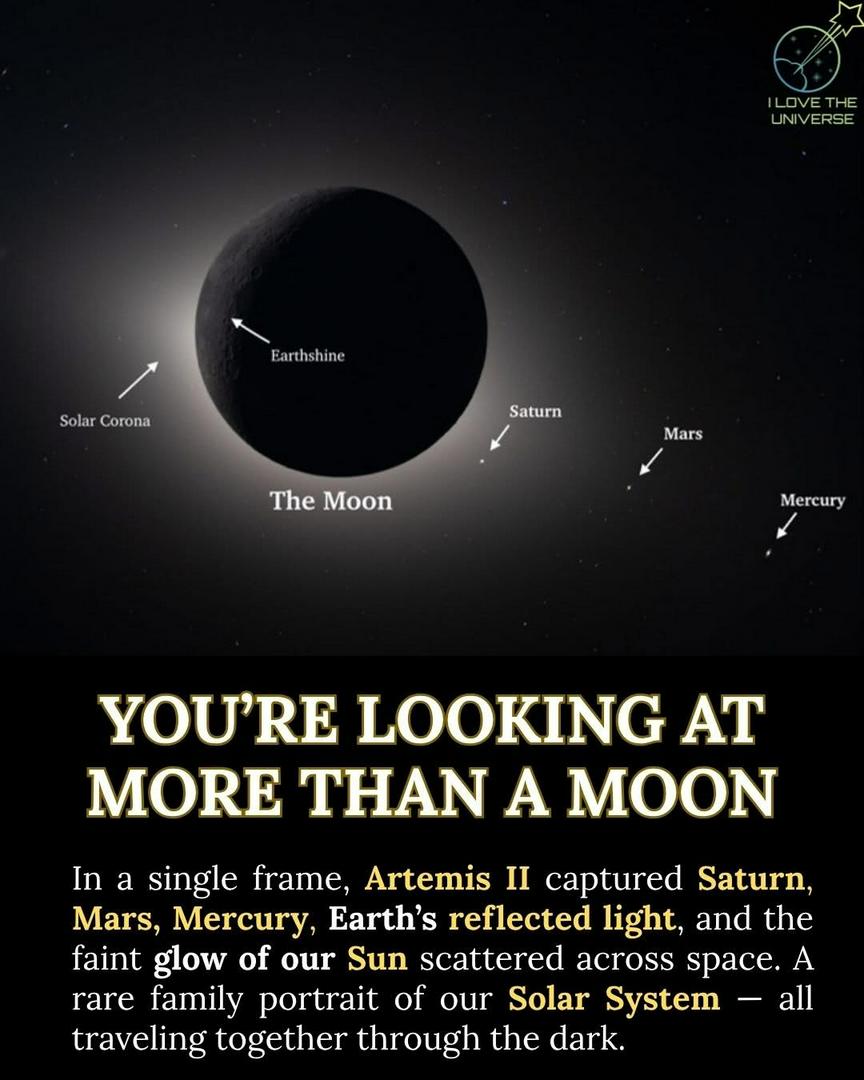
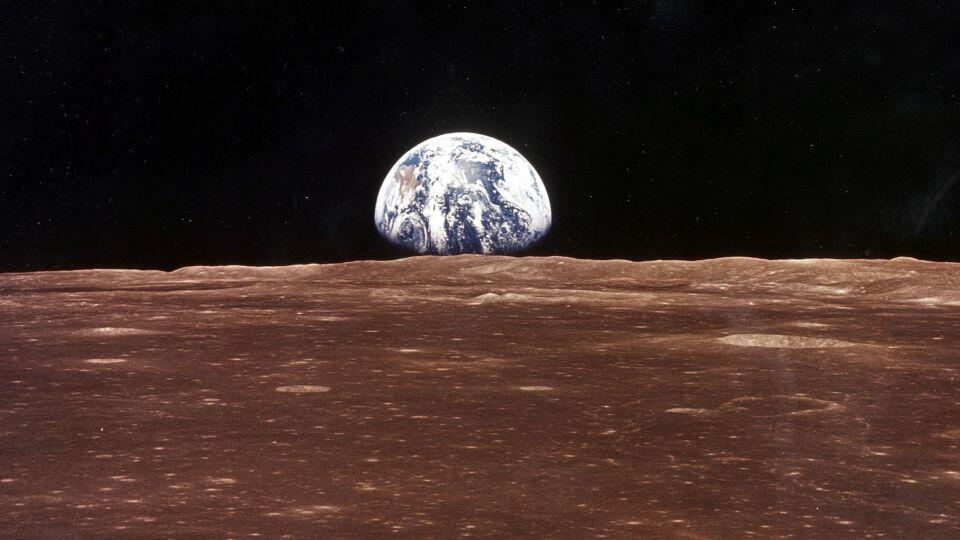
This image captures more than just the Moon… 🤯
Captured by the Artemis II crew, this view reveals not just the Moon, but a quiet alignment of worlds — Saturn, Mars, and Mercury, all shining across the same sky. Even Earth is here, its light softly illuminating the dark side of the Moon.
What looks like empty space is anything but — sunlight scattered through interplanetary dust creates a faint glow, reminding us that we are all part of one vast, connected system. Venus sits just beyond the edge of this frame, while Neptune is here too — hidden in the darkness, too faint to be seen.
A rare and humbling family portrait of our Solar System — seen not from afar, but from within. 🚀
Credits: NASA/ Artemis II
#ArtemisII #NASA #Space #Astronomy #SolarSystem #Moon #Earth #Explore #Cosmos