Tag Page lataraspeakstruth

#lataraspeakstruth
LataraSpeaksTruth

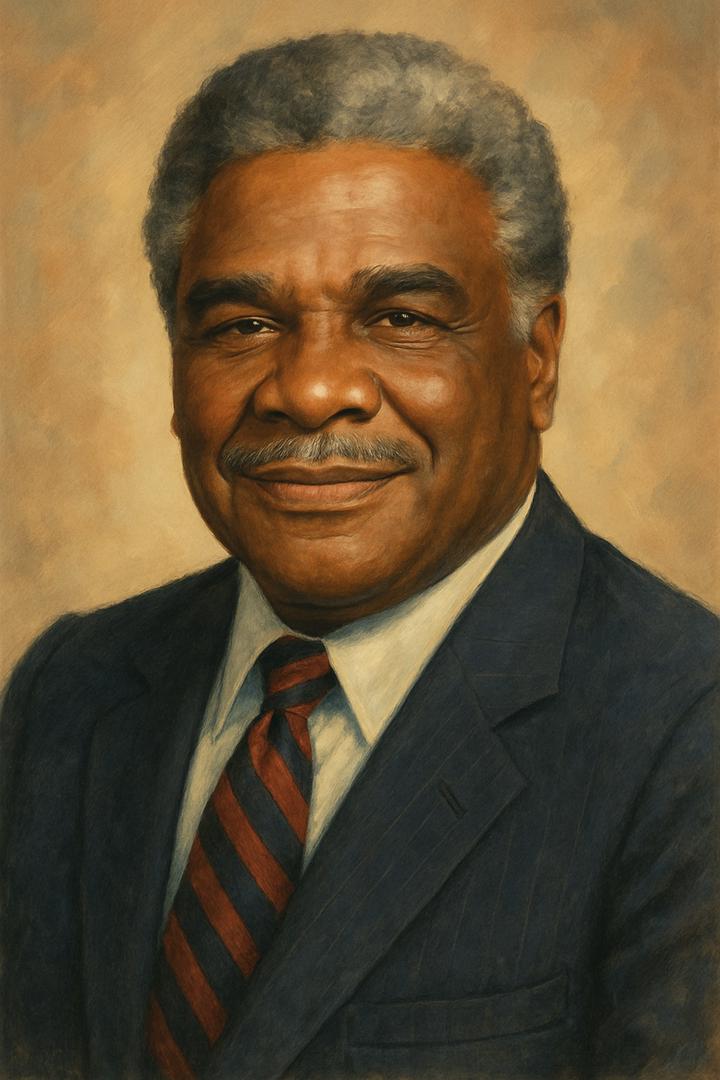
1987: Death of Chicago Mayor Harold Washington

Harold Washington, the first Black mayor in Chicago’s history, passed away on this day in 1987 after collapsing at his desk in City Hall. He was sixty-five. His election reshaped Chicago’s political landscape. Washington built broad coalitions across neighborhoods that had long been divided. His administration shifted attention toward communities that spent decades on the margins and brought new expectations for transparency and reform. Even with the challenges he faced, Washington’s leadership changed how people saw the possibility of political power in Chicago. His time in office lives on as a turning point for the city and for generations who studied the path he carved. #HaroldWashington #ChicagoHistory #AmericanPolitics #HistoricalLeaders #LataraSpeaksTruth

1987: Death of Chicago Mayor Harold Washington
LataraSpeaksTruth

1960… The Day New Orleans Showed Its True Face

On November 29, 1960, the sidewalk outside William Frantz Elementary turned into a scene the country still can’t shake. White segregationist mothers lined the street, screaming as a little Black girl tried to walk into school. Through all that chaos, Daisy Gabrielle held her daughter Yolanda’s hand and kept moving. That walk was courage in real time… the kind that doesn’t wait for applause, just does what’s right. The footage from that day became part of America’s permanent record. Not the cleaned-up version… the real one, showing grown adults trying to block a child’s education because of her skin. And here’s the part people love to pretend they don’t hear… 1960 wasn’t ancient history. It wasn’t “way back then.” Many of the adults in that crowd lived long enough to watch the world pretend this never happened. Progress didn’t fall from the sky… somebody had to push it. #HistoryMatters #AmericanHistory #OnThisDay #NewOrleansHistory #EducationHistory #LataraSpeaksTruth

1960… The Day New Orleans Showed Its True Face
LataraSpeaksTruth

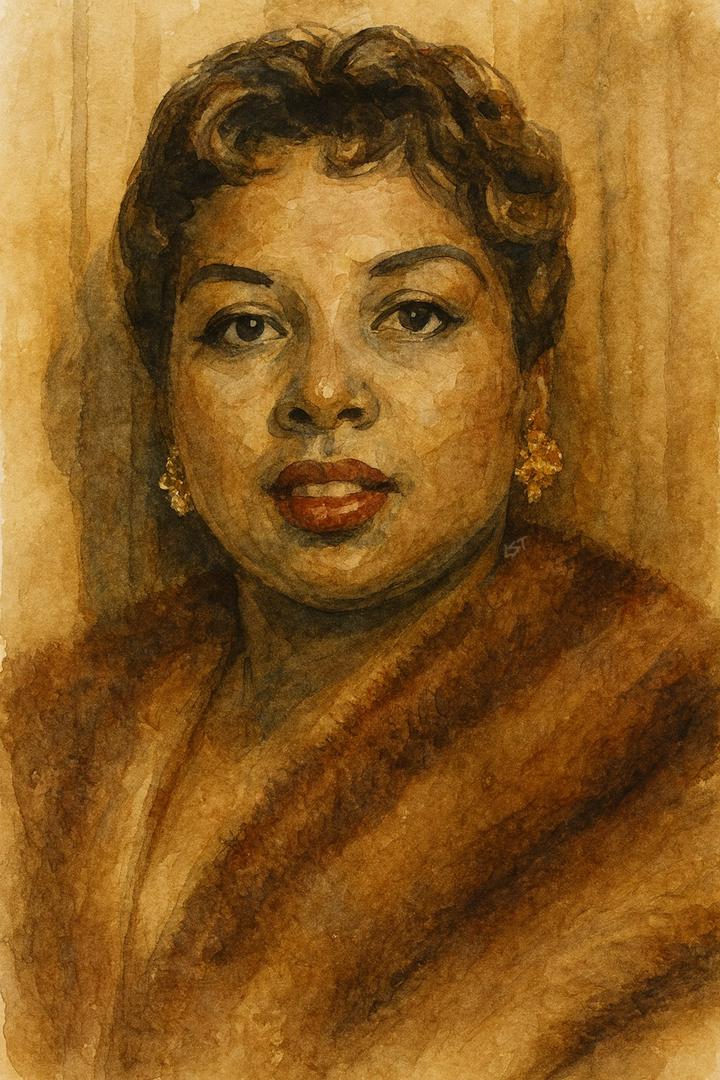
The Birth of Etta Jones, November 25, 1928

Etta Jones was born on this day in Aiken, South Carolina. She later moved to Harlem, where music was the heartbeat of the neighborhood and a young singer could grow into something special. That move shaped her sound and set the stage for the career she would build. Jones became a respected jazz and blues vocalist known for her warm tone and expressive phrasing. She had a style that felt effortless and lived in the middle ground between jazz smoothness and blues honesty. She stepped into recording in the late 1940s and built her voice through steady work, touring, and collaborations that kept her grounded in the traditions she loved. Her breakthrough came with the song Don’t Go to Strangers in 1960. The single reached a national audience and earned her a Grammy nomination. It also introduced new listeners to the depth of her talent and the kind of mature, lived in singing that set her apart. One of the most defining parts of her career was her long partnership with saxophonist Houston Person. They worked together for decades. Their chemistry created a catalog of albums that felt consistent and true to who she was as an artist. Many fans remember them as one of the strongest vocalist instrumentalist duos in modern jazz. Etta Jones continued recording and performing until the end of her life. In a moment that felt almost poetic, she passed away in 2001 on the same day her final album was released. Her legacy lives quietly but powerfully in jazz circles and in the voices of singers who followed her path. #OnThisDay #JazzHistory #EttaJones #LataraSpeaksTruth #AskNewsBreak

The Birth of Etta Jones, November 25, 1928
LataraSpeaksTruth

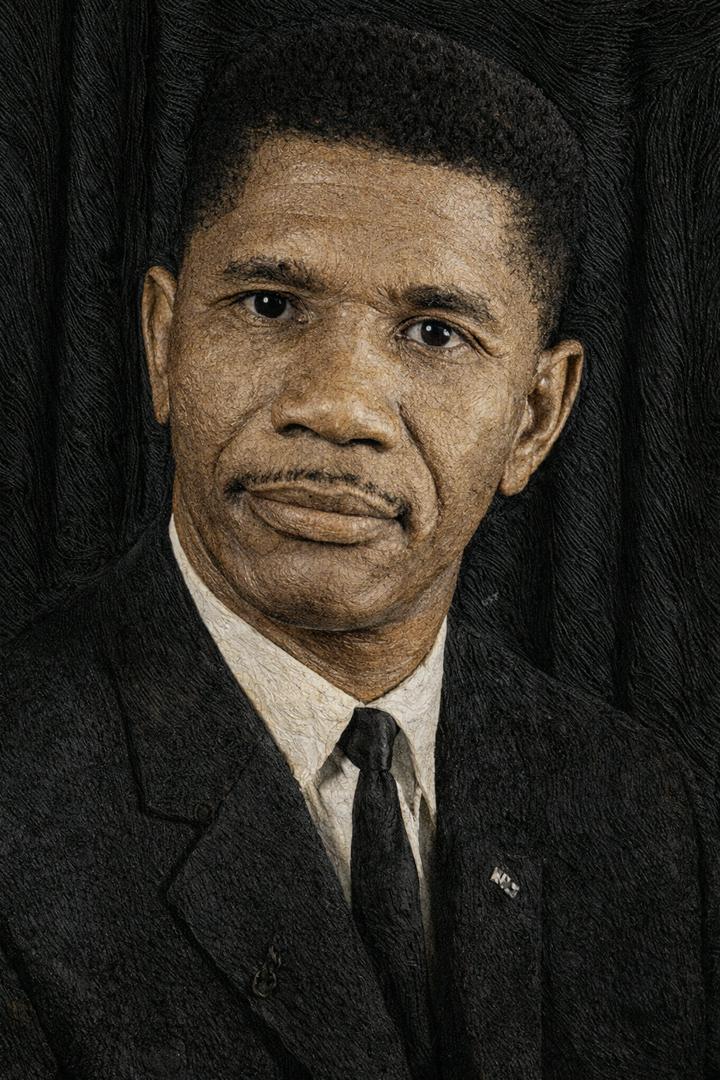
Born on July 2, 1925, in Decatur, Mississippi, Evers grew up in a state where segregation shaped nearly every part of daily life. After serving in the United States Army during World War II, he returned home determined to build a better future. He later attended Alcorn Agricultural and Mechanical College, where he studied business administration and became active in student leadership. In 1954, Evers became the NAACP’s first field secretary in Mississippi. In that role, he traveled across the state organizing local branches, encouraging voter registration, investigating racial violence, and helping challenge segregation in schools and public spaces. His work placed him on the front lines of one of the most dangerous battles in the South. Evers also helped investigate the 1955 murder of Emmett Till and worked to expose the brutal realities Black families faced in Mississippi. He pushed for equal access to education, fought discriminatory laws, and worked to expand basic rights that had long been denied. Because of his work, Evers lived under constant threat. His home was attacked, his family lived with fear, and he knew that speaking openly against injustice could cost him his life. Still, he refused to step away from the work. On June 12, 1963, Medgar Evers was assassinated outside his home in Jackson, Mississippi. His murder shocked the nation and became one of the defining tragedies of the civil rights era. Though his life was cut short, his courage left a lasting mark on American history. Medgar Evers is remembered not only as a leader, but as a man who kept showing up for the work even when the danger was clear. His legacy lives on in the continued fight for justice, dignity, and equal protection under the law. #OurHistory #MedgarEvers #AmericanHistory #CivilRightsHistory #LataraSpeaksTruth

LataraSpeaksTruth

1863, Nashville… The Day New Soldiers Changed the War

On November 19, 1863, the 13th United States Colored Infantry officially formed in Nashville, Tennessee. Hundreds of Black men stepped forward to wear Union blue at a time when the nation still refused to recognize their full rights. They volunteered anyway. They took up weapons in a country that denied them protections, hoping their service would help crack the walls holding their people down. The 13th USCI was one piece of the larger United States Colored Troops, a force created after the Emancipation Proclamation opened the door for Black military enlistment. The officers were white, but the spirit, grit, and discipline came from the men themselves. Some had escaped plantations. Others were freeborn. All of them were determined to see slavery fall. Their service came with barriers. Lower pay in the early months. Harsher treatment. Hostility from Union soldiers and Confederate soldiers alike. Still, the 13th USCI held the line. They fought in Tennessee, Georgia, and Alabama, pushing Union control deeper into the South. Their formation marked a turning point. The Civil War shifted from just saving the Union to redefining what freedom would mean in America. Black soldiers made that shift visible. The men of the 13th USCI stood as proof that Black Americans were willing, ready, and brave enough to fight for their freedom and their families’ future. Their legacy still speaks: freedom in this country has always moved forward because of the people who were denied it, yet fought for it anyway. #history #americanhistory #blackmilitaryhistory #civilwarstories #LataraSpeaksTruth

1863, Nashville… The Day New Soldiers Changed the War
LataraSpeaksTruth

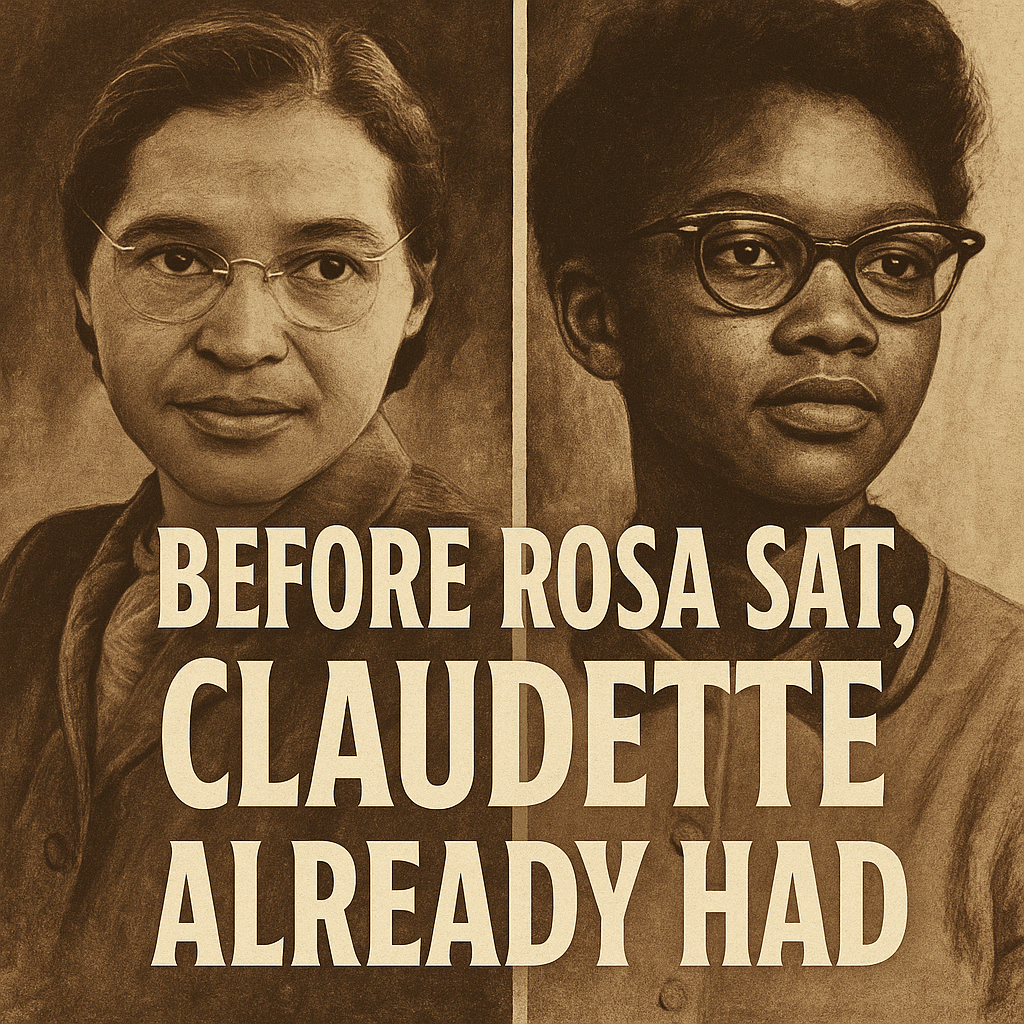
🚌Before Rosa Sat, Claudette Already Had.

Nine months before Rosa Parks made history, a 15-year-old girl named Claudette Colvin refused to give up her seat on a Montgomery bus. She was young, bold, and fearless, but the movement wasn’t ready to rally behind her. They called her “too rebellious,” “too dark,” “too unpolished.” So when Rosa Parks, a seasoned activist and NAACP secretary, made that same choice, the world finally paid attention. Not because the act was new… but because society decided who was allowed to represent it. Rosa knew the risk. She knew the story before hers. And she made her moment count, turning one woman’s refusal into a movement’s awakening. 🕊️ She passed away on this day in 2005, but her courage, and Claudette’s… still ripple through every generation learning that “quiet” does not mean “compliant”. #ClaudetteColvin #RosaParks #BlackHistory #CivilRights #LataraSpeaksTruth #WomenOfCourage #HiddenFigures #KnowYourHistory #BlackExcellence #LegacyAndTruth

🚌Before Rosa Sat, Claudette Already Had.
LataraSpeaksTruth

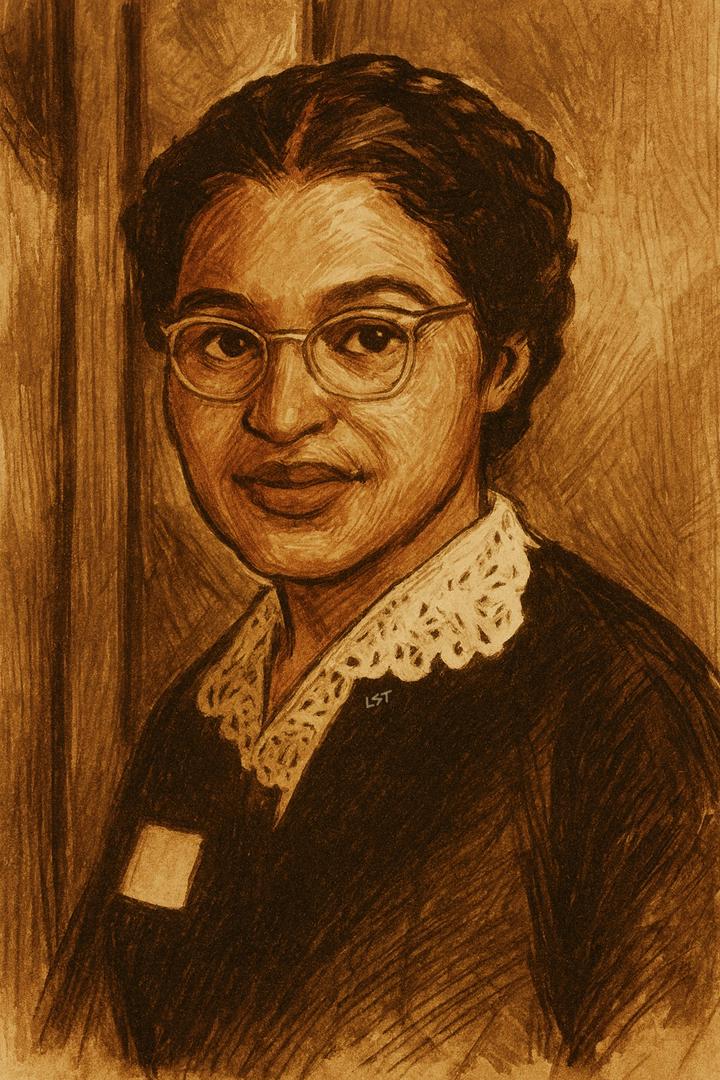
Rosa Parks Attends the Dexter Avenue Meeting, 1955

1955… Montgomery was already on edge, but that night at Dexter Avenue Baptist Church, things shifted. Rosa Parks walked into a packed mass meeting to hear a talk about Emmett Till… the 14-year-old boy whose brutal murder had shaken the entire country. The church was filled with tension, grief, anger, and a rising sense that silence was no longer an option. Parks sat and listened as speakers talked plainly about the dangers Black families faced across the South. Emmett Till wasn’t a headline to her… he was a warning, a wound, and a reminder of every injustice people tried to swallow just to survive. The stories that night weren’t meant to scare anyone… they were meant to wake everyone up. And Rosa heard all of it… really heard it. She wasn’t some tired seamstress like people love to repeat. She was seasoned, sharp, and fully aware of how dangerous the world around her was. That meeting settled something inside her spirit. It fed the backbone she already had. So when she refused to give up her seat just a few months later, it wasn’t random, it wasn’t sudden, and it definitely wasn’t because she was “just tired.” She was tired of abuse, tired of the disrespect, tired of a system that stole sons like Emmett Till and told mothers to accept it. That night at Dexter wasn’t a footnote… it was fuel. #OnThisDay #HistoryMatters #LataraSpeaksTruth #RosaParks #EmmettTill #Montgomery

Rosa Parks Attends the Dexter Avenue Meeting, 1955
LataraSpeaksTruth

Jan Ernst Matzeliger was an inventor whose work transformed the shoe industry during the late nineteenth century. He was born on September 15, 1852, in Paramaribo, Suriname, which was then called Dutch Guiana. His father was a Dutch engineer, and his mother was a Black Surinamese woman. As a young man, Matzeliger developed mechanical skills while working around machinery and ships before later immigrating to the United States. In the 1870s, Matzeliger settled in Lynn, Massachusetts, a city known at the time as a major center of shoe manufacturing. During this period, one of the most difficult and expensive steps in making a shoe was the process called lasting. Lasting is the step where the upper part of a shoe is pulled and shaped around a form called a last and then attached to the sole. Before Matzeliger’s invention, this step had to be done by hand by skilled craftsmen known as lasters, making the process slow and costly. Matzeliger studied the problem carefully and began developing a machine that could perform this task automatically. After years of experimentation, he successfully created the shoe lasting machine, which could attach the upper part of a shoe to the sole far faster than hand labor. He received a patent for the lasting machine in 1883. His invention greatly increased production in shoe factories and helped make footwear more affordable for ordinary people. Matzeliger’s work became widely used in the shoe manufacturing industry and played a major role in the growth of mass shoe production in the United States. Although his invention had a major impact, he did not live long after his success. He died on August 24, 1889, at the age of 36. His contribution to industrial manufacturing remains an important part of American history, Black history, and the development of modern footwear production. #JanErnstMatzeliger #Inventors #AmericanHistory #IndustrialHistory #BlackHistory #Innovation #ShoeIndustry #HistoryMatters #LataraSpeaksTruth

Tag: lataraspeakstruth - Page 10 | LocalAll