Tag Page hiddenhistory

#hiddenhistory
LataraSpeaksTruth

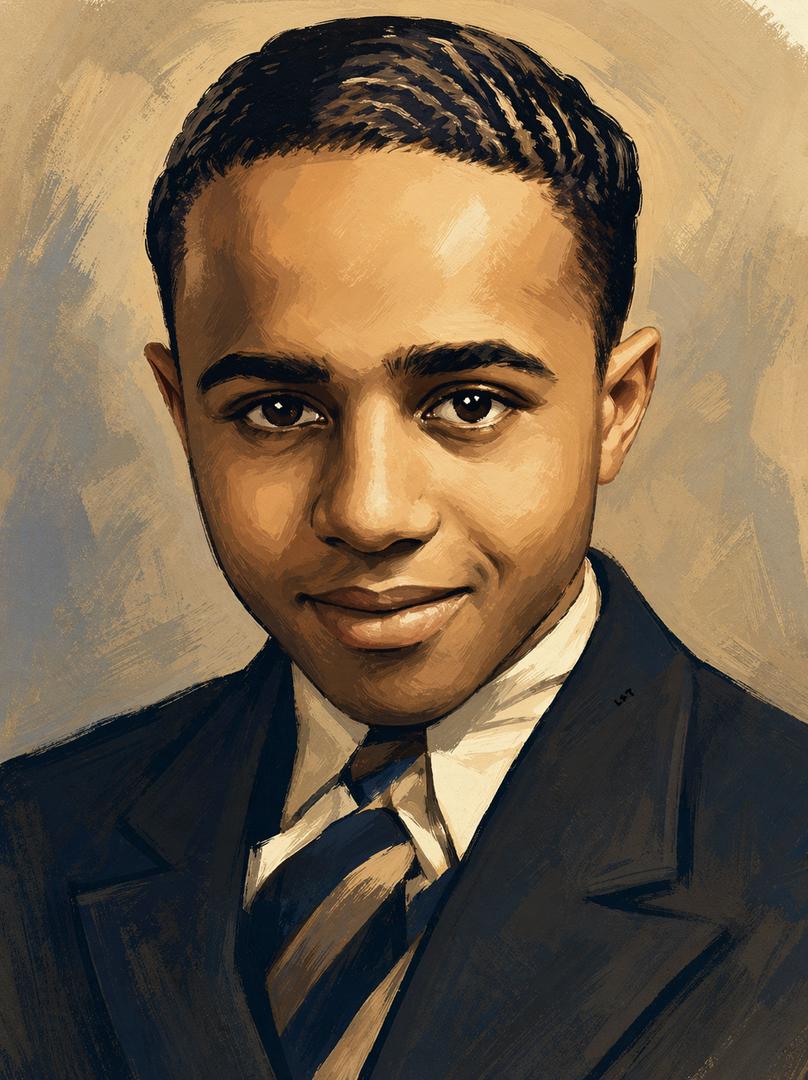
On April 24, 1919, David Harold Blackwell was born in Centralia, Illinois. And his name belongs in the room whenever we talk about brilliant minds who helped shape the modern world. Blackwell became a mathematician and statistician whose work touched probability, game theory, information theory, Bayesian statistics, and dynamic programming. That may sound like a mouthful, but here is the plain truth: he studied how people make decisions when the outcome is uncertain. That kind of thinking matters everywhere. In economics. In science. In technology. In strategy. In the systems people use today without ever knowing whose mind helped build the foundation. He earned his Ph.D. in mathematics from the University of Illinois in 1941, when he was only 22 years old. At a time when doors were often closed before a Black scholar could even reach for the handle, Blackwell kept walking forward anyway. In 1965, he became the first African American elected to the National Academy of Sciences. That was not just a personal achievement. That was a barrier breaking in one of the highest scientific institutions in the country. He also became the first Black tenured professor at the University of California, Berkeley, and his legacy continues through ideas tied to the Rao-Blackwell theorem, Blackwell’s approachability theorem, and other work that still carries his name. David Blackwell did not need noise to prove greatness. His work was precise. His mind was powerful. And his legacy reminds us that Black history is not only found in marches, music, sports, or politics. It is also found in equations, theories, classrooms, and ideas that changed how the world thinks. On April 24, we remember David Harold Blackwell…a quiet giant of mathematics whose brilliance still speaks. #DavidBlackwell #BlackHistory #HiddenHistory #Mathematics #LataraSpeaksTruth
LataraSpeaksTruth

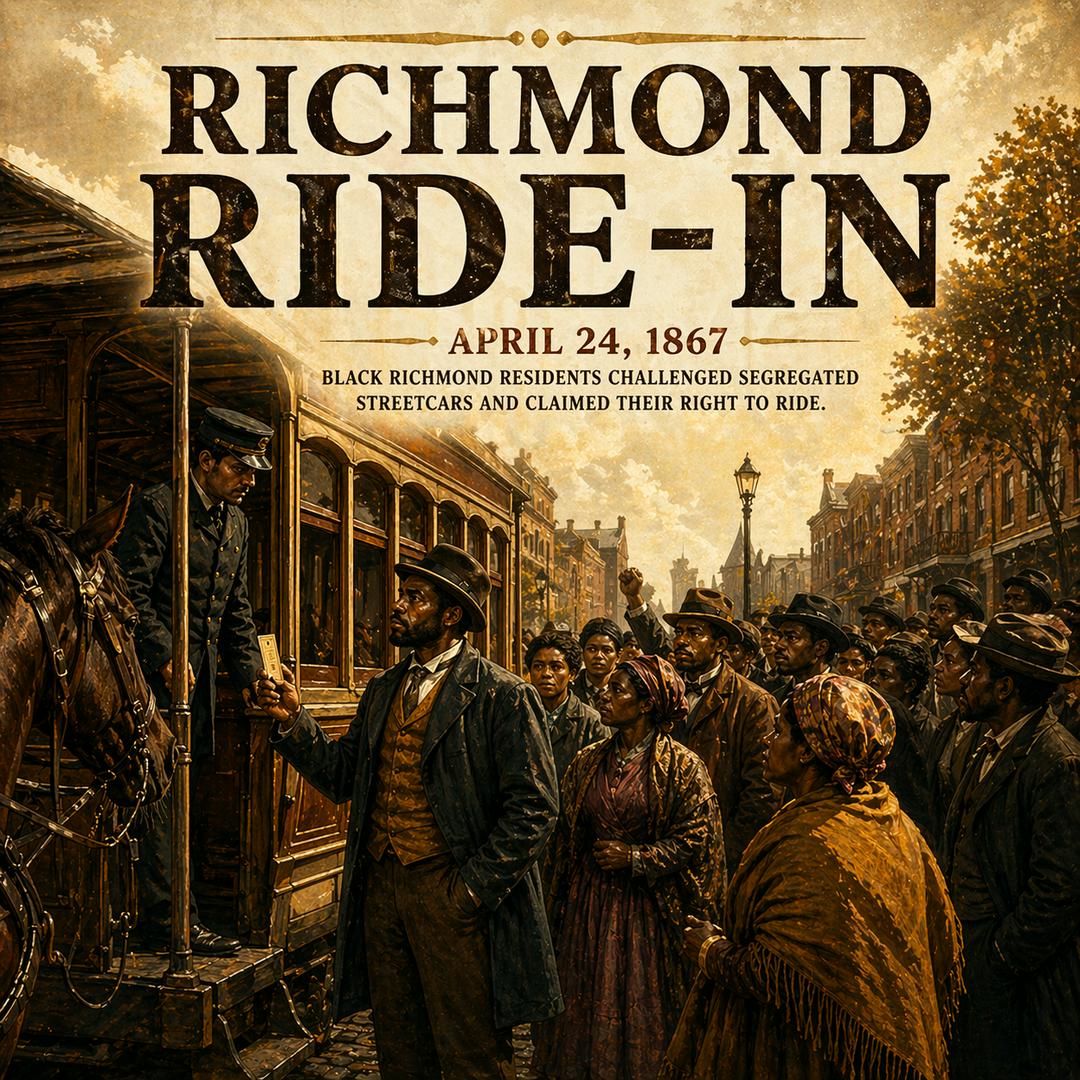
On April 24, 1867, Black residents in Richmond, Virginia made it clear that the fight for equal treatment did not begin in the 1950s. It was Reconstruction. Slavery had officially ended through the 13th Amendment barely more than a year earlier, but freedom on paper did not mean equal rights in everyday life. In Richmond, Black passengers were being denied access to privately operated, horse-drawn streetcars, even when they had paid for a ticket. One of the people connected to this protest was Christopher Jones. According to historical records, Jones bought a ticket for a Richmond streetcar and attempted to ride. When he was refused, a crowd gathered in support of his right to board. He was later arrested for disturbing the peace. But the people did not back down. Black Richmond residents organized protests against the streetcar company’s racial restrictions. This was not just about transportation. It was about citizenship, public space, dignity, and whether freedom would mean anything beyond words written into law. That is what makes this history so important. Long before the Montgomery Bus Boycott, long before Rosa Parks became a national symbol, Black communities were already challenging segregation in public transportation. They were using protest, public pressure, and collective action to demand what should have already been theirs. The Richmond Streetcar Protest reminds us that civil rights history did not suddenly appear in the 20th century. It had deep roots in Reconstruction, when newly freed people were fighting to define what freedom would actually look like in public life. April 24, 1867 deserves to be remembered because it shows us something powerful. The pushback started early. The courage was already there. And the demand was simple: if we paid to ride, we had the right to ride. #BlackHistory #ReconstructionHistory #RichmondVA #CivilRightsHistory #HiddenHistory

LataraSpeaksTruth

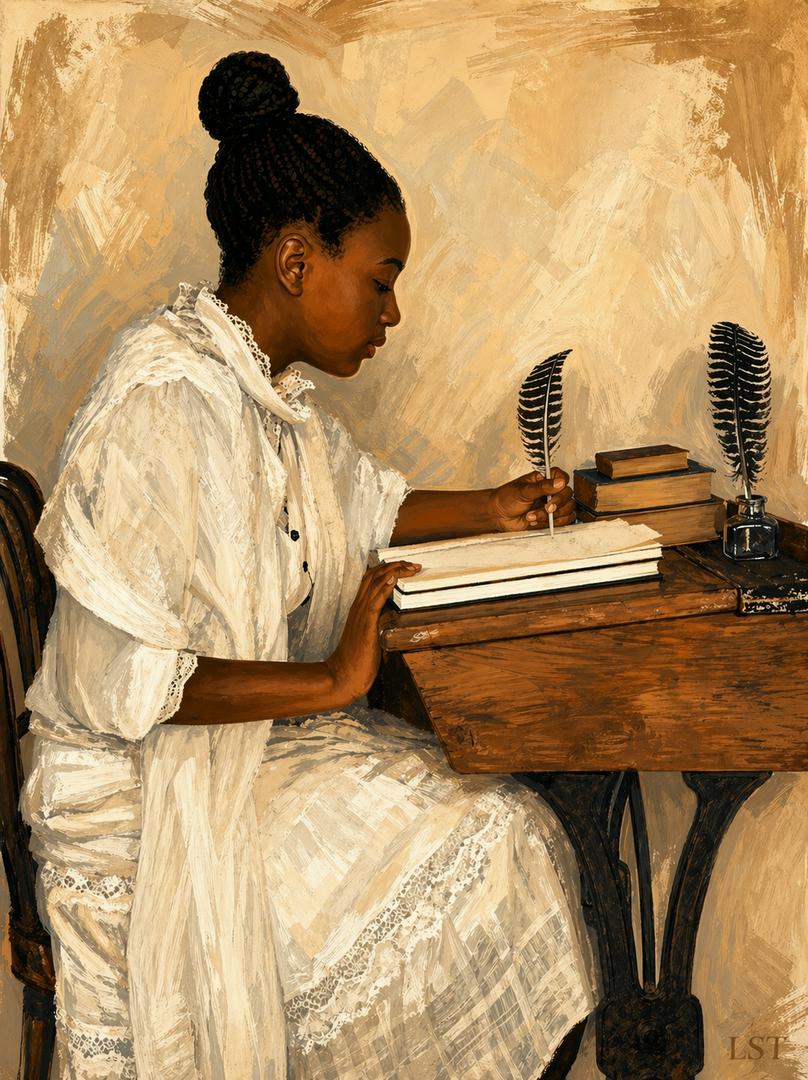
On April 23, 1872, Charlotte E. Ray made history in Washington, D.C. She became the first woman admitted to practice before the Supreme Court of the District of Columbia, helping cement her place as the first Black woman lawyer in the United States. Ray was born in New York City in 1850. Her father, Reverend Charles Bennett Ray, was an abolitionist, minister, and newspaper editor who believed deeply in education. That foundation mattered, because Charlotte stepped into a profession that was not built to welcome women, and especially not Black women. She studied at Howard University School of Law and graduated in 1872. At a time when women were still fighting to be taken seriously in the legal field, Ray broke through two walls at once. She challenged both race barriers and gender barriers. After being admitted to practice law, Ray opened her own law office in Washington, D.C. She worked in commercial law and became known for her legal skill. One of her most recognized cases involved representing a woman seeking divorce from an abusive husband, showing that Ray was not just a symbol of progress. She was a real attorney doing serious legal work. But history should tell the full truth. Charlotte E. Ray had the education, the courage, and the ability. What she did not have was a society willing to fully support a Black woman attorney. Racism and sexism made it difficult for her to keep enough clients to sustain her practice. Eventually, she left law and returned to teaching. That part matters too. Because sometimes the door opens, but the room still refuses to make space. Charlotte E. Ray still walked through it. On April 23, we remember her not just because she was first, but because she stepped into a world that tried to keep her out and left her name in the record anyway. #CharlotteERay #History #WomensHistory #LegalHistory #OnThisDay #HiddenHistory #LataraSpeaksTruth

LataraSpeaksTruth

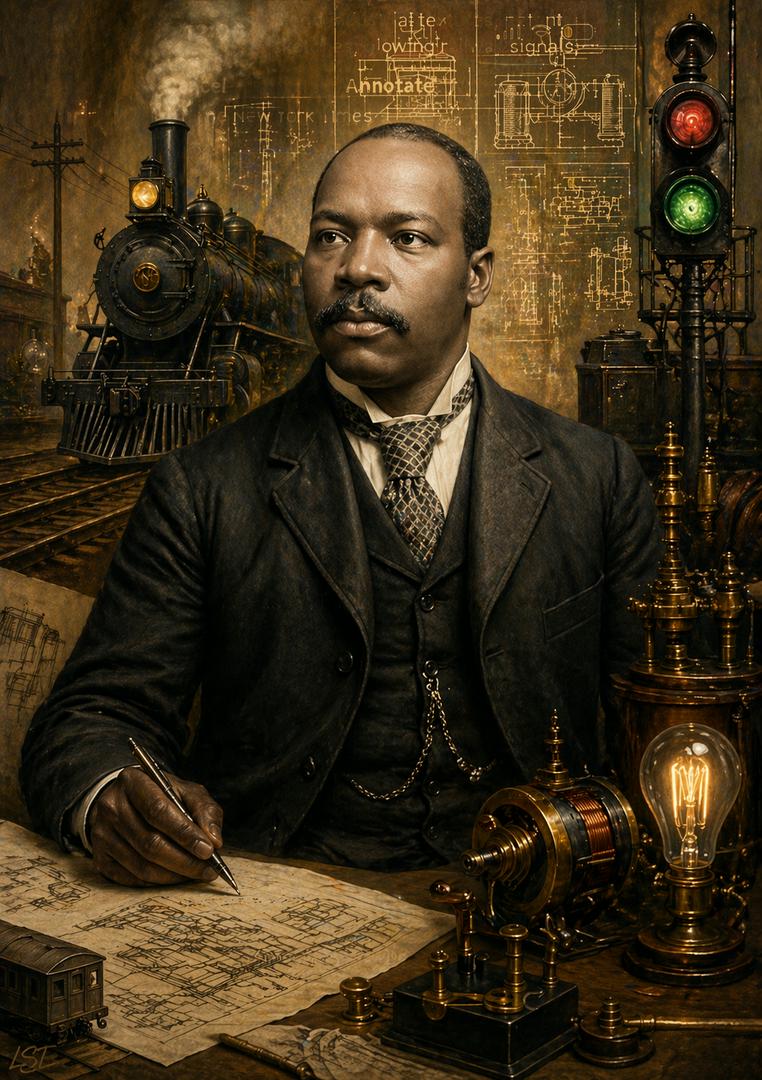
On April 23, 1856, Granville T. Woods was born in Columbus, Ohio…and history got one of its sharpest minds. Granville T. Woods was an inventor and engineer whose work helped make railroad travel safer, smarter, and more efficient at a time when trains were one of the most important parts of transportation in America. He became known for developing electrical and mechanical devices that improved communication on the rails and helped reduce dangerous mistakes.  One of his most important achievements was his railway telegraph, a system that allowed moving trains to communicate with stations and with other trains. That mattered. In an era when timing errors and lack of communication could turn deadly, Woods created technology that helped protect passengers and workers alike. His ideas pushed transportation forward and showed what brilliance looks like when it refuses to be ignored.  He earned dozens of patents and built a reputation strong enough that people called him “The Black Edison.” But Granville T. Woods was not great because he was compared to somebody else. He was great because his mind produced work that helped shape the modern world.  Today, on his birthday, he deserves to be remembered not as a footnote, but as a force…a man whose inventions helped move a nation. #GranvilleTWoods #History #Inventors #HiddenHistory #NewsBreak

justme

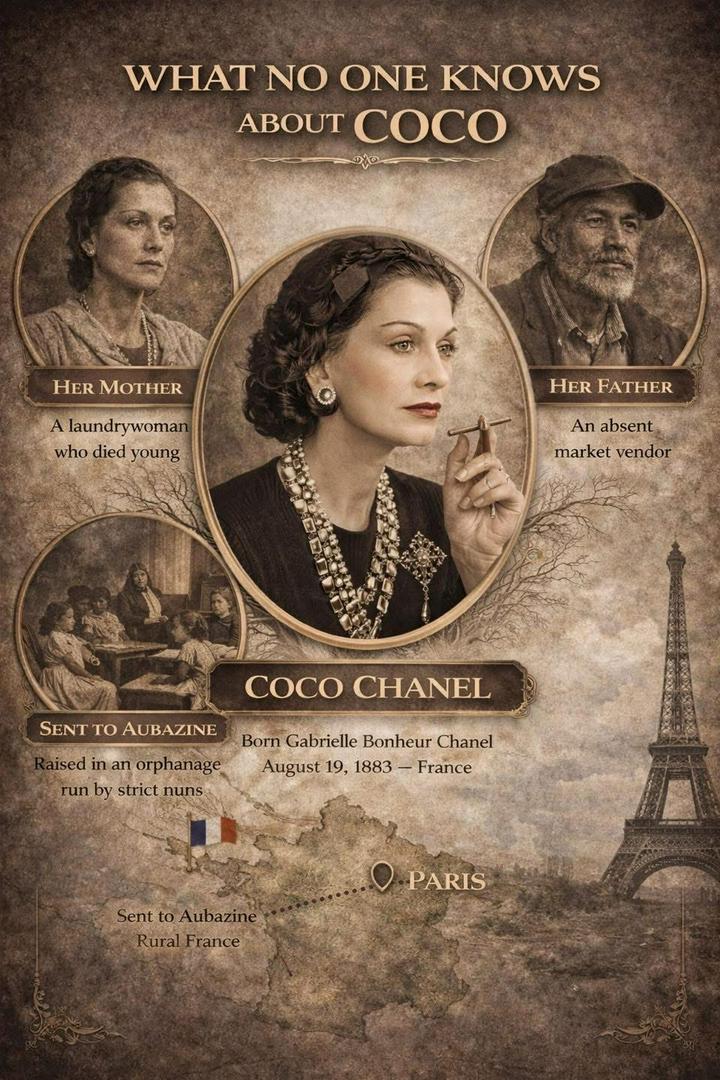
Ever notice how the world celebrates elegance… but rarely asks what it cost? Before the name Coco Chanel became a symbol of luxury… There was no luxury. No polished boutiques. No perfume in glass bottles. No quiet rooms filled with silk. There was loss. Her mother died when she was young. Her father left. And a child who once had a home… was sent to an orphanage in rural France. Not a fashion house. An orphanage. Run by strict nuns. Where discipline was daily. And sewing was not art… it was survival. Now pause here: 👉🏾 What does it do to a person… to grow up in a place where comfort is not given, only structure? Because her story didn’t begin with beauty. It began with absence. And in that absence… she learned something powerful: How to build. Thread by thread. Habit by habit. Identity by identity. Years later, the world would know her for simplicity. Clean lines. Black dresses. Clothes that allowed women to move… breathe… exist. But that didn’t come from luxury. It came from understanding restriction. From knowing what it feels like to be confined… and deciding to design something different. Two different worlds. On one side: An orphanage. Silence. Structure. On the other: Paris. Fashion. Influence. And in between… a woman who carried both. Not a perfect story. A real one. Because here’s what many people miss: She didn’t just create style. She translated her past into something the world could wear. And maybe that’s the deeper question: 👉🏾 Can what we go through… become what we give back? Because this is bigger than one name. There are millions of people walking around with stories that didn’t start easy. Stories that began in places no one celebrates. Yet somehow… they shape things the world cannot ignore. And here is the part we must sit with: Greatness does not always come from comfort. Sometimes… It is stitched together from everything that was missing. So maybe this was never just about Coco Chanel. Maybe it is about wha

LataraSpeaksTruth

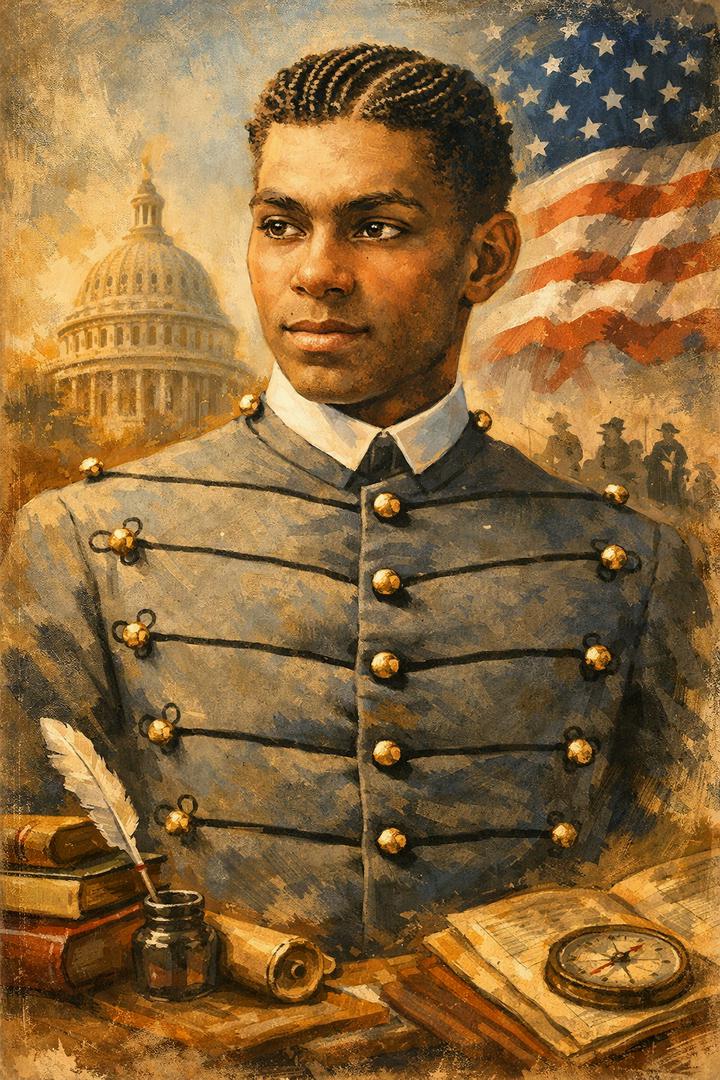
March 21, 1856 - Henry Ossian Flipper was born in Thomasville, Georgia, into slavery. His life began in a nation that had already decided how far Black people were supposed to go, and how firmly they were supposed to stay in their place. Flipper had other plans. He came of age during Reconstruction and, in 1873, was appointed to the U.S. Military Academy at West Point, one of the most elite institutions in the country. Getting in was one battle. Surviving it was another. He faced harassment, isolation, and open hostility, yet refused to be broken by any of it. In 1877, Henry Ossian Flipper became the first Black graduate of West Point and the first Black commissioned officer in the regular U.S. Army. That was no small ceremonial first. It was a direct blow against a system built to exclude Black Americans from military leadership, prestige, and power. His success proved what had always been true: the barrier was never ability, it was racism. After graduation, Flipper served with the 10th Cavalry, one of the famed Buffalo Soldier regiments. His career reflected discipline, endurance, and service, even as injustice continued to follow him. Still, history remembers what matters most: Henry Ossian Flipper crossed a line this country never intended for a Black man to cross… and he did it in uniform. His name deserves to be spoken with respect, not tucked away like a footnote. Sources: National Archives, U.S. Army #OnThisDay #BlackHistory #HenryOssianFlipper #WestPoint #BuffaloSoldiers #MilitaryHistory #BlackExcellence #HiddenHistory #AmericanHistory #BlackPioneers

Calorie

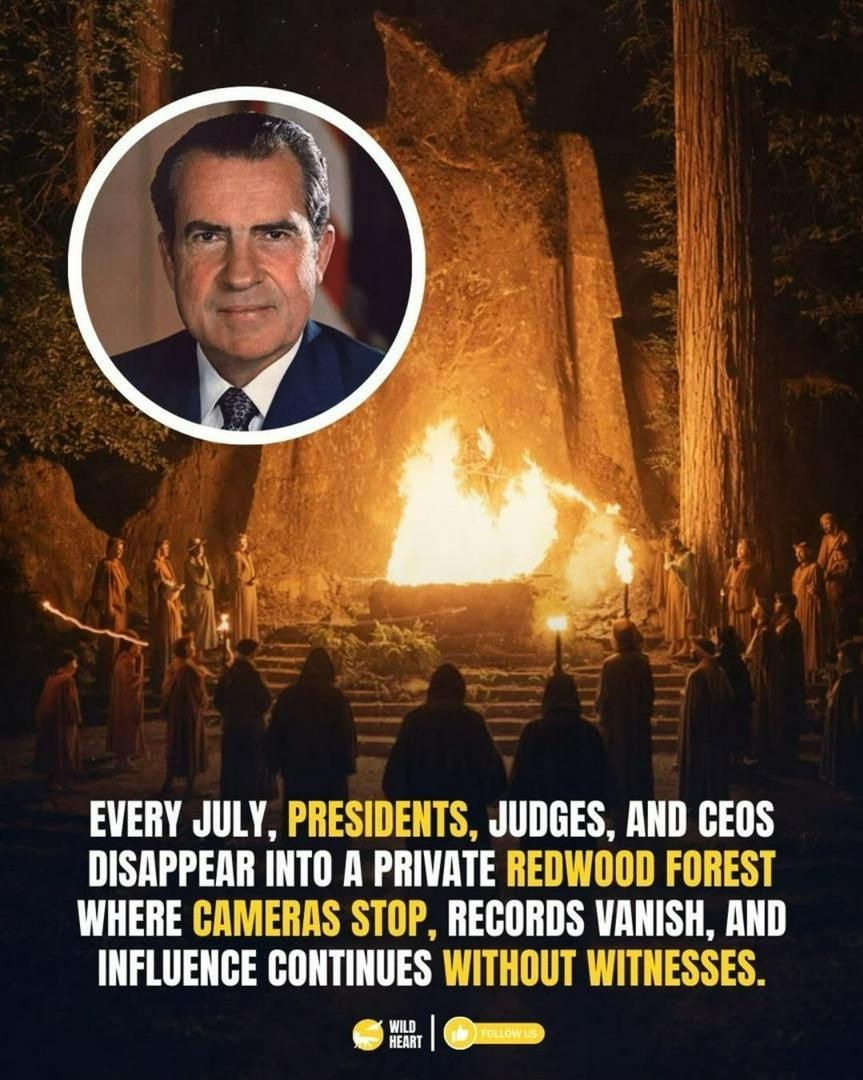
Every July, some of the most powerful men on Earth quietly vanish into a redwood forest in Northern California. and almost no one is meant to talk about what happens next. The place is Bohemian Grove, a private 2,700-acre retreat owned by the Bohemian Club. Former U.S. presidents, intelligence leaders, military officials, udges, and CEOs attend. Phones are restricted. Press is parred. The motto hanging over the event reads, "Weaving Spiders Come Not Here," which is supposed to mean no business, no deals, no plotting But power does not turn itself off iust because the setting changes. On the opening night, attendees gather before a massive concrete owl and perform a ritual called the Cremation of Care. An effigy symbolizing worry, responsibility, and consequence is burned in front of a cheerina crowd. It is theatricalancient-looking, and deeply unsettling to outsiders, especially when everyone is wearing ceremonial robes in near darkness. This might sound like harmless pageantry until history complicates the story. In 1942 senior figures connected to the Manhattan Project were present at the Grove when early conversations took place. No formal meetings were recorded, but the connections were real. and the outcomes reshaped the world. People have tried to see it themselves. In 2000, Alex Jones secretlv filmed part of the ceremony, confirming what many believed was exaggerated. It was not. So is Bohemian Grove iust a strange summer camp for powerful men, or a place where influence quietly forms before the oublic ever notices?Maybe the most honest answer is this: decisions are rarely made in public, but relationships that shape them almost never are. #fblifestyle #historymystery #hiddenhistory #powerstructures #politicalculture

LataraSpeaksTruth

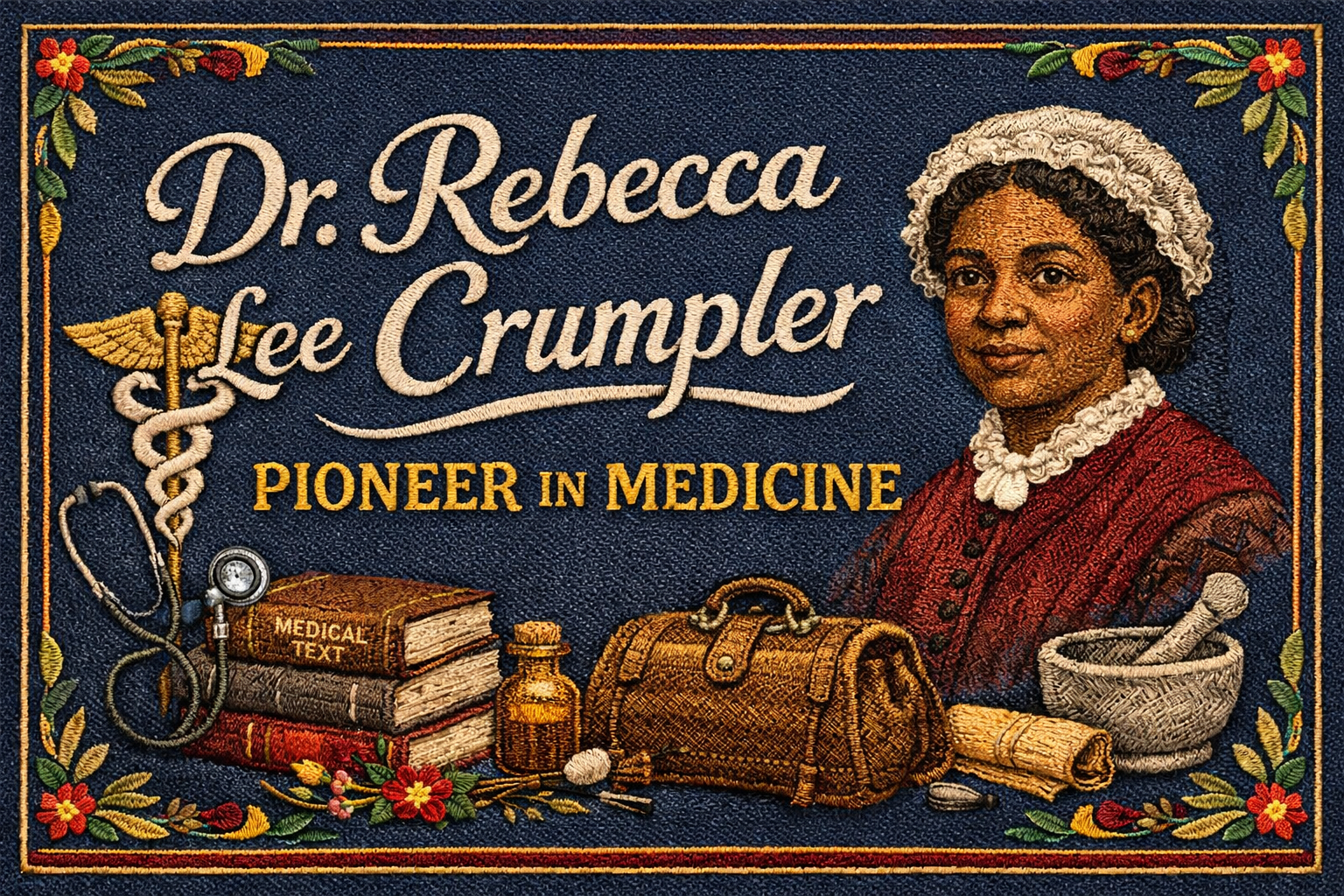
On March 9, 1895, Dr. Rebecca Davis Lee Crumpler died in Hyde Park, Massachusetts. Her death marked the close of a life that helped change American medical history. She is widely recognized as the first Black woman in the United States to earn a medical degree, graduating from the New England Female Medical College in 1864. At a time when both race and sex were used to shut people out of education and the professions, Dr. Crumpler entered medicine anyway and made history by doing work many believed she should never have been allowed to do. Before becoming a physician, she worked as a nurse for years. That experience shaped the kind of doctor she became. After earning her degree, she practiced in Boston and later in Richmond, Virginia, after the Civil War. There, she cared for newly freed Black people who had long been denied proper medical treatment. She focused especially on women and children, serving people too often ignored by the medical system and by the country itself. Her legacy matters not only because she was first, but because of who she chose to serve. Dr. Crumpler worked in a profession dominated by white men and pushed through racism, sexism, and open disrespect. In 1883, she published A Book of Medical Discourses, based on her medical experience caring for women and children. It stands among the earliest medical books published by an African American physician. Too often, history turns people like her into a quick fact and moves on. But Rebecca Crumpler was more than a milestone. She was a physician, writer, healer, and a woman who refused to let this country’s barriers define her reach. Her name belongs in the foundation of American medical history…not as a footnote, but as a pillar. #RebeccaLeeCrumpler #BlackHistory #WomensHistory #BlackWomenInMedicine #MedicalHistory #AmericanHistory #HiddenHistory #MassachusettsHistory #BlackExcellence #Trailblazer #HealthcareHistory #HistoryMatters

LataraSpeaksTruth

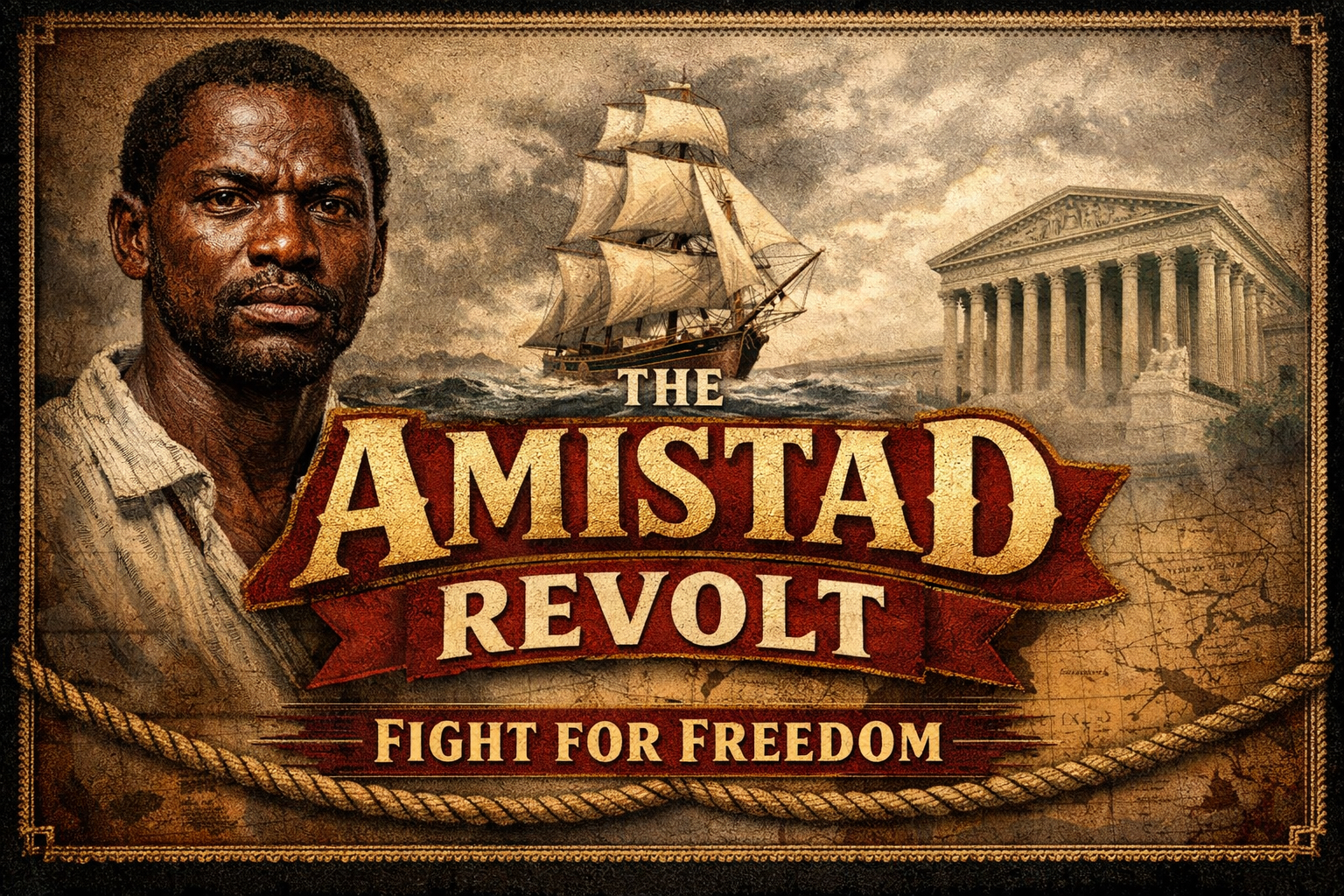
The Amistad case was never just a courtroom story. It was a freedom story written in terror, resistance, and law. In 1839, Africans from what is now Sierra Leone were kidnapped and forced into the illegal slave trade. Taken to Cuba and sold against their will, they were placed aboard La Amistad like cargo. Stripped of home, family, language, and choice, they were expected to submit. They did not. Sengbe Pieh, often called Cinqué, became the best known leader of the revolt. The captives rose up, seized control of the ship, and demanded to be taken back to Africa. This was not piracy. It was self defense against kidnapping and slavery. But the ship never reached home. The Spaniards aboard deceived them by steering north at night, and the vessel was eventually seized near Long Island. Once on American soil, the Africans faced another fight in the legal system. Slave interests and government officials tried to classify them as property. Abolitionists fought to prove the truth…that these were free people who had been illegally kidnapped. Former President John Quincy Adams argued before the Supreme Court on their behalf. On March 9, 1841, the Supreme Court ruled in favor of the surviving Africans. The Court recognized that they had been illegally enslaved and had the right to fight for their freedom. The ruling did not end slavery in America, but it struck a blow against the logic that stolen human beings could be reduced to property under the law. Amistad still matters because freedom was not handed down from above. It was seized by people who refused to die quietly. Too much history gets buried, softened, or pushed aside like people hope nobody will notice what was done. Amistad reminds us that resistance is part of the record and that truth survives, even when power tries to bury it. #Amistad #SengbePieh #Cinque #BlackHistory #AfricanResistance #FightForFreedom #SlaveryHistory #HistoricalTruth #OnThisDay #FreedomStruggle #ResistanceHistory #HiddenHistory

AčT/Cæř

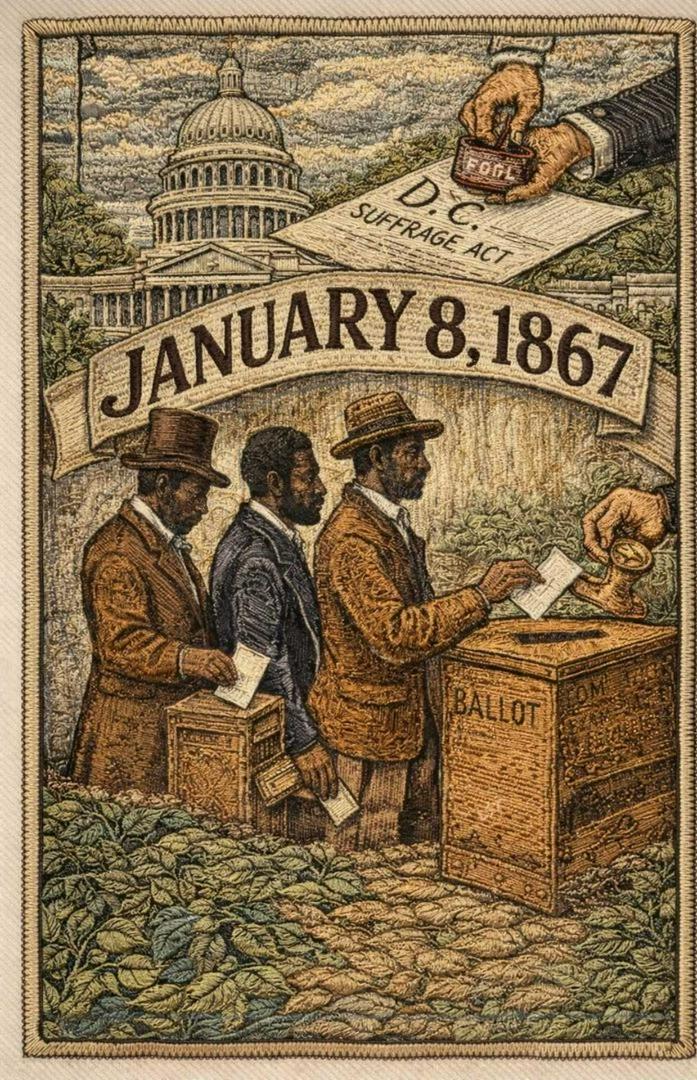
January 8, 1867 marks a turning point in American history that is rarely given the attention it deserves. On this day, Congress passed the District of Columbia Suffrage Act, granting Black men in Washington, D.C the legal right to vote in municipal elections and public referenda. This happened three years before the 1 5th Amendment, at a time wher most of the nation still viewed Black political participation as a danger rather than a riaht. This was not a promise for the future or a symbolic gesture. It was an immediate, enforceable change written directly into law. The decision did not come quietly or without resistance. President Andrew Johnson vetoed the act, arguing that extending votina riahts to Black men was premature and would destabilize the country. Congress reiected that argument and overrode his veto the same day. That override mattered It made clear that Reconstruction was not only about ending slavery on paper but about redistributing political power in real time. Washington, D.C. became a proving ground, showing that Black civic participation could exist and function despite fierce opposition The importance of Januarv 8, 1867 is often overlooked because it does not fit neatly into the simplified version of history many are taught. Voting rights did not suddenly appear with the 15th Amendment. They were demanded, tested, expanded restricted, and attacked repeatedly. This moment captures Black men exercisinc political agency while the nation was still debating whether they deserved it. It reminds us that progress has never required national comfort or unanimous approval. Rights have always moved forward through pressure, confrontation, and refusal to wait. January 8 stands as proof that access was forced open long before the country was ready to admit it #January8 #OnThisDay #BlackHistory #ReconstructionEra #VotinaRichts #DistrictOfColumbia #AmericanHistory #HiddenHistory #CivilRights

Tag: hiddenhistory - Page 4 | LocalAll