Tag Page help

#help
LLama Loo

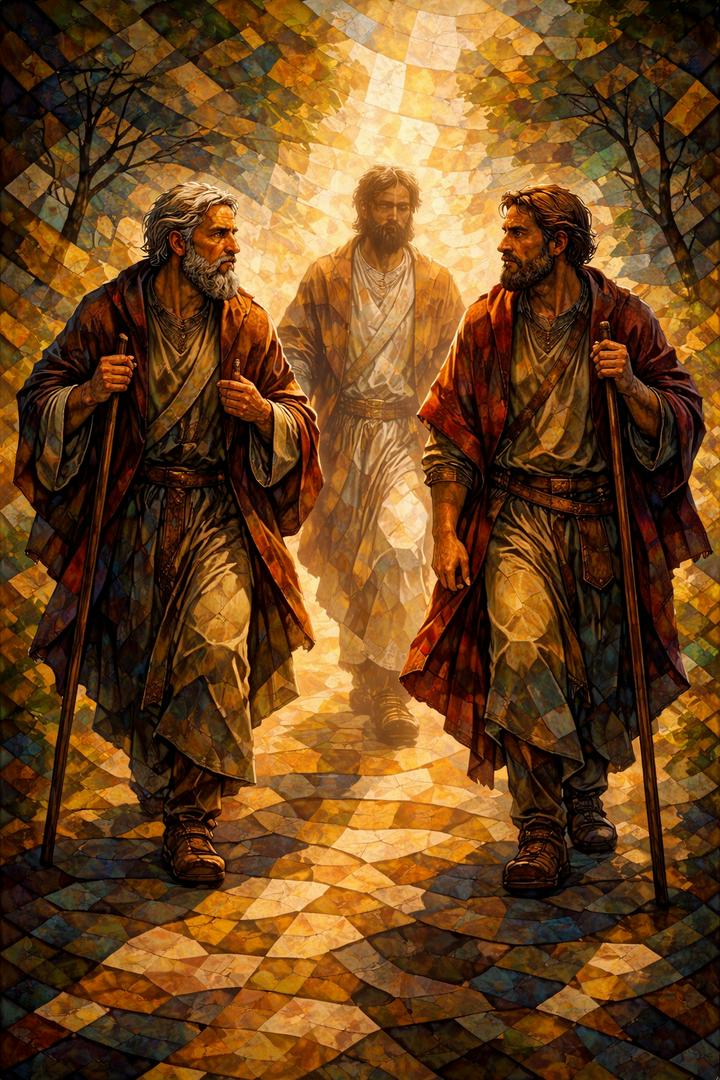
🛟 When People Would Rather Have a Problem Than a Solution A spiritual and psychological perspective We assume that everyone wants relief. We assume that when someone complains long enough, they must want an answer. We assume that if we offer a clear path forward, they’ll take it. And yet — many don’t. They reject solutions. They dismiss advice. They defend the very patterns that are hurting them. It leaves us baffled. So what is happening here? ⸻ What Psychology Says Psychology has long recognized that not everyone is motivated by solutions. Sometimes people are motivated by something else entirely. 1. Secondary Gain Some problems come with hidden rewards: • Sympathy • Attention • Financial support • Avoidance of responsibility • Control over others If solving the problem removes the “benefit,” the person unconsciously resists healing. 2. Learned Helplessness When someone has failed repeatedly or experienced trauma, they may stop believing change is possible. Even when help appears, they assume it won’t work. So they don’t try. Not because they love suffering — but because they expect failure. 3. Identity Attachment For some, the struggle becomes part of their identity. “I’m the overlooked one.” “I’m the unlucky one.” “I’m the misunderstood one.” If the problem goes away, who are they? Growth requires letting go of a familiar story — even if it’s painful. That’s terrifying. 4. Comfort in Chaos As strange as it sounds, dysfunction can feel safer than unfamiliar peace. Predictable misery can feel more controllable than uncertain freedom. ⸻ What Scripture Says The Bible speaks clearly about this pattern. Loving Darkness More Than Light “And this is the condemnation, that the light has come into the world, and men loved darkness rather than light…” — Gospel of John 3:19 Light exposes. Light requires change. Some reject it. Always Learning, Never Arriving 🛟 CONTINUED IN COMMENTS ⬇️⬇️⬇️ #Help #Love #Jesus #Gettowork #SolutionSeekers

LLama Loo

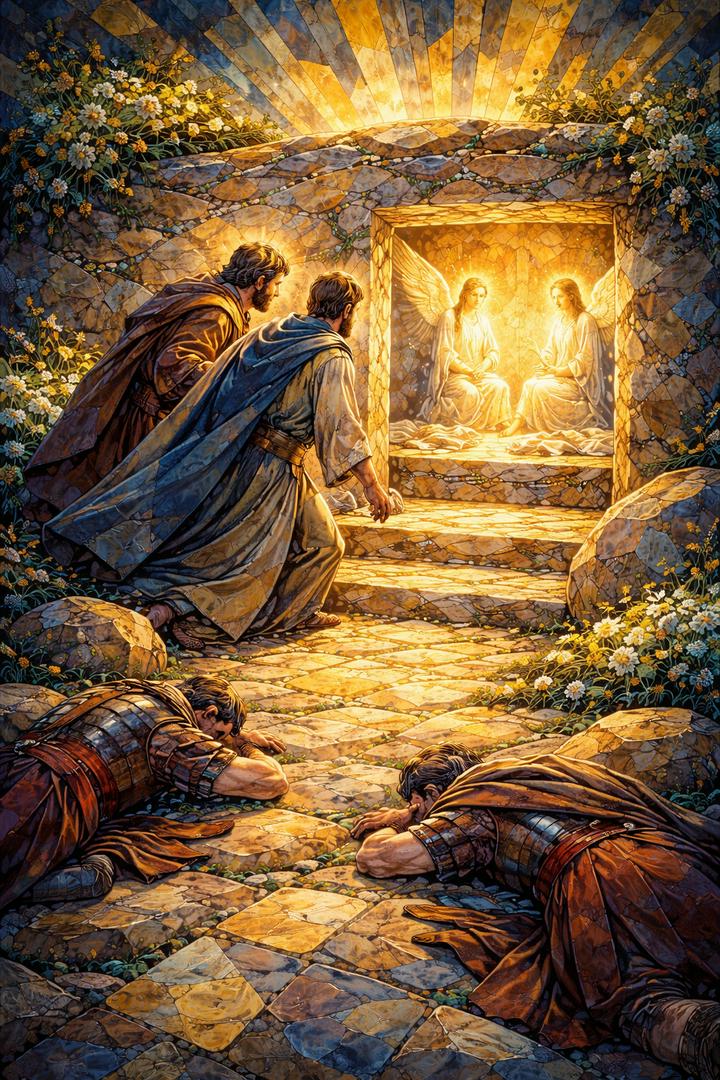
✨ Prophecy Fulfilled: The Resurrection of Yeshua (Jesus) The Empty Tomb The tomb had been sealed. A great stone stood where hope had been buried, and Roman guards—men trained to kill and die—kept watch through the long hours of the night. Death, it seemed, had won. But “after the Sabbath, toward the dawn of the first day of the week” (Matthew 28:1), the stillness broke. The women came early, carrying spices, not faith. They were not expecting resurrection. They were expecting to tend a body. As Mark records, “They were saying to one another, ‘Who will roll away the stone for us from the entrance of the tomb?’” (Mark 16:3). They looked up. The stone was already gone. Not shattered. Not forced open. Simply moved. Matthew tells us the earth itself responded: “There was a great earthquake, for an angel of the Lord descended from heaven and rolled back the stone and sat on it” (Matthew 28:2). The guards—armed, disciplined, accountable under penalty of death—“trembled and became like dead men” (Matthew 28:4). Inside the tomb, there was no body. Instead, there was order. John records the detail with quiet precision: “He saw the linen cloths lying there, and the face cloth… folded up in a place by itself” (John 20:6–7). Grave robbers do not fold linens. Panic does not leave behind calm. This was not theft. This was completion. The angel spoke words that still echo across centuries: “Do not be afraid, for I know that you seek Jesus who was crucified. He is not here, for He has risen, just as He said” (Matthew 28:5–6). Just as He said. This moment did not come without warning. Yeshua had told them plainly, “The Son of Man must be delivered into the hands of sinful men and be crucified and on the third day rise” (Luke 24:7). Yet even those who loved Him most could not yet grasp what had happened. CONTINUED IN COMMENTS ⬇️⬇️⬇️ #Jesus #Redeemer #Resurrection #Bible #Love #Help #Gnosticism #Atheism

LLama Loo

Prophecy Fulfilled: The Life of Yeshua (Jesus) The Tomb The cross was not the end of the story—but it was the end of His suffering. When Yeshua breathed His last, the sky had darkened, the earth had trembled, and the crowd that once roared had grown quiet. Rome had done its work. By every legal and physical standard, He was dead. What followed was not spectacle. It was care. As the Sabbath approached, time became precious. Jewish law required burial before sundown, and victims of crucifixion were rarely granted dignity after death. Bodies were often left exposed as warnings—forgotten by men and consumed by nature. But Yeshua was not abandoned. ⸻ Yosef of Arimathea Steps Forward Yosef of Arimathea, a respected member of the council and a man described in Scripture as one who was waiting for the kingdom of God, emerged from quiet faith into public courage. Until this moment, he had remained largely unseen—careful, observant, faithful in private. Now, when association with Yeshua carried real danger, Yosef went directly to Pilate and asked for the body. This was not a small act. Requesting the body of an executed criminal placed Yosef at risk—socially, politically, and spiritually. Yet he did not hesitate. Love rarely does when the cost is highest. Pilate confirmed that Yeshua was truly dead and released the body into Yosef’s care. ⸻ The Burial Preparation Yeshua was taken down from the cross by human hands—hands that touched torn flesh, puncture wounds, and dried blood. There was no time for ceremony, only intention. Nicodemus joined Yosef, bringing an extraordinary amount of burial spices—myrrh and aloes—far more than custom required. This was not a pauper’s burial. It was an offering of honor. His body was gently wrapped in linen according to Jewish burial customs. No embalming. No delay. Just careful preparation, layer by layer, with reverence and restraint. This mattered. ✝️ Continued in Comments ⬇️⬇️⬇️ #Jesus #Salvation #Love #Help

LLama Loo

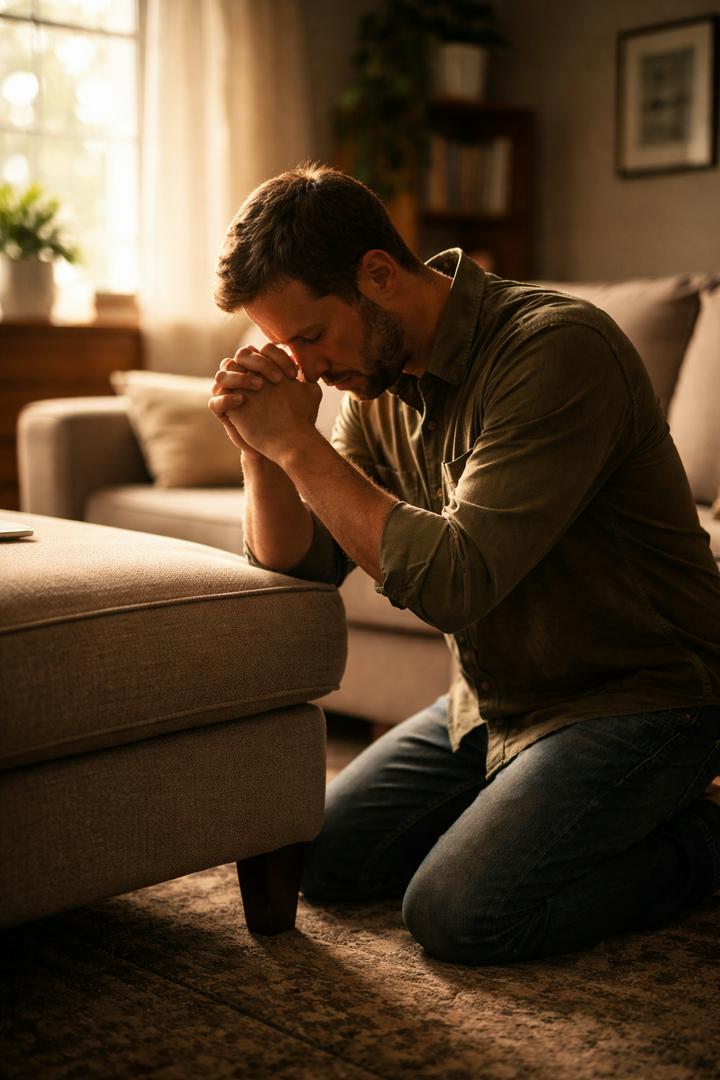
🕊️ A Revelation in the Silence There will be seasons when God is quiet. Not distant. Not gone. Just quiet. And in those moments, something sacred is revealed—not about Him, but about us. Silence is not God turning away. It is not disappointment. It is not rejection. And it is certainly not an invitation for us to stop speaking. God’s silence is never a cue to withdraw. It is a call to lean in. Prayer is not a button we press to provoke a response. It is the lifeline that keeps us tethered to Him—especially when answers don’t come. When God is quiet, prayer becomes pure faith. Not faith fueled by reassurance. Not faith sustained by emotion. But faith that says, “I will keep speaking because I trust You are still listening.” Silence strips prayer of transaction and reveals it as relationship. We pray without ceasing not because we are desperate for words back—but because communion itself is trust. Because staying connected matters more than being comforted. Because love doesn’t disappear when conversation slows. God’s silence does not mean He has stepped away. It means He is still present—close enough that He doesn’t need to shout. And our continued prayer in that silence says something holy: I believe You are here. I believe You hear me. I believe You are working, even now. So we keep praying. We keep speaking. We keep reaching. Not to break the silence—but to remain in relationship. Because prayer is faith made audible. And silence does not sever what faith sustains. 🙏🏼 Continued in Comments ⬇️⬇️⬇️ #Prayer #GodIsWorking #GodIsReal #Jesus #Listen #Praywithoutceasing #Bible #TrustGod #Help

LLama Loo

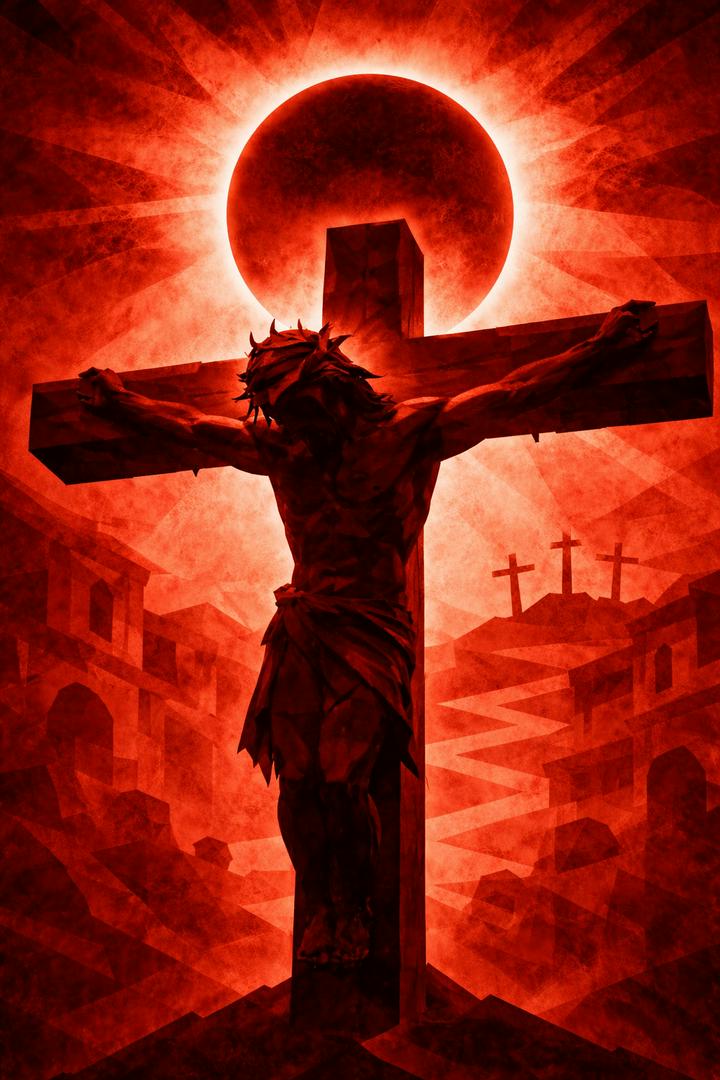
✨Prophecy Fulfilled: The Life of Yeshua, Episode 65- Love Beyond Measure The cross is raised. Wood settles into earth. Iron holds flesh in place. And time slows. Crucifixion is not a single act of violence — it is an ongoing one. Every breath must be earned. To inhale, the body slumps forward. To exhale, the condemned must push upward — against nailed feet and strained arms — scraping torn muscle against wood. Pain is constant. Air is rationed. Around Him, the crowd gathers. Some mock openly. Others watch in uneasy silence. Religious leaders sneer, satisfied that they have preserved their authority. Soldiers cast lots beneath Him, indifferent to the gravity above their heads. “If You are the Son of God,” they say, “save Yourself.” Then Yeshua speaks. Not in protest. Not in defense. He prays. “Father, forgive them, for they do not know what they are doing.” These are not words of resignation. They are words of authority. Even as His body is failing, His role as intercessor does not waver. He does not deny the injustice. He does not excuse the cruelty. He names the truth plainly — they do not understand the full weight of what they are doing — and He places their guilt into the hands of the Father. Forgiveness is offered before repentance is requested. Mercy is extended while nails still hold Him in place. The cross is not only an instrument of death — it is already becoming an altar. On either side, two criminals hang — guilty men receiving the sentence they earned. One joins the mockery. The other does something unexpected. He sees clearly. He does not ask to be spared. He does not demand proof. He asks only to be remembered. And Yeshua answers him — not as a dying man clinging to hope, but as a King exercising authority: “Today, you will be with Me in Paradise.” Forgiveness is still flowing — even here. The sky darkens. ✝️ Continued in Comments ⬇️⬇️⬇️ #Love #Salvation #Sacrifice #Jesus #Bible #Help

LLama Loo

Forgiveness Is Not a Hall Pass 🕊️ We all struggle with it. We all have someone who has hurt us—and most of us have hurt someone else, sometimes without even realizing it. Often, people carry unresolved pain for months, years, even decades. We replay old moments, ruminate over past events, and adjust and readjust imagined outcomes. Deep down, we may hope for an apology that never comes. What we rarely do is resolve to communicate that hurt—especially when we know, deep down, that the other person isn’t sorry and may never be. Most people never apologize for the harm they cause. And most of us carry the weight of someone we have never apologized to. But forgiveness was never meant to hinge on apologies. Forgiveness is about releasing our hurt—our anger, resentment, and desire for retribution—into God’s hands. It is choosing to give forward our pain to Him, instead of carrying it forward ourselves, because vengeance belongs to God alone. As Carrie Fisher once said, resentment is like drinking poison and waiting for the other person to die. God does not want us living in poison. That is why He calls us to forgive—not to excuse what was done, not to deny the damage, but to give forward our pain to Him so we can live in peace, free from the constant pull of bitterness, and focused on Him rather than bound to the past. Forgiveness does not require forgetting. Forgiveness does not require reconciliation. Forgiveness does not require granting someone continued access to your heart, your space, or your peace of mind. Forgiveness can coexist with firm, loving boundaries. Boundaries are not bitterness; they are wisdom. Forgiveness simply means trusting God with them, the same way we trust Him with ourselves. So no—forgiveness is not a hall pass. It is letting go of our demand for human justice because we trust that God’s justice is perfect, complete, and never late. 🙏🏼 Continued in Comments ⬇️⬇️⬇️ #Forgiveness #God #Love #Help #Peace #Bible #Jesus #Faith

LLama Loo

✨ Prophecy Fulfilled: The Life of Yeshua (Jesus) – Episode 63 “The Way of Sorrows” (From Sentencing to the Place of the Skull) The verdict had been spoken. Pilate, having declared Yeshua innocent, nevertheless surrendered Him to the will of the crowd. With that decision, Roman justice concluded its deliberation and began its procedure. Yeshua was sentenced to die. As custom required, the crossbeam was placed upon His shoulders. Condemned men were made to carry the instrument of their execution through public streets—a warning meant to instill fear and enforce obedience. But Yeshua was not a typical prisoner. He had already endured severe scourging. Blood loss, shock, and exhaustion weighed heavily on His body. As the procession moved forward, His strength faltered. He stumbled beneath the burden. Roman soldiers, concerned only with efficiency, compelled a bystander—Simon of Cyrene—to carry the crossbeam. The Son of God allowed help. Not because He lacked authority, but because He had fully embraced the limits of human flesh. Women along the road wept openly. Yeshua turned to them—not to receive comfort, but to speak truth. He warned them not to weep for Him, but for themselves and for the days coming upon Jerusalem. Even while condemned, even while suffering, His concern remained fixed on others and on what was yet to unfold. This was no helpless victim being dragged toward death. This was a King walking a path He had already chosen. ⸻ The Destination The procession led deliberately to Golgotha—a Roman execution site located just outside the city walls. Scripture names it Golgotha, meaning “Place of the Skull.” The Latin term Calvary carries the same meaning. Whether the name referred to the appearance of the site or its long association with death, the implication was unmistakable. This was a place of finality. ✝️ CONTINUED IN COMMENTS ⬇️⬇️⬇️ #Bible #God #Jesus #BibleStudy #Help #Love #Calvary #ViadelaRosa #Salvation #Prayer #Gospel

LLama Loo

🕊️ How to Pray When You Don’t Have the Words One of the most freeing truths about prayer is this: God already knows your heart — and He is patient with your process. Prayer was never meant to be a performance, a script, or a carefully worded speech. God is omniscient. He knows what you carry before you ever speak it. And still, He invites you to come to Him — not because He needs information, but because relationship requires presence. He wants to hear you speak to Him. Even if it’s just a whisper. Even if it’s broken. Even if it’s silence. There is no wrong way to pray as long as you are earnest. You don’t need special language. You don’t need polished words. You don’t need to sound spiritual. Just talk to Him the way you would talk to a trusted friend or a loved one — because that is exactly what He is. Don’t worry about getting the words right. There is no script to follow. Just talk. Just ask. Just thank. Just praise. And then — be still. ⸻ Prayer Is Offered Through Jesus All prayer is offered in Jesus’ name, because Jesus Christ is the mediator between God and humanity. We do not approach God by our eloquence, our posture, or our worthiness. We approach Him through Christ alone. In moments when words completely fail, the Holy Spirit meets us there — translating the feelings of our hearts, the ache we can’t articulate, and the prayers we don’t know how to form. Prayer is a vulnerable space, and God does not leave us exposed in it. The Spirit intercedes, protects, and carries what we cannot. ⸻ Humility at the Heart of Prayer Prayer begins with humility. We worship God because He is good. We do not worship Him to control outcomes. We do not demand. We do not bargain. It is right to ask God to meet our needs — He invites us to do so. But we must remember: God is our loving Father, not a lucky rabbit’s foot. ✝️ CONTINUED IN COMMENTS ⬇️⬇️⬇️ #Bible #God #Jesus #BibleStudy #Help #Praying #Love #Forgiveness #Salvation

LLama Loo

✨ Prophecy Fulfilled: The Life of Yeshua (Jesus) – Episode 61 “Barabbas or Yeshua” (Matthew 27:15–26; Mark 15:6–15; Luke 23:13–25; John 18:39–19:16) The sun was higher now. Jerusalem was awake. What had been decided in shadow during the night was about to be affirmed in daylight—before the people. The tension had not eased with morning; it had thickened. Yeshua was brought once more before Pontius Pilate. Still bound. Still silent. Still innocent. ⸻ ⚖️ A Governor Cornered Pilate knew exactly what stood before him. He had examined Yeshua. He had questioned Him. He had sent Him to Herod. He had received Him back mocked—but unchanged. No crime. No threat. No guilt. More than once, Pilate said it aloud: “I find no fault in Him.” Truth had been spoken clearly. But truth does not always halt injustice—especially when fear outweighs conscience. ⸻ 🧱 A Custom, a Crowd, a Calculation Pilate reached for precedent. Each Passover, one prisoner was released as a political gesture meant to ease unrest. Pilate saw an opportunity—a way to satisfy justice and preserve order without bloodshed. He presented the crowd with a choice. Two men were brought forward. One was Barabbas. A known insurrectionist. A man guilty of violence and murder. A name already stained with rebellion. The other was Yeshua. Unarmed. Unresisting. Called Messiah by some, threat by others. Pilate asked carefully: “Whom do you want me to release to you?” ⸻ 📣 Crowds and Propaganda Crowds are easily moved—not by truth, but by repetition, fear, and perceived authority. The city that had once celebrated Him now watched silently or joined the outcry, proving how quickly devotion collapses when propaganda replaces discernment. Praise without conviction is easily redirected, and public opinion—when untethered from truth—can be turned with frightening speed. ✝️ CONTINUED IN COMMENTS ⬇️⬇️⬇️ #Love #Sacrifice #Jesus #BibleStudy #Scripture #Salvation #Help

LLama Loo

How Living Vertically Changed My Whole Life—for Good From the age of six until eighteen, I was raised in a foster home—not out of love, but as part of a financial arrangement between adults. Love was withheld. Abuse was allowed. Guidance and protection were absent. I learned early how to survive—but not how to be nurtured. By the grace of God—and through circumstances unrelated to spiritual intent—I was taken to church. It was not a vibrant congregation, but there was one teacher who truly believed in the saving grace of God. That mattered. A seed was planted, even if the soil was thin. When I left the foster home, life did not become peaceful. I lived in constant fight-or-flight, operating almost entirely on what I now understand as a horizontal plane. My focus was survival, self-protection, validation, and control. I believed in God, but my life was directed by fear rather than trust. Horizontal living looks outward for stability. It seeks meaning through relationships, accomplishments, distractions, or approval. When peace is tied to circumstances or people, it is always fragile. I spent years chasing a life that never delivered what it promised. That way of living led me through repeated trauma and loss. Again and again, I found myself empty—still searching, still striving, still wounded. I believed God existed, but I had not yet learned how to let Him lead. Eventually, life stripped away every illusion I relied on. At rock bottom, there was nothing left to manage, perform, or control. That was the moment everything shifted. I began to live vertically. Vertical living does not ignore pain or pretend life is easy. It simply changes the reference point. Instead of measuring life against circumstances or emotions, it becomes anchored upward—rooted in God rather than outcomes. ✝️ CONTINUED IN COMMENTS ⬇️⬇️⬇️ #Bible #God #Jesus #BibleStudy #Help #Afterlife #Christ #Prophesy #Heaven #Love #VictoryInChrist