Tag Page fblifestyle

#fblifestyle
Sara Manrique

"One ordinary night, I was sitting in my garage when four men suddenly rushed in and attacked me, demanding my car keys. Beaten and dazed, I told them the keys were inside the house. They rushed in--completely unaware of what was waiting for them. Inside were mv two rescued Pit Bulls - once forgotten shelter dogs, now my loval companions. Usuallv calm and loving, they instantly became protectors They planted themselves between the intruders and the door, barking with such power that the men froze in fear Within seconds, the attackers bolted out of the house My dogs didn't chase - they simply My dogs didn't chase - they simply staved beside me, alert and protective, until was safe That night, I understood something deeply: those dogs people once gave up on... ended up saving my life Rescue dogs aren't "Iess than." Sometimes, they're everything Story credit : Actual Owner #animals #animallover #lifesaver #doglover #herodog #dog #lovestory #kindnessmatters #humanity #efforts #HopeAndHealing #storytime #wholesome #fblifestyle #BornLegend.

justme

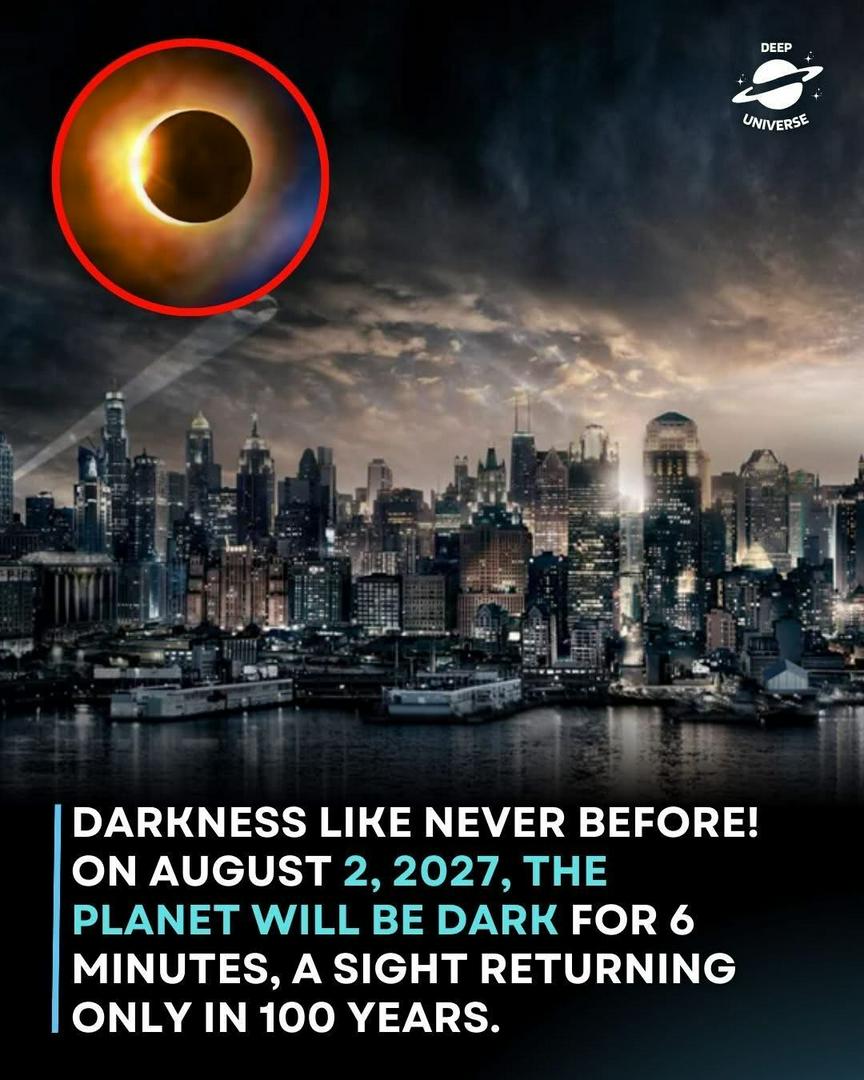
For a fleeting six minutes, day will vanish into night, and the world will hold its breath. On August 2, 2027, the Sun, Moon, and Earth will align in a perfect cosmic dance. It is a quiet shock to realise that such moments of total darkness are so rare — a spectacle that will not grace our skies again for a century. During a total solar eclipse, the Moon completely blocks the Sun, casting a shadow that races across Earth. The corona, the Sun’s outer atmosphere, will shimmer like delicate silver fire around the dark disc. Birds will pause, temperatures will drop, and even the air seems to change, as if nature itself senses the extraordinary. It is not just a visual phenomenon, but an event that reminds us of our fragile place in the cosmos. Scientists study these eclipses to understand the Sun’s mysterious outer layers. Subtle patterns in the corona reveal magnetic fields and plasma flows that cannot be observed any other way. Observing such a rare alignment allows humanity a fleeting glimpse into forces that shape our solar system, hidden most of the time from our eyes. For those who witness it, the eclipse becomes more than science. It is solemn, intimate, and almost spiritual. Standing beneath the shadow of the Moon, one cannot help but feel the vastness above, the precision of celestial mechanics, and the smallness of our daily concerns. The darkness will pass, light will return, and life will resume as if nothing changed. Yet for those six minutes, the world will share a rare moment of unity under the sky, leaving behind a lingering question: how many wonders of the universe wait silently for us to notice them? #DeepUniverse #SolarEclipse2027 #CelestialEvent #TotalEclipse #Astronomy #SkyPhenomena #CosmicWonder #fblifestyle


justme

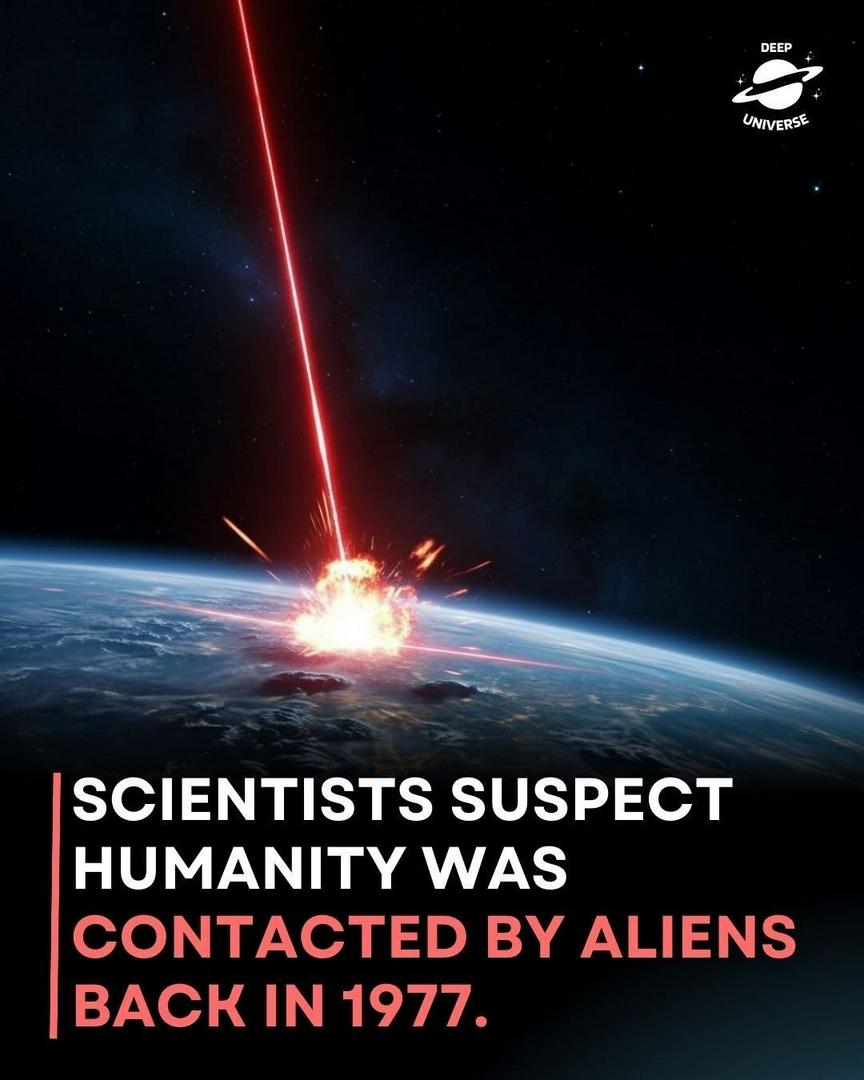
In 1977, scientists recorded the “Wow! Signal,” a brief but powerful burst of radio waves that has puzzled experts ever since. Its origin remains unexplained, a whisper from the cosmos that still sparks questions decades later. For a moment, the world seemed to pause, imagining we were not alone. The signal arrived with perfect clarity, as if deliberately sent, yet it vanished just as suddenly. That fleeting contact reminds us how vast and silent space can be, and how fragile our understanding of the universe truly is. Researchers continue to study patterns in the signal, comparing them to natural cosmic phenomena and human-made interference. Subtle irregularities hint at intelligence rather than chance, though no definitive proof has emerged. Each analysis is a quiet exploration at the frontier of knowledge, where curiosity meets uncertainty. To think of aliens reaching across light-years is both humbling and awe-inspiring. It evokes reflection on our place in the cosmos, the patience required for discovery, and the persistent hope that some messages are meant to awaken wonder rather than provide answers. Even today, the “Wow! Signal” lingers in the imagination. What other cosmic whispers are traveling through space, waiting to be noticed, understood, or perhaps never fully explained? #DeepUniverse #fblifestyle #WowSignal #aliens #SETI #space #discovery #mystery #cosmicwonder #science

justme

Flames filled the cockpit, and there was no time left to think. In a split second during a World War II mission, Major Claude Hensinger pulled the cord that would decide whether he lived or died. Hensinger, a U.S. Army Air Forces pilot, was flying a B-29 bomber in the Pacific when his aircraft caught fire. With the plane failing, he bailed out, relying entirely on his parachute. The silk canopy carried him safely to the ground, sparing his life in what could easily have been a fatal mission. The parachute was later packed away, no longer needed for combat, but too meaningful to discard. Three years after the war, Hensinger prepared to marry his fiancée, Ruth Hensinger. Instead of purchasing new fabric for her wedding gown, Ruth chose something far more personal. She carefully transformed the same silk parachute that had saved her future husband into her bridal dress. The material that once opened in the sky during an emergency descent was cut, sewn, and shaped into a traditional white gown. The wedding took place in 1947. During and after World War II, parachute silk was commonly reused because it was strong, lightweight, and often difficult to obtain through regular channels. Many brides created gowns from military parachutes, but in this case, the fabric had directly preserved the groom’s life. #love #ww2 #fblifestyle

justme

In a revolutionary breakthrough, scientists have developed a light-based therapy that destroyed 99% of cancer cells without the need for chemotherapy or radiation. This innovative approach targets cancer cells directly while leaving healthy tissues completely unharmed, offering a safer and more precise treatment option. Early trials show that this method can significantly reduce tumors in a range of cancer types. Patients experienced minimal side effects, making it a promising alternative to traditional cancer treatments that often carry harsh consequences. Researchers are excited about the potential to transform cancer care globally. While further studies are ongoing, experts believe this light therapy could redefine the way we fight cancer. By harnessing the power of targeted light, science is opening the door to safer, more effective treatments and a future where cancer may be controlled without toxic interventions. #TheSciencePulse #fblifestyle #CancerBreakthrough #LightTherapy

justme

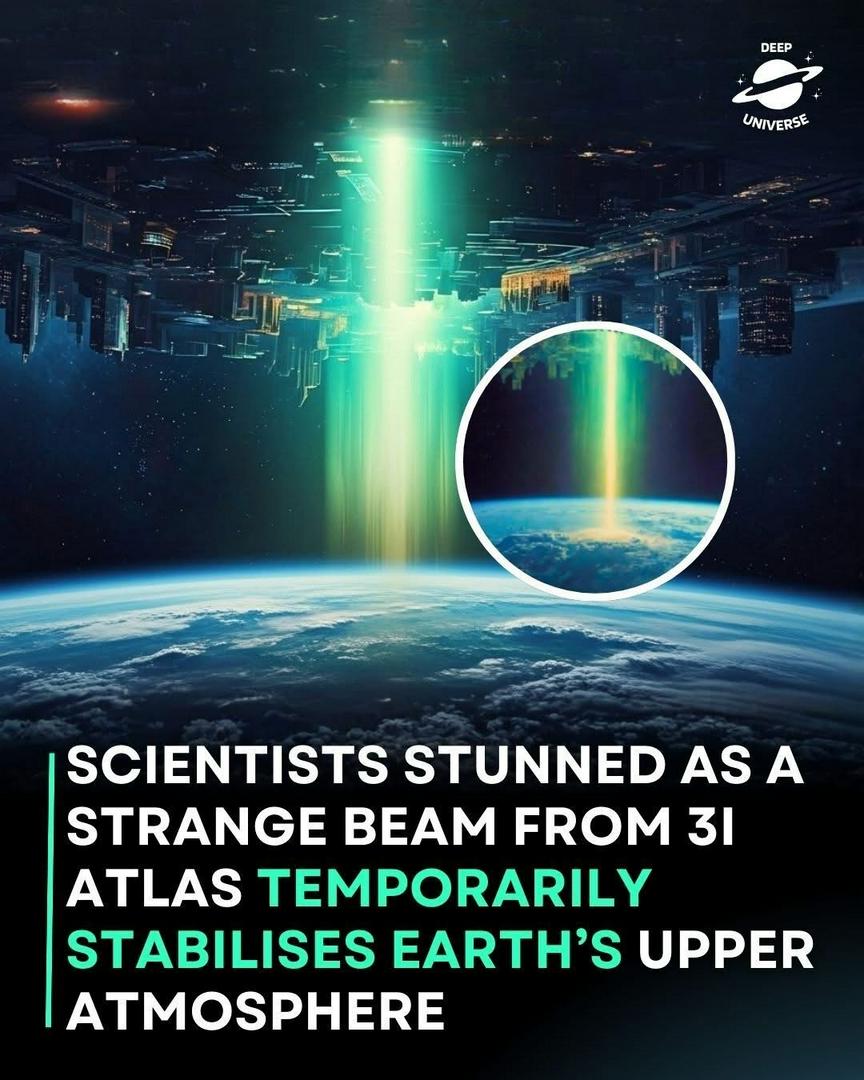
Recently, instruments detected a strange beam emitted from the 3i Atlas that seemed to stabilize fluctuations in Earth’s upper atmosphere. For minutes, disturbances in ionospheric currents and magnetic activity slowed, baffling researchers who had expected nothing could influence the atmosphere so quickly. It is rare for science to encounter phenomena that defy existing models, and this event reminds us that the planet remains full of subtle forces we barely understand. Scientists studying atmospheric patterns have noted that such stabilization could have far-reaching effects, from temporary shielding against cosmic radiation to minor influences on weather systems. While the cause of the beam is still unknown, the data suggest it interacted with Earth’s magnetic field in ways that challenge our understanding of natural and artificial forces. These fleeting hints of control over planetary systems spark both awe and deep curiosity. There is a reflective wonder in imagining a beam from deep space or experimental technology gently holding the planet in balance. It is a reminder of the delicate threads that maintain life and the unseen mechanisms shaping our world. In that quiet moment, the Earth itself seemed to pause, as if acknowledging forces beyond human comprehension. Though the beam vanished almost as quickly as it appeared, the memory of its effect lingers. Scientists and observers alike are left contemplating the fragility and mystery of our atmosphere, and the possibilities that may exist just beyond the edge of what we can measure or explain. #DeepUniverse #3iAtlas #AtmosphericMystery #ScienceDiscovery #ScientificWonder #HiddenForces #SpaceResearch #MysteriesOfEarth #fblifestyle

justme

In eighteenth century Britain, even small theft could carry a brutal sentence. In 1786, a young Cornish woman named Mary Bryant was convicted of stealing a silk bonnet worth just twelve pence. Under the harsh criminal code of the time, the penalty was death. Her sentence was later commuted to 7 years of transportation to Australia, part of Britain’s expanding penal colony system. Bryant was sent aboard the First Fleet to New South Wales, arriving in 1788. Life in the early colony was unforgiving. Food was scarce, discipline was strict, and escape seemed impossible. Yet in March 1791, Mary Bryant, her husband William, their two small children, and 7 other convicts carried out one of the boldest prison breaks in Australian history. They stole the colony’s governor’s six oared cutter, a small open boat not meant for ocean voyages, and loaded it with provisions. Their goal was staggering. They planned to sail north along the Australian coast toward the Dutch East Indies, a journey of roughly 5,000 kilometers through largely uncharted waters. Over ten weeks, they navigated reefs, storms, and hostile shorelines. They survived by fishing and rationing supplies, hugging the coastline when possible. Against all odds, they reached Timor, where they posed as shipwreck survivors. For a brief moment, they had escaped the British penal system. But their identities were eventually discovered, and they were arrested and returned to England. The voyage had taken a heavy toll. Both of Mary’s children and her husband died during the ordeal. Public sympathy in Britain grew once details of the escape became known. In 1793, she received a full pardon. #survival #australia #fblifestyle

Hatter Gone Mad

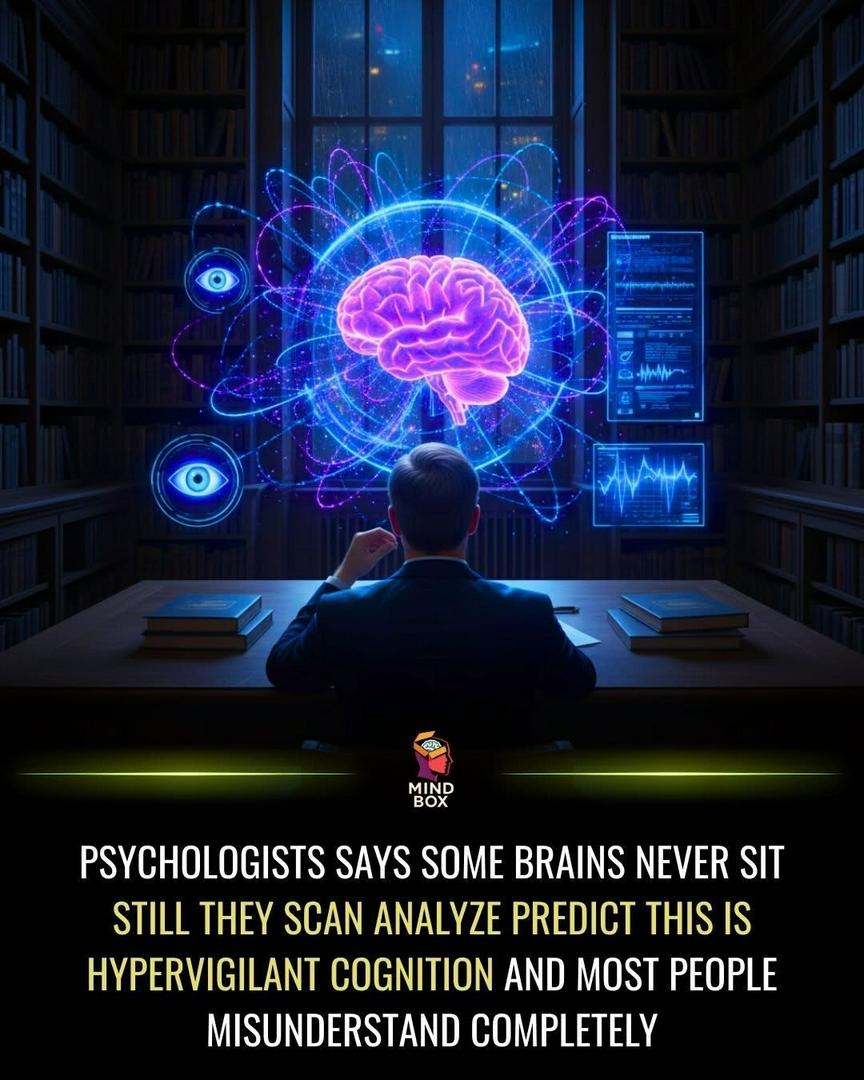
According to psychology, some brains are constantly scanning the environment, analyzing details, and predicting outcomes even when no immediate threat exists. Psychologists say this pattern is known as hypervigilant cognition. It is not overthinking by choice. It is a learned brain state shaped by past experiences. According to psychology, hypervigilant brains developed in environments where unpredictability, emotional tension, or inconsistent safety were present. The brain adapted by staying alert at all times. Psychologists say this allowed faster threat detection and emotional preparation, which once served as protection. Psychology research shows this cognitive style keeps the nervous system in a heightened state of awareness. The brain constantly looks for patterns, shifts in tone, or possible problems. According to psychology, this can make people excellent at reading situations, anticipating needs, and solving complex problems. Psychologists say the misunderstanding comes when hypervigilance is mistaken for anxiety, paranoia, or negativity. In reality, it is a survival based intelligence. However, when the brain never learns to stand down, mental fatigue and stress can follow. According to psychology, healing does not mean shutting the brain off. It means teaching the nervous system when it is safe to rest. Practices that signal safety, such as consistency, grounding, and emotional validation, help recalibrate this pattern. Psychologists say hypervigilant cognition is not a flaw. It is an adaptation. When understood and regulated, it becomes a strength rather than a burden. #MindBox #PsychologyFacts #BrainScience #fblifestyle

justme

In a groundbreaking medical breakthrough, doctors have successfully restored a patient’s sight using the world’s first 3D printed cornea. This innovative procedure involved creating a cornea layer by layer using biocompatible materials, perfectly tailored to the patient’s eye. The 3D printed cornea integrates seamlessly with natural tissue, allowing light to pass through and vision to be restored. The technology represents a major leap in ophthalmology, offering hope to millions suffering from corneal blindness worldwide. Traditional cornea transplants often face shortages of donor tissue, rejection risks, and long waiting lists. 3D printing provides a customizable, scalable solution that could revolutionize treatment and make sight restoration more accessible. Experts emphasise that while this is the first successful case, ongoing research and clinical trials are essential to ensure long-term safety and effectiveness. This achievement highlights the power of combining medical science and cutting-edge technology to solve complex health challenges. For the first time, patients who were previously untreatable now have a path to seeing the world clearly again. #TheSciencePulse #fblifestyle #MedicalBreakthrough #VisionRestored