Tag Page astronomy

#astronomy
justme

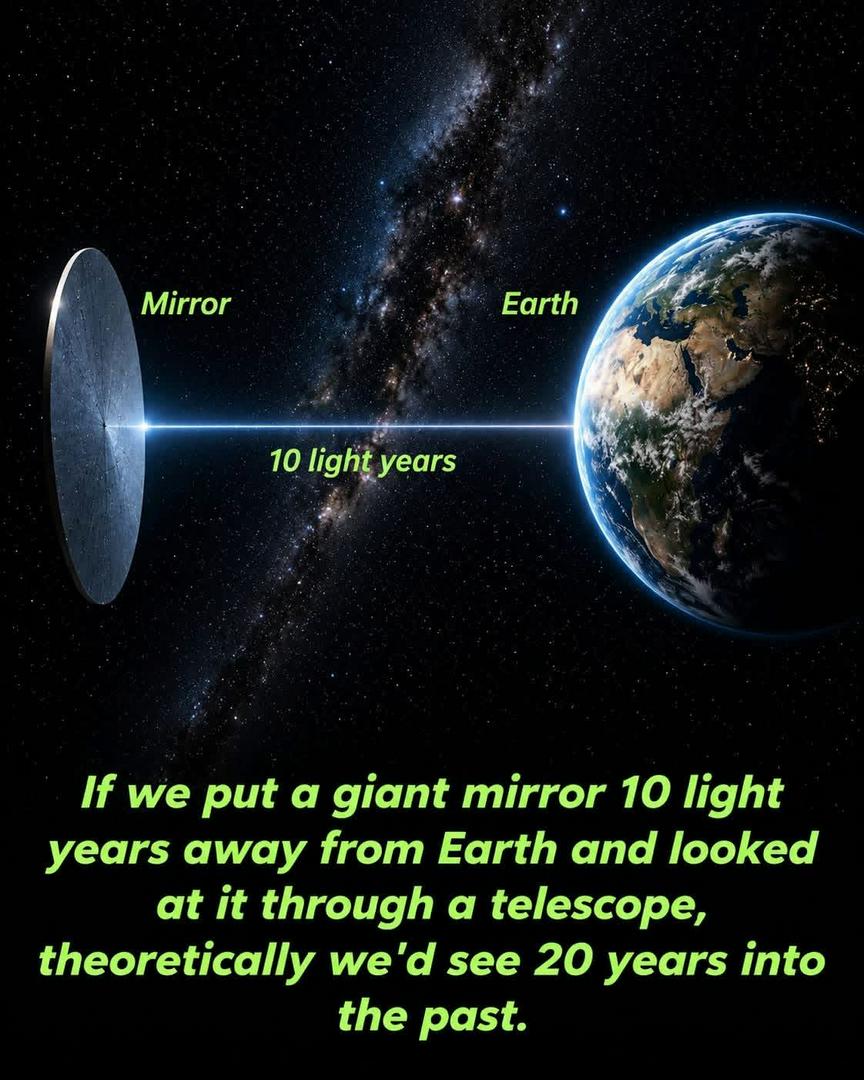
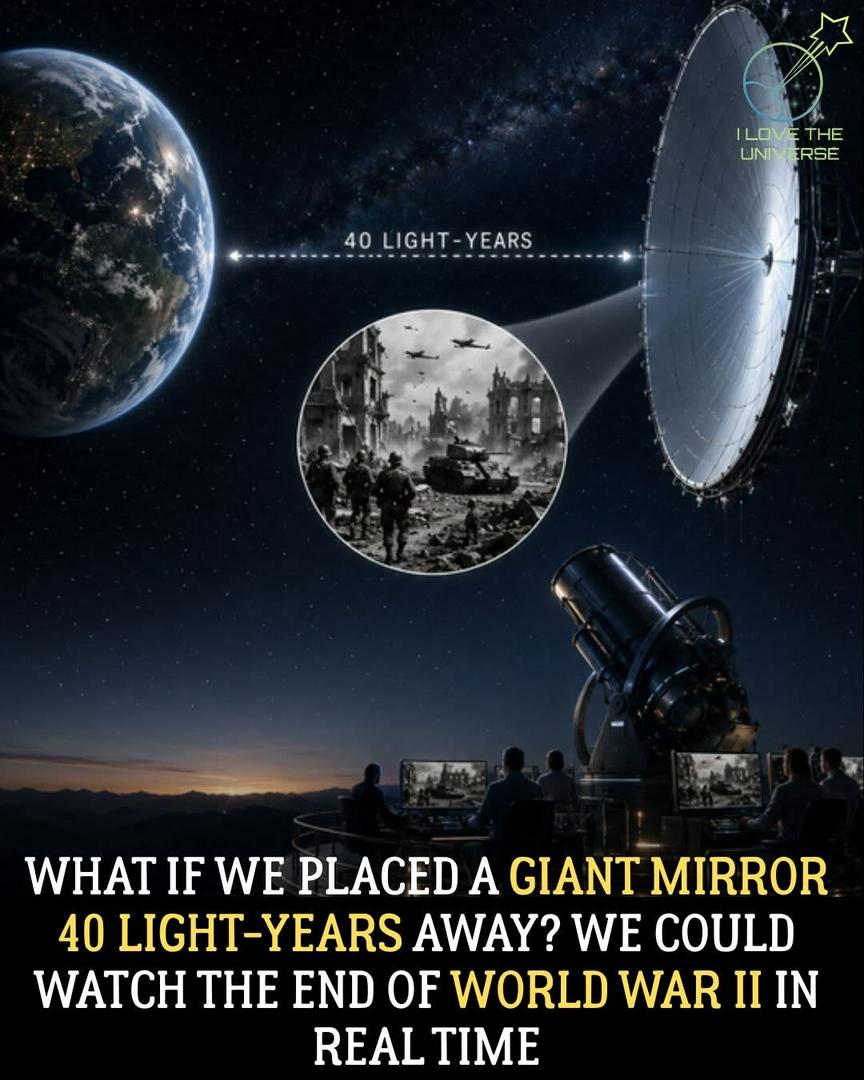
If a civilization were observing Earth from about 2,000 light-years away, the light reaching them today would have left Earth around 2,000 years ago. Because light travels at a finite speed—about 300,000 km per second—distance in space also means looking back in time. An observer that far away would be seeing Earth roughly as it appeared during the early centuries of the Common Era, when civilizations like the Roman Empire were still active. The same principle applies across the universe. When astronomers observe distant galaxies or stars, they are seeing them as they existed long ago because their light has taken years, centuries, or even billions of years to arrive. However, even extremely powerful telescopes would not be able to resolve details such as individual cities, ships, or buildings on Earth from thousands of light-years away. The concept still illustrates a fascinating truth: every time we look into deep space, we are essentially using a natural time machine created by the finite speed of light. #Astronomy #SpeedOfLight #CosmicPerspective #SpaceScience #fblifestyle

justme

👉On the night of March 19, 2026, skywatchers around the world will have the chance to see a remarkable total lunar eclipse. The Moon will remain completely inside Earth’s shadow for about 82 minutes, making it one of the longest total eclipses of the decade. During this time, the bright full Moon will slowly change into a deep red glow in the night sky. This red color appears because sunlight passes through Earth’s atmosphere before reaching the Moon. The atmosphere scatters the blue light and allows the deeper red and orange tones to bend around the planet and illuminate the lunar surface. As a result, the Moon takes on beautiful shades of crimson, copper, and dark orange, creating what many people call a Blood Moon. The eclipse will be visible across large parts of the world, and the best views will happen when the Moon is high in the sky during the peak of the eclipse. If the skies are clear, step outside and look up — events like this don’t happen often and can be truly unforgettable. ✨ Watching the full Moon glow red for more than an hour is a stunning reminder of the beauty of our universe. #LunarEclipse #Astronomy #EarthScience 🌕

justme

Mark your calendars!!! It's your last chance to see a blood moon until 2028! A total lunar eclipse will turn the Moon blood red on March 3, 2026, and it will be the only total lunar eclipse of the year and the last one until 2028. The eclipse will be visible from eastern Asia, Australia, New Zealand, the Pacific region, North and Central America, and far western South America. Viewers on the East Coast will see the eclipse before sunrise and should look west as the Moon sets during the event. During a total lunar eclipse, the Moon appears dark red or orange because Earth blocks most of the Sun's light from reaching the Moon, and the light that does reach the lunar surface is filtered through Earth's atmosphere. It's as if all of the world's sunrises and sunsets are projected onto the Moon. The next total lunar eclipse won't occur until December 31, 2028 – January 1, 2029, making this March 2026 event especially significant for astronomy enthusiasts. You can observe a lunar eclipse without any special equipment. All you need is a line of sight to the Moon! Blood Moons are relatively rare, with only one to two total lunar eclipses happening each year on average, and some years having none at all. If you're anywhere in the viewing zone, this is one celestial event worth setting an alarm for. After March 3rd, we'll be waiting nearly three years for the next total lunar eclipse — so don't miss your chance to witness the Moon's magical transformation. #BloodMoon #LunarEclipse #Astronomy #WormMoon

justme

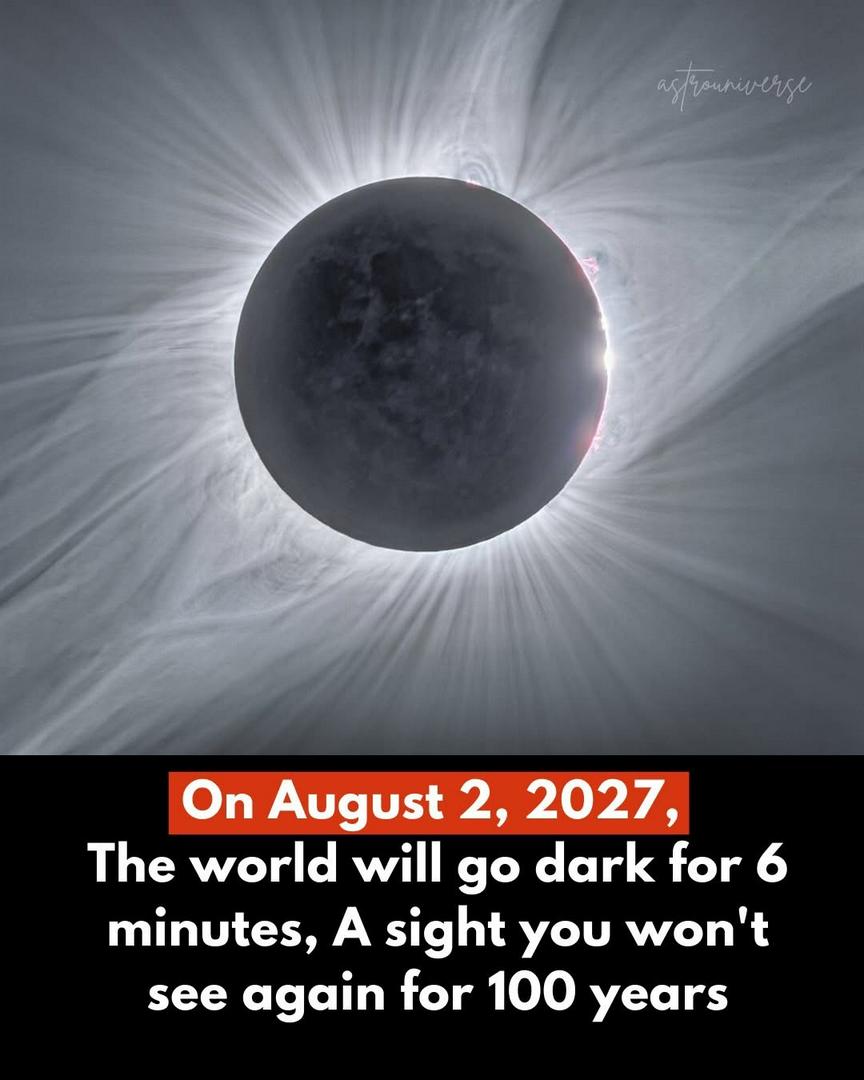
For a fleeting six minutes, day will vanish into night, and the world will hold its breath. On August 2, 2027, the Sun, Moon, and Earth will align in a perfect cosmic dance. It is a quiet shock to realise that such moments of total darkness are so rare — a spectacle that will not grace our skies again for a century. During a total solar eclipse, the Moon completely blocks the Sun, casting a shadow that races across Earth. The corona, the Sun’s outer atmosphere, will shimmer like delicate silver fire around the dark disc. Birds will pause, temperatures will drop, and even the air seems to change, as if nature itself senses the extraordinary. It is not just a visual phenomenon, but an event that reminds us of our fragile place in the cosmos. Scientists study these eclipses to understand the Sun’s mysterious outer layers. Subtle patterns in the corona reveal magnetic fields and plasma flows that cannot be observed any other way. Observing such a rare alignment allows humanity a fleeting glimpse into forces that shape our solar system, hidden most of the time from our eyes. For those who witness it, the eclipse becomes more than science. It is solemn, intimate, and almost spiritual. Standing beneath the shadow of the Moon, one cannot help but feel the vastness above, the precision of celestial mechanics, and the smallness of our daily concerns. The darkness will pass, light will return, and life will resume as if nothing changed. Yet for those six minutes, the world will share a rare moment of unity under the sky, leaving behind a lingering question: how many wonders of the universe wait silently for us to notice them? #DeepUniverse #SolarEclipse2027 #CelestialEvent #TotalEclipse #Astronomy #SkyPhenomena #CosmicWonder #fblifestyle