Tag Page Space

#Space
justme

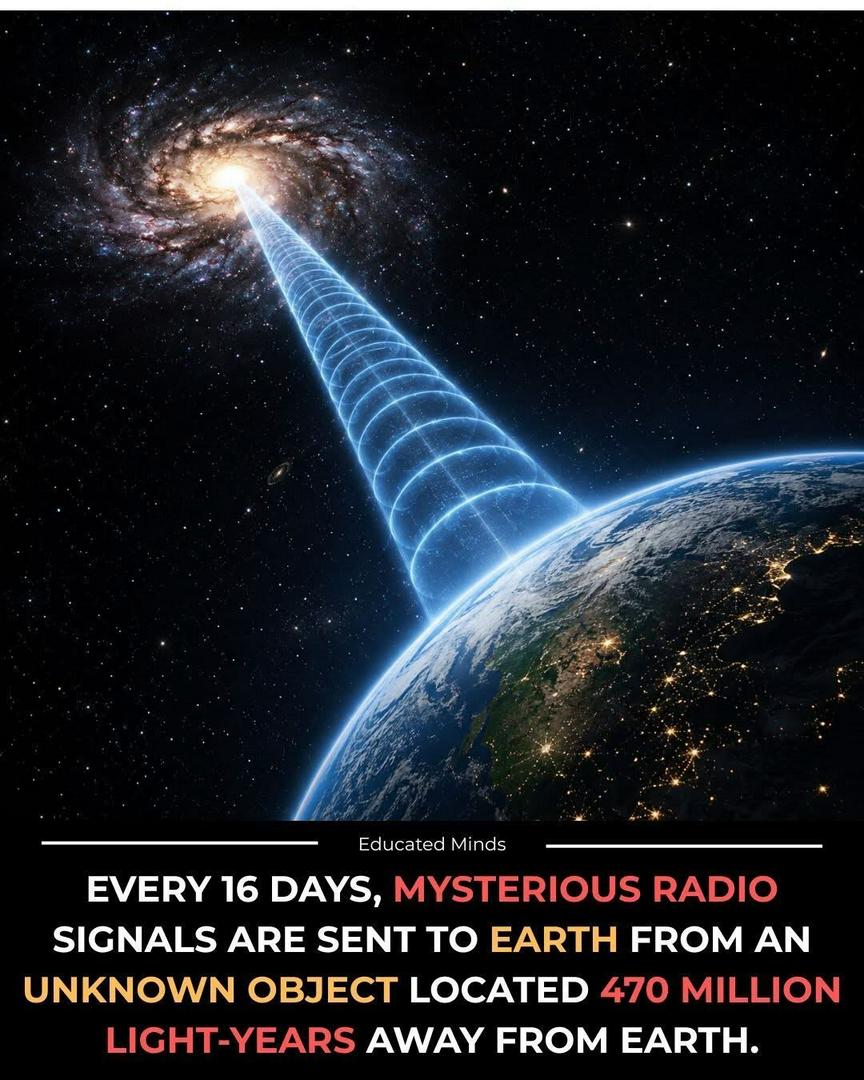
Something nearly 500 million light-years away keeps sending signals toward Earth. And it appears to do it on a schedule. The source is known as FRB 180916, one of the most mysterious objects ever discovered in space. It produces what scientists call a Fast Radio Burst—a powerful flash of radio energy that lasts only milliseconds. Most fast radio bursts appear random. This one doesn't. Researchers discovered that the source follows a repeating cycle of about 16 days. For a few days, it becomes active and sends bursts of radio energy across the cosmos. Then it falls silent. Then the pattern repeats. Again. And again. And again. Scientists still don't know exactly what's causing it. Some suspect a magnetar, an extremely magnetic type of dead star. Others think a neutron star in an unusual orbit may be responsible. But despite years of study, the true source remains uncertain. What makes the mystery so fascinating is that these signals began their journey long before humans existed as a species. They traveled across nearly half a billion years of space before reaching Earth. And we're still trying to understand what sent them. Fun fact: A single fast radio burst can release as much energy in a few milliseconds as the Sun produces over several days. What do you think is more likely: an unusual natural phenomenon, or something scientists haven't even imagined yet? #Space #Curiosity #Science #fblifestyle Sources Nature – Publication reporting the 16-day periodic activity cycle of FRB 180916 Canadian Hydrogen Intensity Mapping Experiment – Discovery and monitoring of FRB 180916 NASA – Explanations of Fast Radio Bursts and proposed origins

justme

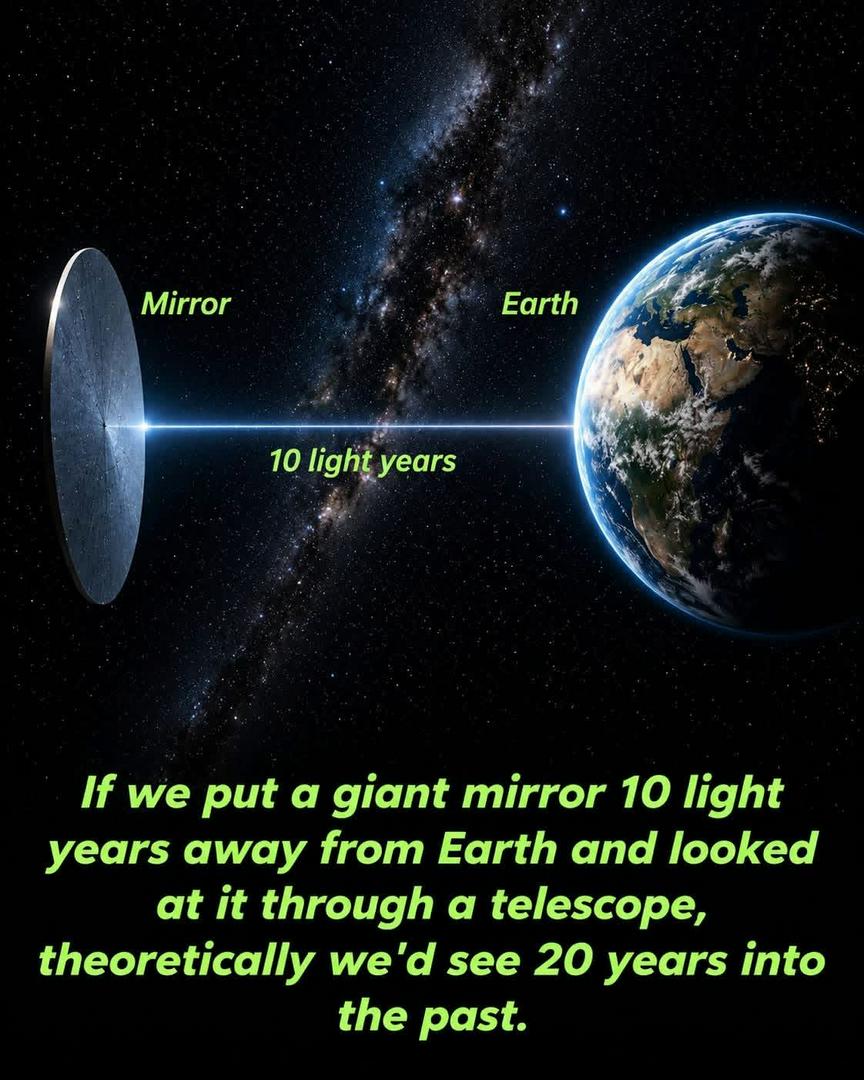
😯👉🪞 What If We Placed a Giant Mirror 10 Light-Years Away? Imagine placing an enormous mirror 10 light-years from Earth. The result would be one of the most fascinating effects in astronomy. Light leaving Earth would take 10 years to reach the mirror and another 10 years to bounce back to us. This means that if we had a telescope powerful enough to see the reflection, we would be looking at Earth as it was 20 years ago. In a way, it would act like a cosmic time machine—not by traveling through time, but by capturing light from the past. The biggest obstacle is size. A mirror capable of reflecting detailed images across such an immense distance would need to be unimaginably large, far beyond our current technology. This thought experiment reveals an incredible fact about the universe: because light takes time to travel, every time we look into deep space, we are also looking back in time. ✨ The farther we look into the cosmos, the older the light we see. #Space #Astronomy #Science #Universe #Cosmos #Physics #LightYears

justme

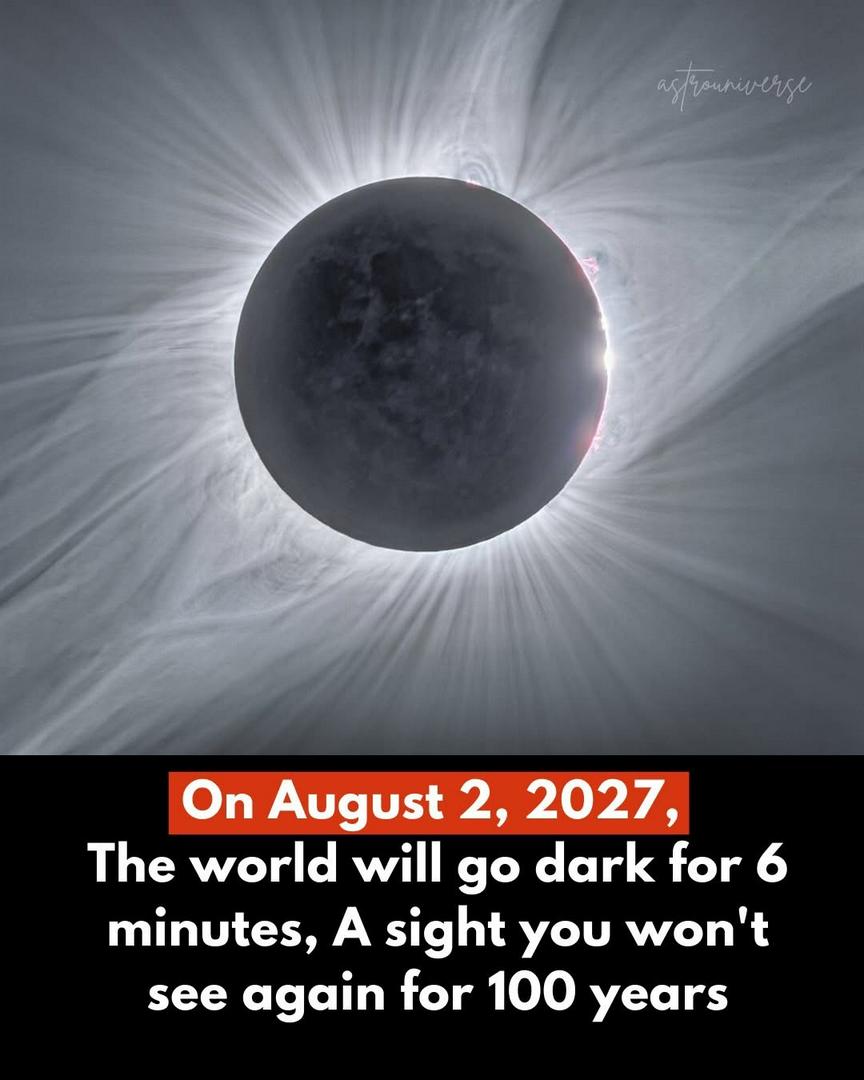
On August 2, 2027, the world will witness the longest total solar eclipse of the 21st century. 🌑☀️ At maximum duration, totality will last an extraordinary 6 minutes and 23 seconds, far longer than the typical 2 to 3 minutes seen during most total eclipses. The longest views will occur near Luxor, Egypt, as the Moon’s shadow crosses parts of Europe, North Africa, and the Middle East. The unusually long eclipse is caused by orbital geometry. The Moon will be near perigee, appearing slightly larger in the sky and allowing its shadow to cover the Sun for an extended period. During totality, daylight will briefly fade into twilight, temperatures may drop, stars can appear overhead, and the Sun’s glowing corona will become visible around the darkened Moon. Even with modern science explaining every detail, a total solar eclipse remains one of the most extraordinary sights on Earth. #SolarEclipse #Eclipse2027 #NASA #Space #Astronomy #Science #Sun #Moon #Cosmos #SpaceFacts
justme

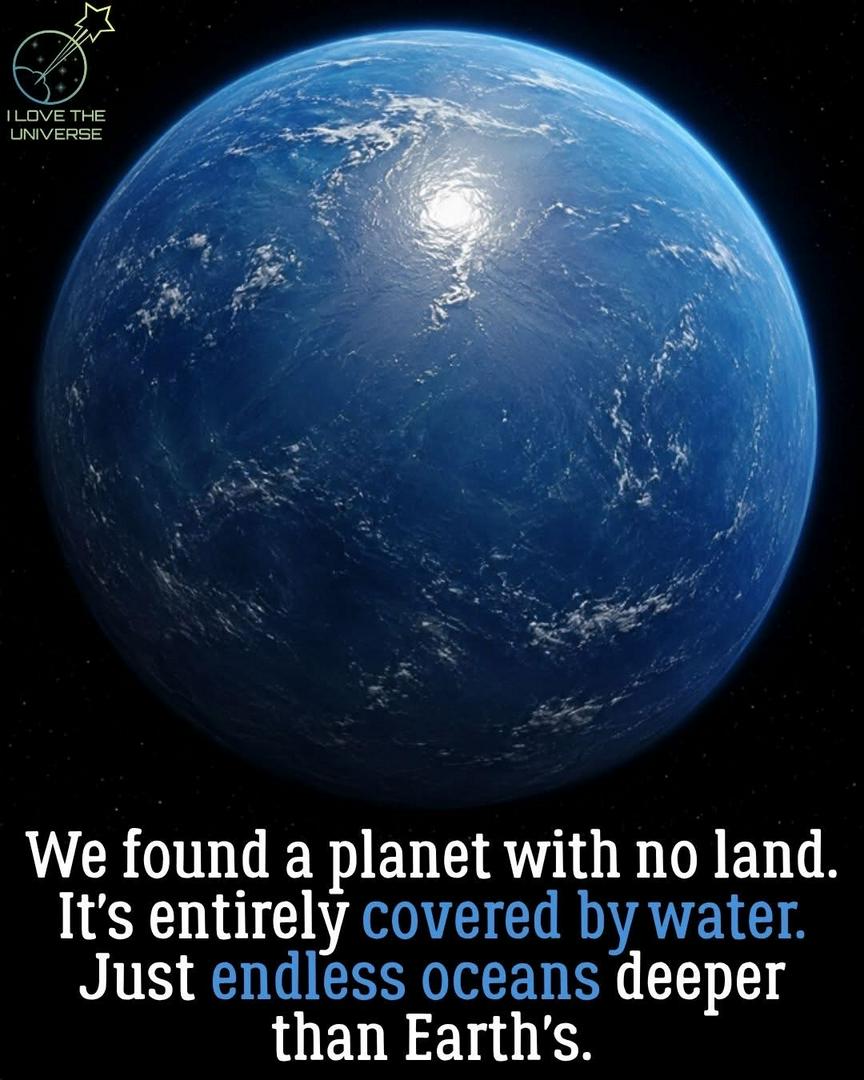
🌊 Imagine a planet where there are no beaches... no continents... no islands... Just water. Endless water. Meet TOI-1452 b — a remarkable alien world located about 100 light-years away in the constellation Draco. This fascinating "super-Earth" is nearly 5 times more massive than our planet and may be covered by a single, planet-wide ocean with no land anywhere in sight. 🌍💙 Scientists believe that beneath its endless waters lies a dense rocky core, hidden under an ocean so vast that it could contain a much larger percentage of water than Earth itself. For comparison, all of Earth's oceans make up less than 1% of our planet's total mass. TOI-1452 b could be something entirely different — a true water world. 🌊✨ Although we cannot directly see its surface yet, data collected by NASA's TESS mission strongly suggests that this extraordinary planet is rich in water and other volatile materials. The powerful James Webb Space Telescope is now helping scientists investigate its atmosphere and uncover its secrets. And here's the mind-blowing part: If these observations are confirmed, TOI-1452 b may represent a completely different type of planetary environment than anything we know in our Solar System — a world where the ocean never ends, where there are no shores to reach, and where the horizon stretches across an endless global sea. 🌌 Somewhere out there, an entire planet may exist without a single piece of land. What do you think life would look like on a world like this? 🌊👽 #Space #Astronomy #Exoplanets #WaterWorld #TOI1452b #JamesWebb #NASA #Universe #Cosmos #Science #ILoveTheUniverse

justme

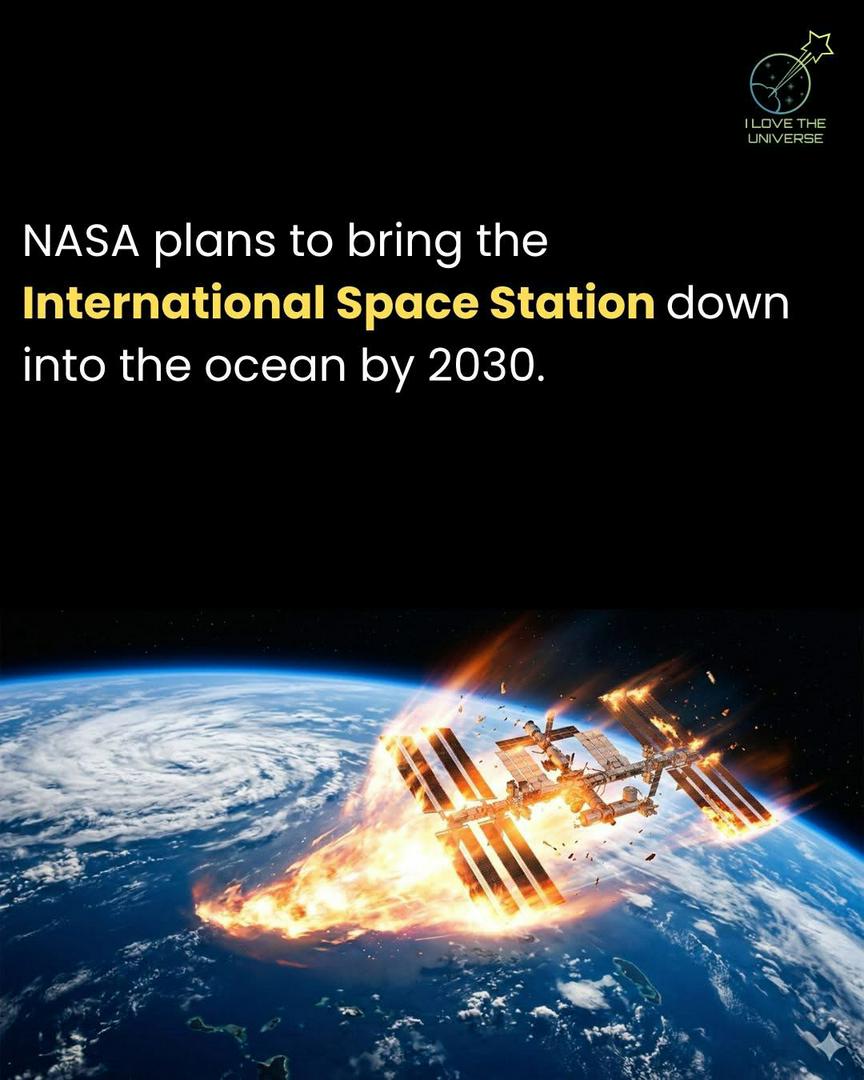
The International Space Station has been humanity’s home in space for more than 25 years. Over 270 astronauts from more than 20 countries have lived and worked aboard it. The station has orbited Earth over 150,000 times, traveling billions of kilometers through space. Building it was one of the most complex engineering projects ever attempted — requiring over a decade of construction, 27 space shuttle flights, and more than 40 assembly missions. And around 2030, its mission will come to an end. Not because it failed — But because it succeeded. NASA plans to guide the ISS into a controlled reentry, where most of the station will burn up in Earth’s atmosphere. Any surviving debris will fall into a remote area of the Pacific Ocean, far from people or ships. The station will not simply fall from the sky. A special spacecraft will help steer it safely back to Earth. This isn’t the end of human activity in low-Earth orbit. Several commercial space stations are already being developed to replace it — continuing the research and exploration the ISS made possible. The ISS was never meant to last forever. It was meant to open a door. And that door is still wide open. 🌌 #SpaceStation #NASA #SpaceHistory #HumanSpaceflight #SpaceExploration #ILoveTheUniverse #Space #Astronomy #FutureOfSpace

justme

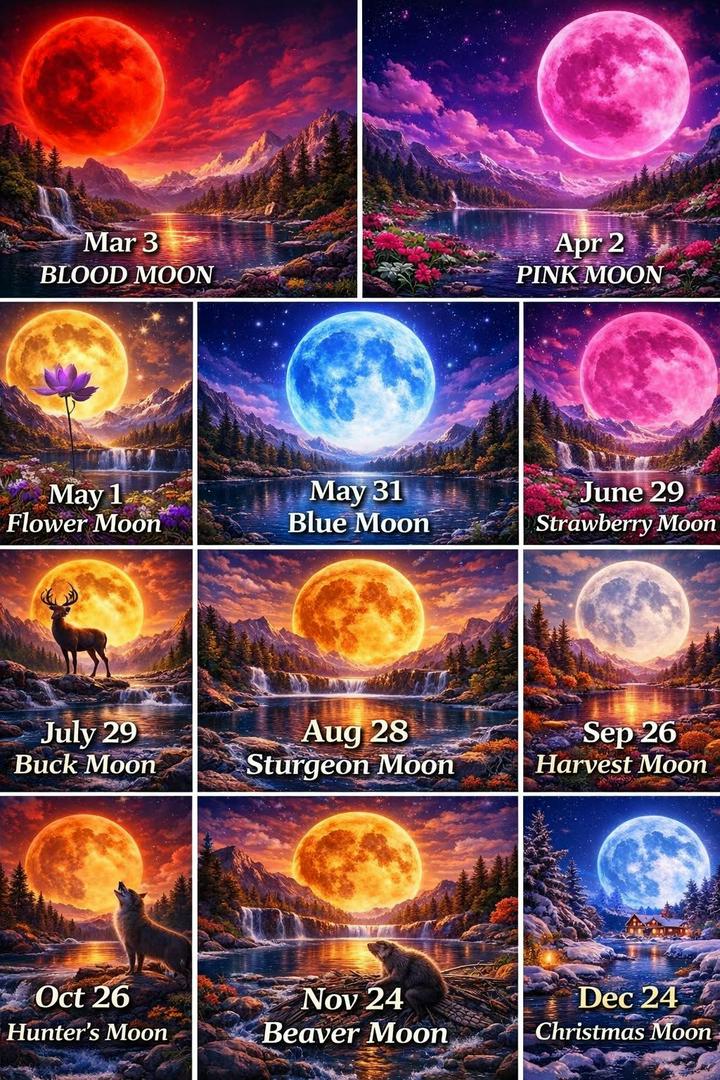
😯👉🌕✨ 2026 Full Moon Calendar — Sky Events You Shouldn’t Miss! Each full moon comes with its own name… and behind every name is a unique story 🌌 Here’s a simple and beautiful guide to all the full moons of 2026 👇 🔴 March 3 — Blood Moon A stunning lunar eclipse will give the Moon a deep red color, creating one of the most breathtaking views in the night sky 🌸 April 2 — Pink Moon Inspired by blooming spring flowers — it’s not actually pink, but still a lovely sight 🌼 May 1 — Flower Moon Represents nature in full bloom and the peak of springtime 🔵 May 31 — Blue Moon A rare second full moon in a single month — the famous “once in a blue moon” event 👀 🍓 June 29 — Strawberry Moon Named after strawberry harvesting season, often glowing with a warm golden tone 🦌 July 29 — Buck Moon Marks the time when deer begin growing new antlers — symbolizing strength and renewal 🐟 August 28 — Sturgeon Moon Named by early tribes for the best fishing period of the year 🌾 September 26 — Harvest Moon The brightest full moon near autumn, traditionally helping farmers work late into the night 🐺 October 26 — Hunter’s Moon Historically used to prepare for winter by hunting under its bright light 🦫 November 24 — Beaver Moon A time when nature prepares for the cold season ahead 🎄 December 24 — Christmas Moon A rare full moon close to Christmas — adding a magical holiday glow ✨ 🌌 Every month brings a new story 🌕 Same Moon… different meaning 👉 Which full moon are you most excited to watch in 2026? 👀 #Moon #FullMoon2026 #fblifestyle #NightSky #Space

justme

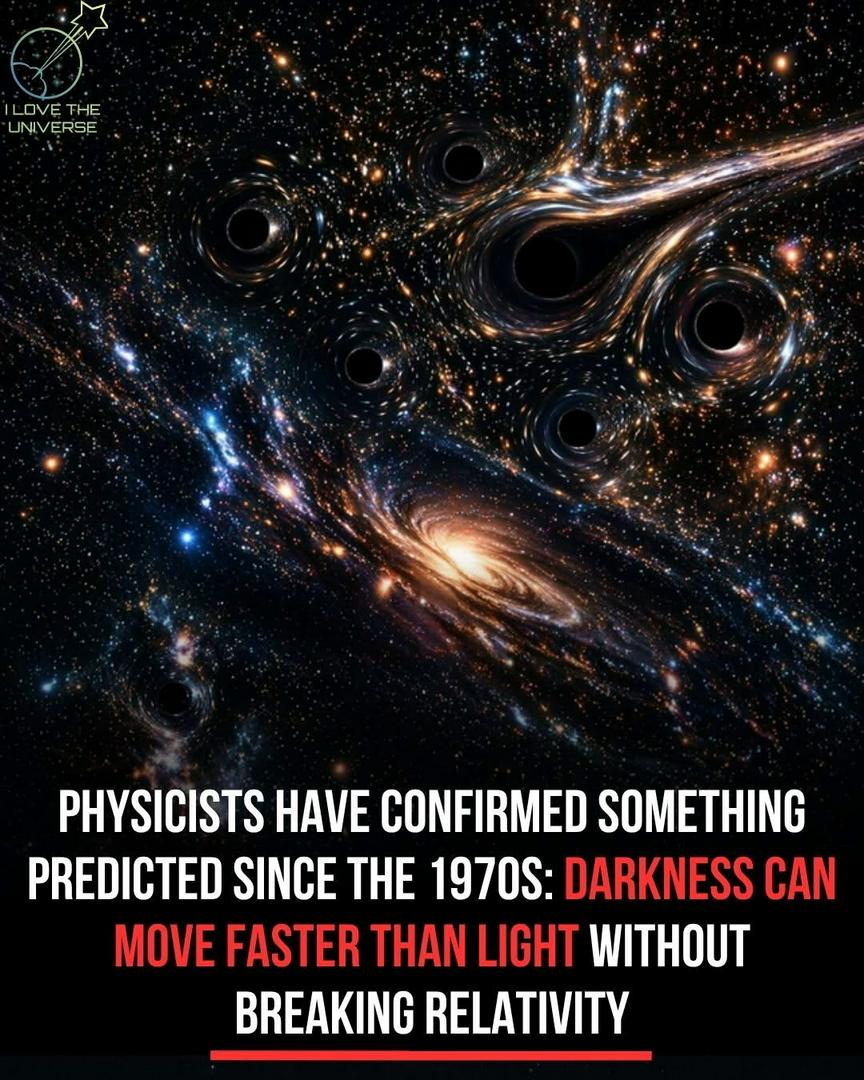
🚨 Something impossible just happened… or did it? Scientists have just observed motion that appears to be faster than light — and somehow… it doesn’t break physics. 🤯✨ But here’s the twist: What they saw wasn’t a particle, not even energy… It was pure nothingness. Inside exotic materials like boron nitride, waves of light and sound interact in such a precise way that they cancel each other out — creating tiny moving “points of darkness.” ⚫ And these dark points? They can move faster than light. No rules broken. No paradoxes. Just reality being far stranger than we imagined. Because these points carry no mass, no energy, no information, Einstein’s limits remain untouched — yet we’re witnessing something that looks like it defies them. 👉 And here’s something even more fascinating: Back in the 1970s, physicists had already predicted that such “points of nothing” could exist and behave in unusual ways — possibly even appearing to move faster than light. At the time, it was just theory. Today, we’re finally watching it happen. 👉 Think about that for a second… We’re now able to track the motion of nothing — moving faster than the fastest thing in the Universe. This discovery isn’t just mind-blowing… It could change how we study waves, light, and even quantum systems — unlocking ways to observe processes that were simply invisible before. The Universe keeps reminding us: The deeper we look… the weirder it gets. 🌌 💬 What do you think — is this the beginning of something bigger? 🔁 Share this with someone who loves space & physics! #Space #Physics #Science #Universe #MindBlown #Quantum #LightSpeed #Astronomy #DidYouKnow 🚀

justme

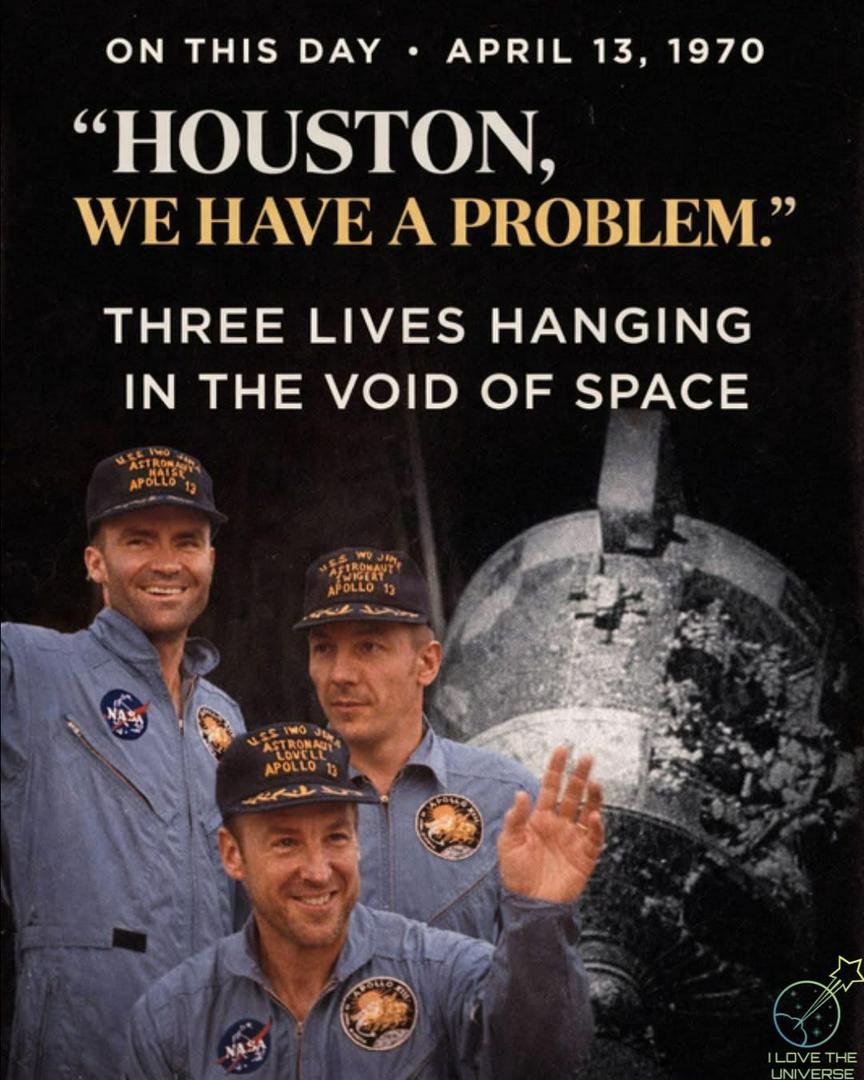
🚀 Apollo 13 — when everything went wrong… and humanity refused to lose On this day, April 13, 1970 — nearly 320,000 kilometers from Earth — an ordinary sentence turned into one of the most chilling moments in space history: “Houston, we’ve had a problem.” A sudden explosion ripped through the service module of Apollo 13, crippling the spacecraft. Oxygen was leaking into space. Power was failing. The Moon landing was instantly abandoned. Three astronauts — Jim Lovell, Jack Swigert, and Fred Haise — were no longer explorers. They were fighting to survive. What followed was not just a mission… It was one of the greatest rescue efforts in human history. Back on Earth, hundreds of engineers at NASA worked around the clock. No sleep. No margin for error. Every calculation mattered. Every decision could mean life or death. They turned the lunar module into a lifeboat. They improvised solutions never tested before. They built survival plans out of pure ingenuity and desperation. At one point, rising carbon dioxide levels threatened to suffocate the crew — until engineers famously created a workaround using nothing but materials available onboard. This was humanity at its absolute best. Against impossible odds, Apollo 13 didn’t land on the Moon. But it did something even greater. It brought its crew home. Alive. The story became legendary — and was later immortalized in the film Apollo 13, starring Tom Hanks — but no movie can fully capture the tension, the fear, and the brilliance of those real moments. Because this wasn’t fiction. This was real. And it proved something we still believe today: Even in the darkest moment… humanity finds a way. #Apollo13 #NASA #Space #Astronomy #History #OnThisDay #Explore #NeverGiveUp