Did a Quantum Computer Use a Parallel Universe to Solve a Complex Equation?
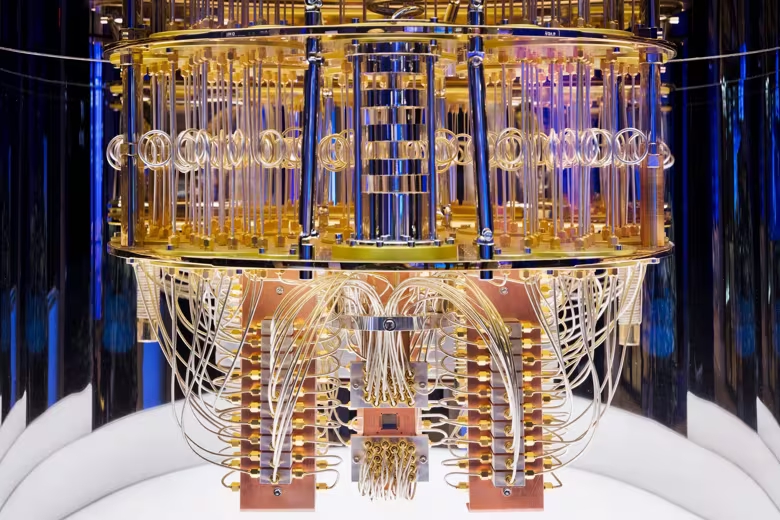
Quantum computers are often said to use “parallel universes,” but that is not exactly true. Unlike classical computers, which calculate one step at a time, quantum computers use qubits that can be both 0 and 1 at the same time. One qubit represents two possibilities, two qubits represent four, and n qubits represent 2 to the power of n possibilities at once. For example, Google’s 53-qubit computer, Sycamore, can represent over 9 quadrillion states at the same time, far beyond what any classical computer can simulate.
This allows quantum computers to solve certain problems much faster. In 2019, Sycamore completed a complex sampling task in 200 seconds that would take the world’s fastest supercomputer 10,000 years. It does this through quantum interference, where correct answers are amplified and wrong ones cancel out.
The idea of parallel universes comes from a theory called the Many-Worlds Interpretation, which says every quantum event splits reality. But this is just a way to think about it, not how the computer works. Scientists only observe the final result, not other “worlds.”
Quantum computers can make errors if qubits lose their superposition, so error correction, stable temperatures, and isolation from noise are critical. Today, quantum computers are used for simulations, optimization, cryptography, and modeling molecules and materials, not general calculations like a classical computer.
In short, quantum computers do not literally use parallel universes. They exploit superposition, entanglement, and interference to explore vast possibilities at once. “Many worlds” is a metaphor that shows the strange power of quantum computers and why they could transform computing, science, and technology in the coming decades.
#ParallelUniverse #Science #History #USHistory #Physics #ScienceNews