Tag Page OnThisDay

#OnThisDay
LataraSpeaksTruth

1941… Death of Henrietta Vinton Davis

Henrietta Vinton Davis, a groundbreaking actress, elocutionist, and international advocate, died on November 23, 1941 in Washington, D.C. Her career blended performance and activism during a period when opportunities for Black artists were limited. Davis became widely known through her stage work and later emerged as a prominent figure in the Universal Negro Improvement Association. She traveled, organized, and spoke publicly on issues related to unity, cultural pride, and global awareness among people of African descent. Her passing marked the end of a career that influenced both the performing arts and early twentieth century Black political life. Davis is now recognized as an important figure whose work reached across borders and generations. #BlackHistory #HenriettaVintonDavis #UNIAHistory #CulturalHistory #OnThisDay #PerformingArtsHistory #HistoricFigures #GlobalHistory #AmericanHistory #HistoryMatters

1941… Death of Henrietta Vinton Davis
LataraSpeaksTruth

February 16, 1960…Durham, North Carolina. While student led sit ins were spreading across the South, Dr. Martin Luther King Jr. came to Durham to stand beside the young people putting their bodies on the line. Earlier that day, he visited the downtown targets of the protests, seeing firsthand how a simple lunch counter could expose an entire system. That night, inside White Rock Baptist Church, the sanctuary became more than a meeting place…it became a command center for courage. King’s message was clear and it was not soft. Protest had to be organized, disciplined, and nonviolent on purpose, not just in words. He urged students to keep their dignity, refuse retaliation, and stay steady when the pressure came. The goal was not chaos…it was moral force that could not be ignored. He pushed the movement beyond polite requests and into direct action that created consequences for injustice. Then came the hard part he wanted them ready for. If arrests came, they were not to panic or fold. He challenged them to accept jail if necessary, not as defeat, but as testimony. When people are willing to suffer without striking back, the world has to look. The sit in movement was already shaking the South, and King’s Durham speech poured gasoline on the fire of commitment, turning fear into strategy and bravery into a shared discipline. #OnThisDay #CivilRightsMovement #DurhamNC #SitInMovement #MLK #NonviolentResistance #BlackHistory

LataraSpeaksTruth

Howard Thurman, Born Around This Time In 1899, Became One Of The Quiet Architects Of A Movement

Howard Washington Thurman entered the world in late November of 1899 in Daytona Beach, Florida, during a time when Black spiritual leadership was still fighting for its full voice. He would grow into one of the most influential theologians of the twentieth century, guiding generations through a faith rooted in dignity, nonviolence, and moral clarity. Thurman later served as dean of Rankin Chapel at Howard University and Marsh Chapel at Boston University, using both spaces to shape conversations that reached far beyond religion. His writings on nonviolence became essential reading for young seminarians in the 1950s, including Martin Luther King Jr., who carried Thurman’s work into marches, pulpits, and national debates. Thurman rarely sought headlines, but his influence threaded through the movement like a steady hand. His life reminds us that the people who change history are not always the ones at the microphone. Sometimes they are the thinkers whose words steady the crowd. #HistoryMatters #OnThisDay #CulturalHistory #FaithHistory #CivilRightsLegacy #NewsBreakCommunity #LataraSpeaksTruthp

Howard Thurman, Born Around This Time In 1899, Became One Of The Quiet Architects Of A Movement
LataraSpeaksTruth

Macon Bolling Allen Admitted to the Massachusetts Bar in 1845

On November 26, 1845, Macon Bolling Allen stepped into a world that liked to pretend it had no room for him and still made space anyway. He became the first Black lawyer admitted to the Massachusetts bar, carrying a calm kind of courage that hits different when you realize the country was still tangled in slavery and hostility. Earlier in 1844 he had already passed the Maine bar exam, proving his skill long before many thought he would even be allowed to take the test. Massachusetts recognized that ability next, and from there he kept pushing forward, eventually serving as one of the first Black judges in the United States. His journey reads like a reminder that discipline and study can be rebellion when the world expects you to shrink. Allen found a way into rooms that were not built for him and left the doors open behind him. Every Black lawyer, judge, advocate, and student walking their own path today moves with echoes of his persistence. #MaconBollingAllen #OnThisDay #HistoryMatters #AmericanHistory #LataraSpeaksTruth

Macon Bolling Allen Admitted to the Massachusetts Bar in 1845
LataraSpeaksTruth

1958… The Day Louisiana’s “Anti-Mixing” Sports Law Finally Fell

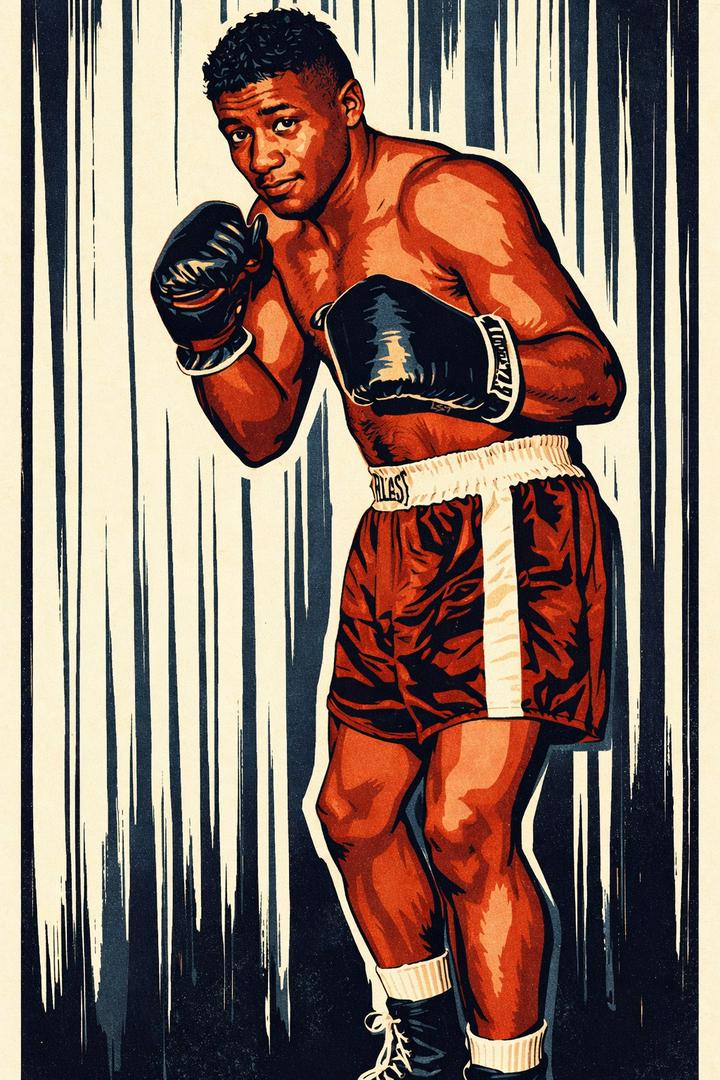
On November 28, 1958, a federal three-judge court ruled against Louisiana’s attempt to keep sports segregated forever. The case was called Dorsey v. State Athletic Commission, and it targeted the state’s “anti-mixing” law… a rule that tried to stop Black and white athletes from competing against each other. Louisiana used this law to block integrated boxing matches. Promoters were threatened with jail. Black fighters were refused licenses. White fighters were told to stay in their own lane. The whole thing was designed to protect the old order… and punish anyone who dared to break it. The court struck it down. They called it unconstitutional, discriminatory, and flat-out incompatible with the country’s direction. It was one of the quiet wins that chipped away at segregation’s foundation. Not loud. Not flashy. But necessary. This wasn’t just about sports. It was about the state trying to control who could stand toe-to-toe in public. And the court said no… not anymore. #LataraSpeaksTruth #HistoryMatters #AmericanHistory #HiddenHistory #UntoldStories #OnThisDay #CivilRightsEra

1958… The Day Louisiana’s “Anti-Mixing” Sports Law Finally Fell
LataraSpeaksTruth

1897… Andrew J. Beard Receives a Patent for the “Jenny Coupler”

On November 23, 1897, Andrew Jackson Beard, a Black inventor from Alabama, received a U.S. patent for one of the most important railroad safety devices of the late 1800s: the automatic car coupler known as the “Jenny Coupler.” Before Beard’s invention, railroad workers had to stand between moving train cars to manually link them together. It was a dangerous job that resulted in countless crushed limbs and deaths. Beard knew those risks firsthand—he had worked around railroads and had seen the toll the old system took on brakemen. His design changed everything. The Jenny Coupler used a pair of locking jaws that snapped together automatically the moment two cars touched. It replaced a life-threatening task with a simple, safer, almost automatic motion. Beard’s patent became part of a nationwide shift toward better railroad safety. His work influenced federal requirements for automatic couplers and helped protect the workers who kept the rail industry running. Even though his name isn’t widely recognized today, Beard’s contribution had a lasting impact. His 1897 patent remains a clear example of how Black inventors helped shape American industrial technology—often without the credit they deserved. #OnThisDay #BlackHistory #AmericanHistory #Inventors #RailroadHistory #SafetyInnovation #UnsungHeroes #CommunityFeed

1897… Andrew J. Beard Receives a Patent for the “Jenny Coupler”
You've reached the end!