Tag Page OnThisDay

#OnThisDay
LataraSpeaksTruth

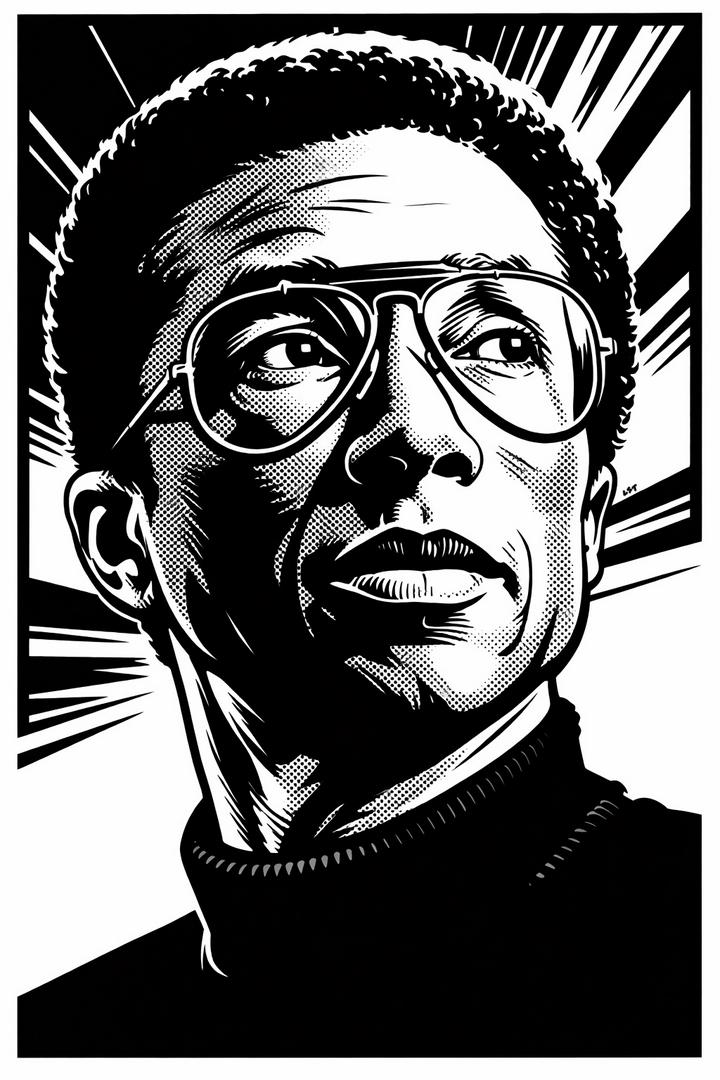
December 13, 1958… Morris Day is born, and decades later his presence still echoes through American music in ways people do not always stop to credit. As the lead singer of The Time, Morris Day became one of the most recognizable voices and personalities to emerge from the Minneapolis funk scene, a movement built on discipline, precision, and deep respect for funk traditions while still pushing them forward. The Minneapolis sound was not accidental. It was rooted in tight musicianship, sharp production, and control rather than excess. Morris Day stood at the center of that balance. With The Time, whose early music was written and produced by Prince, Day transformed meticulous compositions into living, breathing performances. His polished grooves, clever delivery, and commanding stage presence proved that interpretation and leadership matter as much as authorship. Often associated with the Prince-era universe, Morris Day was never merely a supporting figure. He helped define the look, attitude, and performance standards of that moment in music history. Tailored style, synchronized bands, and the understanding that funk was as visual as it was sonic. Funk was not just something you heard. It was something you saw, felt, and remembered. Morris Day’s legacy lives on in how modern artists approach stage presence, band leadership, and musical identity. He showed that funk could be sharp without losing soul, playful without losing purpose, and stylish without losing substance. Some artists chase trends. Others become part of the foundation. Morris Day belongs to the latter. #MorrisDay #TheTime #MinneapolisSound #FunkHistory #MusicLegacy #PrinceEra #BlackMusicHistory #OnThisDay #1957 #FunkIcons

LataraSpeaksTruth

On December 19, 1891, in Baltimore, history moved quietly but decisively. Charles Randolph Uncles became the first African American man ordained a Catholic priest on U.S. soil, breaking through a Church that, like the country around it, was deeply entangled in racial exclusion. Born in 1859 to parents who had been enslaved, Uncles converted to Catholicism as a teenager and soon felt called to the priesthood. That calling was met with resistance. American seminaries shut their doors to him because of his race, forcing him to complete his studies in Europe before returning home for ordination. Ordination did not end the struggle. Father Uncles spent his ministry navigating segregation in parishes, schools, and religious institutions. Still, he showed up. Still, he served. Still, he believed the Church could be better than its habits. He became a founding force behind the Society of St. Joseph of the Sacred Heart, known as the Josephites, a religious order dedicated to serving Black Catholic communities in the United States. This was not symbolic work. It was real, grounded pastoral labor. Father Uncles was more than a parish priest. He was an educator, an advocate, and living proof that authority, faith, and leadership were never meant to be limited by race. His presence at the altar challenged assumptions about who belonged there. December 19, 1891 stands as more than a religious milestone. It reminds us that progress often begins with someone willing to endure exclusion so others do not have to. History does not always shout. Sometimes it kneels, stands up anyway, and refuses to leave. #OnThisDay #ThisDayInHistory #AmericanHistory #FaithHistory #ReligiousHistory #HiddenHistory #UntoldHistory #HistoryMatters

LataraSpeaksTruth

Lou Rawls: A Voice That Lifted Generations

Lou Rawls was born on December 1, 1933 in Chicago, a city known for shaping icons, and he grew into one of the defining voices of soul music. His smooth baritone carried emotion, clarity, and a kind of grounded skill that influenced listeners across multiple generations. He won Grammy recognition throughout his life, but his impact reached far beyond awards. Rawls became a major force for education, raising millions for historically Black colleges and universities through his annual telethons. That work created scholarship opportunities, supported students, and strengthened institutions that often struggled for fair funding. His birthday marks the beginning of a life filled with artistry, service, and generosity. Lou Rawls left behind a legacy built on music, community, and a steady commitment to lifting others. #LouRawls #SoulLegend #ChicagoHistory #MusicHistory #HBCULegacy #BlackMusicCulture #OnThisDay #NewsBreakCommunity

Lou Rawls: A Voice That Lifted Generations
LataraSpeaksTruth

1958… The Day Louisiana’s “Anti-Mixing” Sports Law Finally Fell

On November 28, 1958, a federal three-judge court ruled against Louisiana’s attempt to keep sports segregated forever. The case was called Dorsey v. State Athletic Commission, and it targeted the state’s “anti-mixing” law… a rule that tried to stop Black and white athletes from competing against each other. Louisiana used this law to block integrated boxing matches. Promoters were threatened with jail. Black fighters were refused licenses. White fighters were told to stay in their own lane. The whole thing was designed to protect the old order… and punish anyone who dared to break it. The court struck it down. They called it unconstitutional, discriminatory, and flat-out incompatible with the country’s direction. It was one of the quiet wins that chipped away at segregation’s foundation. Not loud. Not flashy. But necessary. This wasn’t just about sports. It was about the state trying to control who could stand toe-to-toe in public. And the court said no… not anymore. #LataraSpeaksTruth #HistoryMatters #AmericanHistory #HiddenHistory #UntoldStories #OnThisDay #CivilRightsEra

1958… The Day Louisiana’s “Anti-Mixing” Sports Law Finally Fell
LataraSpeaksTruth

The Battle of Fredericksburg on December 13, 1862 unfolded during one of the most consequential pauses in American history. The Emancipation Proclamation had been announced but would not take effect for another three weeks, placing this battle squarely in the gap between declared freedom and enforced freedom. That timing matters. Although the soldiers fighting at Fredericksburg were overwhelmingly white, the consequences of the Union’s defeat fell heavily on enslaved people. Every failed campaign delayed the collapse of the Confederacy, extending the lifespan of slavery in the South. Union losses did not just cost lives on the battlefield, they prolonged bondage beyond it. Enslaved Black people in Virginia were also directly entangled in this campaign. They were forced to build fortifications, transport supplies, cook, clean, and provide labor for Confederate forces. They were not passive observers of the war. They were coerced infrastructure sustaining it. Fredericksburg’s staggering casualties intensified Northern pressure on Union leadership. Repeated bloodshed made emancipation less of a political abstraction and more of a moral and strategic necessity. That shift helped open the door to Black enlistment in 1863, altering the direction of the war and the meaning of freedom itself. Fredericksburg was not a Black-led battle, but it was part of the chain reaction that led to Black soldiers fighting for their own liberation and the formal destruction of slavery. History is not only about who is visible in the moment, but about who bears the cost while the nation decides who it will become. #December13 #OnThisDay #CivilWarHistory #BattleOfFredericksburg #AmericanHistory #HistoryMatters #UntoldHistory #HiddenHistory #HistoricalContext

LataraSpeaksTruth

Browder v. Gayle on November 13: The Case That Broke Bus Segregation but Revealed Deeper Fault Lines

On November 13, 1956, the United States Supreme Court upheld a federal ruling in Browder v. Gayle, a decision that struck down Alabama’s bus segregation laws and reshaped public transportation practices in Montgomery. The case was built on the earlier arrests of Aurelia Browder, Claudette Colvin, Susie McDonald, and Mary Louise Smith, four Black women whose experiences formed the legal foundation of the challenge months before Rosa Parks became widely recognized. Their involvement secured a critical breakthrough, but their stories were pushed to the margins for decades due to concerns about how the public would judge their age, backgrounds, or personal circumstances. Even after the legal victory, the reality on the ground was far more complicated. Some Black riders faced harassment from bus drivers, intimidation from segregationist groups, and increased police surveillance in their neighborhoods. Local officials delayed enforcement, and white citizens’ councils organized resistance campaigns meant to discourage further challenges to entrenched customs. Browder v. Gayle ended the legal mandate for separation on buses, yet the backlash made it clear that changing a law did not change the hostility aimed at those who demanded equal treatment. The decision shifted policy, but daily life revealed how long it would take for the community to feel the impact of that victory. #BlackHistory #OurStory #HiddenHistory #FullContext #OnThisDay #NewsBreakCommunity

Browder v. Gayle on November 13: The Case That Broke Bus Segregation but Revealed Deeper Fault Lines
LataraSpeaksTruth

January 28, 1901 marks the birth of Richmond Barthé, one of the most influential sculptors of the Harlem Renaissance and a quiet giant in American art history. Born James Richmond Barthé in Bay St. Louis, Mississippi, he came of age during a period when Black artists were rarely allowed space to explore complexity, beauty, or interior life. Barthé did not ask permission. He carved it. Best known for his figurative sculptures, Barthé focused on movement, emotion, and dignity. His subjects were often Black men and women captured not as symbols, but as human beings. Thoughtful. Vulnerable. Strong. Alive. At a time when mainstream art reduced Black bodies to stereotypes, Barthé insisted on nuance and grace. His work gained national attention during the Harlem Renaissance, and his reputation extended far beyond it. Barthé created portraits of major cultural figures including Alain Locke, Duke Ellington, and Rose McClendon. His sculptures were collected by major institutions and private patrons, even as he continued to navigate racial barriers and personal isolation. Barthé also lived openly as a gay man during a time when that visibility carried real risk. Rather than dilute his identity or his vision, he allowed both to exist in the work. That honesty gave his art its emotional depth and lasting power. Richmond Barthé died in 1989, but his legacy endures in bronze and stone. His sculptures remind us that history is not only written in speeches and laws, but in hands that shape truth into form. On this day, we remember an artist who refused to flatten humanity, and whose work still asks us to look closer. #RichmondBarthe #HarlemRenaissance #ArtHistory #January28 #BlackArtists #AmericanSculpture #CulturalHistory #ArtLegacy #OnThisDay

LataraSpeaksTruth

On This Day: Monroe, North Carolina Draws National Attention in 1960

On November 26, 1960, The New York Times published a front-page report titled “Klan and Negroes March in North Carolina Town,” highlighting rising tensions in Monroe, North Carolina, during a pivotal moment in the early civil rights era. Throughout the 1950s, Monroe’s Black residents reported ongoing instances of unequal treatment and intimidation as they pressed for constitutional rights and improved public safety. Community leaders documented these concerns and increasingly organized local efforts calling for fair protection under the law. During this same period, the Ku Klux Klan expanded its presence in the region, holding public demonstrations and increasing its visibility around the town. These activities generated significant local unease and deepened divisions within the community. The march referenced in the Times article brought national visibility to these conflicting forces. Local Black residents mobilized to advocate for equal treatment and greater security, while members of the Klan held their own demonstration representing an opposing stance. The two groups appearing on the same day underscored how sharply divided the town had become. The decision by The New York Times to place this story on its front page had a major impact. It brought attention to conditions in Monroe that had previously received little national coverage, highlighting that civil rights struggles were taking place not only in major cities but also in smaller towns across the South. The headline did not signal the end of the conflict, but it marked a moment when wider audiences could no longer overlook what local residents had been raising concerns about for years. #OnThisDay #AmericanHistory #NorthCarolinaHistory #CivilRightsEra #1960sHistory

On This Day: Monroe, North Carolina Draws National Attention in 1960
LataraSpeaksTruth

Marshall Major Taylor Born November 26, 1878

Marshall Major Taylor was born on November 26, 1878, in Indianapolis. He would rise to become one of the most accomplished cyclists of the early twentieth century at a time when organized racing was dominated by white athletes and shaped by racial barriers that followed him at every turn. His career showed what discipline and unmatched talent could overcome long before fairness became part of the conversation. Taylor’s speed gained attention when he was still a child performing bicycle tricks outside a local shop. Those early demonstrations led to training opportunities that pushed him toward competitive racing. By his late teens he began entering professional events where he quickly stood out not only for his ability to accelerate but also for the composure he carried during hostile environments. In 1899 he won the world one mile sprint championship, which placed him among the top athletes of his era. His titles and records reached international audiences including races in Europe and Australia where he found greater professional respect. He set multiple world records during his career, showing how far his skills could go even without the full support many of his competitors enjoyed. Taylor’s legacy represents strength, discipline, and achievement under pressure. His accomplishments influenced future generations of athletes who saw proof that excellence could not be denied even in the face of exclusion. His name remains an important part of cycling history and a reminder of what it looks like to keep moving forward with purpose. #OnThisDay #MarshallTaylor #SportsHistory #CyclingLegend #LataraSpeaksTruth

Marshall Major Taylor Born November 26, 1878