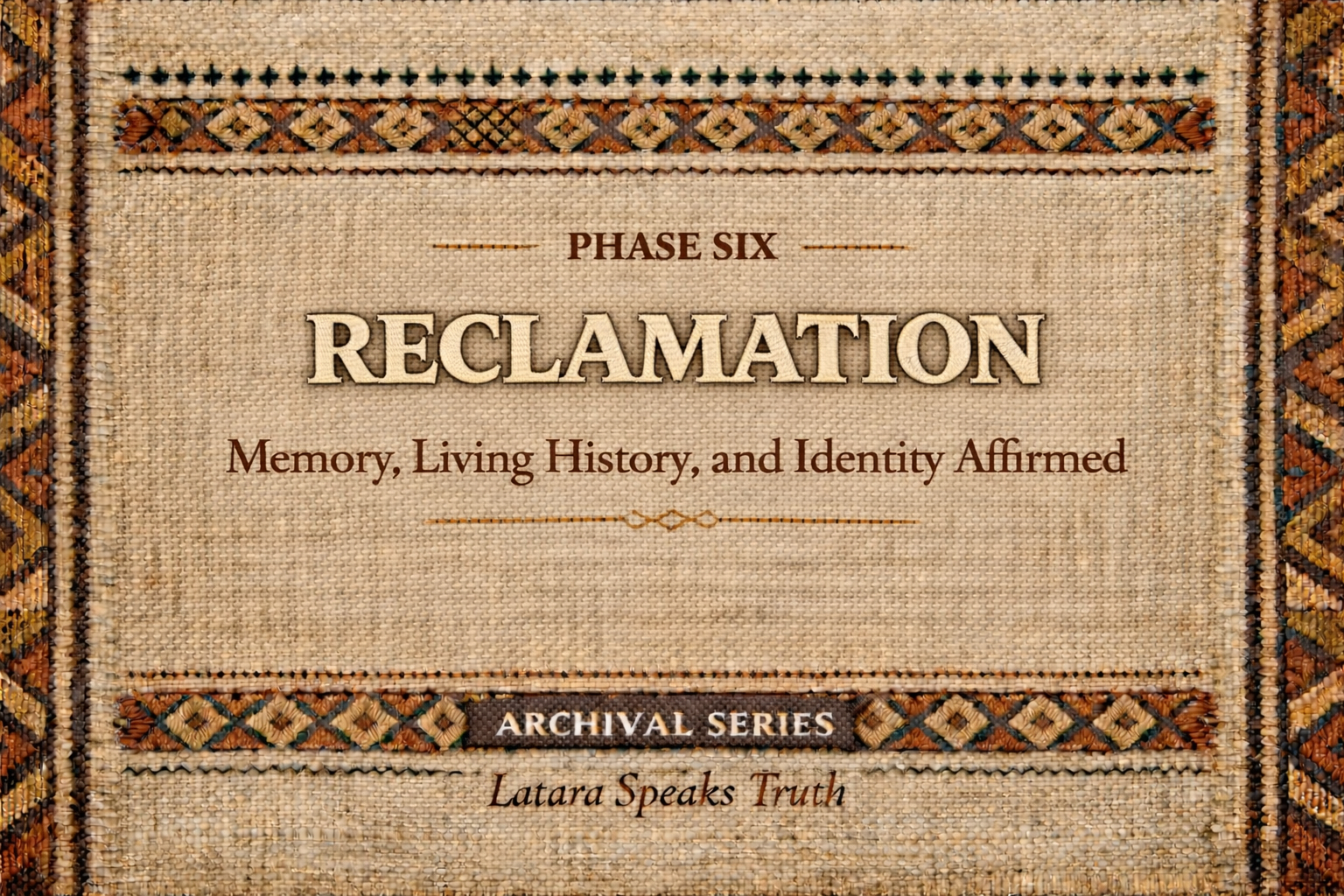
Phase Six. Reclamation. After decades of dispute, exclusion, and denial, descendants began reclaiming identity beyond federal approval. When records failed to recognize them, families turned to memory, oral history, church records, land deeds, cemeteries, and kinship networks to reconstruct what paperwork had erased.
Reclamation did not begin with permission. It began with research. Descendants traced lineages through fragmented archives, comparing census data, treaty language, enrollment records, and family testimony. What emerged was continuity where the record claimed absence. Communities that had survived entanglement and erasure refused disappearance.
For many Black American Indians and Freedmen descendants, reclamation meant asserting identity without enrollment, recognition without validation, and belonging without institutional approval. Cultural practice, storytelling, and community became acts of resistance. Identity was no longer something granted. It was something affirmed.
This phase does not suggest resolution. Legal battles continue. Enrollment disputes persist. Recognition remains uneven. But reclamation represents a shift in power. The narrative is no longer controlled solely by the same systems that produced erasure. Memory challenges record. Lived history confronts official silence.
Reclamation is not about restoring the past exactly as it was. It is about refusing the lie that it never existed. It marks the continuation of identity beyond removal, classification, and denial. What survived entanglement, enumeration, erasure, and dispute did not vanish. It adapted.
The archive does not end here. It speaks forward.
#Reclamation
#BlackAmericanIndian
#ArchivalSeries
#HistoricalRecord
#CulturalSurvival
#IdentityAsserted
#LivingHistory
#LataraSpeaksTruth