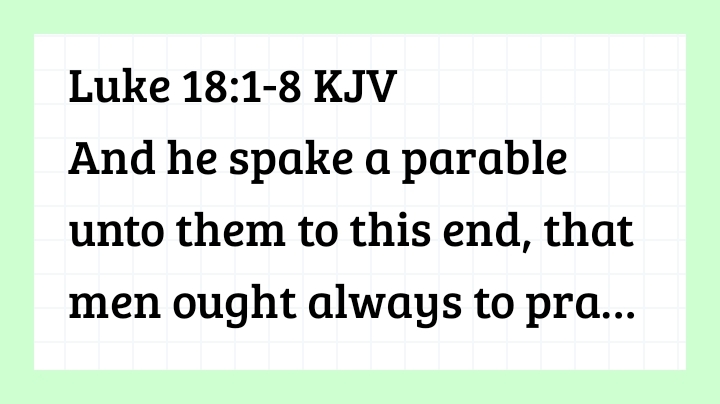
Luke 18:1-8 KJV
And he spake a parable unto them to this end, that men ought always to pray, and not to faint; [2] Saying, There was in a city a judge, which feared not God, neither regarded man: [3] And there was a widow in that city; and she came unto him, saying, Avenge me of mine adversary. [4] And he would not for a while: but afterward he said within himself, Though I fear not God, nor regard man; [5] Yet because this widow troubleth me, I will avenge her, lest by her continual coming she weary me. [6] And the Lord said, Hear what the unjust judge saith. [7] And shall not God avenge his own elect, which cry day and night unto him, though he bear long with them? [8] I tell you that he will avenge them speedily. Nevertheless when the Son of man cometh, shall he find faith on the earth?
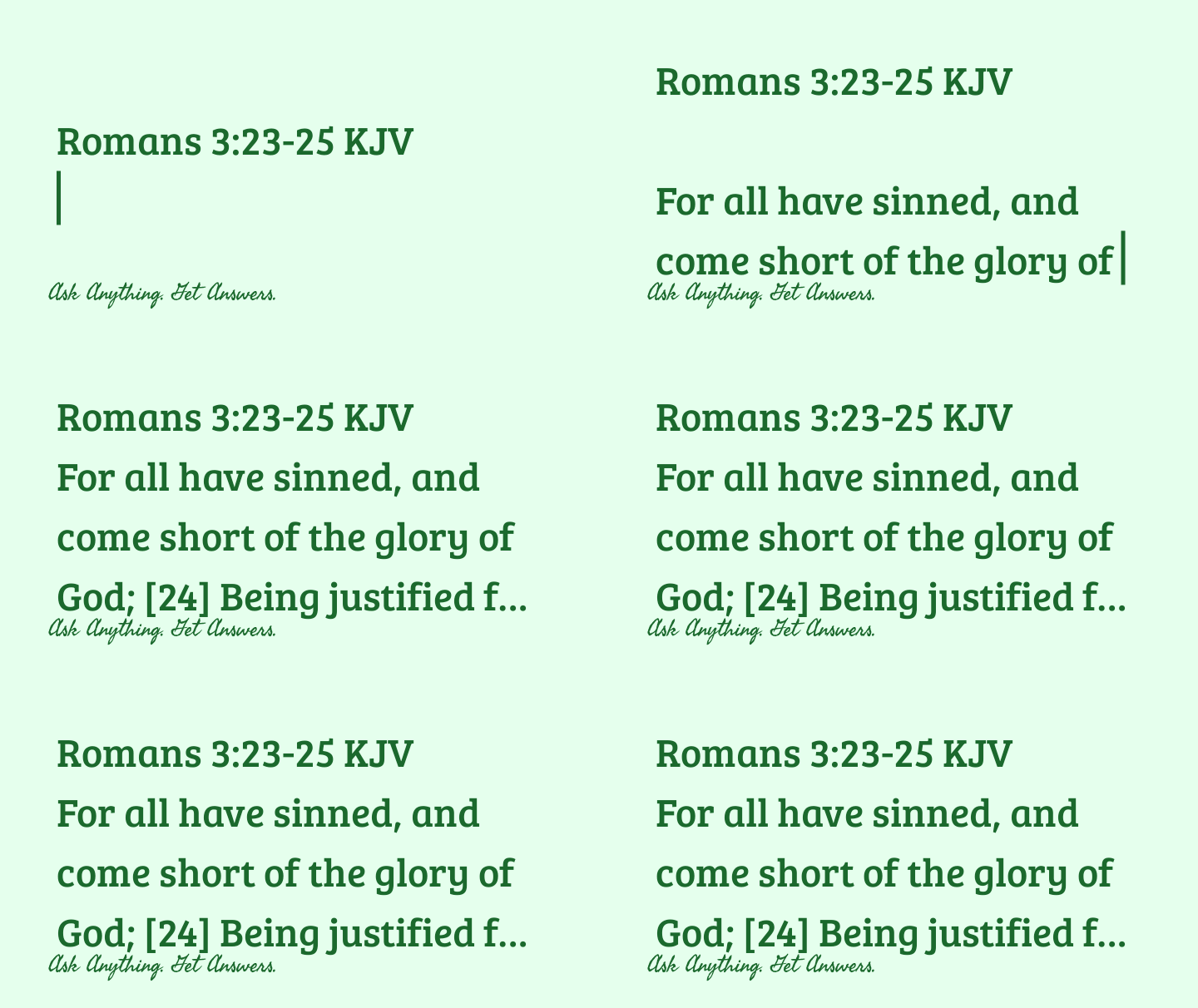
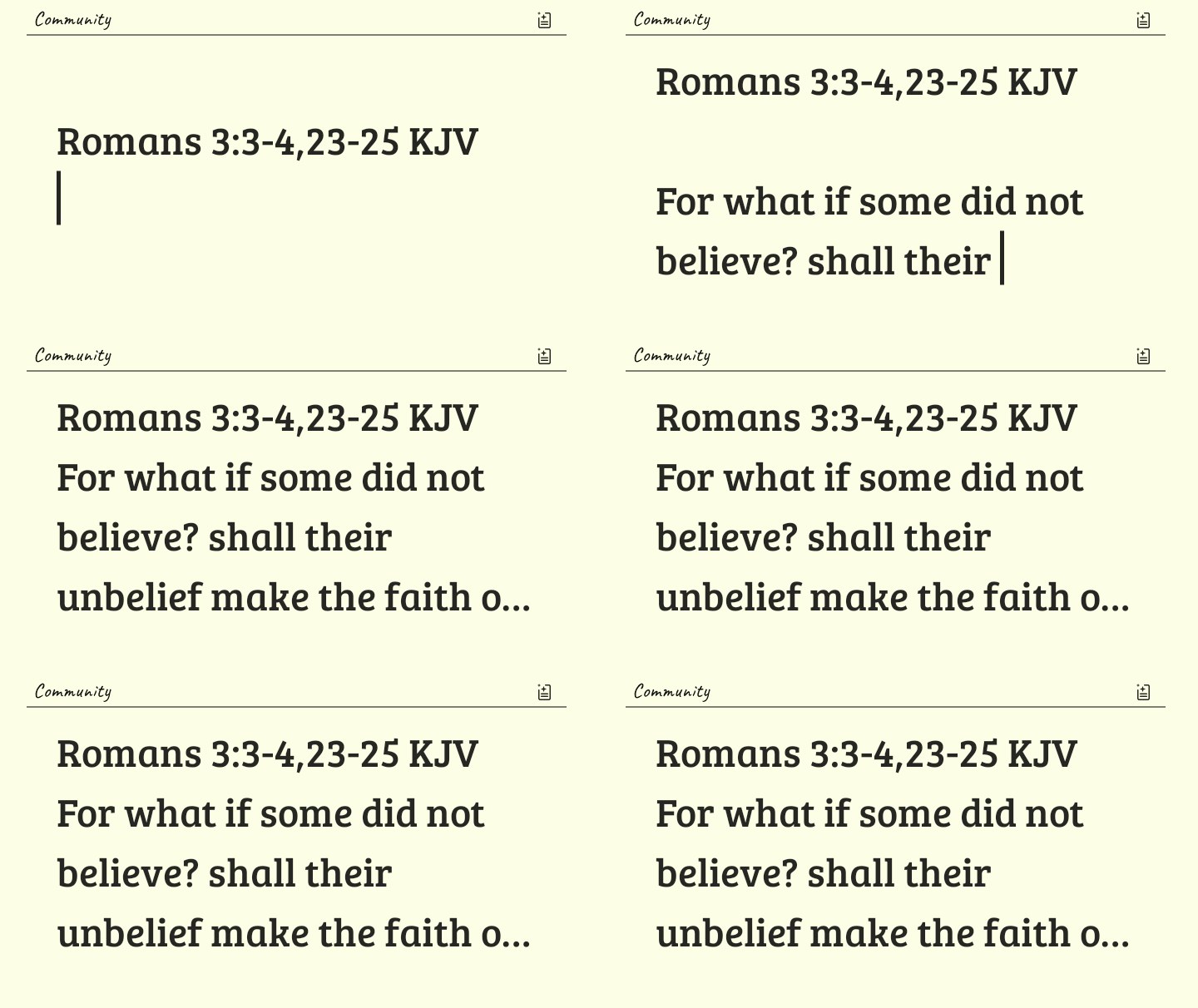
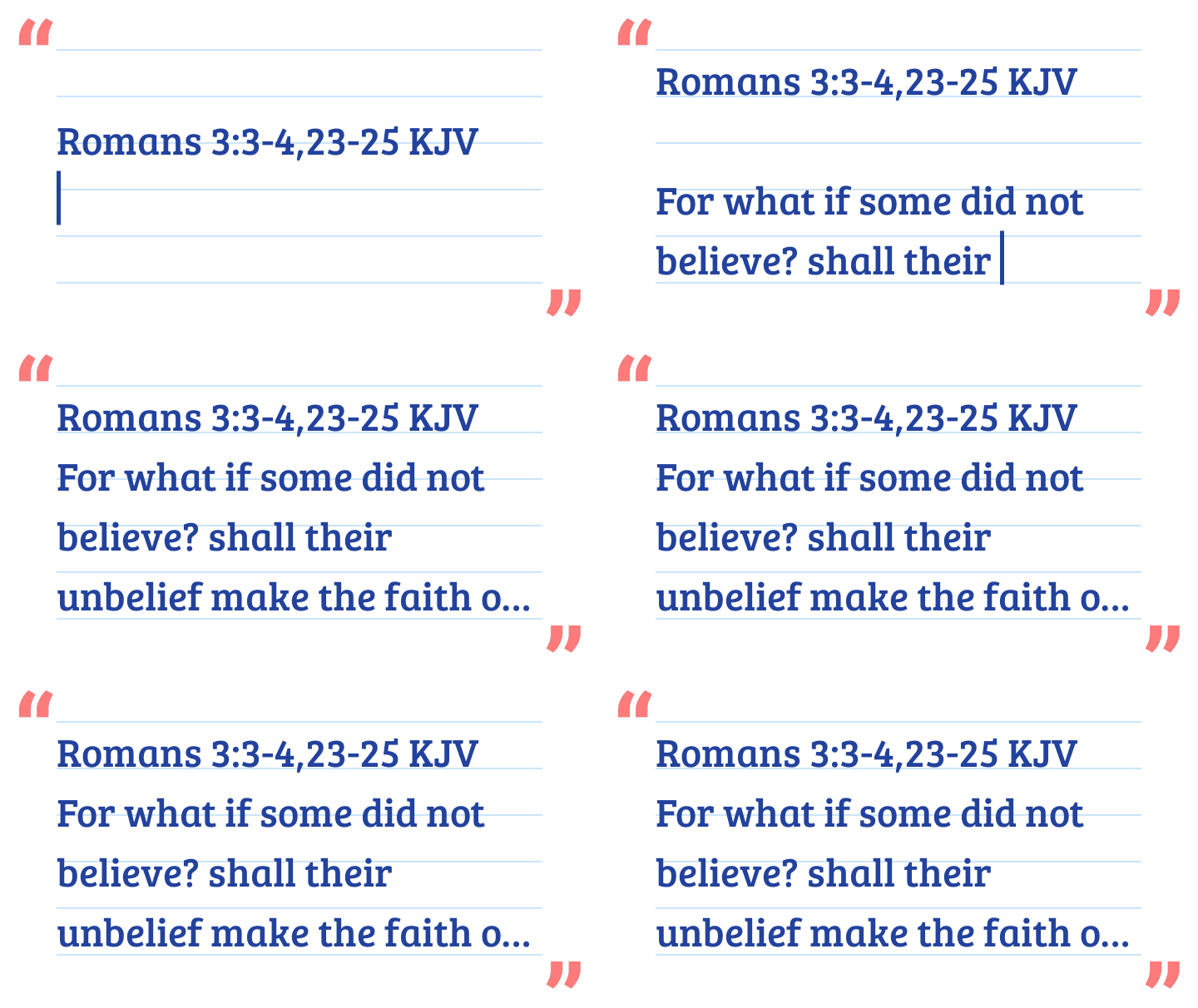
Romans 3:3-4,23-25 KJV
For what if some did not believe? shall their unbelief make the faith of God without effect? [4] God forbid: yea, let God be true, but every man a liar; as it is written, That thou mightest be justified in thy sayings, and mightest overcome when thou art judged. [23] For all have sinned, and come short of the glory of God; [24] Being justified freely by his grace through the redemption that is in Christ Jesus: [25] Whom God hath set forth to be a propitiation through faith in his blood, to declare his righteousness for the remission of sins that are past, through the forbearance of God;
1 Corinthians 15:1-4 KJV
Moreover, brethren, I declare unto you the gospel which I preached unto you, which also ye have received, and wherein ye stand; [2] By which also ye are saved, if ye keep in memory what I preached unto you, unless ye have believed in vain. [3] For I delivered unto you first of all that which I also received, how that Christ died for our sins according to the scriptures; [4] And that he was buried, and that he rose again the third day according to the scriptures:
...
...
...
📜📜📜✝️✝️✝️🙏🙏🙏⚠️⚠️⚠️😎😎😎
#1611 #Jesus #Bible