Tag Page HistoricalRecord

#HistoricalRecord
LataraSpeaksTruth

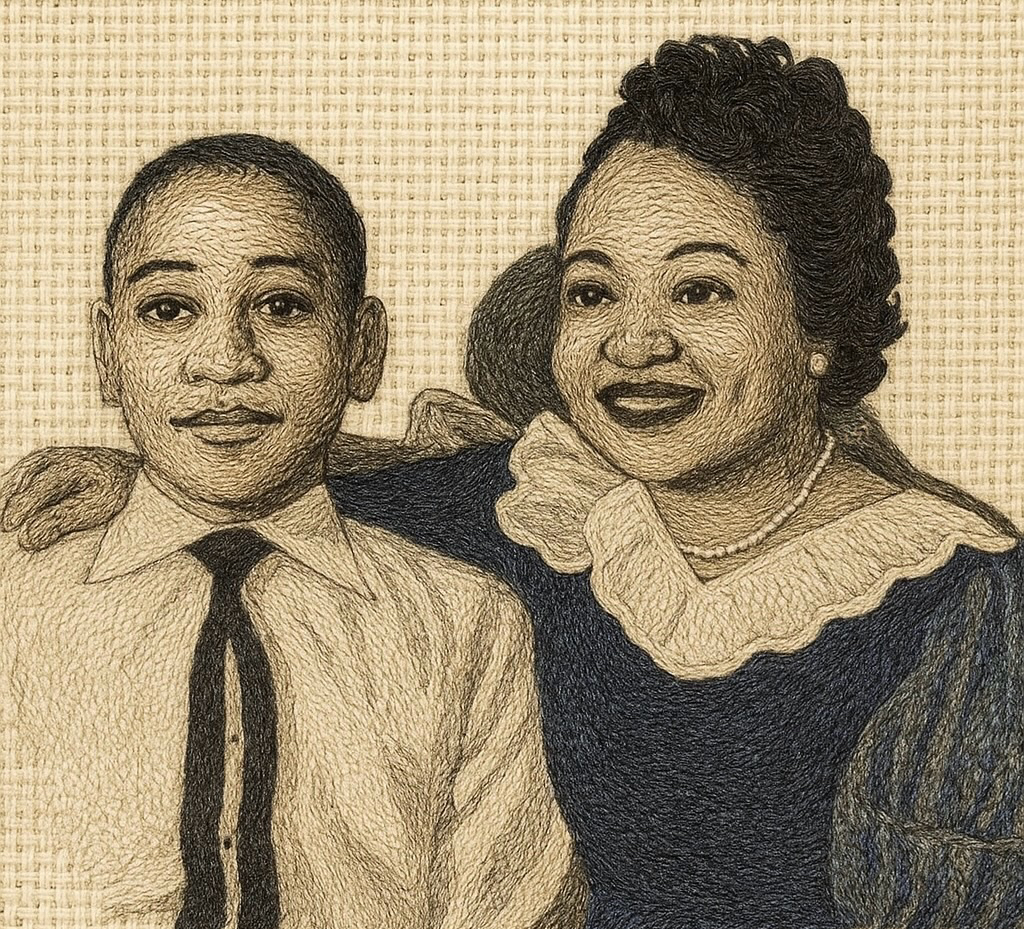
January 24, 1956 marked one of the most disturbing chapters in American history, not because justice was served, but because the truth was openly confessed without consequence. On this date, Look magazine published the paid confessions of the men who kidnapped, tortured, and murdered 14 year old Emmett Till after they had already been acquitted by an all white jury in Mississippi. Protected by double jeopardy, they spoke freely, detailing violence the courtroom had refused to name. The confessions confirmed what many already understood…the verdict was never about evidence, innocence, or law. It was about power. The legal system had functioned exactly as it was designed to, shielding brutality while pretending to uphold justice. Emmett Till’s killing exposed the machinery of Jim Crow justice in its rawest form, where cruelty could operate in daylight and accountability simply did not exist. His death was not treated as a tragedy by the courts, but as an inconvenience quickly brushed aside. Yet the story does not end with the killers. It continues with Mamie Till Mobley, a mother who refused silence, who chose an open casket so the world would see what hatred had done to her child. Those images traveled far beyond Mississippi, cutting through denial and forcing a nation to confront itself. Emmett Till did not set out to change history, but his death became a turning point, galvanizing resistance and awakening consciences that could no longer pretend ignorance. This was not a moment of closure, but of exposure. A reminder that sometimes the most painful truths arrive not through justice, but through the courage to tell what the system tried to bury. #EmmettTill #January24 #AmericanHistory #HistoricalRecord #JimCrowEra #CivilRightsHistory #TruthMatters #NeverForgotten #HistoryYouNeedToKnow

LataraSpeaksTruth

Phase Six. Reclamation. After decades of dispute, exclusion, and denial, descendants began reclaiming identity beyond federal approval. When records failed to recognize them, families turned to memory, oral history, church records, land deeds, cemeteries, and kinship networks to reconstruct what paperwork had erased. Reclamation did not begin with permission. It began with research. Descendants traced lineages through fragmented archives, comparing census data, treaty language, enrollment records, and family testimony. What emerged was continuity where the record claimed absence. Communities that had survived entanglement and erasure refused disappearance. For many Black American Indians and Freedmen descendants, reclamation meant asserting identity without enrollment, recognition without validation, and belonging without institutional approval. Cultural practice, storytelling, and community became acts of resistance. Identity was no longer something granted. It was something affirmed. This phase does not suggest resolution. Legal battles continue. Enrollment disputes persist. Recognition remains uneven. But reclamation represents a shift in power. The narrative is no longer controlled solely by the same systems that produced erasure. Memory challenges record. Lived history confronts official silence. Reclamation is not about restoring the past exactly as it was. It is about refusing the lie that it never existed. It marks the continuation of identity beyond removal, classification, and denial. What survived entanglement, enumeration, erasure, and dispute did not vanish. It adapted. The archive does not end here. It speaks forward. #Reclamation #BlackAmericanIndian #ArchivalSeries #HistoricalRecord #CulturalSurvival #IdentityAsserted #LivingHistory #LataraSpeaksTruth

LataraSpeaksTruth

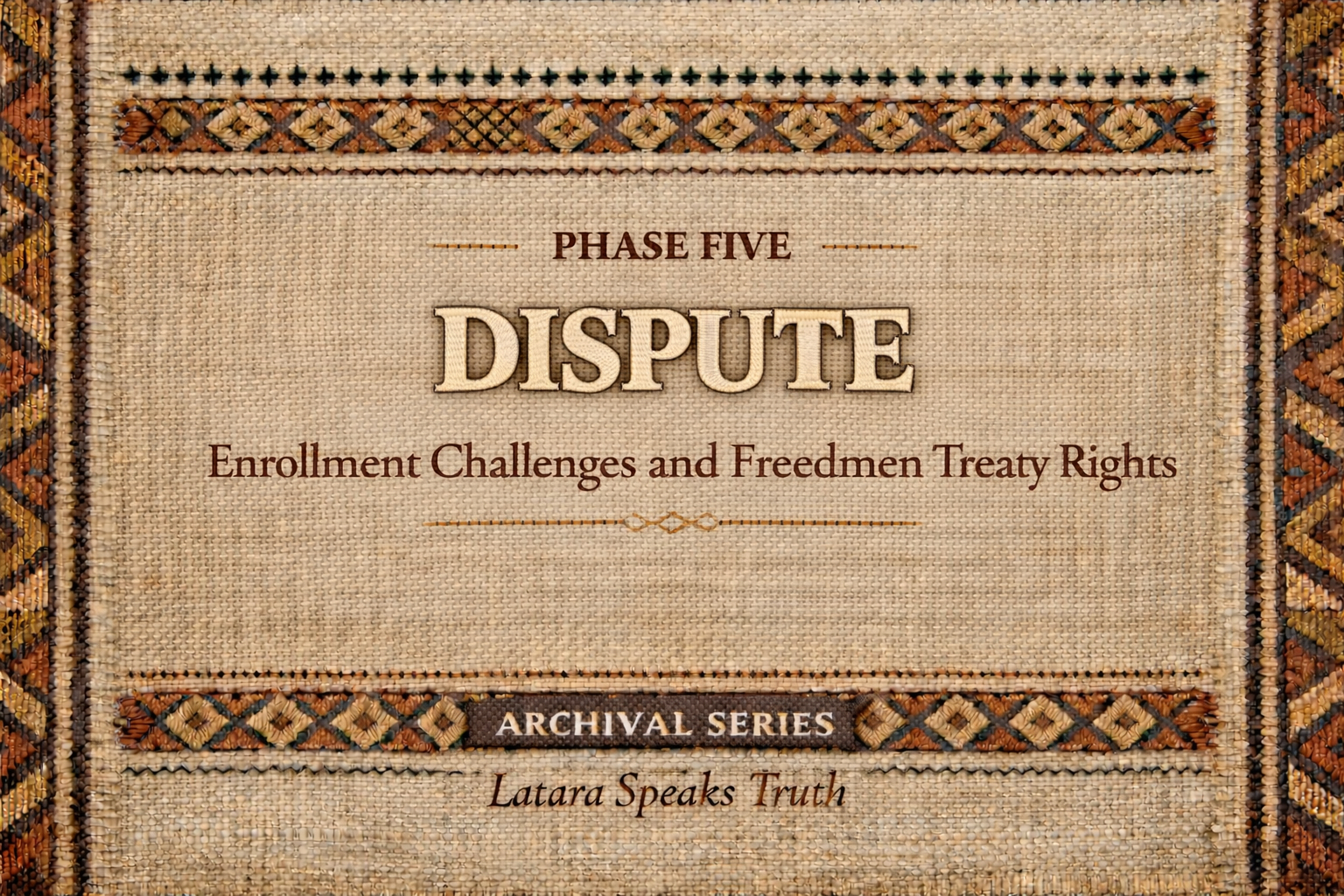
Phase Five. Dispute. After erasure was set into record, its consequences surfaced in open conflict. As descendants sought recognition, land, and citizenship, they encountered systems that demanded proof through documents designed to exclude them. Identity became something argued rather than lived. Throughout the twentieth century and into the present, Black American Indians and Freedmen descendants challenged enrollment decisions, treaty violations, and roll classifications. Many were told their ancestry did not qualify, despite documented lineage and historical presence within their communities. Courts, tribal councils, and federal agencies became battlegrounds where identity was weighed against paperwork. Treaties that had promised citizenship to formerly enslaved people within Native nations were reinterpreted or ignored. Roll closures locked families out permanently. Blood quantum standards narrowed belonging with each generation. Descendants were required to prove themselves using records created during enumeration and erasure, turning absence on paper into evidence against them. Dispute exposed the mechanics of erasure. It revealed how neutral-appearing policies produced exclusion and how legal recognition became separated from lived history. For many, the question was no longer who they were, but whether the system would acknowledge what already existed. This phase is not about resolution. It is about resistance within constraint. It explains why identity remains contested today, why recognition is uneven, and why historical injury continues to shape present-day struggles. Dispute is the sound of erasure being challenged, even when the rules were written to prevent success. #Dispute #BlackAmericanIndian #Freedmen #TreatyRights #ArchivalSeries #HistoricalRecord #IdentityContested #AmericanHistory

LataraSpeaksTruth

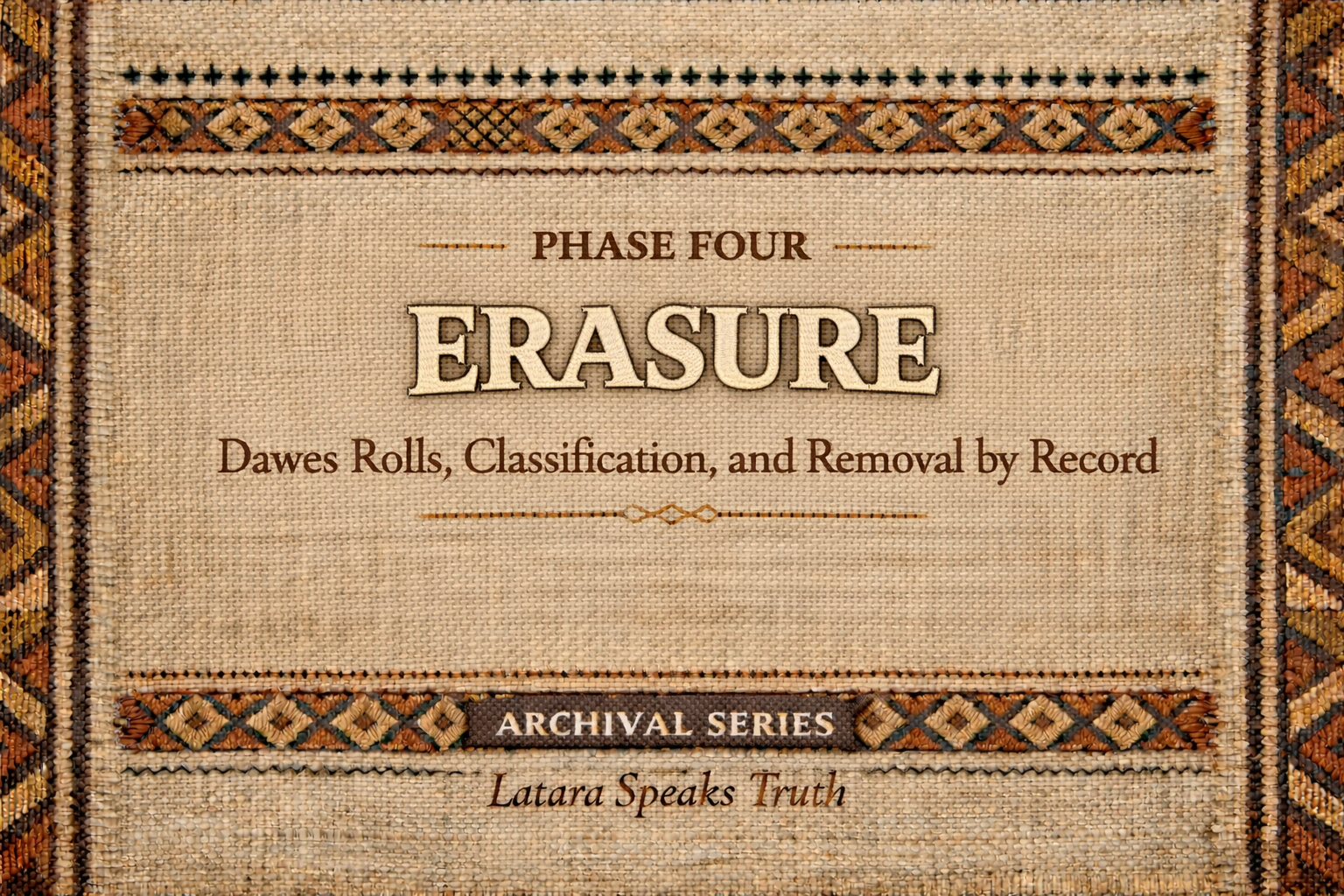
Phase Four: Erasure. After entanglement came enumeration. After enumeration came removal by record. In the late nineteenth and early twentieth centuries, the United States imposed enrollment systems that reshaped Indigenous identity through federal authority. Among the most consequential were the Dawes Rolls, used to divide communal land and redefine tribal belonging. The Dawes Rolls did not simply document people. They categorized them. Individuals were placed into rigid classifications such as “by blood,” “freedmen,” and “intermarried,” often based on appearance, rumor, or the judgment of federal enumerators. These labels carried permanent legal consequences. African ancestry became grounds for separation even when Indigenous lineage was known, lived, and recognized within the community. Families were split across categories. Children were enrolled differently than their parents. Kinship was overridden by paperwork. Once recorded, these classifications followed descendants for generations, determining access to land, citizenship, and recognition. What had existed through shared history and community was reduced to entries on a roll. This marked the transition from entanglement to erasure. Identity no longer depended on belonging or lineage alone. It depended on federal approval. Absence from a roll, or placement in the wrong category, became justification for exclusion. Over time, roll closures and enrollment restrictions solidified these outcomes. Erasure did not require open violence. It operated through clerks, registrars, and policy. By redefining who counted on paper, entire communities could be diminished without removal. Black American Indians were left navigating systems that questioned their existence while relying on records designed to exclude them. This is why identity disputes persist today. The disappearance was administrative. The consequences were permanent. #Erasure #DawesRolls #BlackAmericanIndian #ArchivalSeries #HistoricalRecord

LataraSpeaksTruth

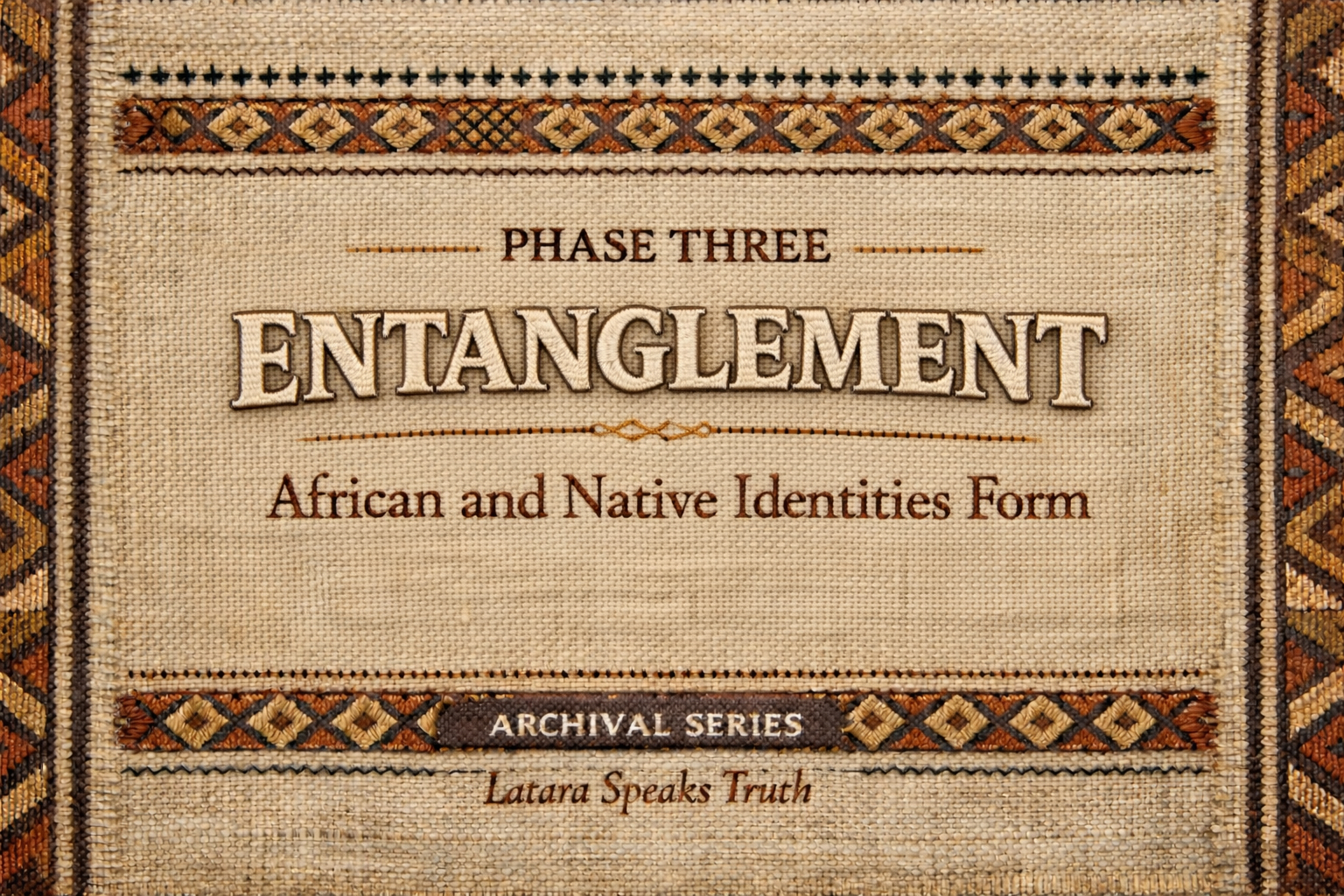
Phase Three. Entanglement. As slavery became codified, African and Indigenous lives grew increasingly bound together through proximity, survival, and necessity. Within colonial and early American systems, Africans and Native peoples labored alongside one another, shared land, formed families, and navigated overlapping systems of control imposed by European and later U.S. authorities. In many regions, enslaved Africans sought refuge among Indigenous nations. In others, Africans were held in bondage within Native territories shaped by colonial pressure. Over time, intermarriage and kinship created communities that did not fit neatly into emerging racial categories. These relationships were not uniform or idealized. They were shaped by local conditions, power, and survival. As the United States expanded, Native nations were forced into treaties and policies that increasingly reflected American racial hierarchies. Some tribes adopted chattel slavery under pressure tied to land, recognition, or economic survival. Others resisted or adapted differently. Across these systems, African ancestry became increasingly scrutinized, even when families and communities had existed for generations. Entanglement produced identities that were lived before they were named. Black American Indians emerged through shared history, not paperwork. Community often existed long before classification. This phase marks the height of connection before restriction followed. What had been fluid would soon face narrowing, as law and documentation replaced kinship and memory. #Entanglement #BlackAmericanIndian #ArchivalSeries #HistoricalRecord

LataraSpeaksTruth

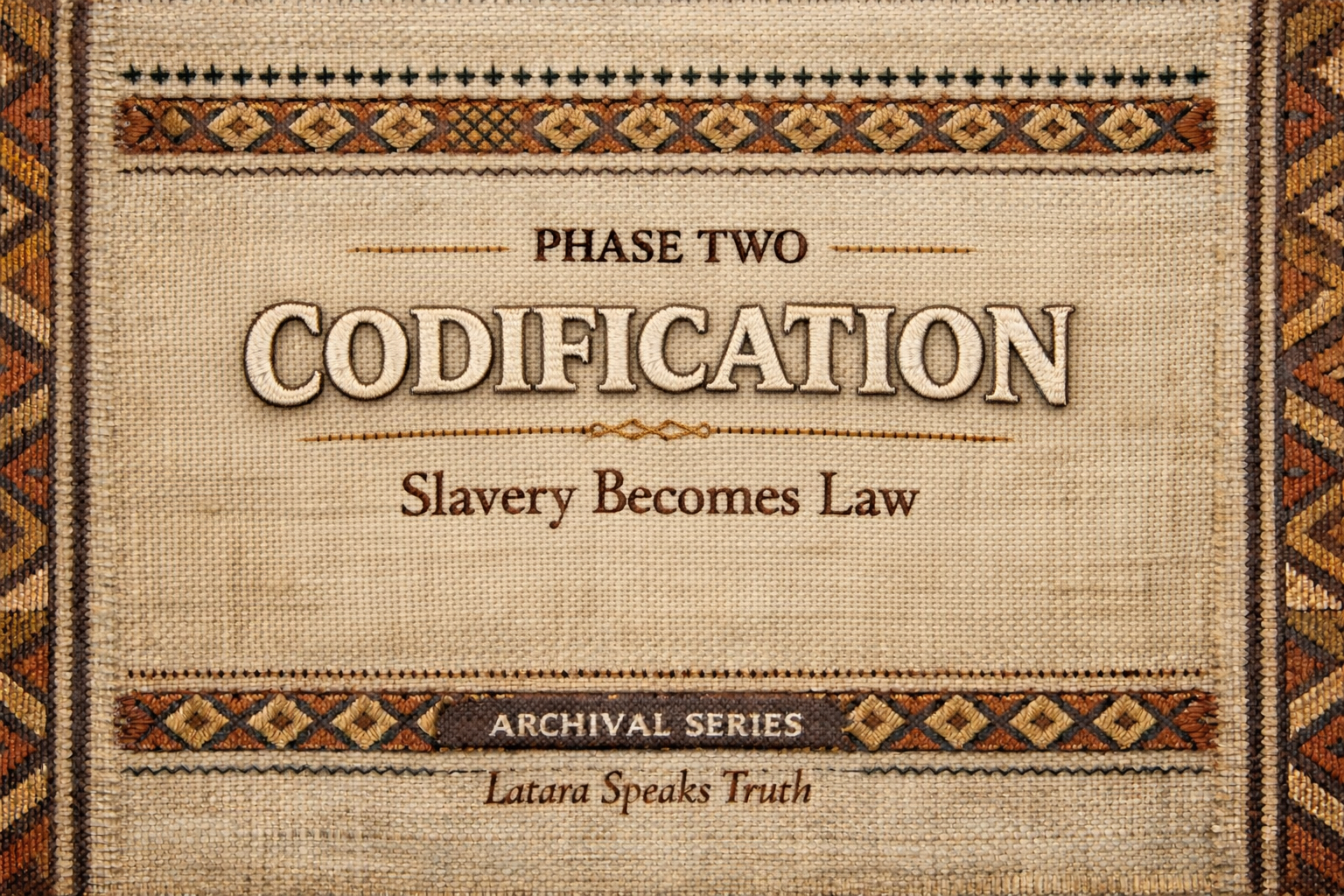
Phase Two. Codification. As colonial systems expanded across the Americas, enslavement shifted from practice to law. What had once been enforced through custom and violence was formalized through statutes, court rulings, and inherited status. By the late seventeenth century, slavery was increasingly defined as permanent, racial, and transferable by birth. African ancestry became a legal condition rather than a circumstance. Colonial governments codified labor, movement, marriage, punishment, and property rights. Enslaved Africans were stripped of legal personhood, while freedom for Black people became restricted and conditional. Laws varied by colony, but their direction was consistent. Status followed bloodlines. Children inherited bondage. Escape no longer altered classification. Identity became assigned, recorded, and enforced. Indigenous nations were pulled deeper into this system as European and later American expansion intensified. Treaties, land seizures, and survival pressures forced tribes to navigate slave economies imposed by colonial powers. Some Native nations resisted participation. Others adopted chattel slavery under coercion, economic pressure, or promises of political recognition. These decisions occurred within systems designed to limit Indigenous sovereignty. Codification narrowed earlier possibilities. Where proximity once allowed shared labor, refuge, or informal belonging, law demanded rigid classification. African ancestry was separated from Indigenous identity in legal terms, even when families and communities told a different story. Written records began to override lived reality. This phase marked the moment slavery became self perpetuating. The system reproduced itself through law, reshaping citizenship, land ownership, and recognition, and laying foundations for exclusion and erasure that followed. #Codification #SlaveryBecomesLaw #ArchivalSeries #HistoricalRecord #ColonialHistory #AfricanAmericanHistory #NativeAmericanHistory

LataraSpeaksTruth

Point Zero. Before transatlantic slavery, before European colonies in the Americas, Africa was already home to structured societies with governance, trade networks, legal systems, and spiritual traditions. Regions of West and Central Africa included empires such as Mali, Songhai, Benin, Kongo, and others, each with distinct political organization and cultural life. These societies engaged in agriculture, regional and international trade, education, and diplomacy long before sustained European intervention. Early European contact began through commerce, not enslavement. Trade relationships initially focused on goods such as gold, ivory, and textiles. Over time, as European expansion intensified and labor demands increased in the Americas, those trade systems shifted. Human beings were gradually absorbed into commercial exchange through coercion, warfare, and policy. This transition was not accidental. It was documented, regulated, and enforced by emerging colonial economies. Africans taken into the transatlantic system did not arrive without identity or culture. Identity was deliberately dismantled during capture, transport, and sale. The Middle Passage functioned as an organized system of confinement and control, designed to sever language, kinship, and memory. Survivors carried fragments of cultural knowledge that later shaped communities across the Americas, even as legal structures sought to erase their origins. This context forms the foundation for understanding enslavement in the Americas, interactions between Africans and Indigenous nations, and the emergence of mixed identities under colonial rule. Subsequent chapters do not stand alone. They extend from this point. #PointZero #AfricaBeforeEnslavement #HistoricalRecord #ArchivalSeries #LataraSpeaksTruth #BlackHistoryDocumented #AfricanHistory #BeforeTheShips #BeforeTheChains #HistoricalContext #UnfilteredHistory

LataraSpeaksTruth

On December 29, 1890, U.S. Army troops from the 7th Cavalry surrounded a Lakota Sioux encampment near Wounded Knee on the Pine Ridge Reservation in South Dakota during a forced disarmament operation. Tensions escalated as soldiers attempted to confiscate weapons. After a single shot was fired under disputed circumstances, troops opened fire using rifles and Hotchkiss cannons. An estimated 150 to 300 Lakota men, women, and children were killed, many of them unarmed. As people fled, gunfire continued across the encampment. Numerous victims were later found frozen in the snow. The massacre occurred amid federal fear surrounding the Ghost Dance, a spiritual movement officials misinterpreted as a threat rather than a religious practice. Military force was deployed instead of diplomacy. Earlier that month, the killing of Lakota leader Sitting Bull intensified tensions across the region. Wounded Knee is widely regarded as marking the violent end of large scale Indigenous armed resistance on the Plains. No meaningful accountability followed, and several soldiers later received military commendations. Today, the massacre remains a defining example of state violence against Indigenous people and continues to shape debates about historical memory and justice in the United States. #WoundedKnee #December29 #USHistory #NativeHistory #Lakota #SouthDakota #HistoricalRecord #AmericanHistory #HistoryMatters

LataraSpeaksTruth

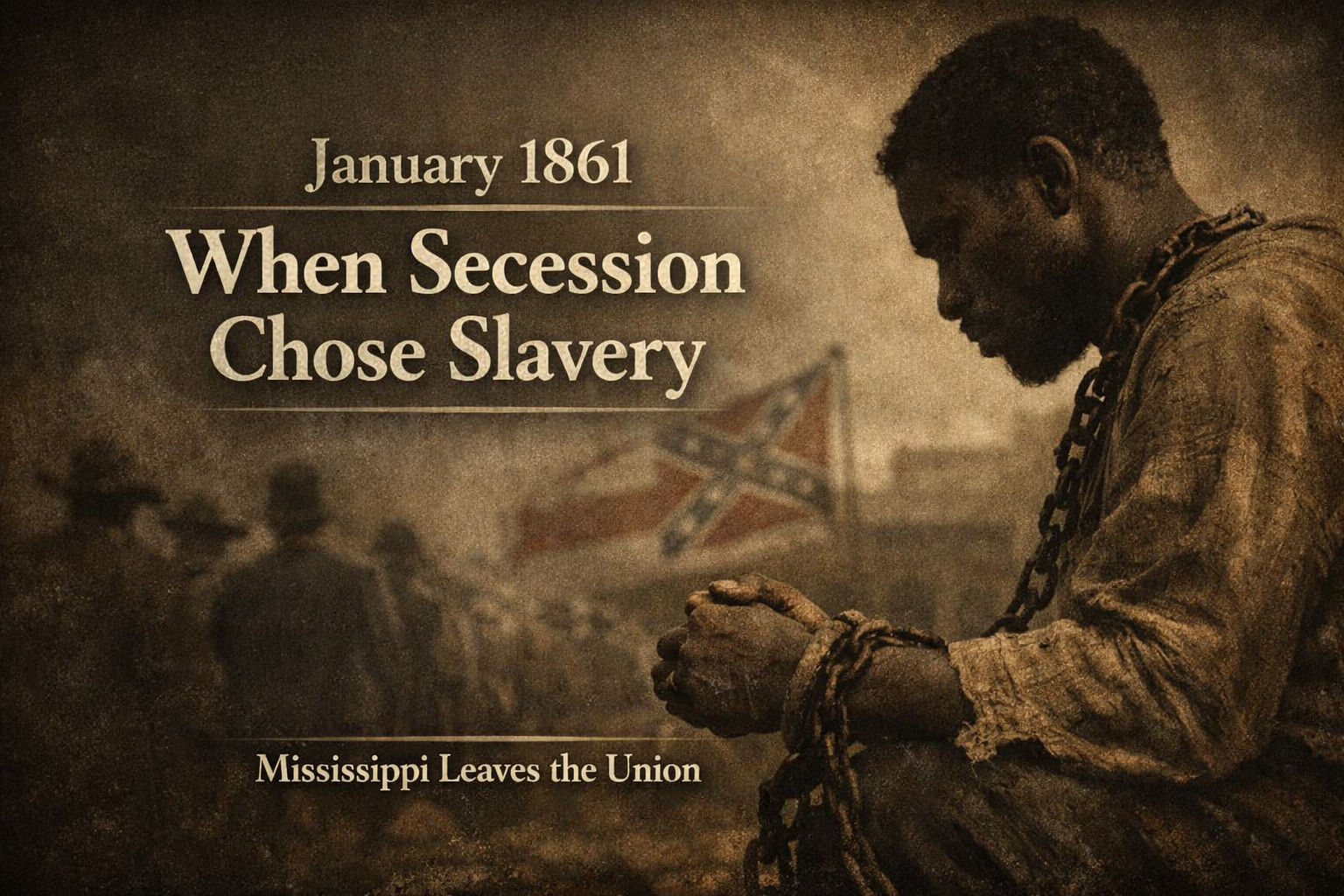
On January 9, 1861, Mississippi formally voted to secede from the United States, becoming the second state to leave the Union in the tense months leading up to the Civil War. This decision was not abstract politics or distant ideology. It was a direct declaration that slavery would be protected, expanded, and defended at all costs. For enslaved Black people across Mississippi and the broader Deep South, secession carried immediate meaning. It signaled that those in power were willing to fracture the nation rather than consider any future without human bondage. Families already living under brutal conditions understood that this choice hardened their reality and closed off any remaining hope that change might come without conflict. Mississippi’s leaders were explicit about their reasoning. In its secession declaration, the state named slavery as the central cause, tying its economy, social order, and political identity to the continued ownership of Black lives. This clarity matters, because it removes any doubt about what was being defended and who was being sacrificed. As the nation moved closer to war, decisions made in early 1861 reshaped the paths of millions. Enslaved people would later escape behind Union lines, resist through sabotage and survival, or enlist in the United States Colored Troops once allowed. These acts of courage were not spontaneous. They were responses to years of tightening control and to moments like Mississippi’s secession, when the stakes became unmistakably clear. January 9, 1861 stands as a reminder that the Civil War did not begin in confusion. It began with choices. And for Black Americans, those choices made by others turned the fight for freedom into a matter of survival, resistance, and eventual transformation through war. #AmericanHistory #CivilWarEra #MississippiHistory #DeepSouth #USHistory #HistoricalRecord #FreedomStruggles #SlaveryHistory

LataraSpeaksTruth

George W. Ashburn

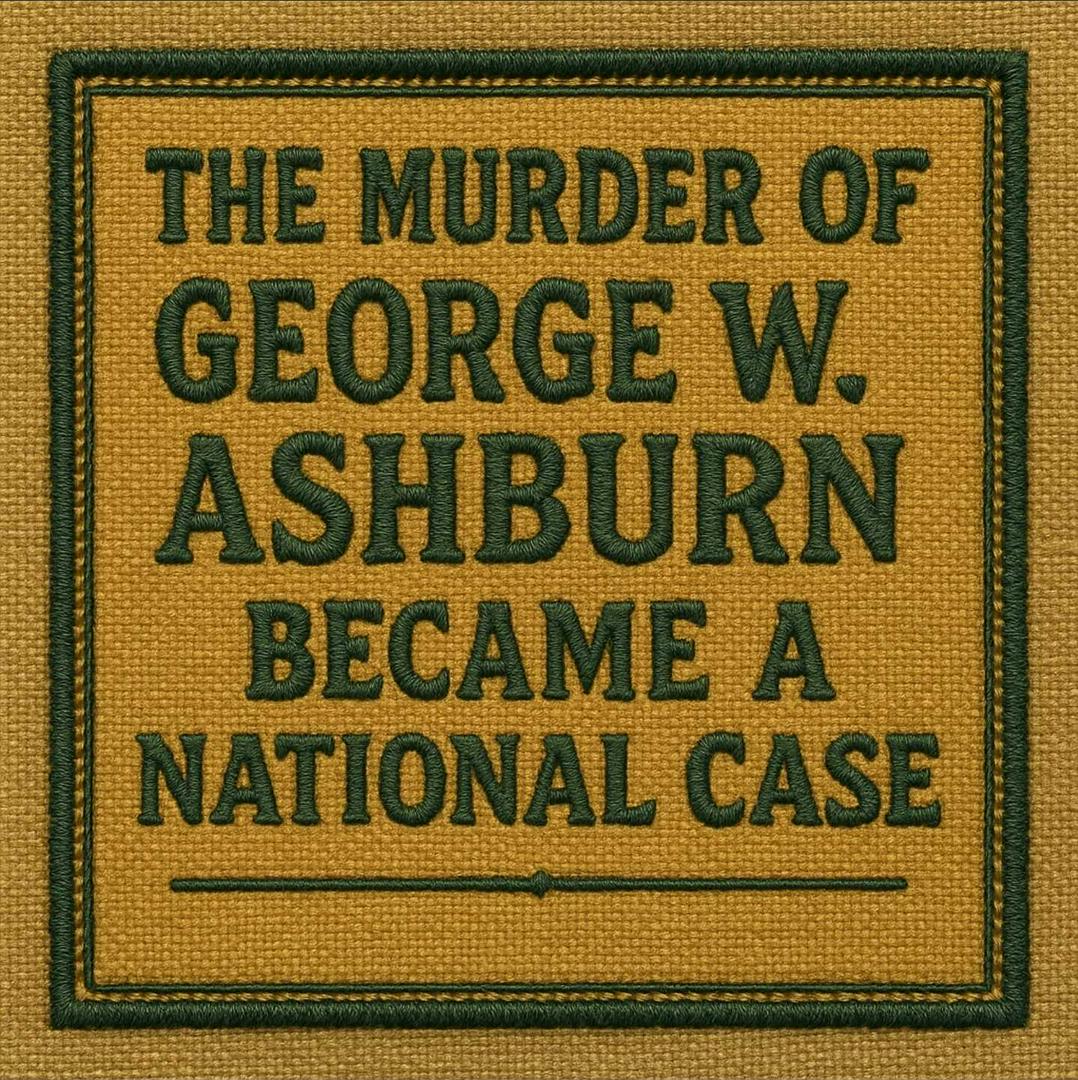
George W. Ashburn was a white Radical Republican who openly supported political rights for newly freed Black citizens during Reconstruction. That alone made him a target in Columbus, Georgia, where resistance to racial equality was strong and vocal. On March 31, 1868, Ashburn was assassinated inside a boarding house. Witnesses reported that a masked group forced their way in and shot him, a killing widely attributed to early Ku Klux Klan activity. His murder came just weeks after he backed Georgia’s new constitution, which expanded civil rights for Black residents. Because Georgia was still under military rule, his death did not stay a local matter. Federal authorities moved quickly, and on November 23, 1868, the case became national news when a military tribunal charged dozens of white men, some from prominent families, with participating in the assassination. The investigation exposed the organized backlash against Black political progress. It also showed how far opponents of Reconstruction were willing to go to silence anyone advocating for racial equality. But despite the national attention, the case fell apart. Political pressure, intimidation of witnesses, and Georgia’s push to end military oversight led to the charges being dropped. No one was ever convicted. Ashburn’s murder became a symbol of the violent resistance that shaped the end of Reconstruction, a reminder of the dangers faced not only by Black citizens, but by anyone who stood beside them during one of the most volatile periods in American history. #HistoryMatters #AmericanHistory #ReconstructionEra #GeorgiaHistory #CivilWarLegacy #PostWarSouth #HistoricalRecord #USHistoryStory #OnThisDayHistory

George W. Ashburn
Tag: HistoricalRecord | LocalAll