April 26, 1892... Sarah Boone received a patent for an improved ironing board
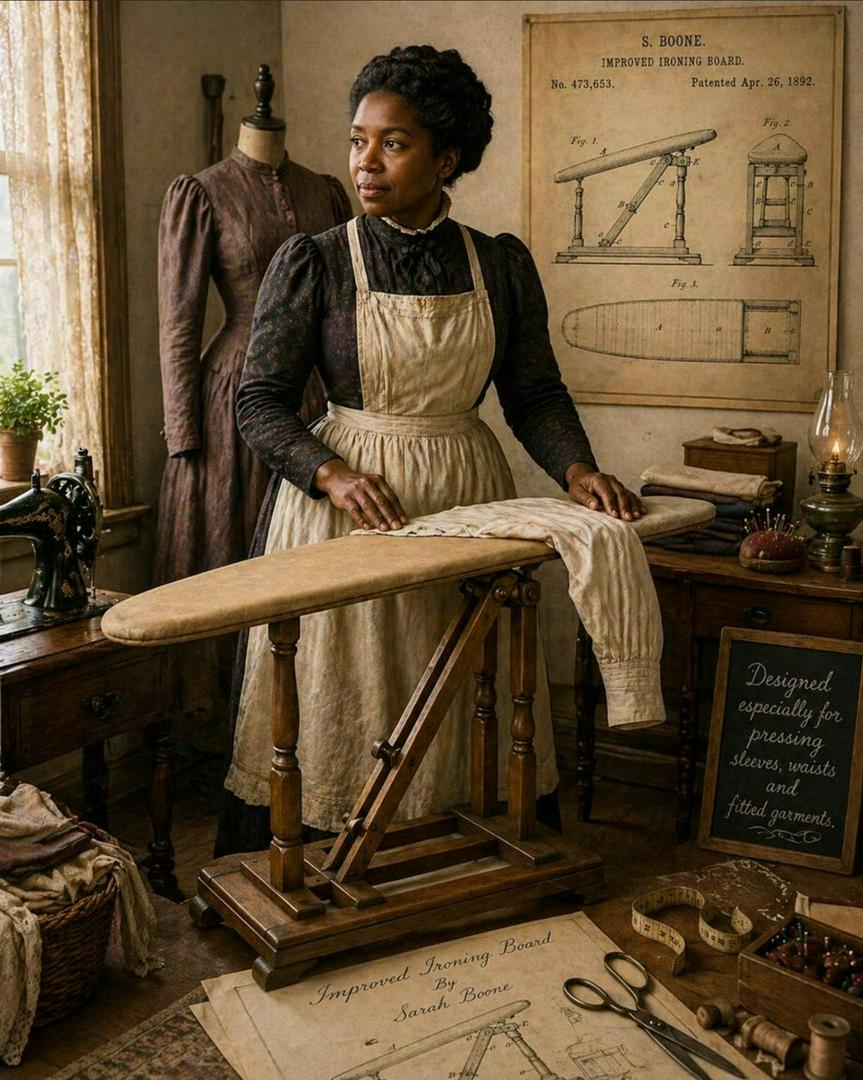
The image used with this story is an original artistic illustration inspired by Boone's documented 1892 patent. It shows a dignified dressmaker in a late 1800s sewing room, standing beside a narrow curved ironing board with garments, sewing tools fabric, and a patent-style diagram around her. It is not a verified portrait of Sarah Boone, but a tribute to her work and invention.
Sarah Boone was a dressmaker from New Haven, Connecticut. Through her work, she understood a problem many people faced: pressing clothing was not always simple especially sleeves, fitted waists, curved seams, and tailored garments.
Boone saw the issue and improved the tool
Her invention was not about creating the first ironing board. It was about making the board better suited for the shape of clothing. Her improved ironing board was narrow, curved, and designed to help press sleeves and fitted garments more effectively. On April 26, 1892, she received U.S. Patent No. 473,653 for that design
That distinction matters. Boone improvec an existing household tool using practical knowledge from her own work. Her contribution came from observation, skill and everyday problem-solving.
At a time when women, especially women of color, were rarely recognized for innovation, Boone secured her name in the patent record
Her story reminds us that invention does not always begin in a laboratory. Sometimes it begins in a sewing room, a kitchen, aworkshop, or anywhere someone keeps saying, "There has to be a better way."
Sarah Boone's legacy is not just about an roning board. It is about creativity persistence, and the value of workroom knowledge that too often goes overlooked
#SarahBoone #Inventors #WomenInventors #Innovation #HiddenFiqures