Tag Page Help

#Help
LLama Loo

🐁 A Church Mouse in a Snake Pit ⭐️ I love having been called to ministry. Most days, it’s genuinely easy. Most people come into my lane because they want hope, encouragement, and a deeper understanding of God’s Word. I am deeply blessed by the love and support you—my readers—pour out every day. When you tap a simple “Like,” type an “Amen,” or leave a heartfelt comment, it truly makes my day. It tells me that in that moment, you found a reason to connect with God. That means everything to me. But if I’m completely honest, not every day is a gentle stream of blessings. We all know social media can feel like the Wild West. When we stay in our lane, we are usually unbothered by the riff-raff. But as a Bible-believing follower of Christ, I often find myself crossing into another lane—especially when I see Scripture twisted, misquoted, or weaponized. It’s in that lane that I run into true spiritual marauders. Suddenly, this little church mouse finds herself in a snake pit. So what does a church mouse do when surrounded by venom? How do we show God’s love to people who lie, cheat, and steal? And yes—I say that intentionally. That is Satan’s job description. He lies. He accuses. He steals. He destroys. And he’s more than willing to use anyone who opens themselves to his influence. So— What Would Jesus Do? Scripture gives us powerful examples: • “Get behind Me, Satan.” • Flipping the tables of the money changers. • Rebuking the Pharisees with holy boldness. • Warning not to cast pearls before swine (Matthew 7:6). • Instructing His disciples: if they refuse your message, shake the dust off your feet and move on (Matthew 10:14). Sometimes, there was a little vinegar in the Lord’s honey. Not cruelty. Not spite. But holy clarity—truth without apology. So when we find ourselves roped into that snake pit, a touch of vinegar is sometimes unavoidable. ✝️ CONTINUED IN COMMENTS ⬇️⬇️⬇️ #Bible #God #Jesus #Help #BibleStudy #Truth

LLama Loo

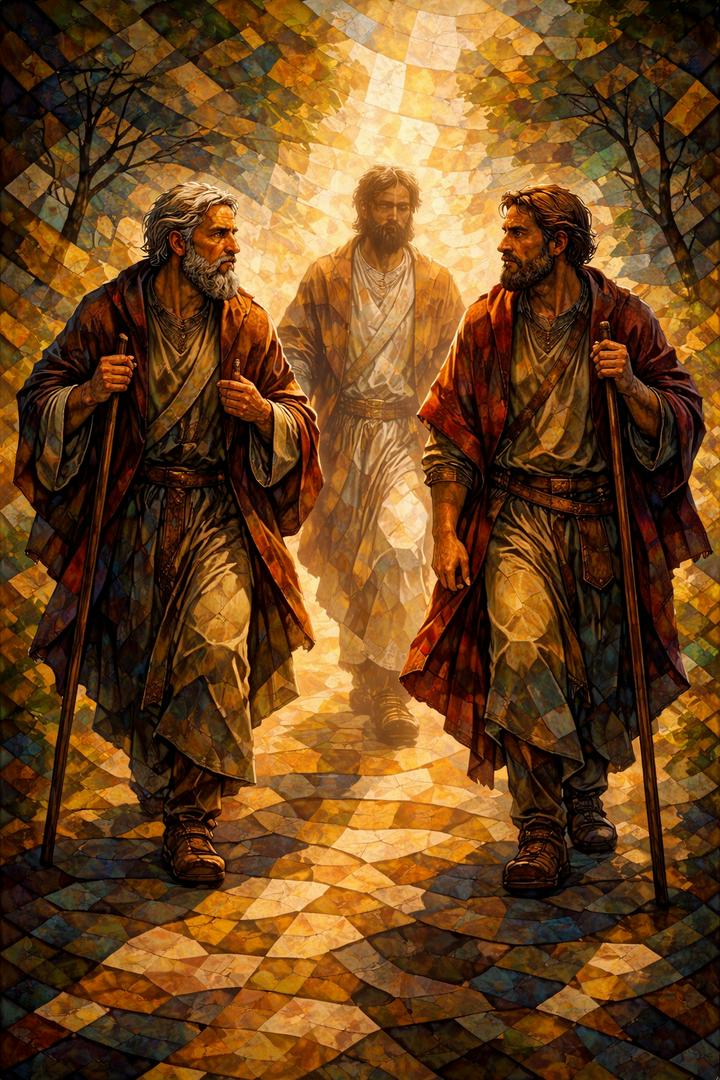
✨ Prophecy Fulfilled: The Life of Yeshua (Jesus) – Episode 51A Olivet Discourse - Signs The Temple still shimmered behind them as Yeshua and His disciples stepped out into the open sunlight. The widow’s quiet offering had faded into silence. The sting of the Woes still echoed in the marble courts. But the disciples were captivated by the stones — massive blocks of polished limestone, some as long as 40 feet, fitted so perfectly together that not even a blade of grass could slip between them. “Teacher,” one said, “Look at these stones! Look at these magnificent buildings!” This was Israel’s pride. Her landmark. Her national identity. Her religious heartbeat. And Yeshua stopped walking. He turned toward the Temple — the place where He had taught, healed, and wept — and spoke a prophecy that shattered their breath: “Do you see all these things? Truly I tell you: not one stone will be left on another. Every one will be thrown down.” The disciples stood frozen. The Temple? Destroyed? Unthinkable. They followed Him across the Kidron Valley in stunned silence, up the slope of the Mount of Olives, where the whole Temple glittered before them in the afternoon sun. There, privately, they asked the three questions that shaped all end-times understanding: 1️⃣ “When will these things happen?” 2️⃣ “What will be the sign of Your coming?” 3️⃣ “And the end of the age?” Yeshua sat down to answer — and heaven’s timeline began to unfold. ⸻ 🔥 1. The First and Greatest Warning: Deception Before speaking of earthquakes or wars, before persecution or signs in the heavens, Yeshua warned of something far more dangerous: “Take heed that no one deceives you. For many will come in My name, saying, ‘I am the Messiah,’ and will deceive many.” Deception is the enemy’s first weapon. Counterfeits come before the crisis. False saviors arise before the true One returns. ✝️ CONTINUED IN COMMENTS ⬇️⬇️⬇️ #Bible #God #Jesus #BibleStudy #Help #Disciples #Faith #Love #askmeaboutmyjesus

LLama Loo

The Weight of True Love ❤️ Love is one of the most overused and misunderstood words in our world. We use it for everything from comfort foods to covenant promises—and somewhere in that tangle of emotions, disappointments, and expectations, the true meaning of love gets lost. But if we pause long enough to examine it, we begin to see the layers. Maternal Love, Familial Love… and Obligation A mother’s love can be fierce and sacrificial. Family love is the bond we’re born into. Yet many people carry deep wounds—abandonment, betrayal, manipulation, or relationships built more on duty than genuine affection. These experiences shape how we define love and what we think we deserve. Camaraderie, Friendship, and “Besties” Friendship is precious—laughter, shared history, the comfort of being known. But friendships can fracture, fade, or prove conditional. We all know the ache of someone who promised to stay… and didn’t. Lust and Romance Romance is powerful and intoxicating, but it is often confused with infatuation or need. It can be beautiful, but it can also be fragile, temporary, and centered on emotions that shift like sand. These are all forms of human love—real, but imperfect. And in a world soaked with selfishness, abuse, cruelty, and spiritual darkness, many people stop trusting love altogether. They’ve been hurt too deeply. Manipulated too often. Disappointed too many times. So when they hear about God’s love, they compare it to the broken love they’ve known… and they struggle to believe it. But Agape is different. ⸻ Agape: The Highest Form of Love Agape is not desire. It is not emotion. It is not obligation. Agape is God’s perfect, unstoppable, self-sacrificing love for humanity. It is steadfast. Unchanging. Not dependent on our worthiness. Not withheld when we fail. And Agape was not proven in a poem or a feeling. It was proven in blood. ✝️ CONTINUED IN COMMENTS ⬇️⬇️⬇️ #Love #God #Jesus #TrueLove #Help #Afterlife #Bible

LLama Loo

Philemon — A Brief Introduction to the Bible Part 52** Philemon is the shortest of all Paul’s letters — but it is one of the most profound demonstrations of Christian forgiveness, reconciliation, and the transforming power of the gospel in the New Testament. Where other epistles address doctrine, church order, or spiritual endurance, Philemon addresses a single human relationship shaped and changed by Christ. This letter is a delicate combination of boldness and humility. Paul appeals not by command, but by love. He urges a Christian master to receive his runaway slave not as property, but as a beloved brother in Christ. Philemon is proof that the gospel does not merely inform theology — it reforms relationships. ⸻ Audience & Setting Philemon was a wealthy believer in Colossae, known for his faith, love, and hospitality. The church met in his home. One of his slaves, Onesimus, ran away from him — a serious offense in Roman society — and fled to Rome. There, by God’s providence, he encountered Paul and became a Christian. Paul writes this letter from prison and sends Onesimus back to Philemon, not as a fugitive or a criminal, but as a transformed man and a brother in Christ. Paul asks Philemon to: • Forgive Onesimus • Receive him as family • Restore him not as a slave, but as a partner in the gospel ✝️ CONTINUED IN COMMENTS ⬇️⬇️⬇️ #Bible #God #Jesus #BibleStudy #Help #Philemon #Love

LLama Loo

🙏🏼Every Day is Thanksgiving 💕 Every morning we open our eyes is a gift—an unearned invitation from God to rise, breathe, and begin again. Before our feet touch the floor, gratitude becomes our first act of worship. We thank Him for the breath in our lungs, the shelter over our heads, the food on our tables, and the love that flows from His heart to ours. But true gratitude goes deeper than abundance. It is tested—and proven—in the fire. There are seasons when resources run thin, when strength feels small, and when life presses hard enough to expose what we really believe. Those are not the moments God abandons us; they are the moments He refines us. Just as precious metals are purified by intense heat, our faith is strengthened through trial. In the flames, the impurities rise, the distractions fall away, and the sincere trust we didn’t even know we possessed begins to shine. And when God brings us through—and He always does—we can stand steady on the other side and declare with full assurance: “Lord my God, great is Your faithfulness.” Because every day—whether overflowing with blessing or forged in the fire—He is faithful. Every day He is worthy of thanksgiving. Every day He is drawing hearts to Himself. And if your heart is stirring even now, that is His invitation. Not to religion, not to ritual— but to redemption, to forgiveness, and to new life in Yeshua, Jesus the Messiah. 🙏🏼 CONTINUED IN COMMENTS ⬇️⬇️⬇️ #Faith #God #Jesus #Love #Help #Thankful #Grateful

LLama Loo

✨ Prophecy Fulfilled: The Life of Yeshua (Jesus) – Episode 50 “The Widow’s Mite” The fury of the Woes still hovered in the Temple air like smoke after a fire. The crowds whispered. The scribes retreated. The Pharisees nursed their wounded pride. But Yeshua… He walked past the noise, past the tension, past the murmurs of men who hated Him. He quietly sat down in the Court of the Women, the place where the people came to offer gifts to God. For a moment, the world grew still. Twelve giant offering trumpets lined the courtyard — hammered bronze catching the sunlight. Wealthy worshippers approached, each letting their coins fall loudly into the metal mouths. The echoes rang across the stone courts like applause. To the people, the sound symbolized generosity. To the priests, it symbolized status. But to Yeshua… it symbolized misplaced worship. Then she appeared. A widow — fragile, unnoticed, unnamed. Her clothing worn thin. Her steps quiet. Her presence overshadowed by those with overflowing purses. She approached an offering trumpet with two tiny coins — two lepta, the smallest coins in circulation. Worth almost nothing. But they represented everything she had. She opened her hand. The coins fell. clink… clink… Barely a whisper. No one turned to look. No one praised her. No one stepped aside to honor her sacrifice. No one… except Yeshua. His eyes lit with something the others could not see — the brilliance of a heart fully surrendered. He called His disciples to Himself with urgency: “Truly I say to you, this poor widow has put in more than all the others.” They looked at Him, confused. More? They had seen the wealthy empty handfuls of silver and gold. But Yeshua explained: “They gave out of their abundance, but she, out of her poverty, gave all she had to live on.” The Kingdom of God does not measure by amount. It measures by sacrifice. By devotion. By trust. ✝️ CONTINUED IN COMMENTS ⬇️⬇️⬇️ #Bible #God #Jesus #BibleStudy #Help #Tithing #Giving

LLama Loo

✨ Prophecy Fulfilled: The Life of Yeshua (Jesus) – Episode 49 “Woes to the Pharisees” (Matthew 23:1–39; Mark 12:38–40; Luke 20:45–47) The Temple courts fell into a heavy stillness. Yeshua stood before the crowds — disciples, pilgrims, scholars, and skeptics — and before the Pharisees who had spent the day attacking Him. This was His final public sermon before leaving the Temple forever. He lifted His voice, not with bitterness, but with the holy authority of a Judge and the breaking heart of a Father. “The scribes and Pharisees sit in Moses’ seat. So do what they tell you— but do not do what they do. For they preach, but do not practice.” A murmur rippled across the people. “They tie up heavy burdens and lay them on others’ shoulders, but they themselves won’t lift a finger to help.” Yeshua turned toward the Pharisees. The air trembled with truth about to fall. Woe One “Woe to you, scribes and Pharisees, hypocrites! You shut the kingdom of heaven in people’s faces.” Woe Two “Woe to you! You travel over land and sea to make a convert, and when you do, you make him twice the son of hell as yourselves.” Gasps echoed across the courtyard. Woe Three “Woe to you, blind guides! You swear by the gold of the temple and forget the God who dwells there.” Woe Four “Woe to you! You tithe mint and dill and cumin, but neglect justice, mercy, and faithfulness.” His voice cracked with grief, not anger: “These you ought to have done without neglecting the others.” Woe Five “Woe to you! You clean the outside of the cup, but inside are greed and self-indulgence.” Woe Six “Woe to you! You are like whitewashed tombs— beautiful on the outside, but inside full of dead men’s bones.” The Pharisees stiffened, but Yeshua pressed on. Woe Seven “Woe to you! You build tombs for the prophets and decorate the graves of the righteous… yet you are the sons of those who murdered them!” ✝️ CONTINUED IN COMMENTS ⬇️⬇️⬇️ #Bible #God #Jesus #BibleStudy #Help

LLama Loo

Zephaniah: A Brief Introduction to the Bible – Part 32

The prophet Zephaniah delivers a message both terrifying and hopeful. Writing during the reign of King Josiah (late 7th century BC), Zephaniah was a descendant of King Hezekiah, placing him within Judah’s royal lineage. His prophetic ministry likely came just before Josiah’s sweeping reforms—when idolatry, corruption, and complacency had reached their peak. The book opens with a chilling declaration: “I will utterly consume everything from the face of the land,” says the Lord (1:2). Zephaniah’s prophecy cuts across all boundaries—Judah, surrounding nations, and the entire earth—pointing toward a day of divine reckoning known as the Day of the Lord. It’s not limited to local judgment; it echoes forward to the end of the age when God will purge the world of wickedness. Zephaniah exposes hypocrisy among those who claimed to serve God yet bowed to idols, warning that comfort and indifference would not protect them. Yet amid the destruction, a remnant is promised—those humble enough to seek the Lord, do His justice, and walk in truth (2:3). The final chapter brings radiant hope. God will restore His people, gather the faithful from every nation, and rejoice over them with singing (3:17). It is one of Scripture’s most tender portraits of divine love—a Father rejoicing over His restored children. Zephaniah reminds us that judgment and mercy are not opposites but part of God’s redemptive plan. The same God who disciplines also delights. His warnings call us to repentance; His promises invite us into everlasting joy. 🙏🏼 CONTINUED IN COMMENTS ⬇️⬇️⬇️ #Bible #God #Jesus #BibleStudy #Help #Christian #Christ #Prophesy

Zephaniah: A Brief Introduction to the Bible – Part 32
LLama Loo

I Don’t Know How To Pray - Start Here ❤️

If you’ve ever thought, “I don’t know how to pray,” you’re not alone. Many people feel this way—even lifelong believers sometimes struggle with finding the right words. But prayer isn’t about perfection. It’s about connection. It’s about acknowledging that you want to be near God—and trusting that He wants to be near you. Prayer is not a performance. It’s a conversation with your Creator, who loves you more than you can imagine. ⸻ Start with the Right Mindset Before you speak a word, take a moment to breathe. Let your heart focus on this truth: you are not talking into the air. You are speaking to the God who made you, who sees you, and who longs to hear your voice. Jesus, the Son of God, gave us a model for prayer in what we call “The Lord’s Prayer.” But He never meant it as a rigid formula—it’s a framework, a guide. Let’s walk through it together in simple, real-world terms. ⸻ Step One: Come in Peace and Focus Close your eyes if it helps. Try to picture God. If you don’t have a mental image, imagine a radiant light like the sun—bright, warm, but not burning. Picture yourself standing in that light. You’re not just near it—you’re known, loved, and invited in. That’s what God’s presence feels like. ⸻ Step Two: Praise Him Begin with awe. God is the Creator of the universe—of every galaxy and atom, every heartbeat and breath. He’s the reason the earth spins and your lungs fill with air. You can start simply: “God, You are awesome. You made everything. You made me. Thank You.” ⸻ Step Three: Trust Him Let Him know you trust Him—even if that trust is shaky and growing. “I don’t have all the answers, but I believe You do. I want to trust You with my life.” ⸻ Step Four: Confess and Ask for Forgiveness Don’t be afraid to admit where you’ve gone wrong. He already knows. And He already loves you. 🙏🏼Continued In Comments ⬇️⬇️⬇️ #Bible #God #Jesus #BibleStudy #Help #Christian #Christ #Prayer

I Don’t Know How To Pray - Start Here ❤️
LLama Loo

Isaac and Ishmael: A Rivalry That Shaped the World

It began in Abraham’s household nearly 4,000 years ago: two sons, born of the same father but destined for very different futures. Isaac and Ishmael were more than brothers—they became the heads of two nations locked in a rivalry that still shapes the world today. ⸻ Two Sons, Two Destinies Ishmael was Abraham’s firstborn, son of the Egyptian maidservant Hagar. His birth was the result of human impatience—Sarah’s attempt to “help” God fulfill His promise of descendants. Isaac was born later, a miracle child given to Abraham and Sarah in their old age. He was the fulfillment of God’s covenant, the child of promise. Even as boys, the tension was undeniable. Ishmael mocked Isaac (Genesis 21:9). Sarah demanded that Abraham cast out Hagar and Ishmael, and God confirmed that while Ishmael would be blessed, His covenant would rest with Isaac (Genesis 17:19–21). Two sons, two paths: one chosen by human striving, the other by God’s promise. ⸻ Nations Born of Rivalry • Isaac’s line became the people of Israel, through whom came the Law, the Prophets, and finally the Messiah—Jesus Christ. • Ishmael’s line became the twelve princes of Arabia, fathers of powerful tribes that spread across the desert lands. What began as household tension became national conflict. Israel and her neighbors clashed again and again, locked in cycles of rivalry, conquest, and uneasy peace. The feud of brothers grew into the fracture of nations. ⸻ A War Older Than Nations But this is not just politics or history—it is a spiritual war as old as Eden itself. When God declared in Genesis 3:15 that the seed of the woman would crush the serpent’s head, Satan went to work sowing division, using every opportunity to attack the line of promise. 🙏🏼 CONTINUED IN COMMENTS ⬇️⬇️⬇️ #Bible #God #Jesus #BibleStudy #Help #Christian #Christ #BooksoftheBible

Isaac and Ishmael: A Rivalry That Shaped the World