Tag Page FirstAmendment

#FirstAmendment
LataraSpeaksTruth

The Supreme Court once had to decide a case called “Bong Hits 4 Jesus,” and yes, that was real. The case was Morse v. Frederick, decided in 2007. It started in 2002 in Juneau, Alaska, when students were allowed to leave class to watch the Olympic torch relay pass near their school. Joseph Frederick, a high school student, stood across the street with friends and held up a banner that read “Bong Hits 4 Jesus.” Principal Deborah Morse took the banner down and suspended him. She said the message promoted illegal drug use and violated school policy. Frederick argued that his First Amendment rights had been violated because he was not on school property and the banner was not serious political speech. The case eventually reached the U.S. Supreme Court. In a 5 to 4 decision, the Court sided with the principal. The majority ruled that schools may restrict student speech at school-supervised events when the message can reasonably be viewed as promoting illegal drug use. That ruling matters because it showed that students do have free speech rights, but those rights are not unlimited inside school settings. The Court treated the torch relay as a school event because students were released from class and supervised by school staff. But the case was not unanimous. The dissent warned that punishing a student over a vague, silly banner could go too far and weaken free speech protections. Justice John Paul Stevens argued that the message was more nonsense than serious drug advocacy. That is what made the case so strange and important at the same time. A ridiculous banner became a major Supreme Court case about student speech, school authority, and where the First Amendment stops once school supervision begins. The phrase may sound like a joke, but the ruling was not. #SupremeCourt #FirstAmendment #StudentRights #LegalHistory #USHistory #Education
David Ruvolo

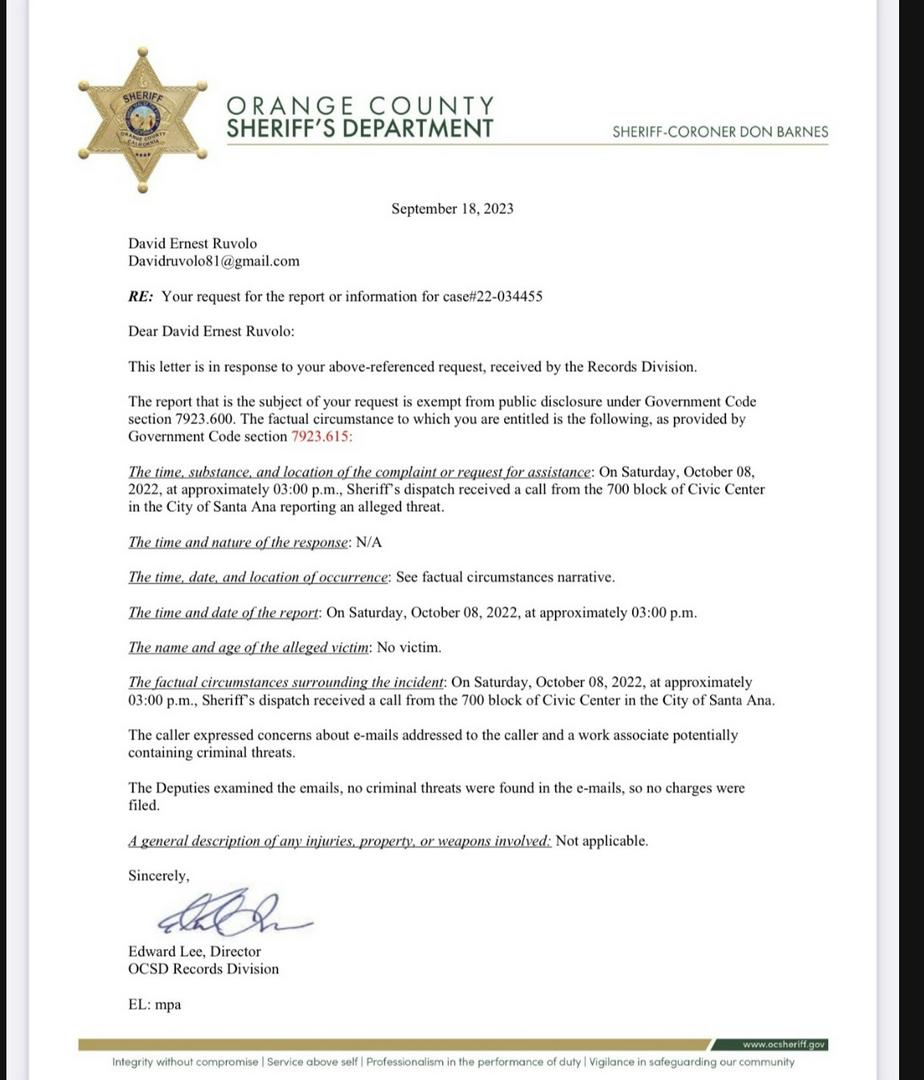
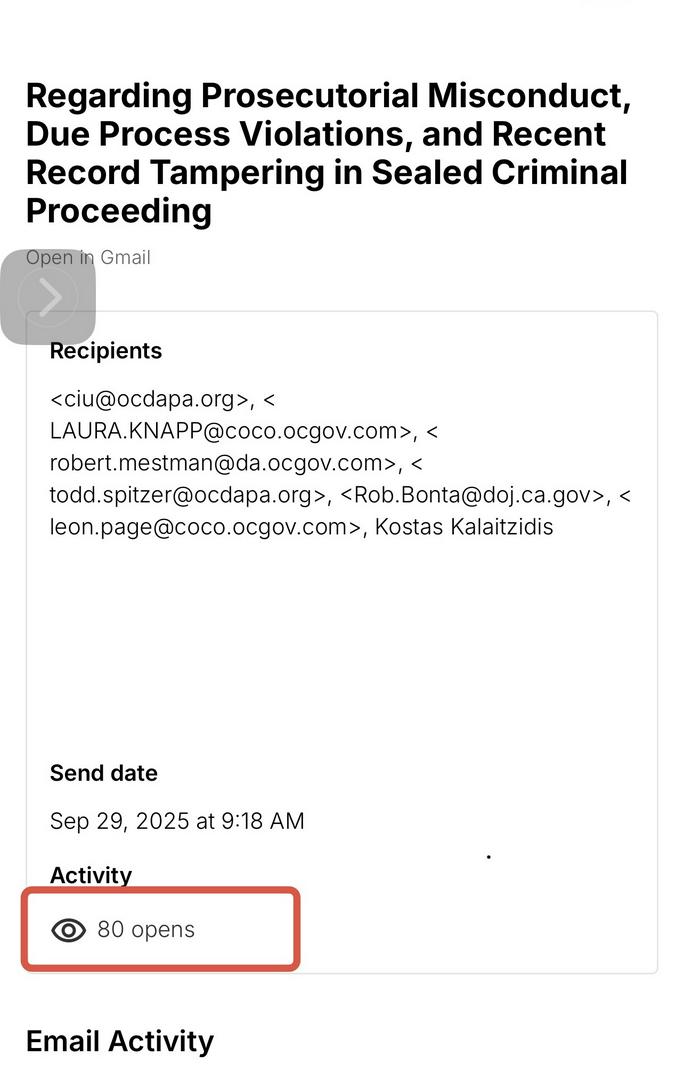
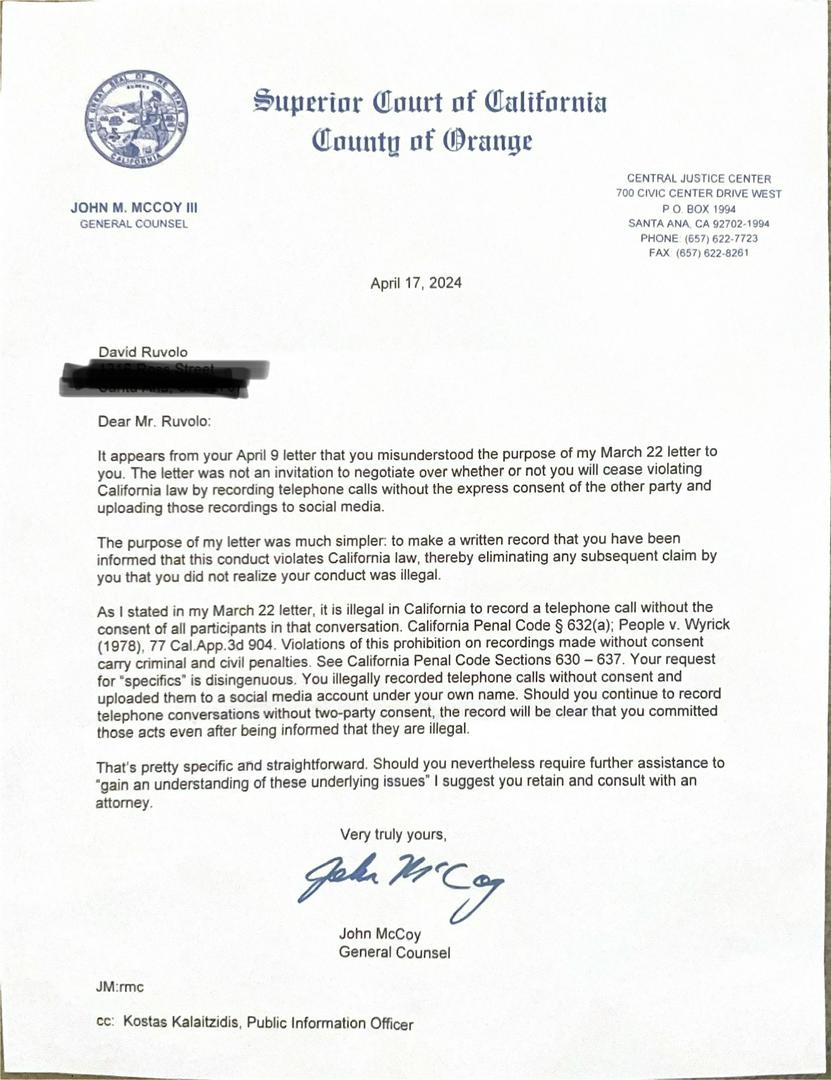
Behind the Bench: The Battle for Transparency at Orange County Superior Court The Public Information Officer (PIO) at the Orange County Superior Court (OCSC) is the primary bridge between the court and the public. However, a multi-year analysis reveals a relationship with records requesters defined by institutional friction and shifting legal definitions. The Divide of Rule 10.500 Tension often centers on California Rule of Court 10.500, which governs access to "administrative records" like budgets. Crucially, it excludes "adjudicative records"—case filings and orders. Data shows the PIO’s office, led by Kostas Kalaitzidis, frequently uses this distinction to limit disclosures. While administrative requests are often facilitated, inquiries into record integrity—such as the validity of signatures on probation orders—are often met with silence. Institutional Pressure In 2023, the court filed a report with the Sheriff’s Department regarding a persistent requester. Although no criminal threats were found, such actions create a "chilling effect" on First Amendment rights. High-stakes disputes are eventually transferred to the Office of General Counsel, signaling a shift from public information to legal defense. Unresolved Anomalies Technical discrepancies remain a concern for local news followers. These include missing pages in provided PDFs, the use of legacy CCMS identifiers over a decade after the system was discontinued, and allegations of digitally altered signatures. In a climate following the recent guilty plea of Judge Israel Claustro for mail fraud, the court’s "strategic silence" regarding record integrity justifies heightened public scrutiny. #OrangeCounty #OCSC #SantaAna #OCNews #JudicialAccountability #Rule10500 #CourtTransparency #PublicRecords #FirstAmendment #DueProcessNee

You've reached the end!