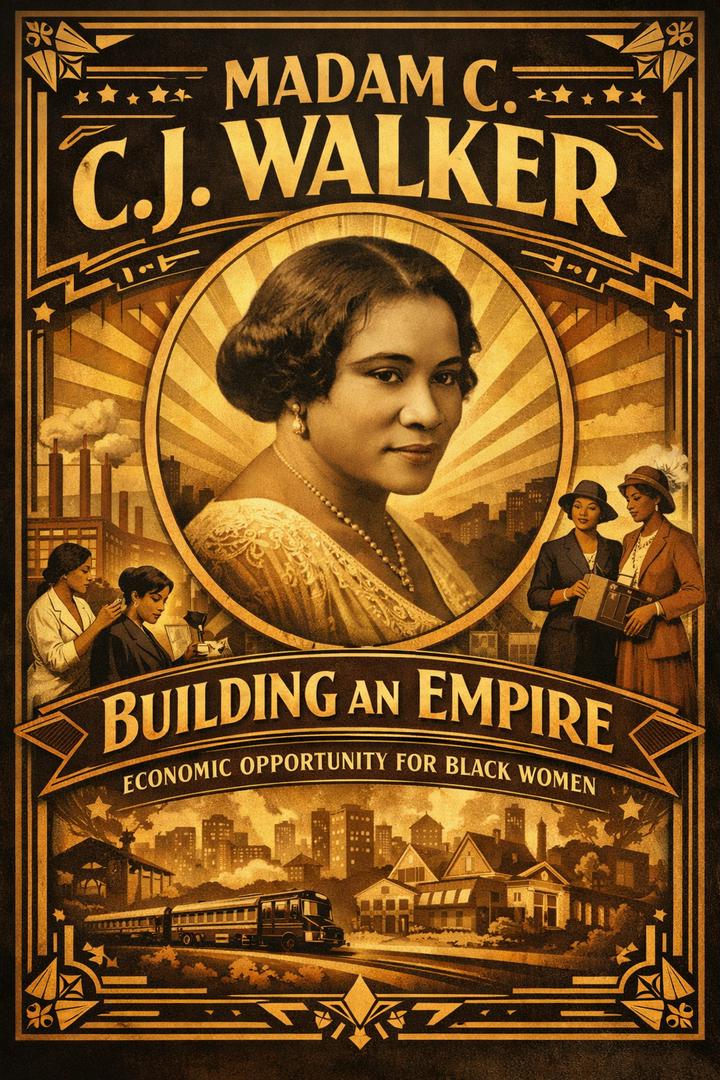
During the 1920s, the business empire built by Madam C. J. Walker was still expanding, even after her death in 1919. This mattered. At a time when economic opportunity for Black women was deliberately restricted, Walker’s company continued to operate, grow, and employ thousands. Her vision did not end with her life. It outlived her.
Walker had built more than a beauty brand. She created a national system of training, sales, and ownership that allowed Black women to earn steady income, travel, and gain financial independence in an era that offered few legitimate paths to either. By the 1920s, her sales agents, often called Walker Agents, were operating across the country, supporting families and funding communities.
This was not charity. It was structure. Walker believed economic power was a form of protection and dignity. Her company provided wages, business education, and leadership opportunities long before corporate America was willing to do the same. Many of the women employed through her system went on to buy homes, send children to school, and support civil rights organizations quietly and consistently.
What made Walker’s legacy radical was its practicality. She did not argue theory. She built systems. In a decade defined by segregation, limited labor access, and social barriers, her company functioned as proof that economic independence was achievable when ownership and opportunity were placed directly in the hands of those excluded from both.
The 1920s did not slow her impact. They revealed it. Long after her passing, Madam C. J. Walker’s business remained a working model of what happens when vision meets execution.
#BlackHistory #BusinessLegacy #EconomicPower #WomensHistory #HiddenHistory