Tag Page Devotional

#Devotional
Shawn Winchester

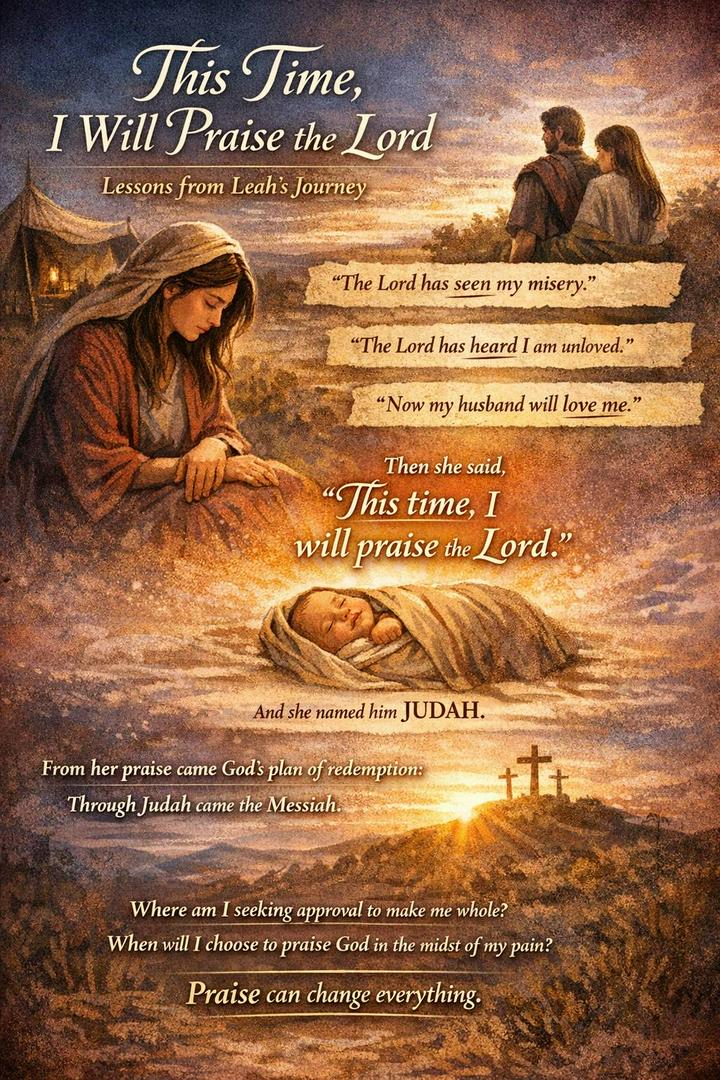
Spirit and Truth Devotional: Learning to Praise in the Midst of Pain Genesis 29:31-35 tells the quiet, aching storv of Leah-a woman overlooked by her husband but deeply seen by God. Each of her first three sons reveals the longing inside her. With Reuben, she says, "The Lord has seen my misery," hoping Jacob will finally notice her. With Simeon, she says "The Lord has heard that 1 am unloved." stil reachina for affection that never comes With Levi, she hopes, "Now my husband will become attached to me," believing that mavbe this child will earn her the love she craves. Leah keeps waiting for someone else's approval to heal her heart. But nothing changes. Then something shifts. When her fourth son is born, she says, "This time I will praise the Lord." She names him Judah, and for the first time her focus turns from Jacob's affection to God's faithfulness. Leah's circumstances don't improve- Jacob still favors Rachel--but Leah's center changes She stops striving for human validation and anchors her identity in the God who sees hears, and loves her. And in that moment of praise, God births something far greater than she could imagine: Judah becomes the ancestor of Jesus, the Messiah. Redemption flows through the child born when Leah finally ifted her eves from her pain to her God Leah's story invites us to ask: Where am I waiting for someone else's approval to make me whole? Where am I hoping circumstances wil finally give me peace? True healing begins not when life changes but when our gaze changes. Praise doesn't erase pain, but it reorders the heart. Like _eah, we can choose to say, "This time, I will praise the Lord," trusting that God can bring unexpected redemption from the places where we once felt unseen. #Devotional #God #ChristianLiving

Yehudah HaLevi

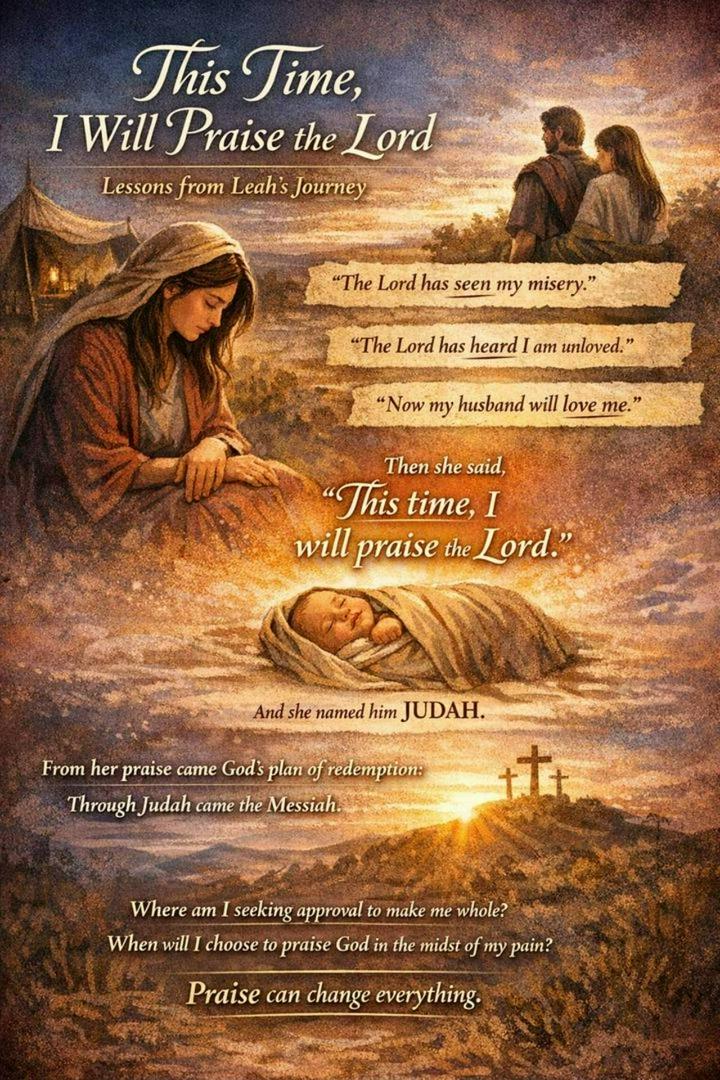
Spirit and Truth Devotional: Learning to Praise in the Midst of Pain Genesis 29:31–35 tells the quiet, aching story of Leah—a woman overlooked by her husband but deeply seen by God. Each of her first three sons reveals the longing inside her. With Reuben, she says, “The Lord has seen my misery,” hoping Jacob will finally notice her. With Simeon, she says, “The Lord has heard that I am unloved,” still reaching for affection that never comes. With Levi, she hopes, “Now my husband will become attached to me,” believing that maybe this child will earn her the love she craves. Leah keeps waiting for someone else’s approval to heal her heart. But nothing changes. Then something shifts. When her fourth son is born, she says, “This time I will praise the Lord.” She names him Judah, and for the first time her focus turns from Jacob’s affection to God’s faithfulness. Leah’s circumstances don’t improve—Jacob still favors Rachel—but Leah’s center changes. She stops striving for human validation and anchors her identity in the God who sees, hears, and loves her. And in that moment of praise, God births something far greater than she could imagine: Judah becomes the ancestor of Jesus, the Messiah. Redemption flows through the child born when Leah finally lifted her eyes from her pain to her God. Leah’s story invites us to ask: Where am I waiting for someone else’s approval to make me whole? Where am I hoping circumstances will finally give me peace? True healing begins not when life changes, but when our gaze changes. Praise doesn’t erase pain, but it reorders the heart. Like Leah, we can choose to say, “This time, I will praise the Lord,” trusting that God can bring unexpected redemption from the places where we once felt unseen. #Devotional #God #ChristianLiving
Yehudah HaLevi

Spirit and Truth Devotional: Kingdom Culture - Living as Citizens of Another Realm When Jesus said, “My kingdom is not of this world” (John 18:36), He revealed that His followers belong to a realm shaped by values different from earthly systems. Paul echoes this: “the kingdom of God is… righteousness and peace and joy in the Holy Spirit” (Romans 14:17). Our true identity is rooted in heaven—“our citizenship is in heaven” (Philippians 3:20). Just as a person’s origin can be recognized by their speech and conduct, the same is true spiritually. Those who belong to God’s Kingdom should display a distinct culture that reflects the character of Christ. The question is: Can the world tell you are part of the Kingdom of God? Can they tell that you are different? Characteristics of Kingdom Culture: Love and Kindness (1 Corinthians 13:1–8) Love is the defining trait of Kingdom life—patient, kind, and selfless. Without it, even spiritual gifts lose meaning. Integrity and Honor (1 Peter 3:16) Kingdom citizens live with clean consciences. Integrity does what is right unseen; honor treats others with dignity, silencing accusations. Forgiveness (Matthew 18:21–22) Forgiveness is continual. Kingdom people release offense quickly because they know how deeply God has forgiven them. Humility (Philippians 2:3–4) Humility stands out in a self-centered world. It mirrors Christ, who placed others before Himself. Righteousness and Holiness (1 Peter 1:15–16; Philippians 1:11) Holiness is a life set apart for God. Righteousness aligns our actions with His character through the Spirit’s work. Devotion to God (Luke 16:13) Kingdom citizens serve one Master. Devotion shows in obedience, worship, and choices that place God above all else. Kingdom culture is not performance but transformation. When believers embody these traits, the world sees a glimpse of heaven. #Jesus #Devotional #KingdomOfGod #ChristianLiving #holyspirit #God

Yehudah HaLevi

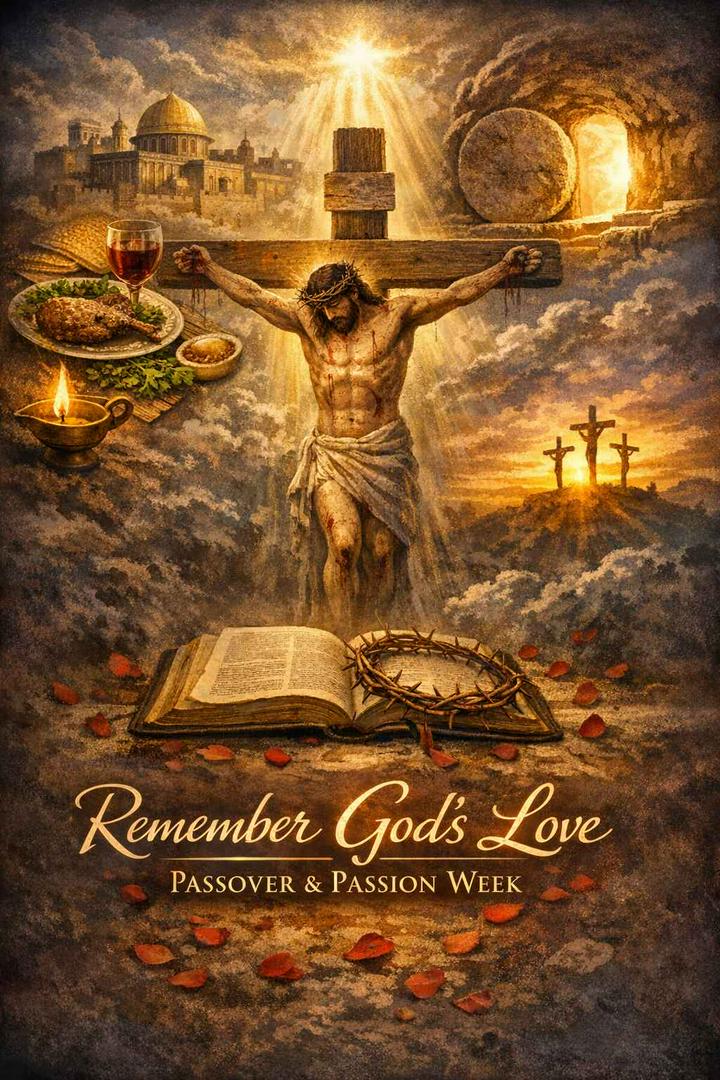
Spirit and Truth Theology: How Can Jesus Be God if God Cannot Die? A common objection from non‑trinitarians is: “If God cannot die and Jesus died, how can He be God?” Scripture is clear that God is immortal (Isaiah 40:28; 1 Tim. 6:16). The misunderstanding comes from not grasping the incarnation. Jesus is one Person with two natures—fully divine and fully human. His divine nature cannot die, but His human nature truly did. The death of Jesus was the death of His humanity, not the extinction of His deity. Scripture also shows that God promised not only to send the Messiah, but to be the Messiah. In Zechariah 12:10, Yahweh says, “They will look on me whom they pierced,” then shifts to “him,” revealing that the pierced One is both God and the coming Messiah. John 19:35–37 applies this directly to Jesus. Joel 2:32 declares that all who call on Yahweh will be saved. Paul applies this to Jesus in Romans 10:11–13, identifying Christ as the Lord who saves. Acts 20:28 even says God purchased the church with His own blood—something only possible because God the Son took on a human body. The conclusion is clear: God cannot die, but in the incarnation, the Son assumed a human nature capable of death. His divine nature remained immortal, even as His human nature experienced death. In this way, God Himself came as the Messiah and accomplished salvation through Jesus Christ. In this season of Passover and Passion Week, remember that God Himself stepped into our world to show His love. #JesusIsGod #Jesus #Devotional #TheologyTalk #God #Christianity

Yehudah HaLevi

Spirit and Truth Devotional - The War is Real Series: Our Spiritual Weapons - Your Praise is a Weapon Praise is a God‑given weapon in the spiritual war every believer faces. Psalm 8:2 shows that God ordains praise to silence the enemy and the avenger. Scripture proves praise is not optional or limited to certain traditions—it belongs to all Christians. In 2 Chronicles 20, Judah won a hopeless battle not with swords but with singers. As they praised, God confused their enemies until they destroyed one another. Praise shifts our focus from worry to God, bringing strength, deliverance, and divine intervention. Throughout Scripture, God’s people declared His greatness in battle, reminding the enemy that God is the victorious warrior. Praise requires action—lifting hands, singing, shouting, rejoicing—because the enemy hates when God receives glory. When we praise, the enemy’s camp is often thrown into confusion. Ultimately, we praise because the battle is not ours but God’s. #PraiseGod #Devotional #SpiritualGrowth #SpiritualWarfare #Jesus #HALLELUJAH

Yehudah HaLevi

Spirit and Truth Devotional - The War is Real Series: Our Spiritual Weapons - Prayer (in the Spirit) Prayer is a powerful spiritual weapon God gives believers. Scripture calls us to pray in the Spirit at all times (Ephesians 6:18), reminding us that our battles are spiritual and require God’s power, not human strength (2 Corinthians 10:4). Prayer is more than speaking to God—it is fellowship with Him, the way we express our hearts, seek His strength, and stand firm in spiritual warfare. Through prayer, we use God’s Word and authority to declare victory, gain protection, and receive discernment. Effective warfare prayer involves aligning our hearts with God, praying the Scriptures, praying continually, and listening for His guidance. Spirit‑led prayer brings boldness, breakthrough, protection, and renewed strength. Jesus taught us to watch and pray (Matthew 26:41), to pray in trouble (James 5:13), to pray without giving up (Luke 18:1), and to rely on the Spirit’s help (Romans 8:26). In every situation, we present our needs to God through prayer (Philippians 4:6). Grace and peace #SpiritAndTruth #Devotional #SpiritualGrowth #ChristianGrowth #SpiritualWarfare #Jesus

Yehudah HaLevi

Spirit and Truth Devotional - The War is Real Series: Spiritual Weapons - The Sword of the Spirit “The weapons of our warfare are not of the flesh, but divinely powerful for the destruction of fortresses” (2 Corinthians 10:4 NASB20). Most Christians know the Armor of God but often overlook the weapons He gives us. Scripture teaches that our weapons are not fleshly but empowered by God to tear down strongholds, defeat false arguments, and bring every thought into obedience to Christ. Our primary weapon is the Sword of the Spirit—the Word of God. Jesus modeled its power when He resisted Satan using Scripture. The Bible describes God’s Word as faithful, life‑giving, fiery, unbreakable, effective, and sharper than any two‑edged sword. When we meditate on and store the Word in our hearts, we can stand firm with the Shield of Faith and fight back with the Sword of the Spirit, resisting the enemy with strength and confidence. #Devotional #SpiritualWarfare #ChristianLiving #SpiritualGrowth #jesus

Yehudah HaLevi

Spirit and Truth Devotional - The War is Real Series: The Armor of God - The Shield of Faith Paul urges believers to lift the shield of faith to stop the devil’s fiery arrows. The Roman scutum was large like a door, able to cover a soldier completely and even push back the enemy. Wrapped in wet leather, it was designed to extinguish flaming darts. In the same way, faith becomes our first line of defense. Hebrews 11 reminds us that faith is confidence in what we hope for and that without it, we cannot please God. Satan attacks through doubt, fear, and temptation, trying to convince us that his promises are better than God’s. But faith exposes his lies and puts out his arrows. Unlike the other pieces of armor we wear, the shield must be taken up—we choose it daily. Faith isn’t blind; it’s built on evidence of God’s goodness and power. When we hold it firmly, we stand protected. When we drop it, we become vulnerable. So in every circumstance, we lift the shield of faith and trust God to keep us standing. Grace and peace #ChristianLiving #Devotional #Jesus #SpiritualGrowth #SpiritualWarfare