Tag Page BlackHistory

#BlackHistory
LataraSpeaksTruth

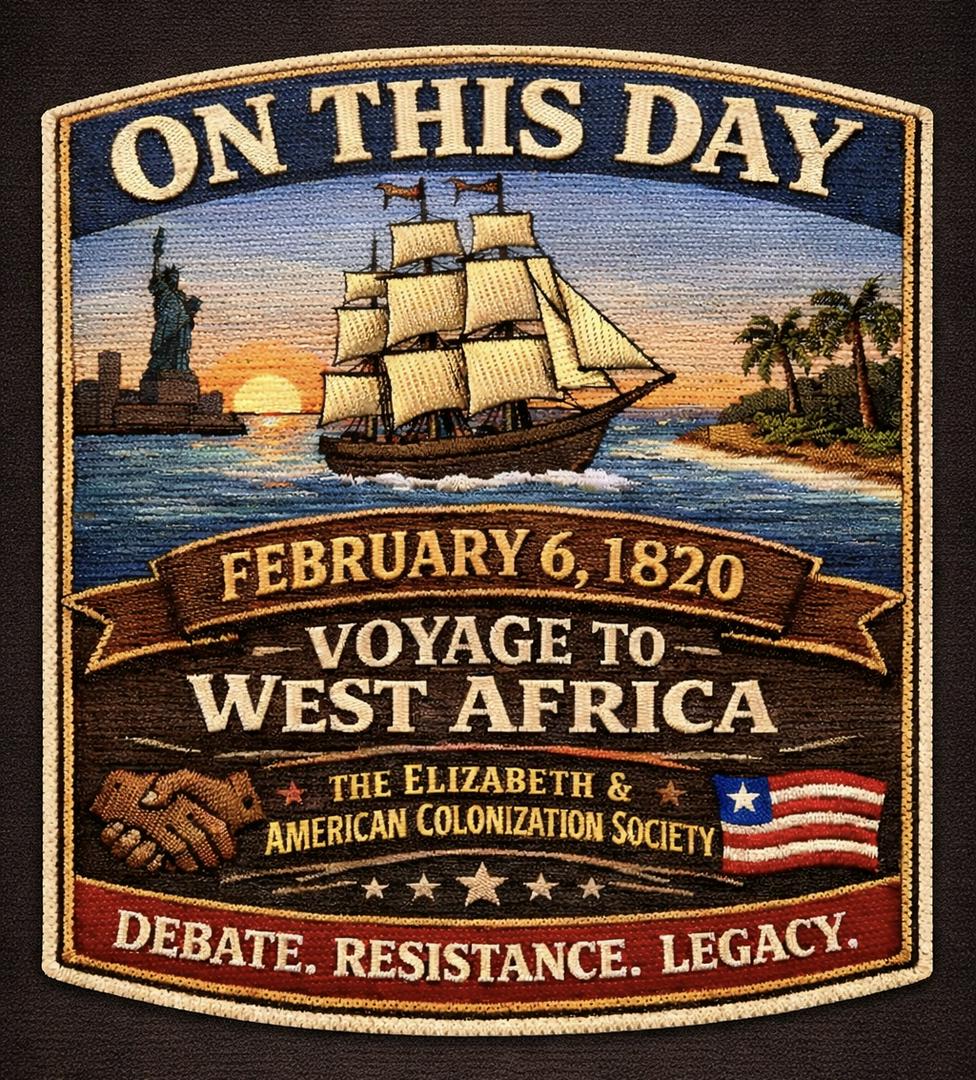
On February 6, 1820, the ship Elizabeth sailed out of New York Harbor carrying 86 free African American emigrants, along with agents connected to the American Colonization Society. This voyage is recognized as one of the earliest organized efforts to relocate free Black people from the United States to West Africa, a movement that would later contribute to the creation of what became Liberia. This journey did not establish a permanent settlement on its own. That came later, after multiple failed and deadly attempts, with a lasting colony forming in the early 1820s. Still, the Elizabeth’s departure marked a critical starting point in the colonization campaign and set events in motion that reshaped lives, families, and history on both sides of the Atlantic. Colonization was promoted by its supporters as a solution to racism in the United States. But many free Black Americans and abolitionists rejected the idea outright. They argued that removal was not justice. They were born here, lived here, labored here, and helped build the country. The problem was not their presence, but America’s refusal to grant them full rights and equal protection. This moment matters because it exposes a deep conflict over belonging. Colonization offered distance instead of accountability. Escape instead of repair. For some, it promised opportunity. For others, it felt like exile disguised as reform. February 6 is not just a shipping record. It represents debate, resistance, and consequences that still echo today whenever “solutions” are proposed that avoid justice instead of confronting it. #OnThisDay #February6 #USHistory #Liberia #AmericanColonizationSociety #BlackHistory #HistoryMatters

The Signal Wire

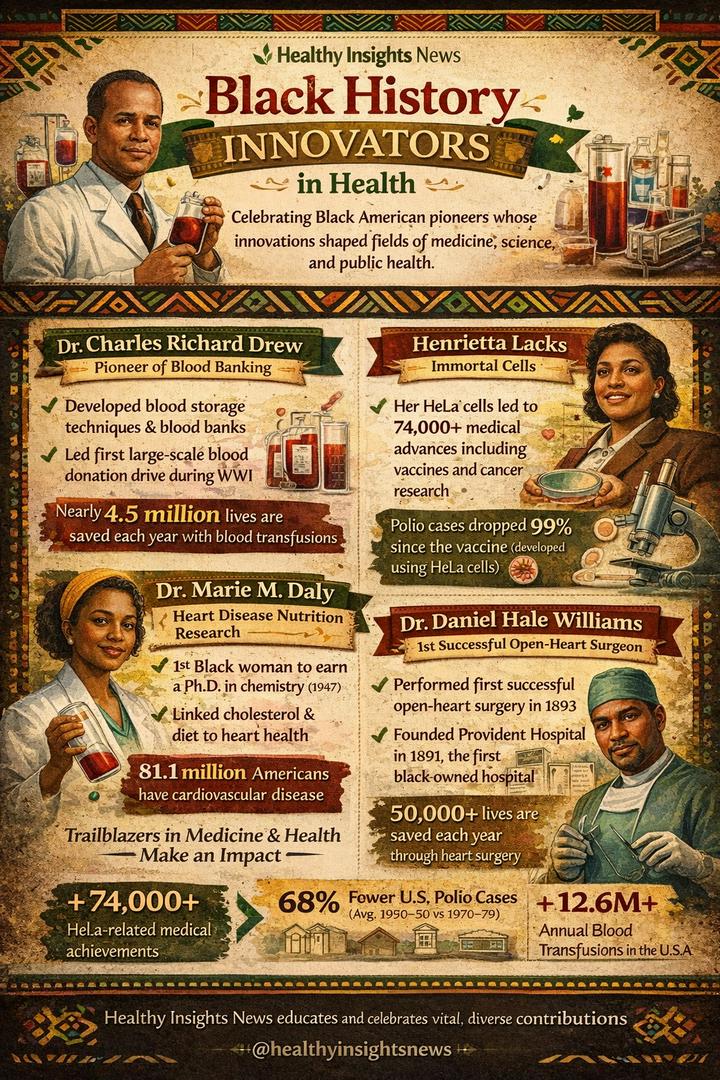
Get Inspired - Health Talk - Celebrating Heroes in Health Hey Health Enthusiasts!🌿⚕️ 
It’s your favorite health revolutionary storytelHER with a special message on Celebrating Heroes in Health - Black Innovators You Should Know! 
Did you know?! 
1. Dr. Charles Richard Drew - Revolutionized blood banking! His pioneering work saved countless lives. 
2. Henrietta Lacks - Her cells changed medicine forever, leading to breakthroughs in cancer research. 
3. Dr. Marie M. Daly - The first Black woman to earn a Ph.D. in chemistry in the U.S. Her research reshaped our understanding of heart health! 
4. Dr. Daniel Hale Williams - A trailblazer in heart surgery and founder of the first Black-owned hospital. 
These innovators not only advanced medicine but paved the way for future generations. Let's honor their legacy and spread the word! 
Share to celebrate Black excellence in health! Let’s get everyone informed! #BlackHistory #HealthInnovators #wellness 
#black #health #getinspired #Inspiration #BreakingNews #HotTopic #HealthNews #healthyinsightsnews

LataraSpeaksTruth

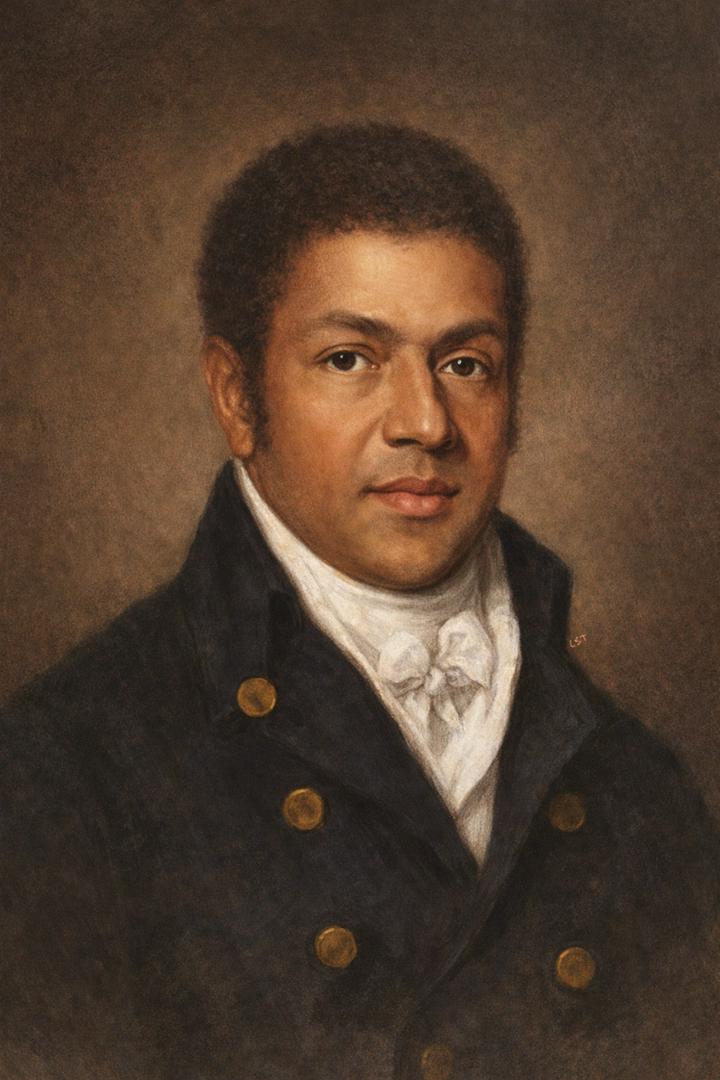
January 17, 1759 marks the birth of Paul Cuffee, a man who quietly rewrote the rules long before the word civil rights ever existed. Born to a formerly enslaved African father and a Native American mother, Cuffee grew up in a world that insisted he stay small. He did the opposite. He taught himself navigation and business, became a skilled shipbuilder, and rose to prominence as a successful merchant captain at a time when most people who looked like him were legally boxed out of power, property, and possibility. Cuffee did not just accumulate wealth. He treated it as a responsibility. In Massachusetts, he helped establish one of the earliest integrated schools in the region, believing education should not be gated by race or class. This was not symbolic. It was practical. He wanted future generations prepared to govern themselves, earn independently, and move through the world with dignity rather than permission. His vision stretched beyond American borders. Deeply influenced by ideas of self determination, Cuffee supported Black-led efforts to resettle free Black people in West Africa, helping finance an early return to Sierra Leone. Unlike later colonization schemes imposed by others, Cuffee imagined this as a voluntary path toward autonomy, economic stability, and global connection for people denied full belonging in the United States. What makes Paul Cuffee remarkable is not just what he believed, but how early he believed it. Long before emancipation. Long before integration was law. Long before freedom was even promised. He lived proof that leadership, intellect, and global vision were already present, even when history tried to pretend otherwise. #PaulCuffee #BlackHistory #EarlyAmerica #MaritimeHistory #Entrepreneurship #EducationMatters #SelfDetermination #ForgottenFigures #HistoryMatters
LataraSpeaksTruth

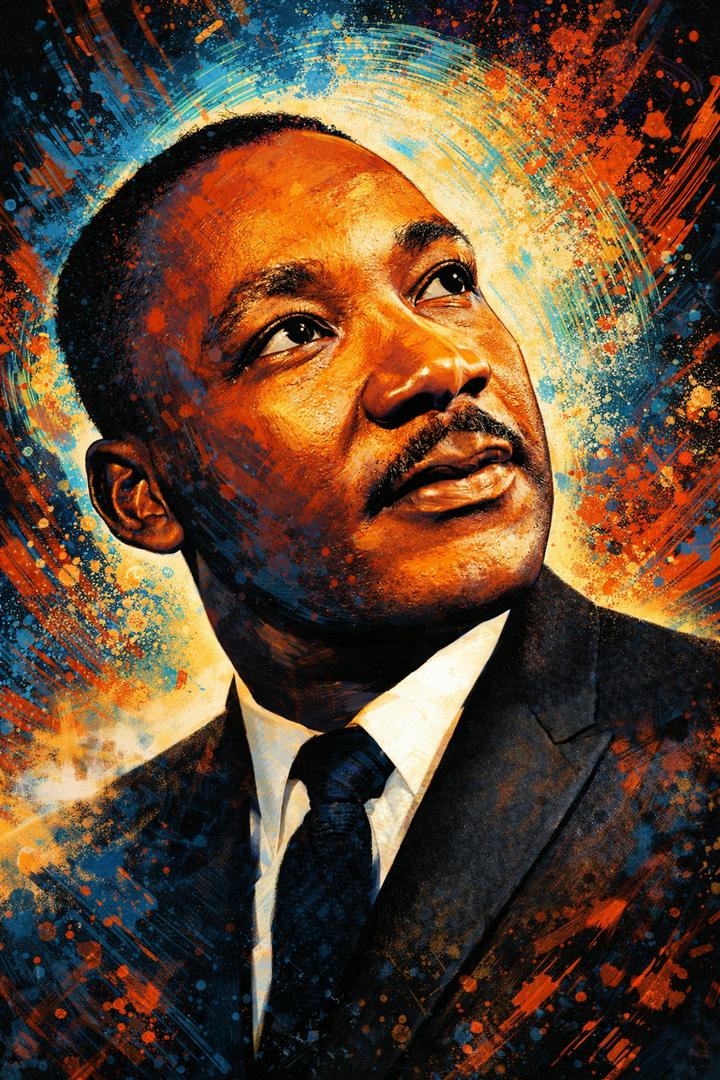
January 15 marks the birth of Martin Luther King Jr., born in 1929. This date is not symbolic fluff. It is a historical anchor. A reminder that disciplined thought, moral clarity, and strategic pressure can destabilize entire systems. Dr. King was not accidental. He was trained. Educated. Deliberate. A Morehouse scholar with a doctorate who understood power, language, timing, and optics. He knew how to force a nation to confront its contradictions without throwing a punch. That restraint made his challenge impossible to ignore. From Montgomery to Birmingham to Selma, his leadership moved civil rights from protest signs into federal law. He did not just inspire conscience. He altered policy. That distinction matters. Movements run on passion. Progress runs on strategy. King mastered both. January 15 is not about a dream stripped of context. It is about intellect, courage, and accountability. It is about a man who understood that justice delayed was not accidental, and that pressure applied intelligently and without apology bends history. Today, we do not soften him. We remember him whole. The thinker. The tactician. The man who knew exactly what he was doing. #MLKDay #MartinLutherKingJr #CivilRights #BlackHistory #SocialJustice

LataraSpeaksTruth

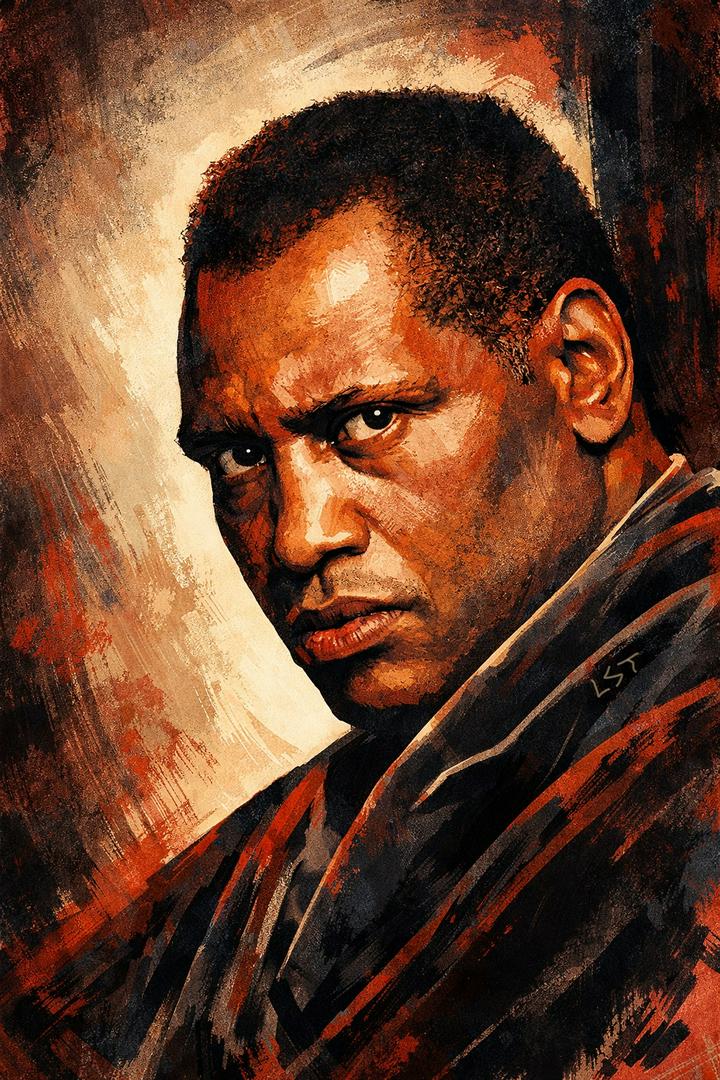
Paul Robeson was a reminder of what happens when extraordinary talent refuses to stay obedient. Robeson was never just one thing. He graduated from Rutgers University as valedictorian and became an All American athlete at a time when excellence from Black Americans was tolerated only when it stayed quiet and contained. He later emerged as a world renowned singer whose powerful bass voice filled concert halls across Europe, where audiences recognized his brilliance even as the United States struggled to acknowledge it. He was also a celebrated actor who expanded what presence, authority, and dignity could look like on stage and screen. That level of achievement could have secured comfort, wealth, and a carefully protected legacy. Many would have taken that deal. Robeson did not. He chose truth over approval. He spoke openly about racial violence in the United States and connected it to colonial oppression abroad. He challenged fascism overseas while calling out hypocrisy at home. He rejected the idea that freedom could exist if it was selectively applied. To Robeson, democracy without equality was performance, not principle. That honesty carried consequences. The U.S. government revoked his passport. Concert venues closed their doors. Media outlets erased his name. His work was sidelined, his reputation deliberately distorted, and his voice muted, not because he lacked talent, but because his influence made power uncomfortable. Robeson understood something that still unsettles people today. Culture is political whether it admits it or not. Art without conscience is decoration. Dignity does not require permission. His life forced America to confront its contradictions. He paid a heavy price for refusing to bend, but history has a long memory. Voices rooted in truth do not disappear. They endure. They return. They echo. #PaulRobeson #BlackHistory #HiddenHistory #AmericanHistory #TruthTellers #CulturalHistory #Legacy #HistoryMatters #VoicesThatEcho

LataraSpeaksTruth

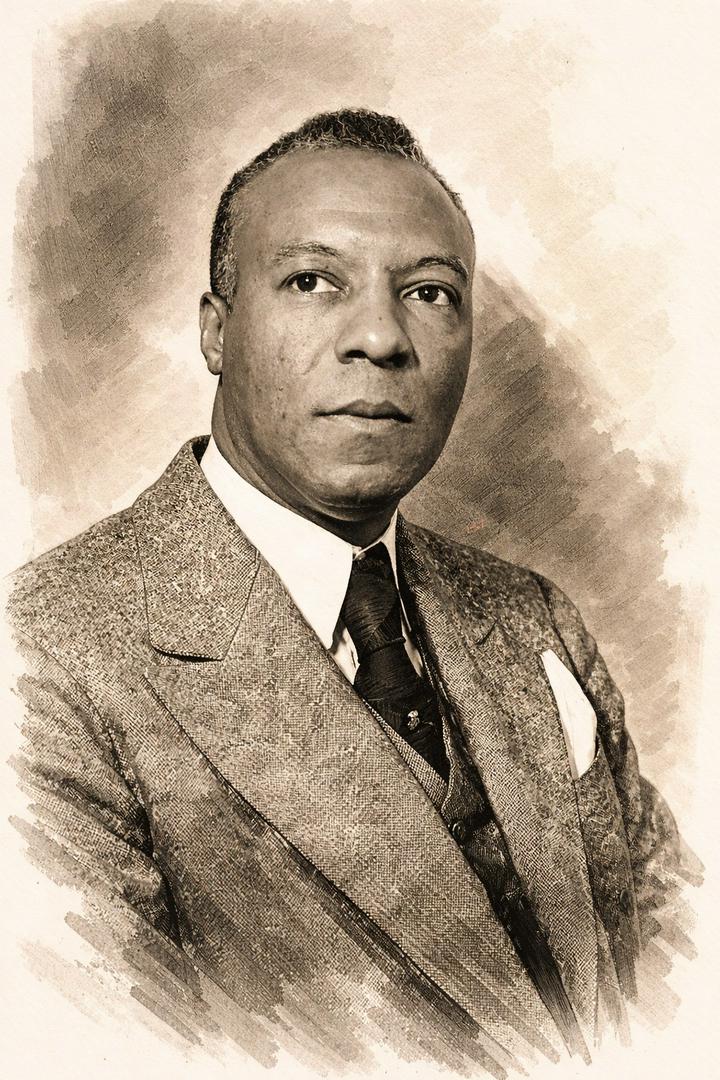
On January 6, 1941, A. Philip Randolph made a move that rarely gets credited the way it should. He formally escalated plans for what became the March on Washington Movement, not as a ceremony, not as a speech tour, but as a direct threat. One hundred thousand Black workers would descend on Washington, D.C., during wartime, to expose racial discrimination inside the very defense industries claiming to protect democracy. This was not a symbolic march. It was an economic pressure campaign. Randolph understood leverage. Defense factories were booming as the U.S. prepared for World War II, yet Black workers were routinely excluded from skilled positions and union membership. Randolph made it clear that the government could not preach freedom abroad while enforcing exclusion at home. The threat worked. Faced with the possibility of a mass protest that would embarrass the administration on a global stage, President Franklin D. Roosevelt acted. Later that year, he issued Executive Order 8802, banning racial discrimination in defense industries and federal contracts and establishing the Fair Employment Practices Committee to enforce it. There was no televised showdown. No viral slogan. No sudden moral awakening. This change happened because Randolph was willing to apply pressure where it hurt…labor, production, and international reputation. The march itself was ultimately called off, but the goal had already been achieved. This is one of those moments in history that later gets softened. The policy change is remembered. The discomfort that forced it is not. But make no mistake, this didn’t “just happen.” It happened because Randolph was prepared to embarrass the federal government during wartime and understood that quiet leverage often moves the needle faster than loud applause. That is how power actually shifts. #BlackHistory #January6 #APhilipRandolph #MarchOnWashingtonMovement #LaborHistory #AmericanHistory #HiddenHistory #CivilRightsHistory #EconomicPressure