Tag Page Biblestudy

#Biblestudy
LLama Loo

Zephaniah: A Brief Introduction to the Bible – Part 32

The prophet Zephaniah delivers a message both terrifying and hopeful. Writing during the reign of King Josiah (late 7th century BC), Zephaniah was a descendant of King Hezekiah, placing him within Judah’s royal lineage. His prophetic ministry likely came just before Josiah’s sweeping reforms—when idolatry, corruption, and complacency had reached their peak. The book opens with a chilling declaration: “I will utterly consume everything from the face of the land,” says the Lord (1:2). Zephaniah’s prophecy cuts across all boundaries—Judah, surrounding nations, and the entire earth—pointing toward a day of divine reckoning known as the Day of the Lord. It’s not limited to local judgment; it echoes forward to the end of the age when God will purge the world of wickedness. Zephaniah exposes hypocrisy among those who claimed to serve God yet bowed to idols, warning that comfort and indifference would not protect them. Yet amid the destruction, a remnant is promised—those humble enough to seek the Lord, do His justice, and walk in truth (2:3). The final chapter brings radiant hope. God will restore His people, gather the faithful from every nation, and rejoice over them with singing (3:17). It is one of Scripture’s most tender portraits of divine love—a Father rejoicing over His restored children. Zephaniah reminds us that judgment and mercy are not opposites but part of God’s redemptive plan. The same God who disciplines also delights. His warnings call us to repentance; His promises invite us into everlasting joy. 🙏🏼 CONTINUED IN COMMENTS ⬇️⬇️⬇️ #Bible #God #Jesus #BibleStudy #Help #Christian #Christ #Prophesy

Zephaniah: A Brief Introduction to the Bible – Part 32
LLama Loo

I Don’t Know How To Pray - Start Here ❤️

If you’ve ever thought, “I don’t know how to pray,” you’re not alone. Many people feel this way—even lifelong believers sometimes struggle with finding the right words. But prayer isn’t about perfection. It’s about connection. It’s about acknowledging that you want to be near God—and trusting that He wants to be near you. Prayer is not a performance. It’s a conversation with your Creator, who loves you more than you can imagine. ⸻ Start with the Right Mindset Before you speak a word, take a moment to breathe. Let your heart focus on this truth: you are not talking into the air. You are speaking to the God who made you, who sees you, and who longs to hear your voice. Jesus, the Son of God, gave us a model for prayer in what we call “The Lord’s Prayer.” But He never meant it as a rigid formula—it’s a framework, a guide. Let’s walk through it together in simple, real-world terms. ⸻ Step One: Come in Peace and Focus Close your eyes if it helps. Try to picture God. If you don’t have a mental image, imagine a radiant light like the sun—bright, warm, but not burning. Picture yourself standing in that light. You’re not just near it—you’re known, loved, and invited in. That’s what God’s presence feels like. ⸻ Step Two: Praise Him Begin with awe. God is the Creator of the universe—of every galaxy and atom, every heartbeat and breath. He’s the reason the earth spins and your lungs fill with air. You can start simply: “God, You are awesome. You made everything. You made me. Thank You.” ⸻ Step Three: Trust Him Let Him know you trust Him—even if that trust is shaky and growing. “I don’t have all the answers, but I believe You do. I want to trust You with my life.” ⸻ Step Four: Confess and Ask for Forgiveness Don’t be afraid to admit where you’ve gone wrong. He already knows. And He already loves you. 🙏🏼Continued In Comments ⬇️⬇️⬇️ #Bible #God #Jesus #BibleStudy #Help #Christian #Christ #Prayer

I Don’t Know How To Pray - Start Here ❤️
LLama Loo

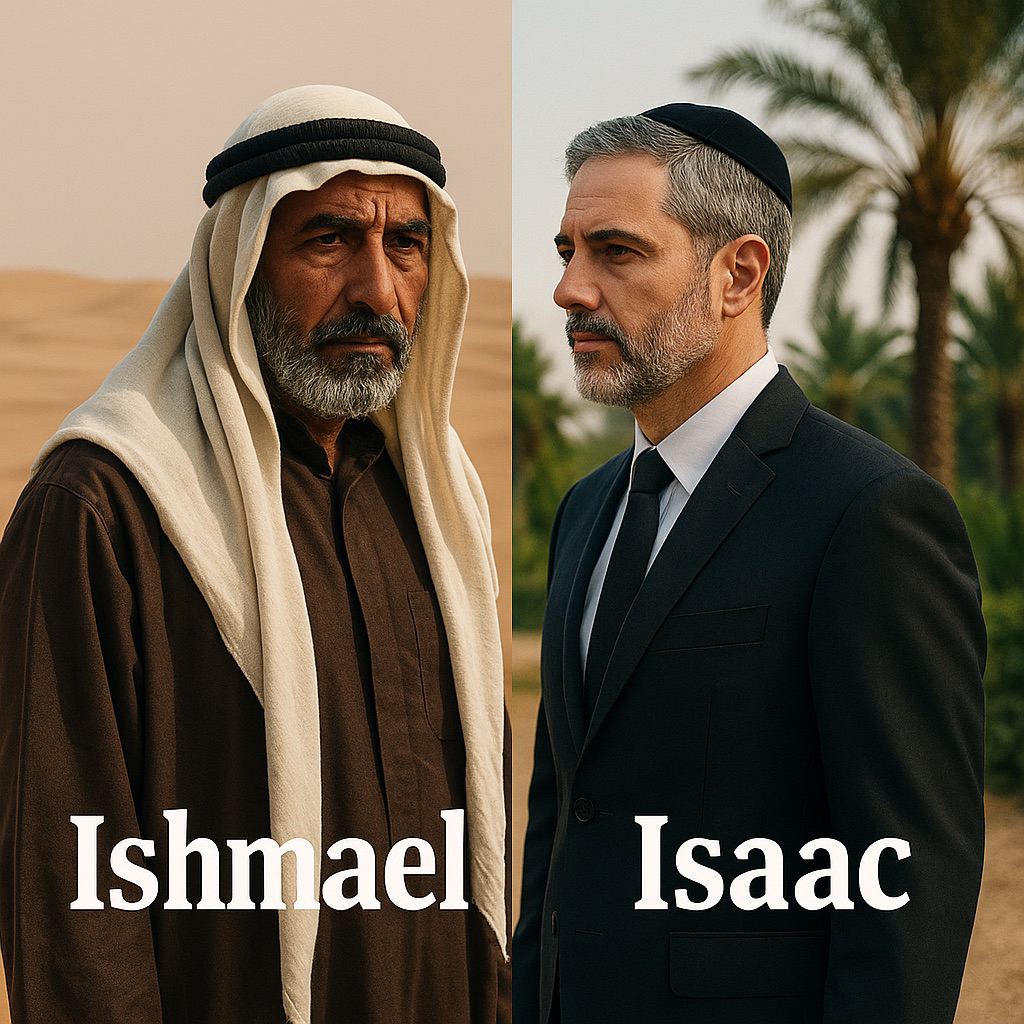
Isaac and Ishmael: A Rivalry That Shaped the World

It began in Abraham’s household nearly 4,000 years ago: two sons, born of the same father but destined for very different futures. Isaac and Ishmael were more than brothers—they became the heads of two nations locked in a rivalry that still shapes the world today. ⸻ Two Sons, Two Destinies Ishmael was Abraham’s firstborn, son of the Egyptian maidservant Hagar. His birth was the result of human impatience—Sarah’s attempt to “help” God fulfill His promise of descendants. Isaac was born later, a miracle child given to Abraham and Sarah in their old age. He was the fulfillment of God’s covenant, the child of promise. Even as boys, the tension was undeniable. Ishmael mocked Isaac (Genesis 21:9). Sarah demanded that Abraham cast out Hagar and Ishmael, and God confirmed that while Ishmael would be blessed, His covenant would rest with Isaac (Genesis 17:19–21). Two sons, two paths: one chosen by human striving, the other by God’s promise. ⸻ Nations Born of Rivalry • Isaac’s line became the people of Israel, through whom came the Law, the Prophets, and finally the Messiah—Jesus Christ. • Ishmael’s line became the twelve princes of Arabia, fathers of powerful tribes that spread across the desert lands. What began as household tension became national conflict. Israel and her neighbors clashed again and again, locked in cycles of rivalry, conquest, and uneasy peace. The feud of brothers grew into the fracture of nations. ⸻ A War Older Than Nations But this is not just politics or history—it is a spiritual war as old as Eden itself. When God declared in Genesis 3:15 that the seed of the woman would crush the serpent’s head, Satan went to work sowing division, using every opportunity to attack the line of promise. 🙏🏼 CONTINUED IN COMMENTS ⬇️⬇️⬇️ #Bible #God #Jesus #BibleStudy #Help #Christian #Christ #BooksoftheBible

Isaac and Ishmael: A Rivalry That Shaped the World
LLama Loo

How Living Vertically Changed My Whole Life—for Good From the age of six until eighteen, I was raised in a foster home—not out of love, but as part of a financial arrangement between adults. Love was withheld. Abuse was allowed. Guidance and protection were absent. I learned early how to survive—but not how to be nurtured. By the grace of God—and through circumstances unrelated to spiritual intent—I was taken to church. It was not a vibrant congregation, but there was one teacher who truly believed in the saving grace of God. That mattered. A seed was planted, even if the soil was thin. When I left the foster home, life did not become peaceful. I lived in constant fight-or-flight, operating almost entirely on what I now understand as a horizontal plane. My focus was survival, self-protection, validation, and control. I believed in God, but my life was directed by fear rather than trust. Horizontal living looks outward for stability. It seeks meaning through relationships, accomplishments, distractions, or approval. When peace is tied to circumstances or people, it is always fragile. I spent years chasing a life that never delivered what it promised. That way of living led me through repeated trauma and loss. Again and again, I found myself empty—still searching, still striving, still wounded. I believed God existed, but I had not yet learned how to let Him lead. Eventually, life stripped away every illusion I relied on. At rock bottom, there was nothing left to manage, perform, or control. That was the moment everything shifted. I began to live vertically. Vertical living does not ignore pain or pretend life is easy. It simply changes the reference point. Instead of measuring life against circumstances or emotions, it becomes anchored upward—rooted in God rather than outcomes. ✝️ CONTINUED IN COMMENTS ⬇️⬇️⬇️ #Bible #God #Jesus #BibleStudy #Help #Afterlife #Christ #Prophesy #Heaven #Love #VictoryInChrist

LLama Loo

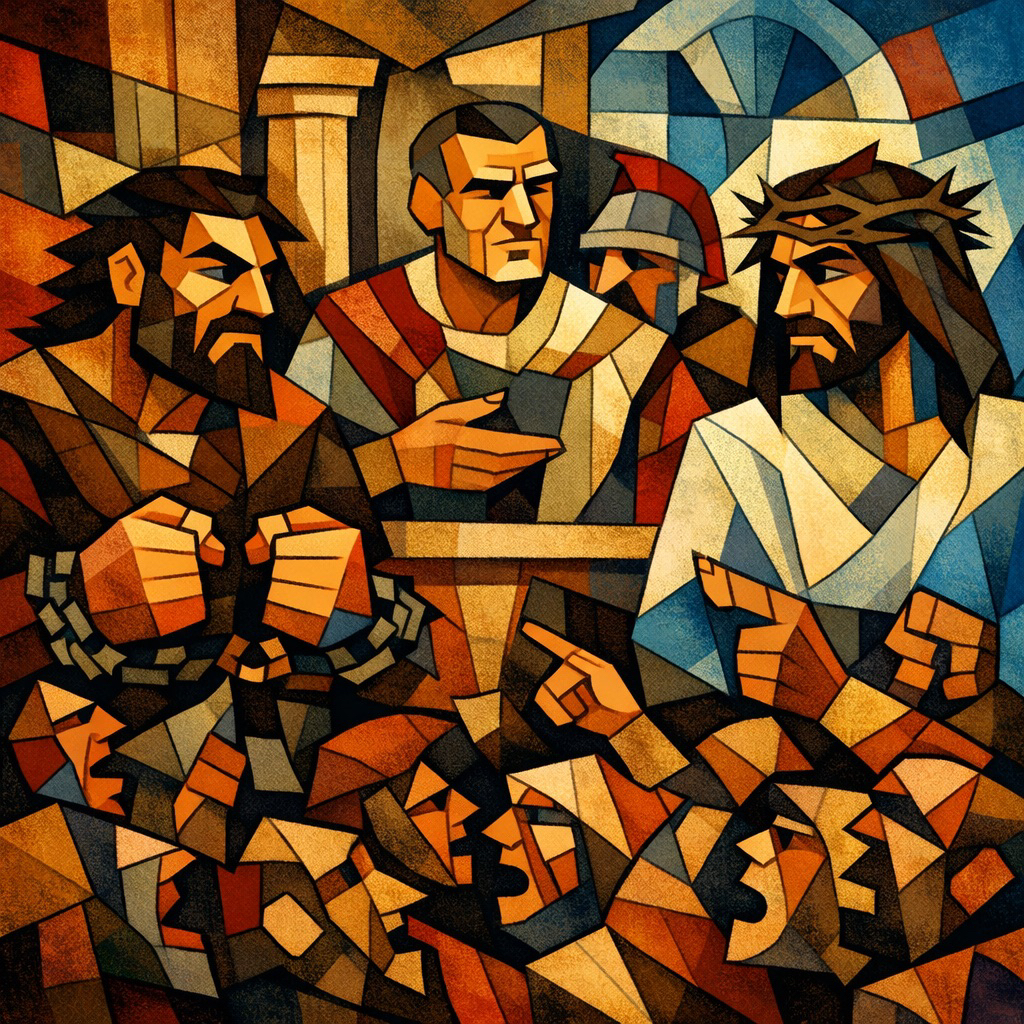
✨ Prophecy Fulfilled: The Life of Yeshua (Jesus) – Episode 61 “Barabbas or Yeshua” (Matthew 27:15–26; Mark 15:6–15; Luke 23:13–25; John 18:39–19:16) The sun was higher now. Jerusalem was awake. What had been decided in shadow during the night was about to be affirmed in daylight—before the people. The tension had not eased with morning; it had thickened. Yeshua was brought once more before Pontius Pilate. Still bound. Still silent. Still innocent. ⸻ ⚖️ A Governor Cornered Pilate knew exactly what stood before him. He had examined Yeshua. He had questioned Him. He had sent Him to Herod. He had received Him back mocked—but unchanged. No crime. No threat. No guilt. More than once, Pilate said it aloud: “I find no fault in Him.” Truth had been spoken clearly. But truth does not always halt injustice—especially when fear outweighs conscience. ⸻ 🧱 A Custom, a Crowd, a Calculation Pilate reached for precedent. Each Passover, one prisoner was released as a political gesture meant to ease unrest. Pilate saw an opportunity—a way to satisfy justice and preserve order without bloodshed. He presented the crowd with a choice. Two men were brought forward. One was Barabbas. A known insurrectionist. A man guilty of violence and murder. A name already stained with rebellion. The other was Yeshua. Unarmed. Unresisting. Called Messiah by some, threat by others. Pilate asked carefully: “Whom do you want me to release to you?” ⸻ 📣 Crowds and Propaganda Crowds are easily moved—not by truth, but by repetition, fear, and perceived authority. The city that had once celebrated Him now watched silently or joined the outcry, proving how quickly devotion collapses when propaganda replaces discernment. Praise without conviction is easily redirected, and public opinion—when untethered from truth—can be turned with frightening speed. ✝️ CONTINUED IN COMMENTS ⬇️⬇️⬇️ #Love #Sacrifice #Jesus #BibleStudy #Scripture #Salvation #Help

You've reached the end!