Tag Page America

#America
Abraham Lincoln

Reflections from My Pocket: How I Came to Be on the Penny I never imagined my face would appear on something as ordinary as a penny, yet in 1909, the United States Mint struck the first Lincoln cent to honor my 100th birthday. At the time, that penny, worth one cent, had the purchasing power of roughly 30¢ today, enough to buy a loaf of bread or a newspaper. In that year alone, the Mint produced 72 million pennies, nearly 60% more than the previous year’s Indian Head cents, showing the public’s enthusiasm for seeing history in their pockets. Why choose me? I understand now that Victor David Brenner, the sculptor who designed the coin, wrote, “I chose Lincoln because his life embodies the highest ideals of this country, and the coin should carry his noble image to every pocket.” I am humbled that my life, my work preserving the Union and proclaiming liberty for the enslaved, was seen as worthy of such a tribute. Some critics at the time worried about placing a political figure on money, yet the public embraced it. Brenner, born in Lithuania and immigrating to the United States in 1890, captured my profile using photographs by Mathew Brady. His initials, VDB, appeared on the reverse of the first 1909 pennies, occupying roughly 1–2% of the surface, which sparked a debate over visibility and credit. The coin weighed 3.11 grams and was composed of 95% copper and 5% tin and zinc, nearly identical to modern pre-1982 cents. Within the first year, about 18 million coins bore the full VDB initials, making them prized collectibles today, some fetching hundreds or even thousands of dollars. Even more than a century later, I am humbled that my likeness remains carried by millions every day. The Lincoln cent is a small object, yet it carries the weight of history, unity, and perseverance. I am glad that Brenner’s vision, that my life should embody the ideals of the nation in every pocket, lives on with each coin. #History #USHistory #America #USA #Penny #Mint #Lincoln

Curiosity Corner

Poisoned or Natural Death? The Stanley Meyer Case and the Car That Could Run on Water Stanley Meyer was an American inventor who claimed to have developed a car that could run on water using a hydrogen based system. He said his technology split water into hydrogen and oxygen on demand to fuel a car without gasoline. Meyer often stated, “I want to give the world a clean energy source that cannot be controlled.” His invention drew global attention, skepticism, and legal scrutiny before his sudden death in 1998. Meyer collapsed while eating at a restaurant in Grove City, Ohio, during a meeting with European investors who were interested in funding and developing his water fuel technology. Witnesses claimed he said, “They poisoned me,” sparking speculation that energy interests or other powerful groups wanted to suppress his invention. However, no verified evidence of poisoning exists. The official cause of death was a cerebral aneurysm, a sudden rupture of a blood vessel in the brain. Medical experts note aneurysms can happen without warning and may resemble poisoning in their suddenness. No toxicology reports showed poison, and no homicide investigation followed. Legally and medically, his death was ruled natural. Some critics question whether the government could have influenced legal or medical findings to prevent public knowledge of Meyer’s technology, citing the Invention Secrecy Act, which allows suppression of sensitive inventions. While there is no proof, the law demonstrates that inventions with potential national impact can be legally restricted, keeping them hidden for decades. Meyer’s story sits at the crossroads of bold claims, secrecy, and sudden death. Was this simply a tragic medical event, or could powerful forces have deliberately kept a revolutionary invention hidden from the world? #Science #Physics #USA #History #USHistory #America #Physics

1776 Patriot

Miracle Over Missouri: George Lamson, Sole Survivor of TWA Flight 128, 1967 On November 20, 1967, TWA Flight 128, a domestic passenger flight in the United States, collided midair with a United Airlines aircraft over Missouri at approximately 11,000 feet. The collision destroyed both planes, killing all 7 crew members and 93 passengers aboard TWA Flight 128 and all 58 people aboard the other plane. George Lamson, a passenger from Missouri, survived, making him the sole survivor of 151 fatalities from the two aircraft. Lamson was seated near the rear of the plane. Investigators concluded that structural debris formed a partial protective space around him, absorbing much of the impact energy. He sustained multiple fractures, including a broken leg, several broken ribs, and a crushed pelvis, as well as internal contusions and significant blood loss. His vital organs avoided fatal trauma, a rare outcome in high energy midair collisions. Rescue crews located him within 20 minutes. Emergency responders stabilized him, controlled hemorrhage and shock, and transported him to a regional hospital. Surgeons performed orthopedic stabilization, blood transfusions, and intensive monitoring. Lamson spent 6 weeks hospitalized and underwent 3 major surgeries. Recovery included months of physical therapy to restore mobility and strength. Later in life, Lamson lived a relatively private life in Missouri. He reportedly returned to work in civil service and rarely spoke publicly about the crash, though he occasionally participated in interviews and safety studies. His survival, one of the rarest in American aviation history, demonstrates how seat location, debris orientation, rapid rescue, and sheer chance aligned perfectly. Analysts estimate that in similar midair collisions, the chance of a single passenger surviving is less than 1 percent, underscoring the extreme improbability of sole survival in catastrophic crashes. #PlaneCrash #Aviation #America #USA #History #Survivor

1776 Patriot

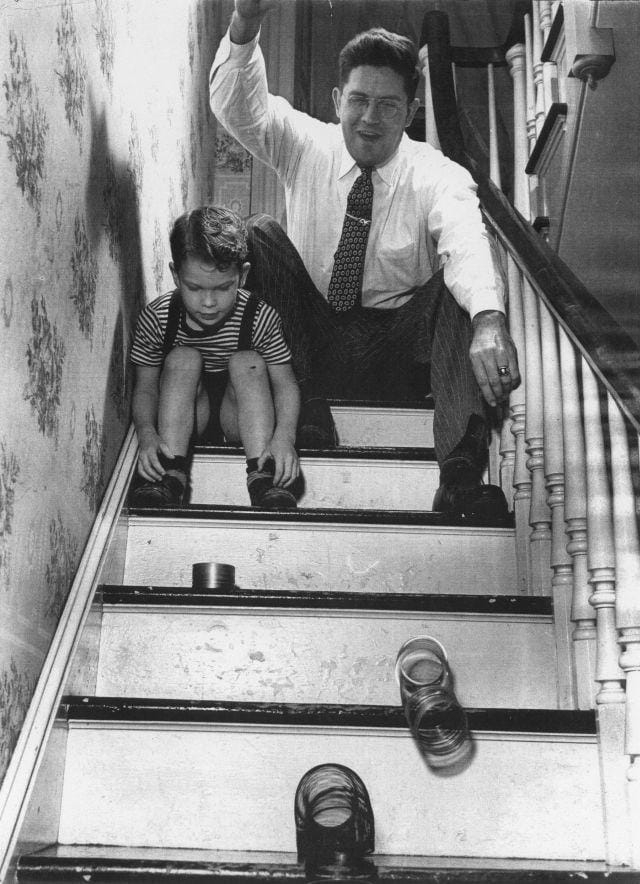
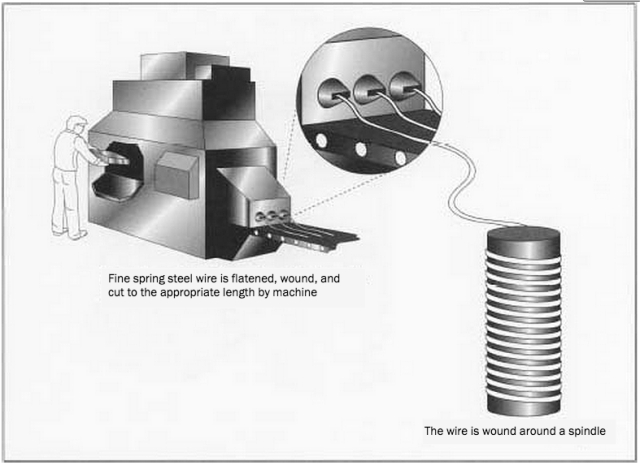
WWII Walking Wonder: The Untold Story of the Slinky In 1943, naval engineer Richard James was working in his Philadelphia workshop on tension springs meant to stabilize sensitive instruments aboard battleships during World War II. While adjusting a spring, it slipped from his hands and “walked” across the floor in a mesmerizing motion. James was astonished. He and his wife, Betty, immediately realized this accidental movement could be the basis for a playful invention. They experimented with dozens of prototypes, measuring how far springs could travel, how many flips they could make, and how quickly they could complete a descent. After testing hundreds of coils, they determined that a spring 2.5 inches in diameter made from high-grade Swedish steel produced the most consistent walking effect. Slight variations in coil thickness, tension, and length drastically changed the motion, and only about 2% of springs tested achieved the ideal “walk.” The war influenced materials and timing: steel was rationed, making their carefully sourced Swedish steel highly valuable, and small-scale production required meticulous hand-winding and testing. Post-war America’s shift to consumer goods in 1945 created the perfect market moment, allowing the Jameses to bring their invention to stores. Each original Slinky sold for $1, equivalent to roughly $17 today. Finally, they revealed the creation to the public: at Gimbels department store in Philadelphia, 400 units were displayed, and all sold within 90 minutes. By the early 1950s, Slinky was sold in over 30,000 stores nationwide, and more than 50 million units were purchased by 1960. Today, over 300 million Slinkys are sold annually worldwide, including metal, plastic, glow-in-the-dark, and themed editions like Disney and Star Wars. The toy also serves as an educational tool, demonstrating wave motion, gravity, and momentum in classrooms across the globe. #WWII #WWIIHistory #USHistory #History #America #USA #Military #Toys
1776 Patriot

First Flight: Inside the Wright Brothers Historic Design

The Wright brothers’ first powered airplane, the Wright Flyer, achieved controlled flight on December 17, 1903, at Kill Devil Hills near Kitty Hawk, North Carolina. Orville and Wilbur were inspired by earlier aviation pioneers and by observing birds. They focused on control and stability, not just engine power, which had hindered prior inventors. Their breakthrough was a three-axis control system: a forward elevator for pitch, a rear rudder for yaw, and wing-warping for roll. Wing-warping twisted the wingtips via cables attached to the pilot’s hip cradle, rolling the airplane side to side. The elevator tilted the nose up or down, controlling pitch. The rudder turned the plane left or right, controlling yaw for directional changes without losing balance. Together, these controls allowed the pilot to maneuver safely in all three dimensions. Construction took about three years, from 1900 glider experiments to the powered prototype. The airframe used spruce and ash, with muslin stretched over the wings. Components were hand-shaped with saws, planes, and chisels. The 12-horsepower gasoline engine powered two chain-driven wooden propellers on a reinforced frame. To refine designs, the Wrights built a wind tunnel in Dayton: a small wooden box with a fan producing airflow, a track for miniature wings, and a balance to measure lift and drag. Many airfoil shapes were tested before full-scale construction. A wooden launch rail helped smooth takeoffs. On December 17, 1903, the Flyer’s first flight covered 120 feet in 12 seconds; later flights reached 852 feet. Afterward, the Wrights developed the 1904 Flyer II and 1905 Flyer III, with stronger frames, more powerful engines, refined control surfaces, and longer-range capabilities. The Flyer proved that mastery of three-axis control: roll, pitch, and yaw and careful engineering, including wind-tunnel testing, was essential to powered flight. laying the foundation for modern aviation. #USHistory #History #America #Aviation

First Flight: Inside the Wright Brothers Historic DesignFirst Flight: Inside the Wright Brothers Historic DesignFirst Flight: Inside the Wright Brothers Historic DesignFirst Flight: Inside the Wright Brothers Historic DesignFirst Flight: Inside the Wright Brothers Historic DesignFirst Flight: Inside the Wright Brothers Historic Design
Curiosity Corner

The Unique Blond-Haired People of Melanesia In the Solomon Islands, a small population has a rare trait: dark skin with naturally blond hair. Roughly five percent display full blond hair, and about one in four carry the genetic variant. This trait comes from a change in the TYRP1 gene, which affects hair pigment but not skin. It is distinct from European blond hair and evolved independently. The same variant is less common in nearby islands. Importantly, this gene affects hair color only and does not directly change eye function, lung capacity, or physical performance. These communities are known for strong swimming and diving skills. Many can hold their breath for one to two minutes and dive several meters without equipment to gather food or navigate reefs. Their abilities come from daily interaction with the marine environment, where fishing and diving are essential. Regular practice strengthens lung capacity, oxygen use, and endurance. While lighter hair and occasionally lighter eyes may slightly improve underwater visibility, most diving skill comes from physical adaptation and cultural training. Some freediving populations, like the Bajau, show spleen enlargement to store oxygen, though this has not been measured in Melanesians. From an evolutionary perspective, as Darwin described, traits that improve survival increase in frequency. On isolated islands, the ability to swim, dive, and gather food efficiently provides an advantage. Over generations, individuals excelling at these skills thrive, illustrating natural selection in action. Compared to most people, Melanesians with this trait combine a distinctive appearance with deep-water skills and physical adaptations shaped by environment and culture, showing how genetics and lifestyle interact to produce both striking appearance and practical abilities. #Genetics #Science #ScienceNews #News #USNews #America #USA
You've reached the end!