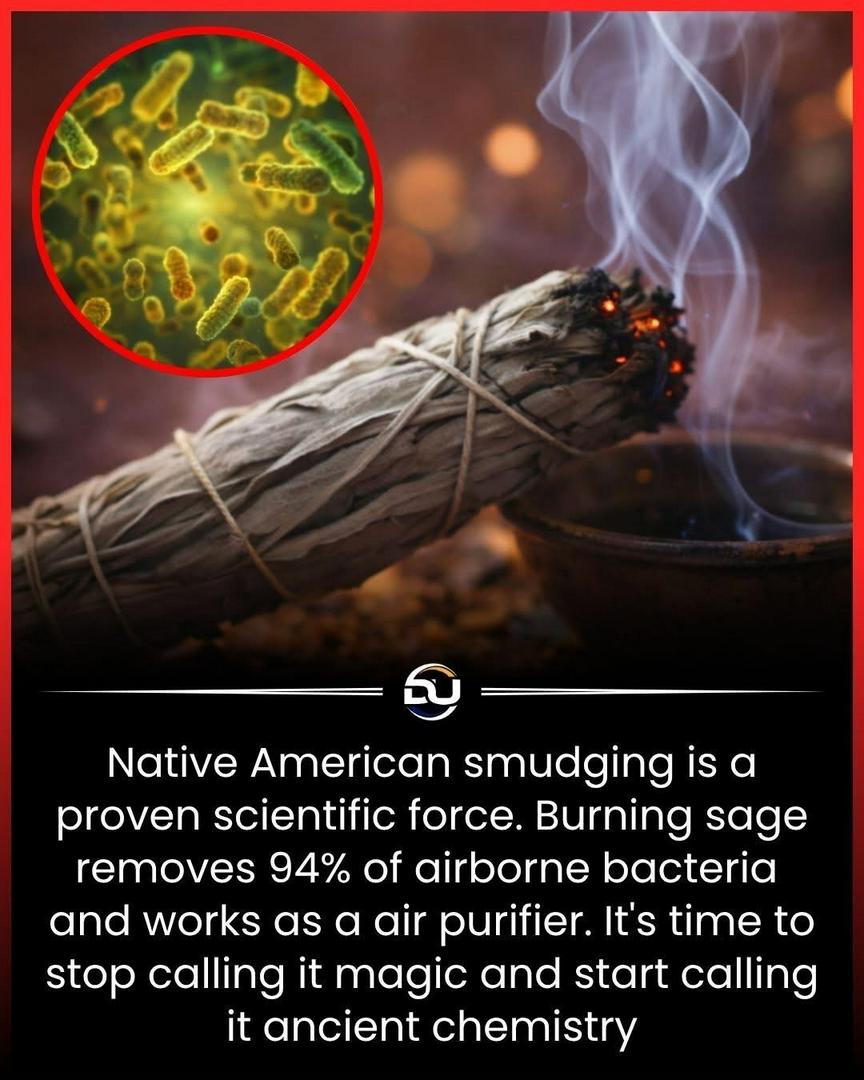
Scientific studies reveal burning sage reduces airborne bacteria
For generations, the practice of burning sage, often called smudging, has been used in various Indigenous cultures as a spiritual ritual. While it has often been dismissed as symbolic or mystical, modern science is beginning to uncover something remarkable behind the smoke. Research suggests that burning certain medicinal plants, including sage, can significantly reduce airborne bacteria, in some cases by up to 94 percent in enclosed spaces.
This effect comes from the natural compounds released when the plant burns. These compounds, including antimicrobial oils, disperse into the air and interact with bacteria, disrupting their structure and reducing their ability to survive. In simple terms, the smoke does not just carry a scent, it carries active particles that can purify the surrounding environment.
Traditionally, air purification has relied on chemical sprays or mechanical filters. But this natural method offers a fascinating contrast. Instead of trapping or masking contaminants, it actively neutralises them using plant based chemistry that has been understood intuitively for centuries. It shows that ancient practices were often grounded in real world effects, even if the science behind them was not yet explained.
The potential implications are meaningful. Understanding how these natural compounds work could inspire safer, more sustainable ways to clean indoor air, especially in areas with limited access to modern technology. It may also encourage a deeper respect for traditional knowledge systems that have long been overlooked.
As science continues to explore these connections, one thing becomes clear. Sometimes, the wisdom of the past holds answers for the future. What was once called ritual may, in fact, be a quiet form of science waiting to be understood.
#DiscoverTheUniverse #Discover #fblifestyle #AirPurification #AncientScience