Tag Page AfricanAmericanHistory

#AfricanAmericanHistory
LataraSpeaksTruth

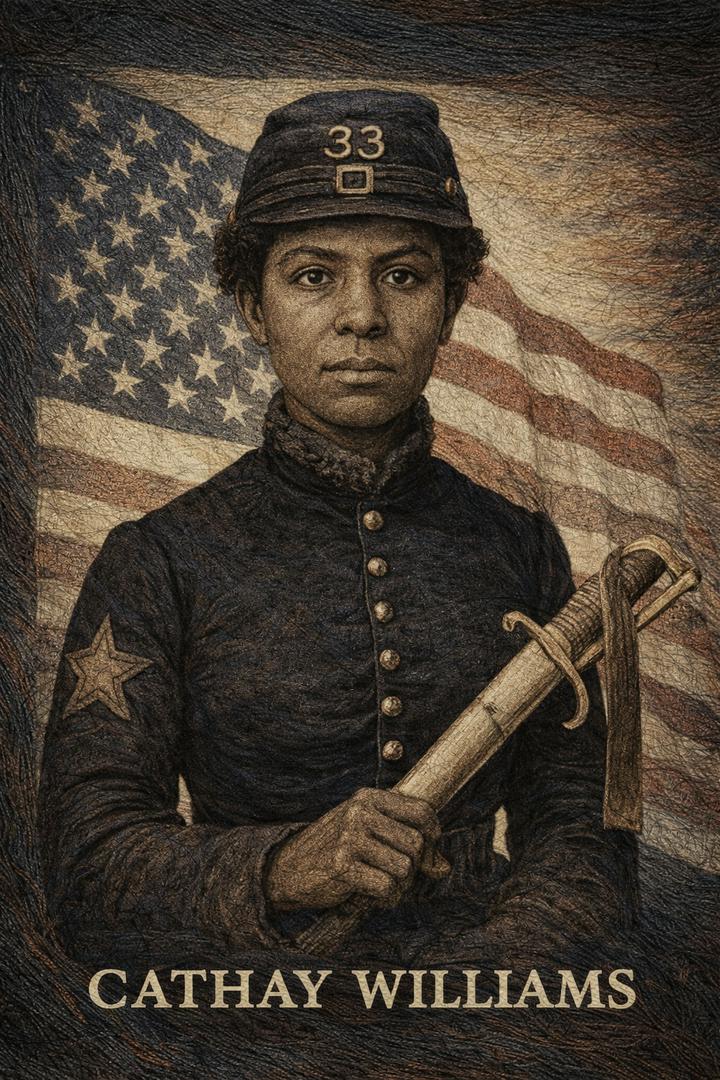
Cathay Williams was born in September 1844 in Independence, Missouri, to an enslaved mother and a free father. Because her mother was enslaved, Cathay was also born into slavery. As a young woman, she was forced into labor for Union troops during the Civil War, working as a cook and washerwoman and traveling with the army through parts of the South. That experience brought her close to military life long before she officially entered it. After the war, Williams chose a path few women of her time could even imagine. On November 15, 1866, she enlisted in the United States Army in St. Louis under the name William Cathay. Since women were barred from military service, disguising herself as a man was the only way she could join. She served in Company A of the 38th U.S. Infantry, one of the African American regiments created after the Civil War and later tied to the legacy of the Buffalo Soldiers. For nearly two years, she performed the duties expected of any soldier. Her secret remained hidden until repeated illness and hospital visits led army doctors to discover she was a woman. She was discharged on October 14, 1868. Years later, Williams applied for a military disability pension, describing her service and failing health, but her claim was denied. Much of her later life remains unclear, but her place in history does not. Today, Cathay Williams is remembered as the only documented woman known to have served as a Buffalo Soldier and one of the most remarkable women in American military history. #OurHistory #CathayWilliams #BuffaloSoldiers #MilitaryHistory #BlackHistory #WomensHistory #AfricanAmericanHistory #HiddenFigures #AmericanHistory #LataraSpeaksTruth

LataraSpeaksTruth

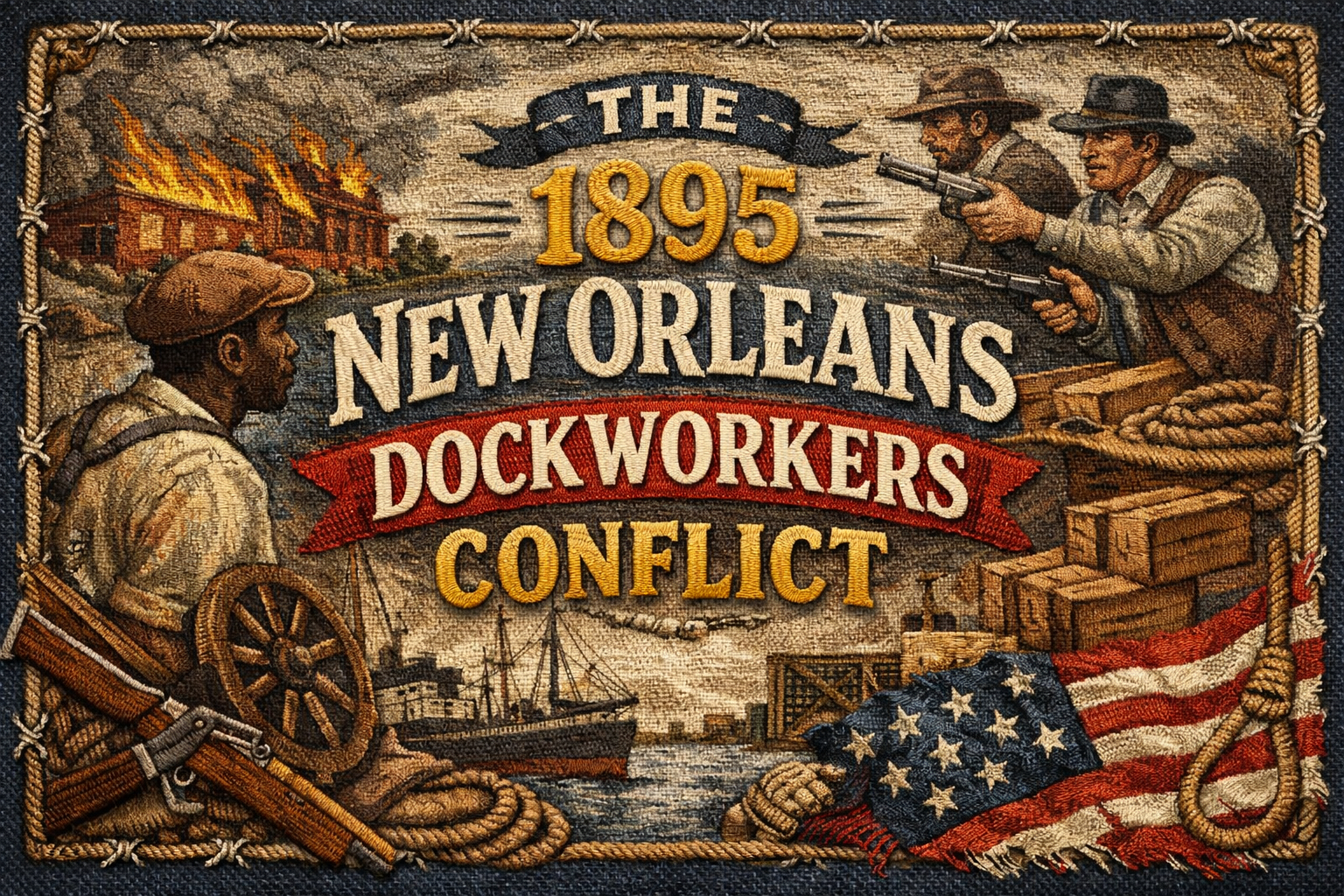
On March 9, 1895, between 300 and 500 armed white men in New Orleans targeted Black dockworkers by attacking the Morris Public Bathhouse, where equipment used by Black laborers was stored. About half of their tools were seized and thrown into the river. This was not random violence. It was organized intimidation meant to punish Black workers for becoming too visible, too independent, and too competitive on the waterfront. Two days later, the violence escalated even further, as white mobs attacked Black dockworkers directly and killed six men on the levee. What happened in New Orleans showed how racial terror could be used to break labor power before it had the chance to grow. After the Panic of 1893, some shipping companies turned to lower-paid Black labor to weaken white unions, and employers benefited from the racial division that followed. Violence did what negotiation would not: it crippled livelihoods, deepened distrust, and helped destroy the fragile possibility of sustained worker unity across racial lines. This history matters because attacks on Black workers were never only about prejudice. They were also about control—control of wages, control of jobs, control of who could rise, and control of who had to remain vulnerable. The dockworkers conflict was not just about the waterfront. It was about crushing Black economic strength before it could take root. #BlackHistory #LaborHistory #NewOrleansHistory #BlackWorkers #Dockworkers #AfricanAmericanHistory #RacialViolence #EconomicJustice #HiddenHistory #AmericanHistory

LataraSpeaksTruth

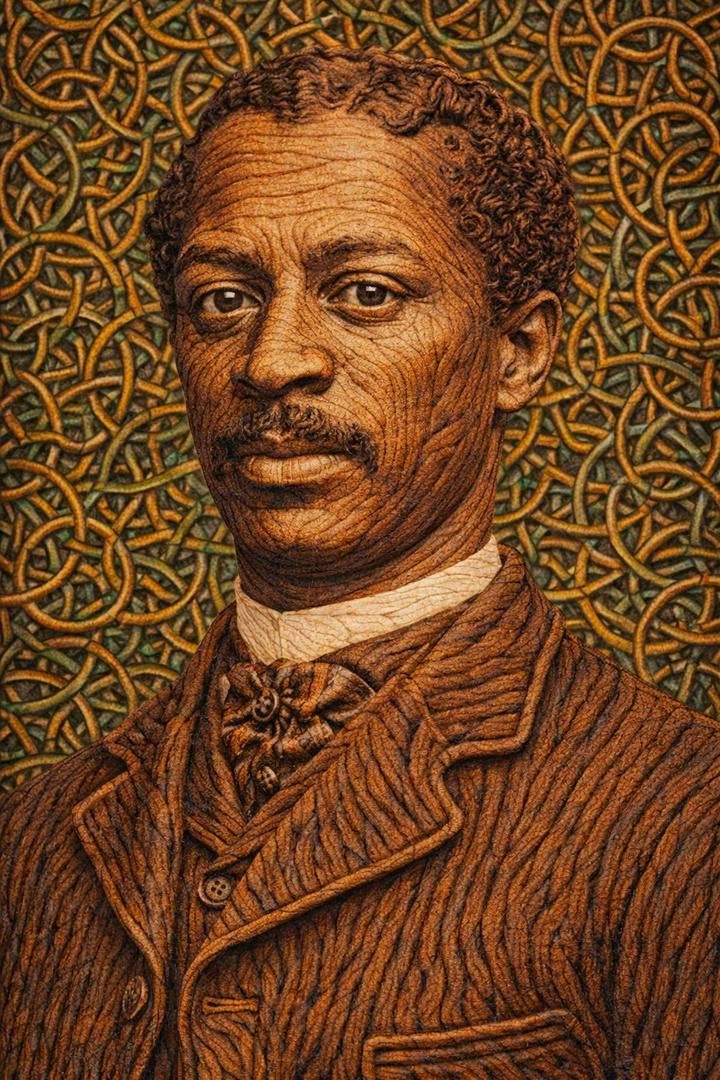
Robert Tanner Freeman was a young man from Washington, D.C., who came of age in a nation that tried to keep Black Americans out of higher education and the professions. Born in 1846, he lived in an era when opportunity was guarded closely and the path into professional life was filled with barriers. Still, he refused to accept the limits placed before him. As a young man, Freeman worked under Dr. Henry Bliss Noble, a white dentist in Washington who became his mentor and encouraged him to study dentistry. At a time when Black students were routinely denied admission to professional schools, Freeman pushed forward with determination. In 1867 he entered Harvard Dental School, and in 1869 he became the first Black man in the United States to earn a formal dental degree. After completing his education, Freeman returned to Washington, D.C., where he opened a dental practice and served his community. His presence in the profession carried weight during a time when Black professionals were rarely seen in such spaces. By establishing himself as a trained dentist, he helped open a path for others who would follow. Robert Tanner Freeman’s story is not only about education. It reflects persistence, discipline, and the courage to step into rooms that had long been closed to people like him. His career was brief, but the example he set became part of a larger movement as Black Americans pushed into medicine, dentistry, education, and other professional fields. Freeman died in 1873 at only 27 years old. Though his life was short, his achievement remains a powerful part of the history of Black advancement in American professional life. #OurHistory #RobertTFreeman #BlackHistory #MedicalHistory #DentalHistory #BlackExcellence #AfricanAmericanHistory #LataraSpeaksTruth

LataraSpeaksTruth

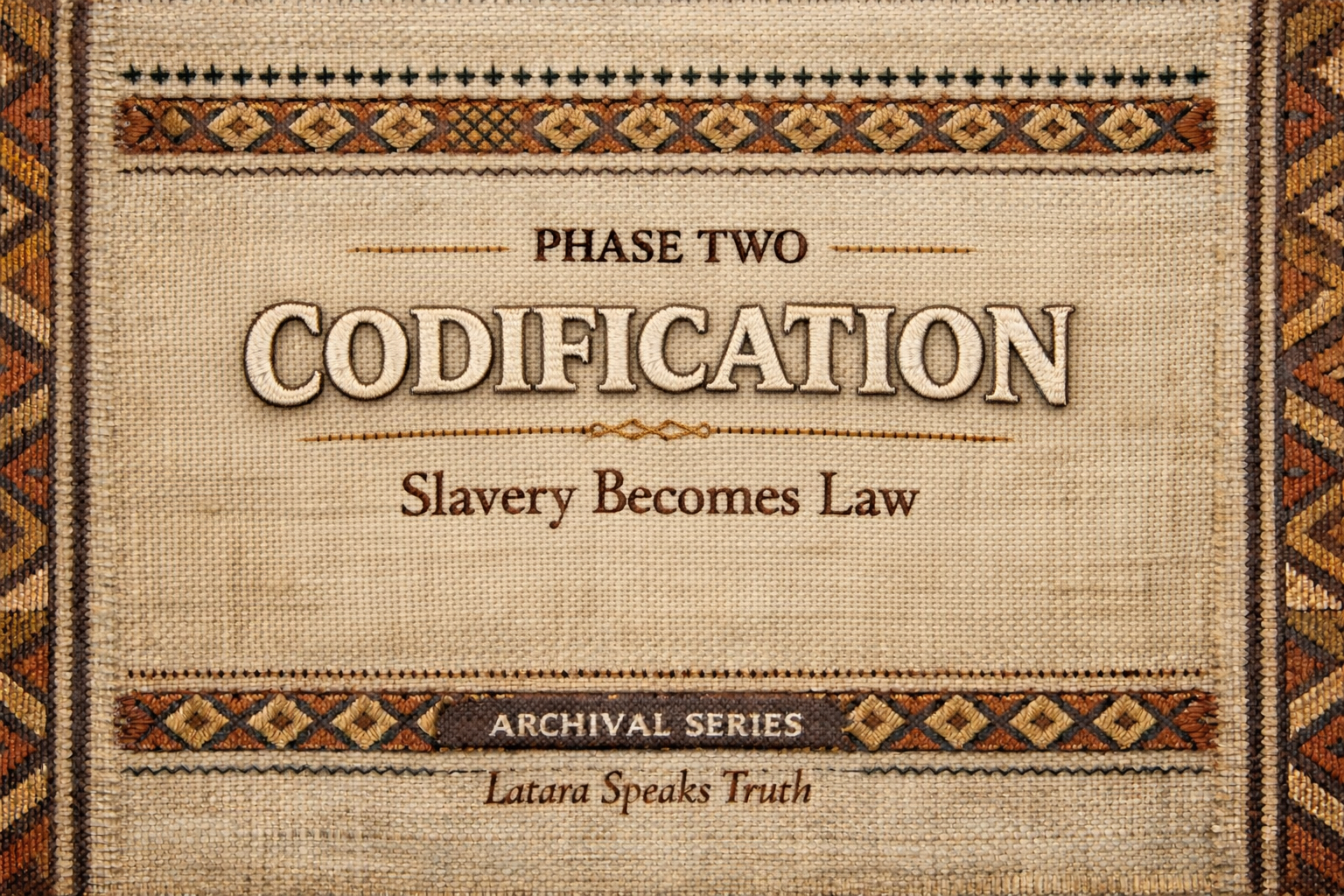
Phase Two. Codification. As colonial systems expanded across the Americas, enslavement shifted from practice to law. What had once been enforced through custom and violence was formalized through statutes, court rulings, and inherited status. By the late seventeenth century, slavery was increasingly defined as permanent, racial, and transferable by birth. African ancestry became a legal condition rather than a circumstance. Colonial governments codified labor, movement, marriage, punishment, and property rights. Enslaved Africans were stripped of legal personhood, while freedom for Black people became restricted and conditional. Laws varied by colony, but their direction was consistent. Status followed bloodlines. Children inherited bondage. Escape no longer altered classification. Identity became assigned, recorded, and enforced. Indigenous nations were pulled deeper into this system as European and later American expansion intensified. Treaties, land seizures, and survival pressures forced tribes to navigate slave economies imposed by colonial powers. Some Native nations resisted participation. Others adopted chattel slavery under coercion, economic pressure, or promises of political recognition. These decisions occurred within systems designed to limit Indigenous sovereignty. Codification narrowed earlier possibilities. Where proximity once allowed shared labor, refuge, or informal belonging, law demanded rigid classification. African ancestry was separated from Indigenous identity in legal terms, even when families and communities told a different story. Written records began to override lived reality. This phase marked the moment slavery became self perpetuating. The system reproduced itself through law, reshaping citizenship, land ownership, and recognition, and laying foundations for exclusion and erasure that followed. #Codification #SlaveryBecomesLaw #ArchivalSeries #HistoricalRecord #ColonialHistory #AfricanAmericanHistory #NativeAmericanHistory
LataraSpeaksTruth

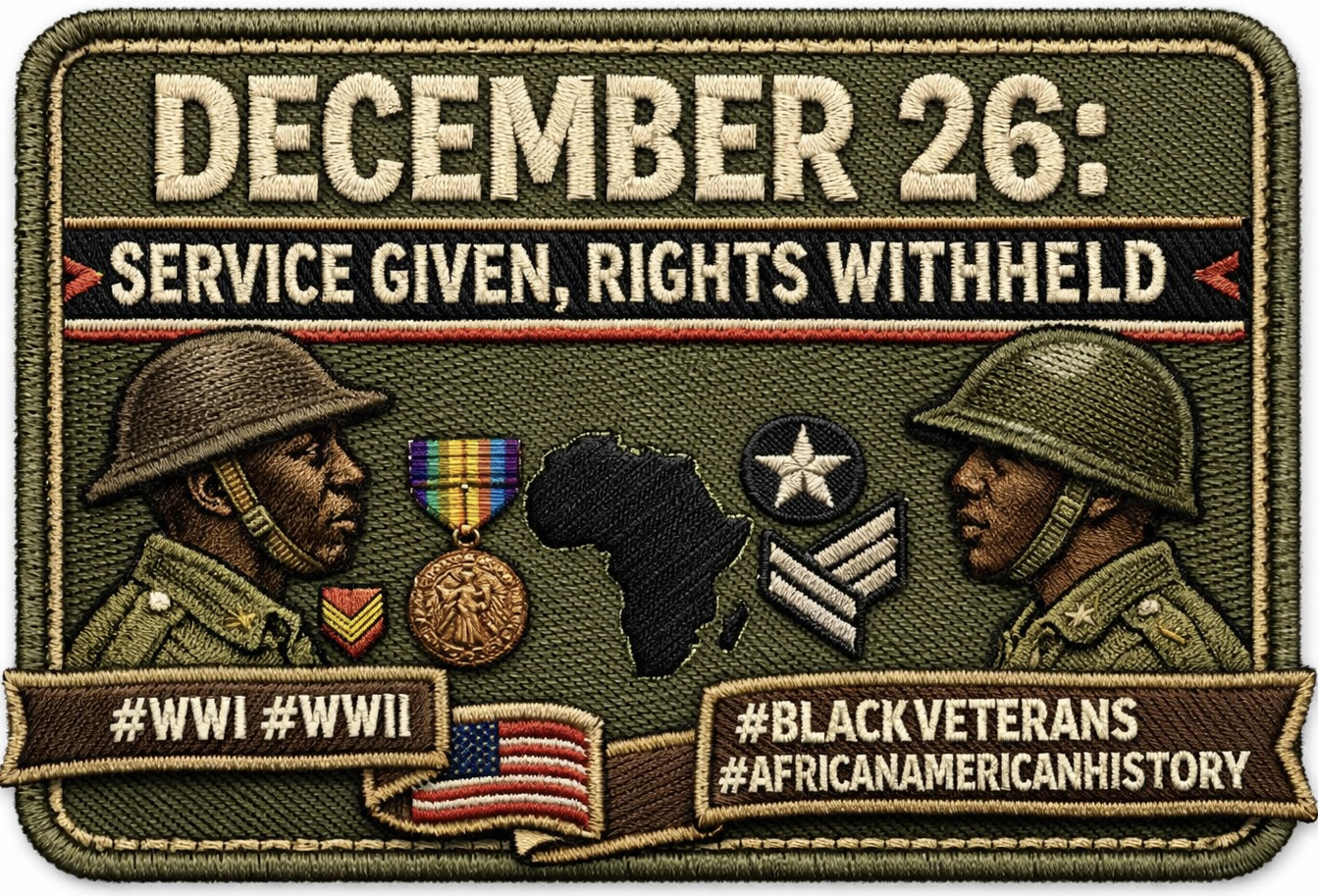
Letters written by Black soldiers during World War I and World War II and dated December 26 reveal a sharp emotional shift. Christmas remembrance ended. Duty resumed. Soldiers wrote about returning to combat readiness almost immediately after the holiday, often overseas, often under segregation within the military itself. Demobilization and reassignment records also list December 26 as a reporting date for Black servicemen. Many returned home to a country that still denied them equal treatment. December 26 marks that contradiction clearly…service given, rights withheld. If you would like to read more on this, you can explore primary letters, military records, and historical analysis through the Library of Congress at loc.gov, the National Archives at archives.gov, and the Smithsonian National Museum of African American History and Culture. #BlackVeterans #MilitaryHistory #December26 #WWI #WWII #AfricanAmericanHistory

LataraSpeaksTruth

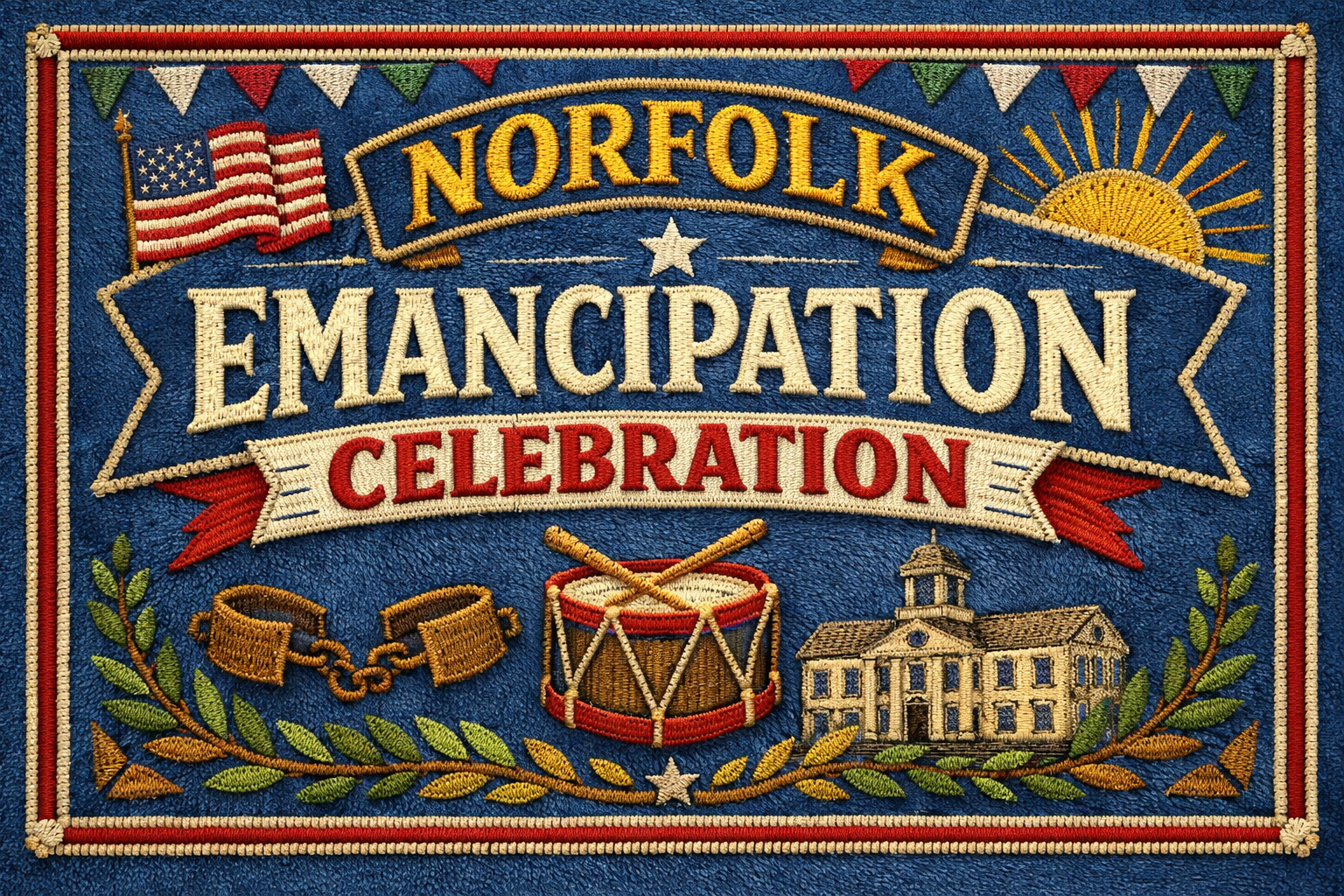
On January 4, 1863, just days after the Emancipation Proclamation took effect, Black residents of Norfolk, Virginia held one of the earliest documented public celebrations of emancipation in the United States. Norfolk had been under Union control since 1862, making it one of the few Southern cities where such a gathering was possible at the time. A contemporary newspaper dispatch dated January 4, 1863, later reproduced by Encyclopedia Virginia, described a procession of at least 4,000 Black men, women, and children moving through the city. The report noted organized marching, music, banners, and speeches, reflecting both celebration and political awareness. This was not a spontaneous gathering. It was a coordinated public declaration of freedom by people who understood the historical weight of the moment. The Emancipation Proclamation did not immediately free all enslaved people, nor did it end slavery everywhere. Its reach depended heavily on Union military presence. Norfolk’s status as an occupied city created conditions where freedom could be openly acknowledged and collectively celebrated, even while much of the Confederacy remained untouched by the proclamation’s enforcement. This January 4 procession stands as an early example of what emancipation looked like in practice rather than on paper. It shows Black communities asserting visibility, dignity, and collective memory at the very start of freedom’s uncertain road. Long before emancipation celebrations became annual traditions, Norfolk’s Black residents marked the moment themselves, in public, and on record. #January4 #BlackHistory #Emancipation #NorfolkVirginia #ReconstructionEra #CivilWarHistory #AfricanAmericanHistory #USHistory #FreedomStories

LataraSpeaksTruth

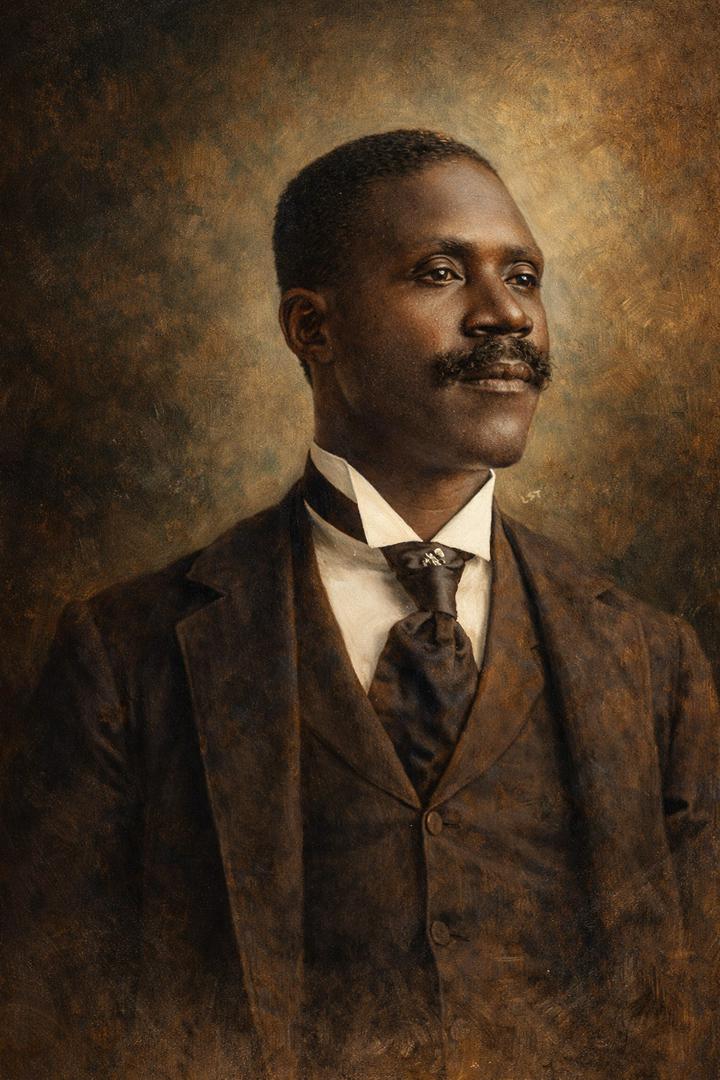
Born enslaved on September 22, 1853 near Rembert in Sumter County, South Carolina, George Washington Murray rose from bondage to the halls of Congress during one of the most hostile eras in American history. After the Civil War, Murray pursued education with purpose and urgency. He attended the University of South Carolina during the brief Reconstruction period when the school was open to Black students, a rare and fragile window of opportunity that would soon slam shut. Education was not just personal advancement for Murray, it was strategy, survival, and resistance. He became a teacher and agricultural expert, believing knowledge was power in a society designed to deny it to Black Americans. From there, he stepped into Republican politics, back when the party still carried the legacy of Reconstruction. In the 1890s, Murray served in the U.S. House of Representatives, representing South Carolina at a time when Black political power was being violently dismantled across the South. Murray was one of the last Black members of Congress in the nineteenth century and during parts of his service, the only one. He spoke openly and unapologetically about lynching, racial terror, and voter suppression while Jim Crow laws tightened their grip. He introduced federal proposals to protect Black voting rights and civil rights, fully aware that Congress was growing less willing to listen and more committed to exclusion. George Washington Murray did not win every fight, but he put injustice on the congressional record and refused silence. In an era demanding submission, he chose courage. That choice still echoes. #GeorgeWashingtonMurray #BlackHistory #ReconstructionEra #BlackCongressmen #AfricanAmericanHistory #CivilRightsHistory #JimCrow #PoliticalCourage #HistoryMatters

You've reached the end!
Tag: AfricanAmericanHistory | LocalAll