1/1

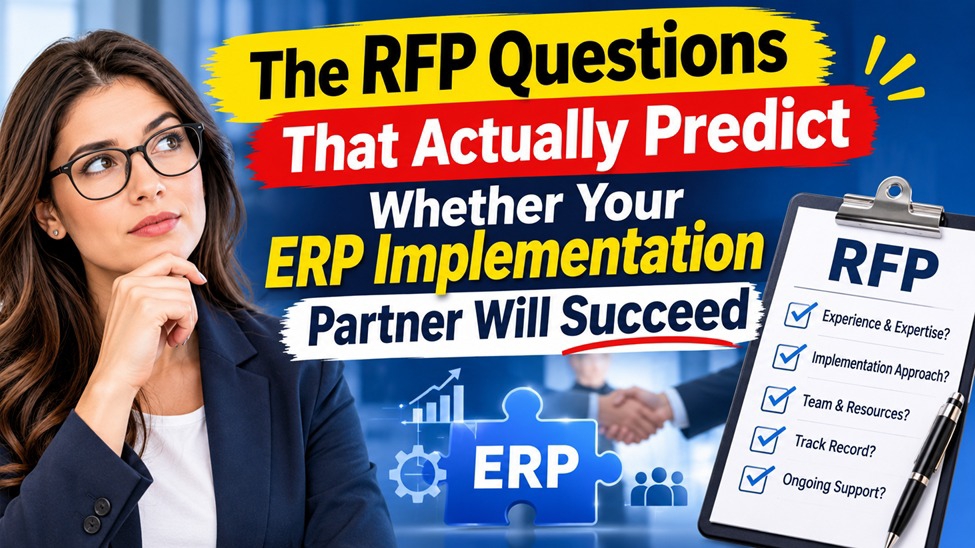
<h1 style="padding-left: 50px;"><strong>The RFP Questions That Actually Predict Whether Your ERP Implementation Partner Will Succeed</strong></h1><p style="line-height: 1.30; font-size: 19px;"><p style="padding-left: 50px;">Most ERP RFPs read like feature checklists. They spell out modules and integrations in a very long way. But they do not check the things that show if the <a href="https://www.arobit.com/erp-development/"><strong>ERP development company</strong></a> you pick can deliver.</p><img src="https://i.ibb.co/wZjY77X2/Screenshot-25-11-2026-184518.jpg" alt="" width="900" height="536" /><p style="padding-left: 50px;">That's not a technology problem. It's a governance one, which is exactly what most RFP templates skip over. <a href="https://rsmcanada.com/insights/services/digital-transformation/7-key-risk-areas-in-erp-implementations.html">RSM's analysis of ERP implementation risk</a> lands on the same conclusion technical capability is rarely the reason these projects fail.</p><img src="https://i.ibb.co/wZKND7rZ/Screenshot-25-11-2026-184550.jpg" alt="" width="900" height="1120" /><p style="padding-left: 50px;">That's why these questions are more important for smaller buyers, not less. When a team is small. It prevents the team from having to handle scope decisions they can't keep track of or follow up on. So ask each <a href="https://www.arobit.com/erp-development/"><strong>ERP implementation partner</strong></a> how they support ERP project governance—especially when your side has limited dedicated staff.</p><img src="https://i.ibb.co/qZ3JmyM/Screenshot-25-11-2026-18468.jpg" alt="" width="900" height="1054" /></p>
56 minutes ago
write a comment...