1/1

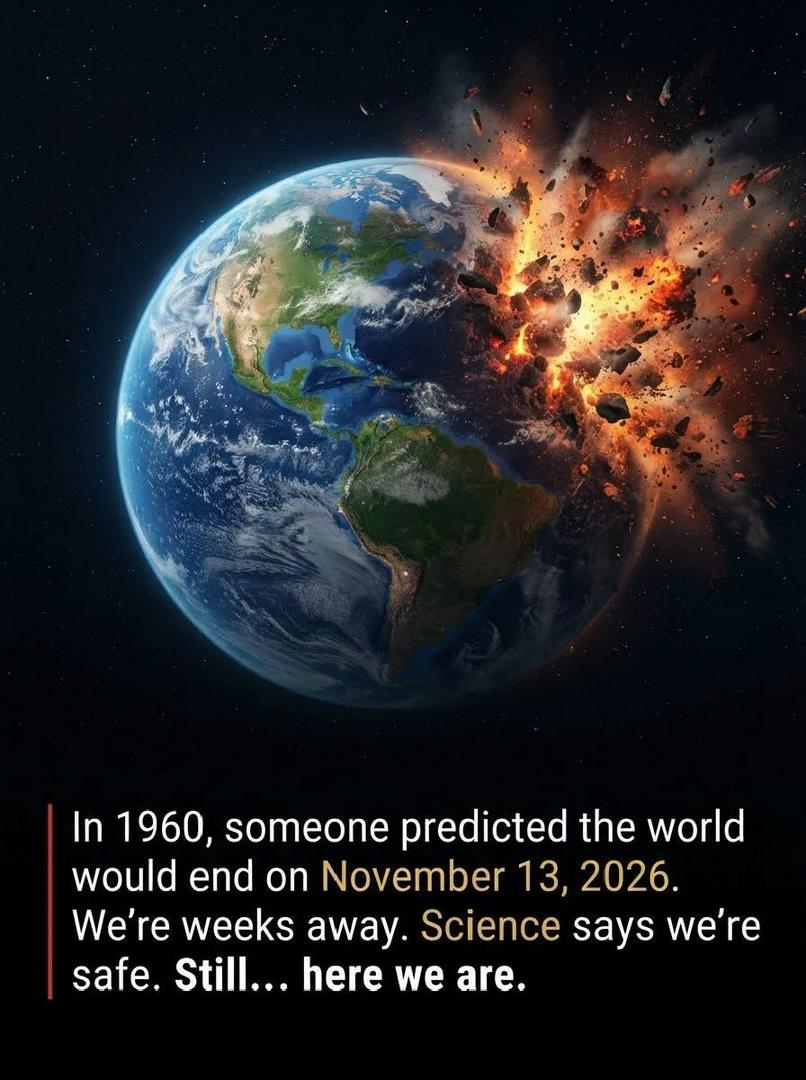
A prediction made in 1960 points to November 13, 2026, as the supposed end of the world. As that date approaches, the story raises an important question: why do doomsday predictions continue to capture our attention decades after they are made? There is a crucial detail, however: a specific date is not scientific evidence of an impending catastrophe. Without a credible explanation, verifiable evidence, and a mechanism that could produce the predicted event, a doomsday claim remains just that—a claim. History offers familiar examples. The Y2K scare raised concerns about computer systems failing when the year changed from 1999 to 2000. In 2012, a misunderstanding of the ancient Maya calendar fueled predictions that civilization would end on December 21. Neither marked the end of the world. These stories persist partly because humans are naturally drawn to dramatic predictions, especially when they involve a precise deadline. As the date gets closer, the claim can feel more significant, even when no new evidence supports it. The illustration accompanying this prediction is a dramatic artistic depiction of Earth's destruction, not a photograph of a real event. And there is no credible scientific evidence that Earth will be destroyed on November 13, 2026. A prediction can survive for generations without becoming more credible. Science asks for evidence, not just a date on the calendar. A prediction made in 1960 points to November 13, 2026, as the supposed end of the world. As that date approaches, the story raises an important question: why do doomsday predictions continue to capture our attention decades after they are made? My advice pay your rent in November
3 hours ago

Guest
Very good 👍 yep pay for Nov
11m
Reply
More comments ...
write a comment...