1/1

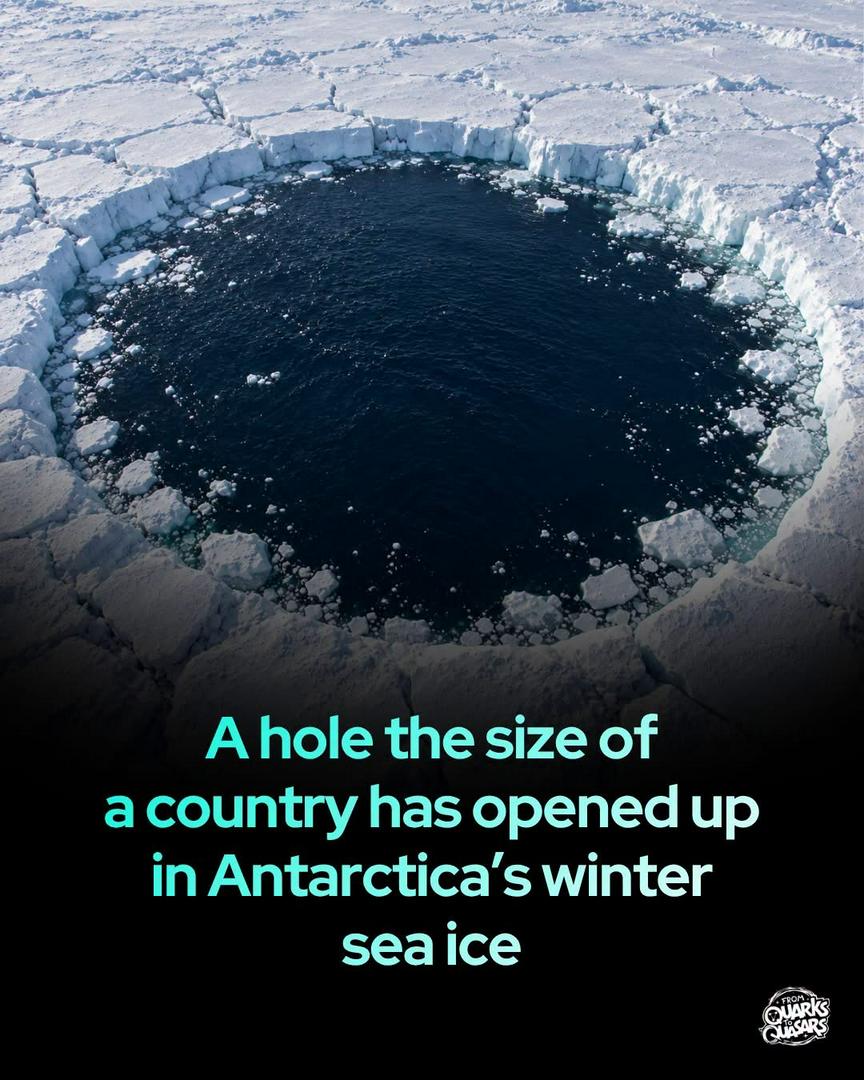
Antarctica has a huge hole the size of Portugal. The opening appeared in Breid Bay, East Antarctica, in August 2024. At its largest, it covered roughly 34,400 square miles (89,121 square kilometers), exposing ocean in a region normally covered by winter ice. Researchers traced the event to a combination of extreme weather and heat rising from deeper water. The opening was a polynya, an area of open water surrounded by sea ice. Polynyas occur naturally, but this winter event was unprecedented in the region’s observations. The ice was already weakening before the hole appeared. During July and August, six intense atmospheric rivers carried warm, moisture-rich air toward Antarctica. These long corridors of water vapor helped deliver heat into the region. The warmer, wetter atmosphere increased the infrared energy reaching the surface, while winds pushed sea ice southward. Together, these conditions hindered ice growth. At the same time, the ocean was supplying heat from below. Strong winds moved surface water away, allowing relatively warm deeper water to rise. Scientists call this process Ekman suction. That rising water, combined with persistent marine heatwaves, made it harder for the surface to freeze again. The result was a vast opening during the Antarctic winter, when sea ice would normally be expanding. Because sea ice already floats, its melting contributes little directly to sea-level rise. But sea ice helps shelter ice shelves from ocean waves and provides habitat for organisms supporting Antarctic food webs. The researchers warn that stronger atmospheric rivers and more persistent ocean heat could make openings like this more frequent in regions where winter ice was once relatively stable. The study shows how changes in the atmosphere and ocean can work together to interrupt Antarctica’s seasonal freeze.
3 hours ago
write a comment...