1/1

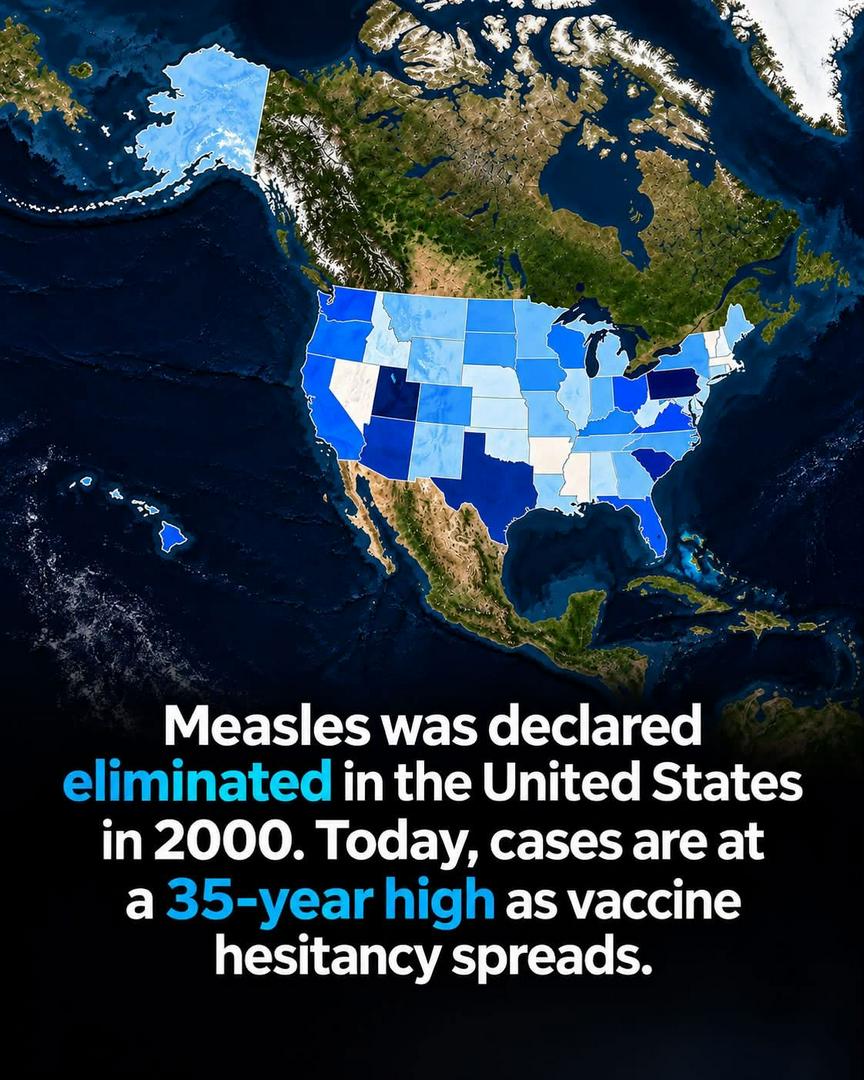
The United States is experiencing its highest number of reported measles cases in decades. As of September 24, 2026, the CDC had recorded 3,659 confirmed measles cases in the United States already far above the 2,289 cases reported during all of 2025. The 2026 count is preliminary and can change as additional cases are reported. In the CDC’s September 17 update, 95% of confirmed cases were associated with outbreaks, including outbreaks that began in both 2025 and 2026. Measles was declared eliminated in the United States in 2000. That did not mean the virus disappeared from the world. It meant continuous transmission within the U.S. had been interrupted. Cases can still be brought into the country through international travel. When measles reaches communities with gaps in immunity, it can spread rapidly. Measles is extremely contagious. It spreads through the air, and the virus can remain infectious in an indoor space for up to two hours after an infected person has left. People can also spread measles before the characteristic rash appears. Early symptoms commonly include fever, cough, runny nose and red, watery eyes, followed by a rash that typically begins on the face and spreads downward. Complications can include pneumonia, encephalitis and, in some cases, de*th. Vac*ination remains the main protection against measles. Two doses of the MMR vaccine are about 97% effective at preventing measles, and CDC data show that U.S. kindergarten MMR coverage has fallen below the 95% level that helps maintain community protection. Local Vac*ination rates can be considerably lower than national averages. (CDC) If you are unsure of your Vac*ination status, checking your records particularly before international travel or during a local outbreak is a practical step. A healthcare professional can advise whether additional Vac*ination or other precautions are appropriate. And if you develop symptoms or think you may have been exposed, call a healthcare facility before
1 hours ago
write a comment...