1/3
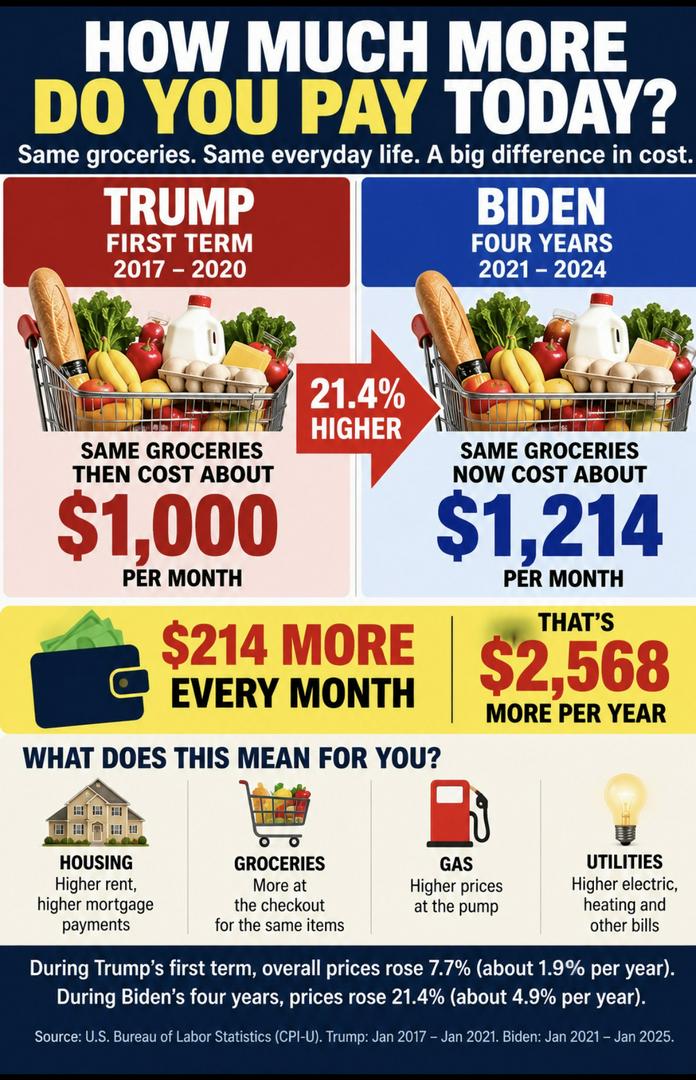
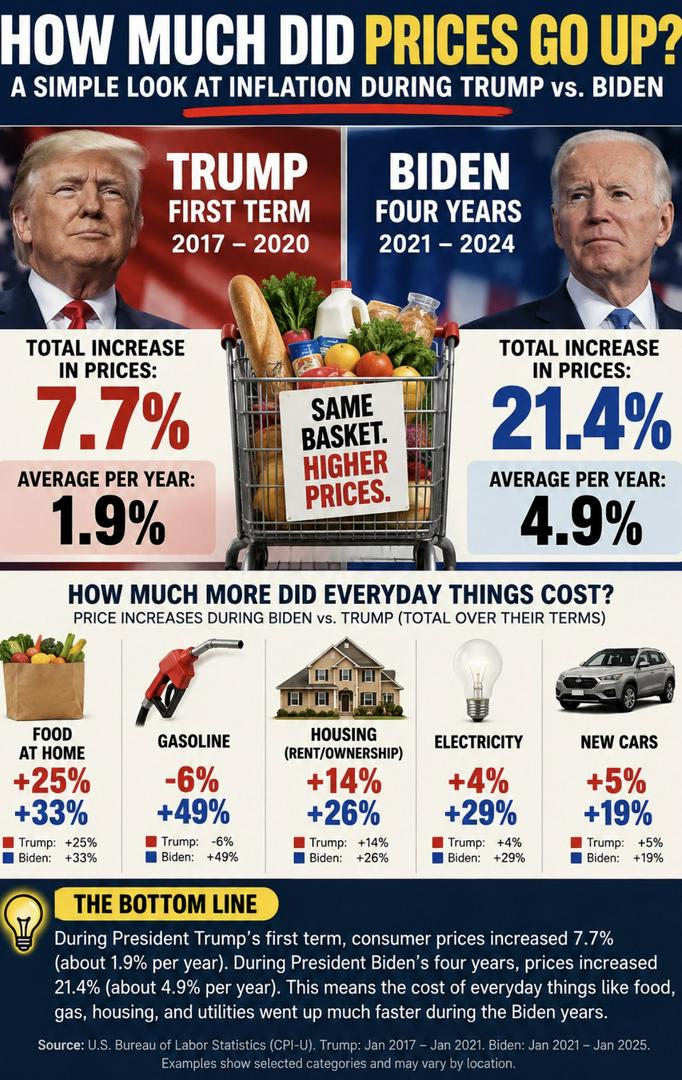

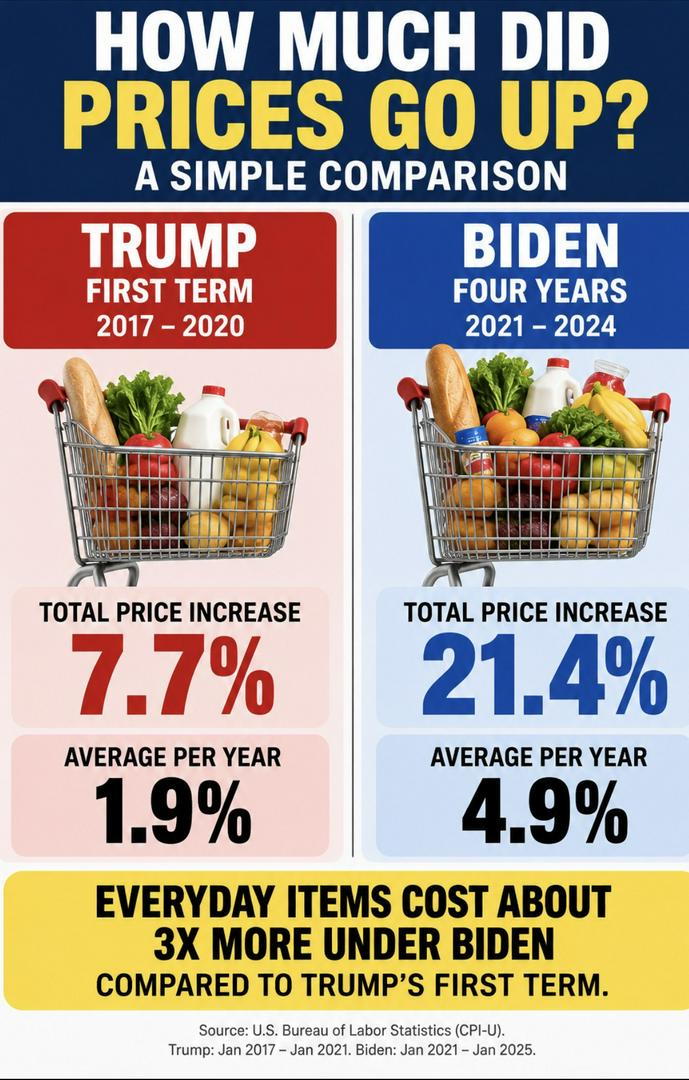
WHAT DOES INFLATION ACTUALLY MEAN FOR YOU? Inflation isn’t just a number reported on television. It determines how much of your paycheck you get to keep after paying for everyday life. During President Trump’s first term, overall consumer prices increased about 7.7% from January 2017 to January 2021. During President Biden’s four years, they increased about 21.4% from January 2021 to January 2025, based on the Consumer Price Index. (Bureau of Labor Statistics) Think about what that means personally. If a collection of everyday goods and services cost you $1,000 a month at the beginning of Biden’s term, roughly the same overall basket would cost about $1,214 after a 21.4% increase. That’s approximately $214 more every month — or $2,568 more per year — just to maintain the same purchasing power. For someone living on a fixed income, that matters. For a young family trying to save for a home, it matters. For someone whose paycheck didn’t increase as quickly as prices, it can mean cutting back somewhere else. And inflation has a lasting effect: when the inflation rate comes down, that normally means prices are rising more slowly — not that the previous price increases disappear. That’s why people can hear that “inflation is down” while still feeling that groceries, housing, insurance and other necessities are expensive. The important question isn’t simply: “What is the inflation rate?” It’s: “How much does my money buy today compared with what it bought a few years ago?” Source: U.S. Bureau of Labor Statistics, CPI-U. The figures describe changes in consumer prices during presidential terms; they do not by themselves establish how much of the change was caused by any president.
1 hours ago
write a comment...