1/1

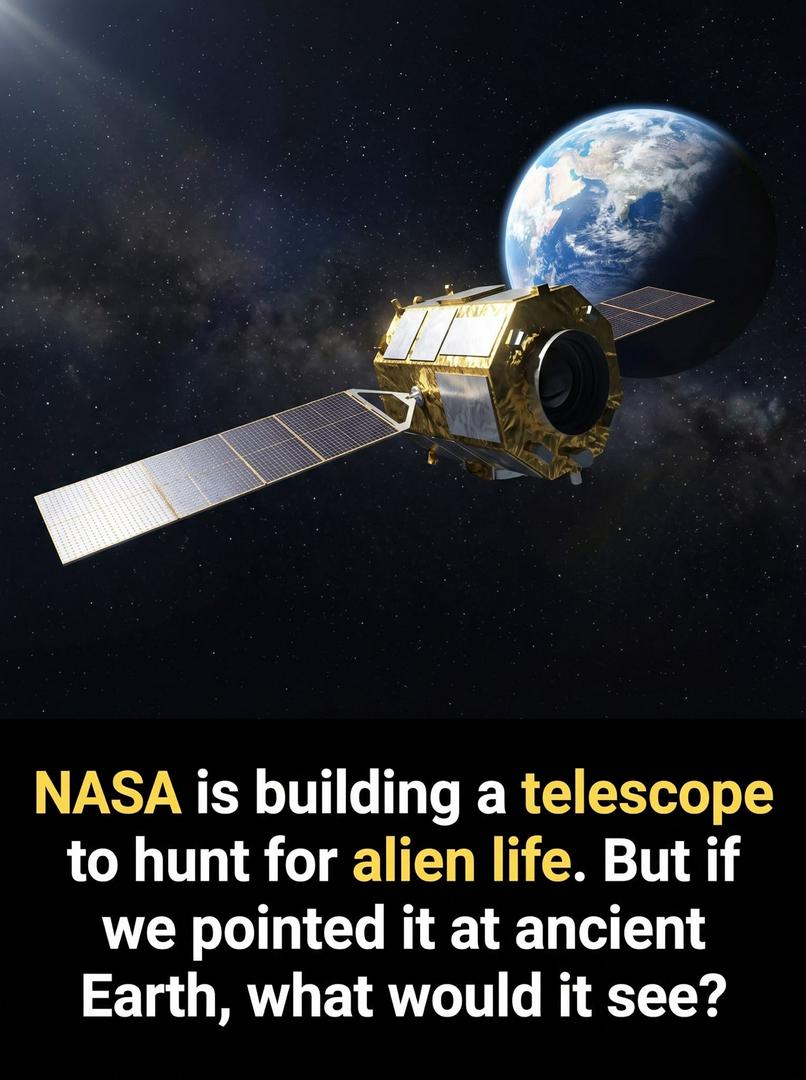
What if an alien civilization had pointed a powerful space telescope at Earth during the age of dinosaurs? The planet might have looked alive from millions of miles away—but not because anyone could see the dinosaurs themselves. NASA is developing concepts for a new generation of observatories, including the Habitable Worlds Observatory (HWO), designed to study potentially habitable planets around other stars and search their atmospheres for possible signs of life. The key is spectroscopy: splitting a planet’s light into its component wavelengths to identify gases in its atmosphere. Oxygen, ozone, methane and other molecules can provide important clues, especially when scientists examine how they occur together and whether nonbiological processes could explain them. If HWO eventually observes an Earth-like planet, it could investigate whether its atmosphere has chemical patterns consistent with biology. Looking at ancient Earth from a great distance, however, would not reveal individual dinosaurs. Their possible influence would be indirect, through the planet’s overall atmospheric chemistry—and distinguishing biological signals from other explanations would remain a major scientific challenge. That is what makes the search so fascinating. Astronomers may not need to see an organism to investigate whether a distant world could be inhabited. Earth’s atmosphere is already a cosmic clue. Learning how to interpret it may help us recognize—or question—the same clues on planets light-years away. Reference: NASA — Habitable Worlds Observatory #NASA #Exoplanets #Astrobiology
7 hours ago
write a comment...