
1/2
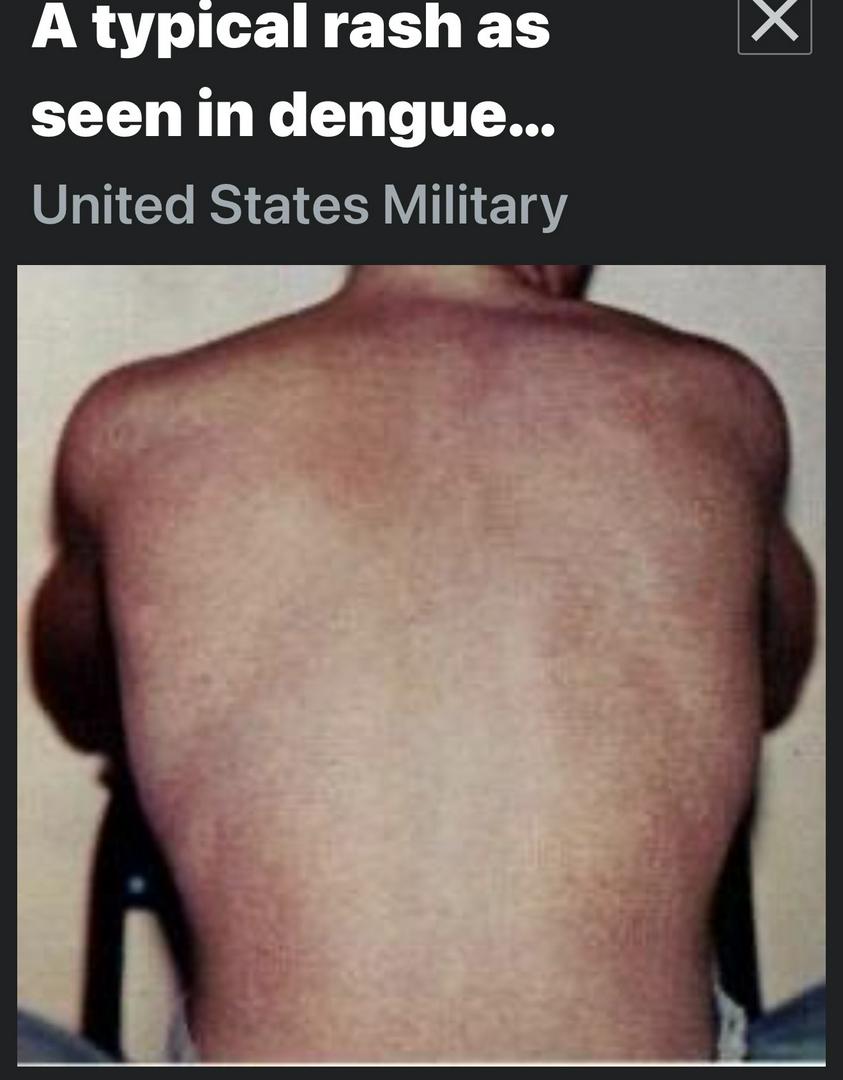

Dengue fever is a mosquito-borne diseasecaused by dengue virus, prevalent in tropical and subtropical areas. Most cases of dengue fever are either asymptomatic or manifest mild symptoms.[8][7] Symptoms typically begin 3 to 14 days after infection. They may include a high fever, headache, vomiting, muscle and joint pains, and a characteristic skin itching and skin rash. Recovery generally takes two to seven days. In a small proportion of cases, the disease develops into severe dengue(previously known as dengue hemorrhagic fever or dengue shock syndrome)[9] with bleeding, low levels of blood platelets, blood plasma leakage, and dangerously low blood pressure.[1][2] Dengue fever Other names Dengue, breakbone fever[1][2] Typical rash seen in dengue fever Pronunciation * /ˈdɛŋɡi,-ɡeɪ/[3][4] Specialty Infectious disease Symptoms Fever, headache, muscle and joint pain, rash. Can be severe, mild or asymptomatic[1][2] Complications Bleeding, low levels of blood platelets, dangerously low blood pressure[2] Usual onset 3–14 days after exposure[2] Duration 2–7 days[1] Causes Dengue virusby Aedesmosquitos[1] Diagnostic method Detecting antibodies to the virus or its RNA[2] Differential diagnosis Malaria, yellow fever, viral hepatitis, leptospirosis[5] Prevention Dengue fever vaccine, decreasing mosquito exposure[1][6] Treatment Supportive care, intravenous fluids, blood transfusions[2] Frequency 5 million per year (2023)[7] Deaths 5,000 per year (2023)[7] Dengue is spread by several species of female mosquitoes of the Aedesgenus, principally Aedes aegypti.[1] The virus has four confirmed serotypes; infection with one type usually gives lifelong immunity to that type, but only short-term immunity to the others. Subsequent infection with a different type increases the risk of severe complications, so-called antibody-dependent enhancement.[10] The symptoms may resemble those of malaria, influenza,
1 hours ago
write a comment...