1/1

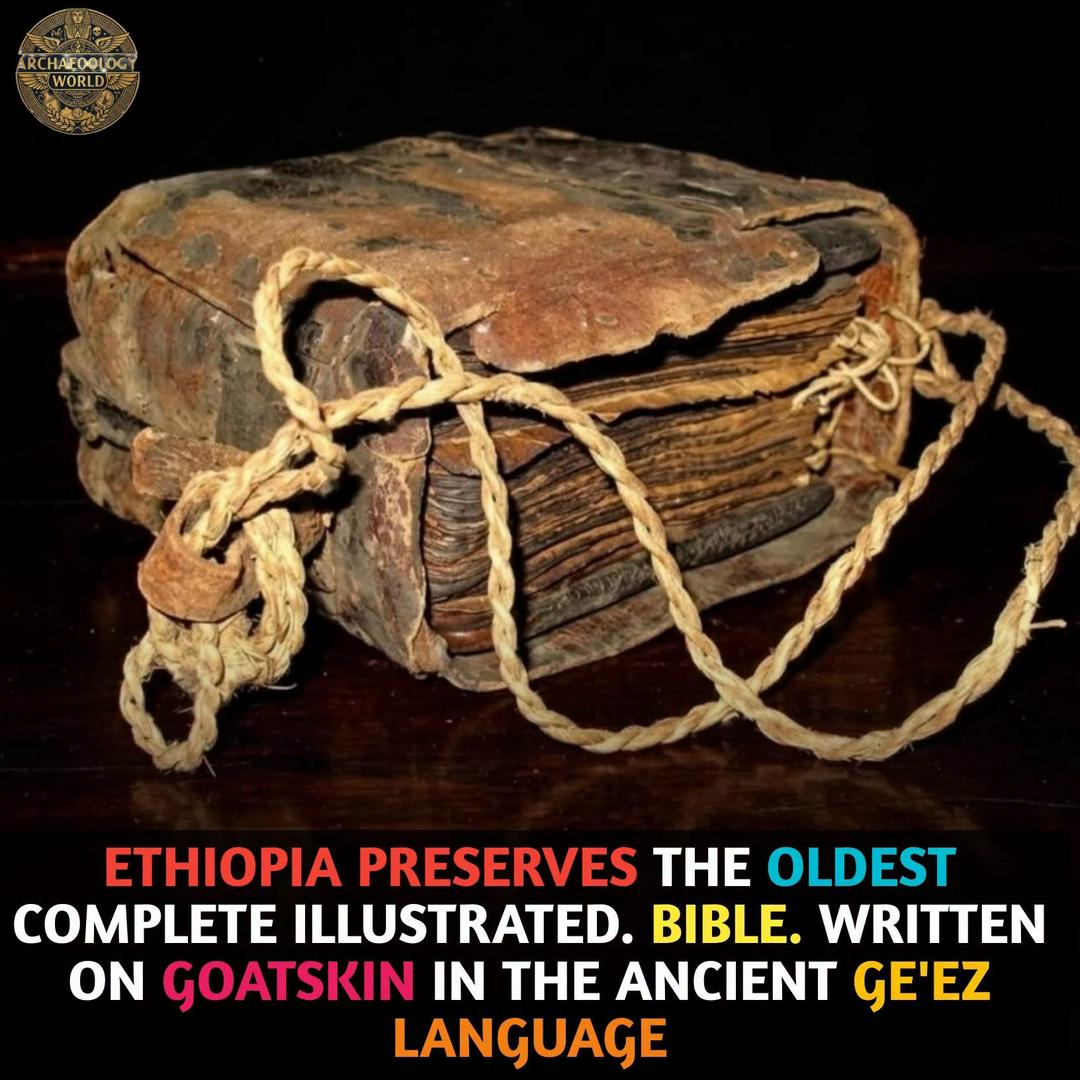
The artifact referenced is the Garima Gospels, preserved at the remote Abba Garima Monastery in the Tigray region of northern Ethiopia. Key Facts About the Manuscripts Age & Creation: Radiocarbon testing by Oxford University dates the parchment pages between 330 AD and 650 AD. This confirms them as the world's oldest surviving complete illuminated (illustrated) Christian manuscript, predating earlier-known illustrated Bibles like the Syrian Rabbula Gospels. Material: The text is hand-written on durable goatskin parchment (vellum) and bound in two separate volumes (Garima 1 and Garima 2). Language & Script: It is written in Ge'ez (Ethiopic), an ancient South Semitic language that served as the official written language of the Aksumite Empire and remains the liturgical language of the Ethiopian Orthodox Tewahedo Church. Illustrations: The volumes feature vibrant illuminations, including portraits of the Four Evangelists (Matthew, Mark, Luke, and John), canon tables, and intricate architectural motifs executed in early Byzantine and Coptic styles. Monastic Legend: Local tradition holds that the gospels were transcribed in a single day by Abba Garima, one of the Nine Saints who brought Christianity to Ethiopia in the late 5th century. Legend says God held the sun in the sky until the saint finished his work. The manuscripts have survived intact for over 1,500 years in the same high-altitude monastic location, protected from invasion, fire, and climate degradation.
45 minutes ago
write a comment...