1/1
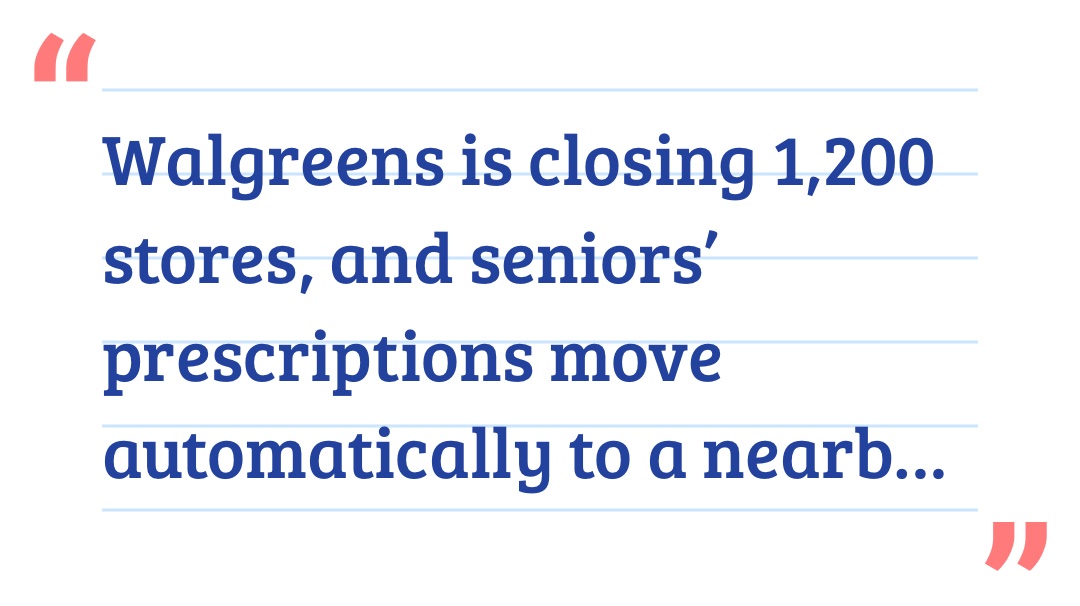
Walgreens is closing 1,200 stores, and seniors’ prescriptions move automatically to a nearby pharmacy By Tyler Foster, Older customers who fill regular medications at Walgreens face a practical question buried inside the chain’s long retrenchment: what happens to a prescription when the neighborhood store disappears. The answer is more reassuring than the raw closure count suggests, because a shuttered Walgreens does not simply lock the door on a patient’s refills. And the downsizing behind those closures has been underway for nearly two years, not sprung overnight as a single sweeping event this summer. Prescriptions transfer automatically, with about 90 days of free delivery When a Walgreens location shuts down, the company moves each active prescription to the nearest open Walgreens automatically, so a patient’s records, remaining refills, and outstanding authorizations follow to the new pharmacy without a fresh order from the prescriber. For roughly 90 days after a closure, that receiving store also offers free prescription delivery, a cushion aimed at customers who suddenly face a longer drive. For someone managing several maintenance drugs, that automatic handoff is the difference between an uninterrupted supply and a dangerous gap. The free-delivery window is more than a courtesy for older customers in particular. Many seniors manage several long-term prescriptions at once and may no longer drive comfortably, so a closure that pushes the nearest pharmacy a few extra miles away can turn a routine pickup into a real obstacle. Roughly 90 days of delivery at no charge gives those customers time to settle on a permanent arrangement, whether that becomes the new Walgreens, a mail-order option through their drug plan, or a different local pharmacy, without missing a dose during the transition. The transfer is not always the most convenient outcome, however.
7 hours ago
write a comment...