1/1

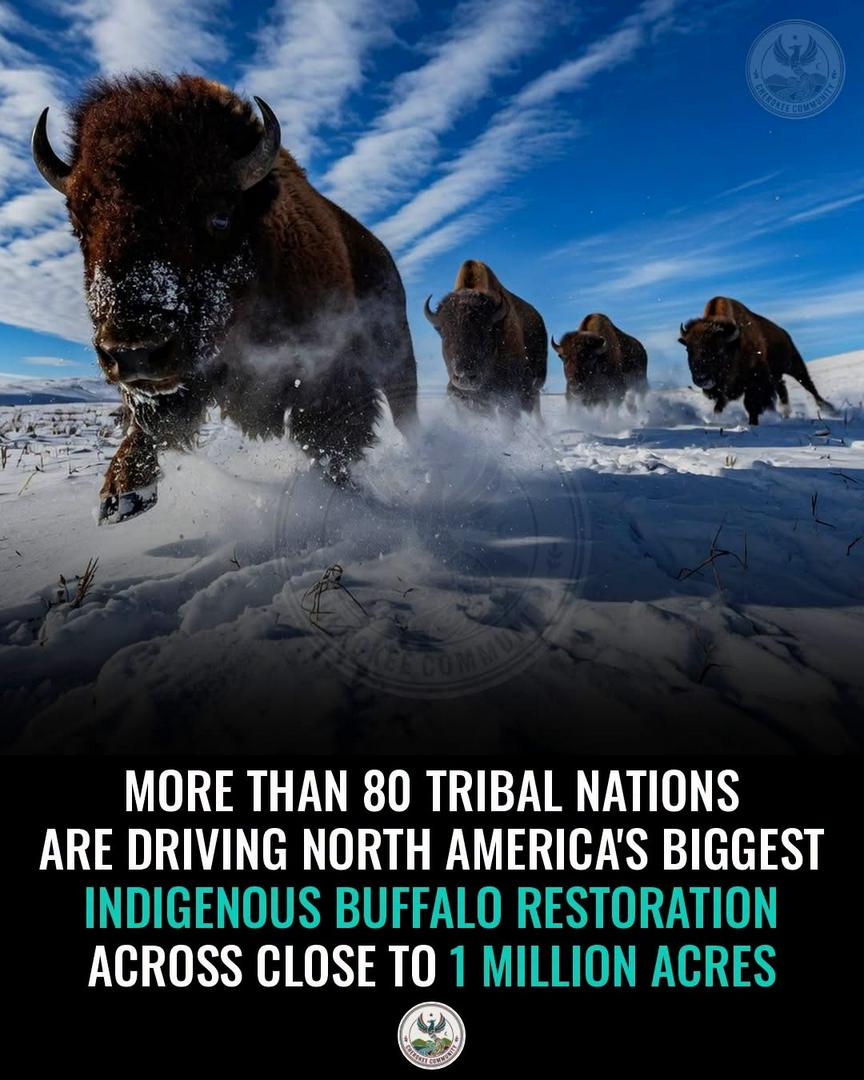
Buffalo restoration is one of the most important Indigenous-led conservation efforts in North America today. For many Indigenous Nations, buffalo are not viewed only as wildlife. They are relatives, teachers, and a central part of cultural identity, food systems, ceremony, and relationships with the land. Today, more than 80 Tribal Nations are working through the InterTribal Buffalo Council to restore buffalo to Tribal lands across the United States. Together, they manage more than 25,000 buffalo on nearly one million acres, helping rebuild herds that sustained Native communities for thousands of years. The return of buffalo is also connected to food sovereignty and community health. Many Tribal buffalo programs provide access to healthy traditional foods, support youth education, and create opportunities for younger generations to learn about cultural responsibilities, ecological knowledge, and the history of their Nations. Buffalo also play an important role in prairie ecosystems. Their grazing patterns can support native grasslands, contribute to habitat diversity, and help restore ecological relationships that were disrupted when buffalo herds were nearly destroyed in the 19th century. This work is supported through partnerships with organizations such as The Nature Conservancy, World Wildlife Fund, and Native Americans in Philanthropy, along with federal conservation investments including the USDA NRCS Regional Conservation Partnership Program Tribal Buffalo Initiative. The U.S. Department of the Interior’s American Bison Conservation Initiative also recognizes the importance of bison conservation across the country. For Tribal Nations, bringing buffalo home is connected to culture, health, land stewardship, and the continuation of knowledge across generations. Sources include the InterTribal Buffalo Council, USDA NRCS, The Nature Conservancy,
1 hours ago
write a comment...