1/1

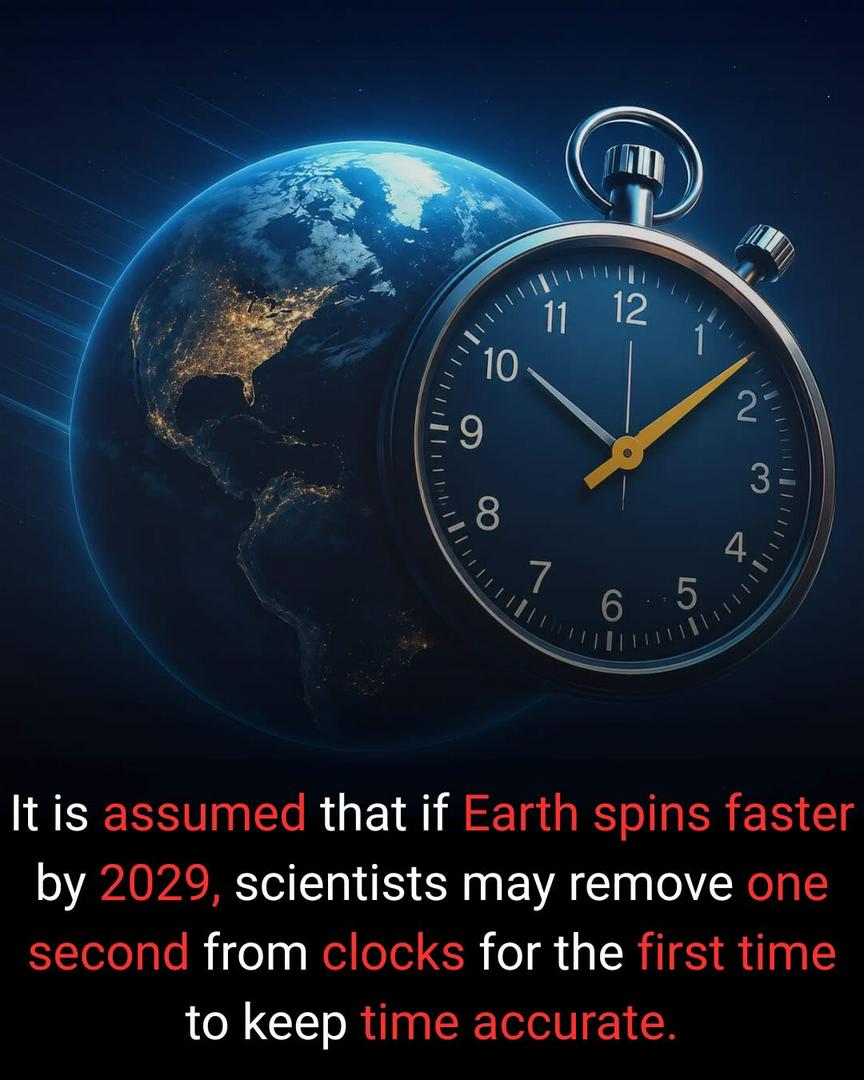
Earth is currently rotating slightly faster than normal, which is making the length of a day shorter by a few milliseconds. Although this change is extremely small and not noticeable in daily life, it matters a lot for precise global timekeeping systems that rely on matching atomic clocks with Earth’s natural rotation. Normally, Earth’s rotation is slightly slowing down over long periods, so scientists occasionally add a “leap second” to clocks to keep them aligned. This ensures that official time stays in sync with the actual position of Earth as it turns. However, recent observations suggest that Earth’s spin is not always slowing it can also speed up slightly due to complex factors like changes in the planet’s core, ocean currents, atmosphere, and mass distribution. If this faster rotation continues, timekeepers may face a rare situation. Instead of adding a second, they might need to remove one second from clocks, known as a “negative leap second.” This would be the first time such an adjustment is applied in history. Experts emphasize that this is still a prediction based on current trends, not a confirmed future event. The change, if it happens, would be very small but technically challenging for systems like GPS, satellites, banking networks, and global communication, which depend on perfectly accurate time synchronization. #fblifestyle
2 hours ago
write a comment...